Stamp Electronic Signature with SignNow

Eliminate paper and improve document processing for increased productivity and countless opportunities. Explore the best manner of running your business with airSlate SignNow.

Award-winning eSignature solution

What a stamp electronic signature is and why it matters

A stamp electronic signature applies a persistent visual or metadata-driven mark to a document to indicate approval, authorization, or notarization in a digital workflow. It often combines a visible graphic or text stamp with cryptographic evidence and an audit trail to preserve intent and integrity. In U.S. business and public-sector processes, stamp electronic signatures are used to streamline approvals, shorten processing times, and create verifiable records that align with ESIGN and UETA requirements when supported by secure platforms such as signNow.

Why organizations adopt stamped electronic signatures

Stamped electronic signatures reduce manual handling, speed approvals, and maintain a consistent, auditable record that supports regulatory compliance and internal controls.

Why organizations adopt stamped electronic signatures

Common challenges when implementing stamped electronic signatures

  • Verifying signer identity across remote interactions can require multi-factor methods to reduce fraud risk and false acceptance.
  • Ensuring stamp immutability and tamper evidence demands robust hashing and secure storage to support later dispute resolution.
  • Integrating stamping into legacy systems often requires API work or middleware to preserve existing workflows without major disruption.
  • Managing retention and access controls must balance legal obligations and operational needs, especially for regulated records.

Representative user roles for stamp electronic signature workflows

Compliance Officer

A Compliance Officer evaluates policy requirements and configures stamping rules to meet regulatory standards. They use stamped electronic signatures to demonstrate controls, generate audit reports, and manage retention schedules for records subject to ESIGN and industry regulations.

HR Manager

An HR Manager uses stamped electronic signatures to finalize employment agreements and benefit elections. They rely on templates, consistent stamps, and identity verification to ensure records are complete, timestamped, and easy to retrieve for audits or employee inquiries.

Who commonly uses stamped electronic signatures

Stamped electronic signatures are adopted across departments and industries that need consistent approvals and strong records.

  • Legal teams handling contracts and corporate approvals that need verifiable signature records.
  • Human resources and finance groups managing onboarding paperwork, payroll authorizations, and expense approvals.
  • Healthcare and education administrators maintaining consent forms and regulated records under HIPAA or FERPA obligations.

Adoption typically focuses on teams that handle contracts, compliance, or regulated records requiring repeatable, auditable sign-off processes.

Additional capabilities that support stamped signature programs

Beyond core functionality, these capabilities help scale stamped signature usage across teams, integrate with systems, and meet enterprise controls.

Bulk Send

Batch stamping and distribution process that allows a single prepared document to be sent to many recipients with individualized stamps and tracking, reducing manual repetition and administrative overhead.


API Access

Programmatic endpoints that let developers embed stamping operations into CRM, ERP, and document management systems to automate stamp placement, signing, and archival workflows.

Mobile Signing

Mobile-optimized stamping supports signing on phones and tablets with preserved audit trails and responsive stamp rendering to match desktop behavior in field or remote scenarios.

Conditional Logic

Rules-driven fields that display stamps or require additional verification based on signer responses, document data, or transaction value to enforce context-sensitive controls.

Document Versioning

Version control that retains original pre-stamp copies, records of stamped versions, and change histories to support audits and prevent unauthorized edits post-stamping.

Retention Policies

Configurable retention and disposition rules that automate archival or deletion in line with recordkeeping requirements and corporate retention schedules.

be ready to get more

Choose a better solution

Core features to look for in stamped electronic signature tools

Effective stamping requires features that combine visible marks with backend integrity, verification, and repeatable templates to support routine processes.

Stamp Signature Tool

A stamping tool lets administrators create consistent visible stamps linked to metadata and cryptographic evidence, enabling a clear visual indicator plus machine-verifiable data for each signed document.

Comprehensive Audit Trail

Audit logs capture signer identity, timestamps, IP data, and document events to support investigations and regulatory reporting while preserving an immutable history for each stamped signature.

Identity Verification

Selectable authentication methods such as email OTP, SMS codes, knowledge-based verification, and enterprise single sign-on let organizations match assurance levels to transaction risk.

Reusable Templates

Templates speed repeated stamping workflows by predefining fields, stamps, signer order, and retention settings for consistent execution across similar document types.
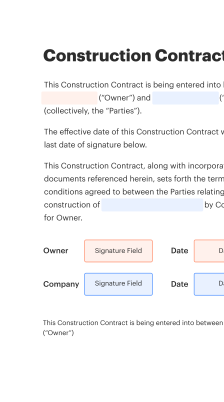
How stamped electronic signatures work in a signing workflow

A typical flow links document preparation, signer verification, stamp application, and secure storage to maintain integrity and evidence.

  • Upload file: Add the document to the signing platform.
  • Tag fields: Mark signature fields and stamp positions.
  • Verify identity: Require authentication before stamping.
  • Apply stamp: Embed the visible mark and metadata.
Collect signatures
24x
faster
Reduce costs by
$30
per document
Save up to
40h
per employee / month

Step-by-step: applying a stamp electronic signature

A concise workflow for preparing, applying, and preserving a stamped electronic signature for a single document.

  • 01
    Prepare document: Confirm fields, signers, and retention rules.
  • 02
    Place stamp: Insert visible stamp and metadata field.
  • 03
    Authenticate signer: Use chosen identity verification method.
  • 04
    Complete and archive: Finalize signature and store audit records.
be ready to get more

Why choose airSlate SignNow

  • Free 7-day trial. Choose the plan you need and try it risk-free.
  • Honest pricing for full-featured plans. airSlate SignNow offers subscription plans with no overages or hidden fees at renewal.
  • Enterprise-grade security. airSlate SignNow helps you comply with global security standards.
illustrations signature

Configuring a stamped signature workflow: recommended settings

Recommended technical and administrative settings that support consistent stamping, identity assurance, and record retention in daily operations.

Setting Name Configuration
Reminder Frequency 48 hours
Authentication Method Email OTP
Retention Policy 7 years
Automatic Archival Enabled
Bulk Send Batch Size 500 recipients

Supported platforms and minimum requirements

Stamped electronic signature workflows require modern browsers, current mobile OS versions, and stable internet connections for secure operation.

  • Desktop browsers: Chrome, Edge, Safari
  • Mobile operating systems: iOS 13+ and Android 8+
  • Network requirements: TLS-enabled internet

For enterprise deployments, administrators should also verify corporate firewall rules, SSO compatibility, and mobile device management policies to ensure stamping features function across environments.

Security measures commonly applied to stamp electronic signatures

Encryption: AES-256 at rest
Transport Security: TLS 1.2+ in transit
Authentication: Multi-factor options
Tamper Detection: Cryptographic hashing
Access Controls: Role-based permissions
Audit Trail: Time-stamped event logs

Practical use cases for stamped electronic signatures

These case examples show how stamped electronic signatures support common business processes while preserving compliance and auditability.

Mortgage Closing

A lender applies a certified stamp to loan documents to record approval and sign-off

  • Stamp metadata includes signer identity and timestamp for settlement
  • The stamp links to a tamper-evident audit trail for regulatory review

Resulting in clearer closing records and reduced paper handling during funding

University Consent Forms

A university issues consent and release forms with a departmental stamp to indicate official review

  • Departments require signer authentication and retention for FERPA compliance
  • The stamped documents are archived with searchable metadata for the registrar and compliance teams

Leading to centralized records and faster responses to student records requests

Best practices for secure and compliant stamped electronic signatures

Adopt clear policies, consistent technical controls, and documented procedures to make stamped electronic signatures reliable and defensible.

Use risk-based identity verification and authentication
Match signer authentication methods to transaction risk by tiering verification requirements, using multi-factor authentication for sensitive transactions, and documenting chosen assurance levels in internal policy to support audits.
Maintain complete, tamper-evident audit trails
Ensure every stamped signature includes a time-stamped event log, signer context, and a cryptographic record to demonstrate integrity. Configure logs to be retained according to legal and business retention schedules.
Standardize stamps and templates across processes
Create approved stamp designs and templates to enforce consistent metadata, visual appearance, and placement. This reduces signer confusion and simplifies training, auditing, and retrieval of stamped documents.
Define retention and disposition policies clearly
Establish retention periods, archival locations, and deletion procedures for stamped records aligned with legal, tax, and industry-specific requirements, and automate enforcement where possible to reduce manual errors.

FAQs about stamp electronic signature

Answers to common questions about legal validity, setup, and verifying stamped electronic signatures in U.S. contexts.

Feature comparison: stamp electronic signature support

A concise comparison of stamp-related capabilities across common eSignature providers to help assess fit for compliance and integration needs.

Criteria signNow (Recommended) DocuSign Adobe Sign
Legal compliance (ESIGN/UETA)
Stamping capability Limited
API availability REST API REST API REST API
Mobile signing support
be ready to get more

Get legally-binding signatures now!

Risks from poor stamped signature handling

Noncompliance fines: Regulatory penalties
Data breach: Confidentiality loss
Audit failures: Record inconsistencies
Legal disputes: Signature authenticity questioned
Business delays: Process interruptions
Reputational harm: Trust erosion

Pricing and plan overview for stamped electronic signature tools

High-level plan names and typical entry-level characteristics to compare cost structure and feature availability across providers for stamping needs.

Plan Name / Provider signNow (Recommended) DocuSign Adobe Sign HelloSign PandaDoc
Entry-level plan Business Personal Small Business Essentials Essentials
Typical starting monthly cost Approx $8 per user Approx $10 per user Approx $14 per user Approx $15 per user Approx $19 per user
Bulk Send capability Available on paid plans Available on paid plans Limited on entry plans Available on paid plans Available on paid plans
API included Available via business plans Available via developer plans Available via enterprise Available on higher tiers Available on higher tiers
Free tier/trial Free trial available Free trial available Free trial available Free tier with limits Free eSign available

Streamline complex workflows

Create, perform, and maintain workflows of any difficulty, electronically from virtually anywhere. Scalable eSignature functionality enable you to share papers with the right people in the proper order and determine roles for each receiver. Stream document workflows faster and easier than ever before.

Automate document management

Improve complicated signing processes with airSlate SignNow�s effective capabilities to enhance your company. Take control of your automated signature workflows to make sure they're operating at top performance with fast notifications and alerts.

Optimize in team communication

Join teams together in a protected, shared workspace. Manage paperwork, use form templates and notifications to create more efficient cross-organization interaction. Free your employees from having to spend time on recurring routines so that they can focus on beneficial, business-essential tasks.

Integrate into your existing systems

Manage your tasks with best-in-class integration. Assemble Salesforce, Microsoft Teams, and SharePoint all in one business flow. Hook up your software to a single unit for countless possibilities and more efficiency.

Remain compliant with best-in-class data safety

Feel confident with the knowledge that your data is protected by the most up-to-date in encryption security. airSlate SignNow is GDPR and eIDAS certified and provides you exposure into your eSigning experience with court-admissible audit trails. Set up user access permissions and rights to regulate who has access to what.


walmart logo
exonMobil logo
apple logo
comcast logo
facebook logo
FedEx logo
be ready to get more

Get legally-binding signatures now!