Stamp Internal Audit Report Signature Block with SignNow

Eliminate paperwork and automate digital document management for increased performance and countless opportunities. Sign any papers from a comfort of your home, quick and feature-rich. Experience the perfect strategy for running your business with airSlate SignNow.

Award-winning eSignature solution

What the stamp internal audit report signature block is and why it matters

A stamp internal audit report signature block is an embedded electronic element placed on audit reports to record signer identity, role, date, and a tamper-evident seal. It standardizes approval presentation within the document and binds signature metadata to the file, preserving integrity during review cycles. In internal audit workflows the signature block captures attestations from auditors, reviewers, and approvers while generating a reliable audit trail. When implemented with secure eSignature platforms such as signNow, the stamp can include timestamps, authentication checks, and locked fields to meet organizational and regulatory requirements.

Why a formal signature block improves audit reliability

A consistent signature block reduces errors, documents accountable approvers, and creates a verifiable record that supports internal controls and compliance audits.

Why a formal signature block improves audit reliability

Common challenges when stamping audit reports

  • Inconsistent placement of handwritten stamps leads to unclear approval chains and delays when consolidating reports.
  • Paper-based signature pages require scanning and manual reconciliation, increasing risk of lost or altered records.
  • Lack of enforced signer authentication creates uncertainty about signer identity for critical audit approvals.
  • Insufficient audit trails make it difficult to demonstrate who signed, when, and what changes were made.

Representative user profiles for signature block workflows

Internal Auditor

An Internal Auditor uses the signature block to attest to audit procedures and findings. They require a tamper-evident seal, timestamp, and a preserved audit trail that links the signature to authentication events and the final PDF delivered to stakeholders.

Compliance Officer

A Compliance Officer reviews stamped audit reports to verify approvals meet policy and regulatory standards. They depend on consistent stamp formatting, role designation in the signature block, and searchable records for periodic internal and external reviews.

Teams that commonly use the stamp internal audit report signature block

Internal audit teams, compliance functions, and control owners rely on standardized signature blocks to maintain clear approval records.

  • Internal audit groups responsible for financial, operational, and IT audits requiring formal sign-off documentation.
  • Compliance and risk teams that verify approvals against policies and regulatory frameworks.
  • Finance and operations stakeholders who must retain auditable sign-off history for governance.

Standardizing the signature block helps these groups reduce reconciliation work and strengthens evidentiary support during reviews or external examinations.

Advanced capabilities that enhance stamped signature block use

Beyond basic stamping, these features improve control, scalability, and audit readiness for internal audit processes.

Flexible Placement

Allow administrators to define exact coordinates, page anchoring rules, and dynamic placement logic so the stamp appears reliably across varied report templates and multi-page documents without manual repositioning.


Date/Time Stamp

Apply authoritative timestamps from the signing system to each stamp that record the precise signing moment, supporting time-based audit evidence and sequence verification for multi-step approvals.

Role Tags

Attach signer role metadata to each stamp so the final document clearly shows position titles and responsibilities, simplifying compliance reviews and internal control validation procedures.

Conditional Fields

Use conditional logic to reveal or require additional fields in the stamp block based on auditor responses, risk levels, or report type, ensuring relevant attestations are captured consistently.

Bulk Apply

Apply the same stamped signature block across many files or recipients in a single automated operation, reducing manual work for recurring audit cycles and standardized report sets.

Version History

Track template and document edits with a clear version log so auditors can trace when stamp templates changed and validate which template was applied to a signed report.

be ready to get more

Choose a better solution

Core tools for managing the stamp internal audit report signature block

Key capabilities make implementation reliable: configurable stamp fields, field locking, authentication options, and reusable templates tuned to audit requirements.

Custom Stamp

Create a branded, role-aware block that captures signer name, role, date, and optional comments while allowing standardized placement across templates.

Field Locking

Once the block is signed, lock associated fields to prevent edits and ensure the stamped page remains unchanged during storage or distribution.

Authentication Options

Support password, SMS OTP, or two-factor methods to verify signer identity consistent with organizational security policies and audit requirements.

Reusable Templates

Save approved templates that include the signature block, required approver roles, and field validations to speed future audit cycles and maintain consistency.
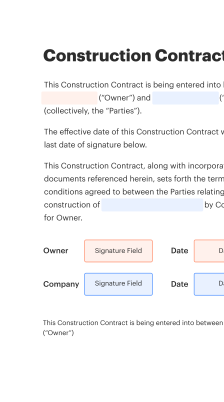
How stamping and signing flows typically operate

A concise workflow shows the typical lifecycle from upload to an auditable signed document.

  • Upload: Add the audit report PDF to the eSignature service
  • Place Stamp Field: Configure the signature block with role and field rules
  • Authenticate: Signers verify identity using the chosen method
  • Record Audit Trail: System logs events, timestamps, and finalizes the file
Collect signatures
24x
faster
Reduce costs by
$30
per document
Save up to
40h
per employee / month

Step-by-step: applying the stamp internal audit report signature block

Follow these primary steps to place and finalize a signature block in an audit report using an eSignature platform.

  • 01
    Prepare Document: Finalize report content and confirm version control
  • 02
    Insert Stamp: Place the signature block where approvals are required
  • 03
    Assign Signers: Designate roles and authentication methods for each signer
  • 04
    Lock and Archive: Lock fields after signing and store the final PDF securely
be ready to get more

Why choose airSlate SignNow

  • Free 7-day trial. Choose the plan you need and try it risk-free.
  • Honest pricing for full-featured plans. airSlate SignNow offers subscription plans with no overages or hidden fees at renewal.
  • Enterprise-grade security. airSlate SignNow helps you comply with global security standards.
illustrations signature

Recommended workflow settings for stamp signature block processing

Configure workflow defaults to enforce approval order, authentication, and retention aligned with audit policy.

Workflow Setting Name and Purpose Default configuration values for setup
Signature Reminder Frequency Notification Window 48 hours default, reminders every two days
Signer Authentication Method and Policy Require SSO or SMS OTP for external signers
Stamp Placement Enforcement and Validation Rules Validate coordinates and prevent overlap with critical text
Template Locking and Version Control Settings Lock templates; record version history on edits
Audit Trail Retention Period and Storage Retain logs for seven years in encrypted storage

Supported platforms and file requirements for stamping

The stamp internal audit report signature block works across modern browsers, mobile apps, and desktop clients when documents meet basic format requirements.

  • Web Browser Support: Latest Chrome, Edge, Safari
  • Mobile Applications: iOS and Android apps
  • Supported File Types: PDF, Word, and common formats

For reliable rendering, use flattened PDFs for final storage, confirm fonts are embedded, and validate that any redaction or form-flattening operations occur before applying the signature block to prevent visual or metadata inconsistencies.

Security features relevant to stamped signature blocks

AES-256 Encryption: At-rest and in-transit encryption
Tamper-evident seals: Integrity checks on finalized files
Access logs: Detailed sign and view records
Two-factor authentication: Optional signer verification step
Role-based access: Permissions scoped by role
Secure storage: SOC 2 compliant storage

Practical examples showing how a stamped signature block is used

Two concise case summaries demonstrate how organizations apply an electronic stamp to internal audit reports to improve control, traceability, and timeliness.

Case Study 1

A regional bank replaced paper sign-offs with an embedded stamp for loan review reports, ensuring each approval includes signer role and time metadata

  • The stamp field enforces signer identity and locks the report after signing
  • This removed manual reconciliation and reduced approval cycle time by visible metrics

Resulting in clearer audit evidence and faster internal reviews.

Case Study 2

A healthcare compliance team standardized a signature block across audit templates to capture HIPAA-related attestations and reviewer credentials

  • The signature block required multi-factor authentication and appended a tamper-evident seal
  • That approach improved confidence in signer identity and ensured consistent documentation for inspections

Leading to streamlined compliance reporting and auditable trails retained for retention periods.

Best practices for secure and accurate signature blocks

Adopt standard formats and controls to strengthen audit evidence, reduce errors, and simplify retrieval.

Standardize stamp layout across reports
Define a single approved layout including signer role, timestamp format, and location to make approvals instantly recognizable and searchable across audit documentation.
Require strong signer authentication
Use multi-factor or organization SSO for approvers to tie signatures to verified identities and reduce risk of unauthorized approvals.
Lock fields after final sign-off
Configure the signature block to lock document fields post-signing; maintain a sealed, tamper-evident final file for retention and evidentiary purposes.
Retain searchable audit trails
Ensure event logs include signer identity, method, IP address, and timestamps; index those records for internal review and regulatory inspection.

FAQs and troubleshooting for the stamp internal audit report signature block

Common questions and solutions when applying, signing, or validating stamped signature blocks in audit reports.

Capability comparison for stamped signature block support

Compare key technical capabilities across leading eSignature providers that support electronic stamp and audit workflows.

Feature or Criteria Compared Across Vendors signNow (Recommended) DocuSign Adobe Sign
Stamp field placement consistency
Tamper-evident seal support
API access for stamping automation REST API available REST API available REST API available
Bulk stamp deployment capabilities Bulk Send available Bulk Send available Limited batch tools
be ready to get more

Get legally-binding signatures now!

Risks of improper stamping or weak signature blocks

Noncompliance fines: Possible monetary penalties
Invalidated audits: Remediation and rework required
Data integrity loss: Undetected alterations risk
Reputational damage: Stakeholder trust erosion
Operational delays: Extended approval cycles
Legal exposure: Challenges in court evidence

Pricing snapshot for signing and stamping features

A brief pricing and packaging snapshot to understand baseline costs for stamping and API use among common providers.

Pricing Tier Comparison signNow (Recommended) DocuSign Adobe Sign OneSpan Sign HelloSign
Starting Monthly Price $8 per user per month $10 per user per month $14.99 per user per month Contact sales for pricing $15 per user per month
API access cost Included on business plans, metered calls Requires API plan Requires API plan Enterprise pricing applies Included on paid plans
Enterprise discount availability Volume discounts available Discounts for enterprise Negotiable for volume Negotiable enterprise deals Volume pricing offered
Free trial or pilot 14-day trial available Limited trial 30-day trial Pilot via sales 14-day trial
Security add-on cost Advanced security included on higher-tier plans Additional modules priced Included in enterprise Add-on priced per feature Included on premium plans

Simplify complex workflows

Create, execute, and manage workflows of any complexity, electronically from virtually anywhere. Scalable eSignature capabilities allow you to share documents with the right people in the correct order and define roles for each recipient. Execute document workflows faster and easier than ever before.

Automate document management

Optimize complex signing processes with airSlate SignNow’s powerful features to enhance your business. Control your automated eSignature workflows to ensure they're running at peak performance with instant notifications and reminders.

Optimize in team collaboration

Bring teams together in a secure, shared environment. Manage documents, use form templates and notifications to create more efficient cross-organization collaboration. Free your employees from having to spend time on repetitive activities so that they can focus on valuable, business-critical tasks.

Integrate into your existing systems

Run your projects with industry-leading integration. Collect Salesforce, Microsoft Teams, and SharePoint all in one business flow. Connect your software to a single system for endless possibilities and more efficiency.

Stay compliant with best-in-class data security

Feel confident with the knowledge that your information remains secure by the latest in encryption security. airSlate SignNow is GDPR and eIDAS certified and gives you awareness into your signing experience with court-admissible audit trails. Set up user authorization and rights to regulate who has access to what.


walmart logo
exonMobil logo
apple logo
comcast logo
facebook logo
FedEx logo
be ready to get more

Get legally-binding signatures now!