Type Electronic Signature with SignNow

Get rid of paperwork and improve document management for increased performance and countless opportunities. Experience the perfect way of doing business with airSlate SignNow.

Award-winning eSignature solution

What a type electronic signature means in practice

A type electronic signature is an electronic representation of a signer's intent created by typing a name, initials, or other identifying text into an electronic form or signature field. It is one of several eSignature methods widely used to execute contracts, acknowledgment forms, and administrative documents. In U.S. legal contexts, a typed signature can satisfy ESIGN and UETA requirements when connected to reliable authentication, clear intent, and an auditable record. Implementation should pair typed signatures with appropriate controls to preserve integrity and evidentiary value.

Why typed electronic signatures are commonly used

Typed electronic signatures simplify signature capture for remote signers, reduce processing time, and integrate cleanly with digital workflows while meeting ESIGN and UETA criteria when properly authenticated and recorded.

Why typed electronic signatures are commonly used

Common challenges with typed electronic signatures

  • Authenticity concerns when identity verification is minimal, increasing dispute risk if not paired with authentication measures.
  • Potential for unauthorized use if form controls and access restrictions are weak or improperly configured.
  • Document integrity questions if the signed file lacks tamper-evidence, audit trail, or cryptographic seals.
  • Inconsistent acceptance across counterparties when contract terms or regulatory regulators expect higher-assurance signature methods.

Typical user roles for typed electronic signatures

Administrator

IT or operations administrators configure signature policy, access controls, and audit settings for typed electronic signatures across the organization. They balance usability with required authentication and ensure logging and retention meet legal and regulatory policies.

Signer

End users or customers who type their name into a signature field to indicate agreement. Signers must be authenticated appropriately and provided with clear consent language and an auditable confirmation of their action.

Who relies on typed electronic signatures and why

Organizations that need fast, low-friction signatures for routine approvals often choose typed electronic signatures for convenience and ease of use.

  • Small business contracts and vendor acknowledgments with low legal risk.
  • Internal HR approvals and administrative consents where speed matters.
  • Customer intake forms and low-value sales agreements requiring quick completion.

For higher-risk or regulated transactions, typed signatures are frequently supplemented with stronger authentication, audit logging, and policy controls to meet compliance needs.

Additional features to enhance typed signature workflows

Beyond core tools, several advanced features help scale typed signature processes across teams and compliance environments.

Bulk Send

Enables sending the same document to many recipients with individualized fields, reducing manual effort for mass acknowledgments or routine renewals while tracking responses centrally.


Templates

Reusable templates store field placements, roles, and routing logic so common agreements can be generated and executed quickly without repetitive setup work.

Conditional fields

Fields that appear or change based on prior responses allow forms to adapt to signer inputs and reduce errors in data collection and legal language.

Role-based routing

Automated routing ensures documents move to the right parties in sequence or parallel, enforcing approval hierarchies and auditability in multi-step processes.

API access

Programmatic integration lets developers embed typed signature flows into web apps and business systems, providing a consistent signing experience and centralized control.

Retention policies

Configurable retention and deletion schedules help organizations meet recordkeeping obligations while managing storage and privacy requirements.

be ready to get more

Choose a better solution

Core tools to support typed electronic signatures

Implementing typed signatures effectively depends on several platform features that together preserve legal value and operational efficiency.

Signature fields

Customizable signature fields allow administrators to require typed names, initials, or checkboxes and to place those fields precisely in contracts so signer intent is explicit and clearly associated with the document content.

Authentication options

Multiple signer authentication methods, such as email verification, SMS codes, or knowledge-based checks, let organizations match assurance level to transaction risk while maintaining a usable signing flow for end users.

Audit log

A timestamped audit log records all signing events, IP addresses, device details, and document versions to create an evidentiary trail that supports enforceability under ESIGN and UETA when maintained properly.

Document locking

Post-signature document locking prevents edits after execution, ensuring tamper evidence; combined with secure storage, it reduces the likelihood of later disputes about content and authenticity.
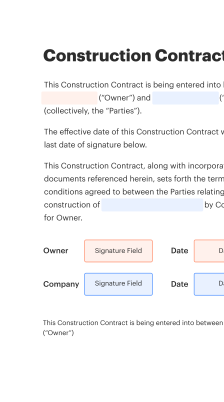
How a typed electronic signature is processed

This sequence describes the common technical flow from document preparation to final storage for a typed electronic signature transaction.

  • Document setup: Upload file and add signature fields.
  • Signer invitation: Send secure link to the signer.
  • Signing action: Signer types name and confirms intent.
  • Completion: Generate signed PDF and audit record.
Collect signatures
24x
faster
Reduce costs by
$30
per document
Save up to
40h
per employee / month

Quick steps to collect a typed electronic signature

Follow these basic steps to request and capture a typed electronic signature while maintaining a minimal audit trail and authentication.

  • 01
    Prepare document: Insert signature field and consent language.
  • 02
    Authenticate signer: Use email link or single-factor verification.
  • 03
    Capture signature: Signer types name in the designated field.
  • 04
    Record evidence: Store timestamp, IP, and signed PDF.

Detailed signing flow for a typed electronic signature

A more detailed grid of steps clarifies responsibilities and expected outputs during a typed signature transaction.

01

Upload document:

Prepare the file and fields
02

Assign roles:

Designate signer and reviewers
03

Set authentication:

Choose verification method
04

Send invitation:

Deliver secure signing link
05

Signer action:

Type name and confirm
06

Finalize:

Lock file and create audit PDF
be ready to get more

Why choose airSlate SignNow

  • Free 7-day trial. Choose the plan you need and try it risk-free.
  • Honest pricing for full-featured plans. airSlate SignNow offers subscription plans with no overages or hidden fees at renewal.
  • Enterprise-grade security. airSlate SignNow helps you comply with global security standards.
illustrations signature

Recommended workflow settings for typed signatures

These settings provide a balanced starting point for workflows that use typed electronic signatures, emphasizing traceability and reasonable signer verification.

Setting Name Configuration
Authentication Level Email + IP logging
Reminder Frequency 48 hours
Expiration Window 30 days
Document Locking Immediate after signing
Audit Retention 7 years

Platform and device requirements for typed electronic signatures

Typed electronic signatures require only a web-capable device and a modern browser or the platform's mobile app to capture a typed name reliably.

  • Desktop browsers: Chrome, Edge, Safari supported
  • Mobile support: iOS and Android apps
  • PDF output: Standard PDF/A generation

Ensure access controls, TLS transport, and server-side signing services are configured for your chosen devices; test each environment for correct timestamping, audit capture, and PDF rendering to maintain evidentiary quality.

Security layers to protect typed electronic signatures

Authentication: Multi-factor or email verification
Audit trail: Comprehensive event logging
TLS encryption: In-transit document protection
At-rest encryption: Encrypted storage of files
Access controls: Role-based permissions
Tamper evidence: Hashing and seals

Practical examples of typed electronic signature use

These short case examples show how typed electronic signatures work within common U.S. business processes and the controls used to support them.

HR Onboarding

A mid-size employer collects form W-4 and policy acknowledgments using typed signatures in an onboarding portal to speed processing

  • signature fields auto-capture typed name and timestamp
  • paired with employer-issued email verification for signer identity

Leading to faster completion and an auditable employee record suitable for routine HR administration.

Low-value Sales Contract

A SaaS provider accepts typed signatures on subscription agreements during online checkout to reduce friction

  • the checkout flow records the typed name, IP address, and device metadata
  • combined with confirmation emails and stored PDFs for evidence

Resulting in reduced cart abandonment while retaining a defensible transaction record for billing and support.

Best practices for secure and reliable typed electronic signatures

Follow these operational and technical practices to reduce dispute risk and preserve legal validity when using typed electronic signatures.

Match assurance level to transaction risk
Assess the legal and financial stakes of each document and choose authentication methods accordingly; low-risk forms may use email verification, while higher-risk agreements should require multi-factor or identity-proofing measures.
Maintain clear consent language
Present concise instructions and explicit consent language near the signature field so signers understand they are creating a legally binding electronic signature under ESIGN and UETA.
Preserve immutable evidence
Generate a tamper-evident signed PDF and retain a complete audit log that includes timestamps, IP addresses, and device metadata to support enforceability and dispute resolution.
Apply role-based controls and retention
Limit configuration access to administrators, enforce retention policies for signed records, and regularly review permission settings to prevent unauthorized template or policy changes.

FAQs and troubleshooting for typed electronic signatures

Common questions about typed electronic signatures with concise troubleshooting guidance for implementation and compliance.

be ready to get more

Get legally-binding signatures now!

Retention and regulatory timing considerations

Key dates and retention guidelines to align typed signature records with business and regulatory needs.

Document retention period:

7 years recommended for contracts

Audit log retention:

Match document retention

Access review cadence:

Quarterly reviews

Certificate renewal timeline:

Annual verification

Record disposal window:

After retention expires

Risks and potential legal consequences

Contract disputes: Invalidation risk
Regulatory fines: Compliance exposure
Data breaches: Liability costs
Reputational harm: Loss of trust
Operational delays: Process interruptions
Evidence gaps: Weak audit trail

Simplify complex workflows

Create, deliver, and control workflows of any difficulty, digitally from virtually anywhere. Scalable eSignature features allow you to share documents with the right people in the proper way and assign roles for each signee. Complete document workflows faster and simpler than ever before.

Automate document managing

Enhance sophisticated signing tasks with airSlate SignNow�s highly effective capabilities to boost your company. Take control of your automated signature workflows to make sure they're running at maximum performance with instant notices and reminders.

Enhance in team communication

Bring teammates together in a safe, shared workspace. Handle documents, use form templates and notices to produce better cross-company interaction. Free your workers from having to hang out on repeated routines to enable them to focus on valuable, business-critical projects.

Integrate into your current network

Work your assignments with industry-leading integration. Assemble Salesforce, Microsoft Teams, and SharePoint in multi functional business flow. Link up your software to a single unit for endless possibilities and higher productiveness.

Stay compliant with best-in-class data protection

Feel confident with the knowledge that your information remains secure by the most up-to-date in encryption security. airSlate SignNow is GDPR and eIDAS compliant and gives you transparence into your signing procedure with court-admissible audit trails. Configure user access permissions and roles to manage who has access to what.


walmart logo
exonMobil logo
apple logo
comcast logo
facebook logo
FedEx logo
be ready to get more

Get legally-binding signatures now!