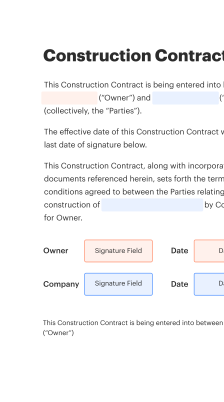
Underwrite Receiver Signature Service with SignNow
What underwrite receiver signature service is and how it works
Why organizations adopt underwrite receiver signature service
Using a designated underwrite receiver signature service reduces turnaround time and creates a verifiable, tamper-evident record of underwriting acknowledgements while preserving auditability and regulatory compliance for financial and insurance workflows.
Common operational and compliance challenges
- Inconsistent signer identity checks can lead to rejected signatures and regulatory exposure in lending or insurance processes.
- Poorly defined routing rules cause delays when underwriting approvals require multiple sequential authorizations across teams.
- Improper document formatting or missing fields increases rework and creates gaps in the audit trail for compliance reviews.
- Lack of integration with core systems forces manual uploads and duplicative recordkeeping, reducing operational efficiency.
Representative user profiles for the underwrite receiver signature service
Senior Underwriter
A senior underwriter reviews risk documentation and applies conditional approvals. They need a clear signature field, reliable identity verification, and a detailed audit trail to support regulatory reviews and internal escalations across loan or policy files.
Loan Processor
A loan processor prepares closing packages and coordinates third-party receiver signatures. They require predictable routing, document templates, and integration with loan origination systems to reduce manual steps and ensure complete, auditable records.
Typical teams and roles using underwrite receiver signature service
Risk, underwriting, and loan servicing teams use underwrite receiver signature service to record approvals and acknowledgements within regulated workflows.
- Underwriters and senior credit officers who must sign off on risk decisions and document acknowledgements.
- Loan processors and closing coordinators who collect signatures from third-party receivers or borrowers.
- Compliance and audit teams that review signature evidence and maintain retention records.
Usage spans financial services, insurance, real estate closings, and any regulated process needing traceable underwriting receipts and approvals.
Choose a better solution
Core features relevant to underwrite receiver signature service
Role-based routing
Define routing sequences by role and department so underwriter actions follow prescribed approval paths and receivers are prompted in the correct order, simplifying multi-step document flows.
Identity verification
Support for email, SMS, knowledge-based checks, and configurable MFA provides multiple authentication levels to meet internal policies and ESIGN/UETA expectations for signer intent.
Audit trail
Comprehensive event logs capture signer IP, timestamps, and field interactions to create a defensible record for audits and dispute resolution, with exportable reports.
Template library
Reusable templates let teams standardize underwriting forms, pre-place signature and data fields, and reduce errors when preparing recurring acknowledgement packets.
How the signing flow operates in practice
-
Generate envelope: Create a packet with required documents.
-
Assign signers: Attach roles and verification methods.
-
Collect signature: Signers authenticate and apply signatures.
-
Record and store: System timestamps and archives final record.
Quick setup steps for underwrite receiver signature service
-
01Prepare document: Upload and designate signature and data fields.
-
02Define roles: Assign underwriter, approver, and receiver roles.
-
03Set authentication: Choose email, SMS, or MFA verification.
-
04Publish workflow: Enable routing, reminders, and retention policy.
Why choose airSlate SignNow
-
Free 7-day trial. Choose the plan you need and try it risk-free.
-
Honest pricing for full-featured plans. airSlate SignNow offers subscription plans with no overages or hidden fees at renewal.
-
Enterprise-grade security. airSlate SignNow helps you comply with global security standards.
Typical workflow configuration settings
| Workflow Setting Name and Configuration | Default configuration values used in setup |
|---|---|
| Signer Routing Order and Logic | Sequential routing by role with reminders |
| Reminder Frequency and Notifications | 48 hours with two reminder emails |
| Authentication Method for Receivers | Email token with optional SMS MFA |
| Document Retention and Archive Policy | Retain signed PDFs for seven years |
| Field Validation and Mandatory Checks | Required fields enforced before send |
Supported devices and environment considerations
The underwrite receiver signature service works across desktop, tablet, and mobile devices; planning for platform requirements improves reliability.
- Modern desktop browsers: Chrome, Edge, Safari
- Mobile operating systems: iOS and Android supported
- Network and security needs: TLS-enabled networks
Ensure the organization's browser and mobile device management policies permit required cookies, pop-ups, and JavaScript; confirm that network firewalls allow TLS connections and that users have current OS versions to maintain compatibility and security.
Industry examples showing practical impact
Mortgage Underwriting Acknowledgement
A mid-sized mortgage lender needed a faster way to capture underwriter acknowledgements on loan amendments without in-person signings.
- Implementation used role-based routing and SMS verification for receivers.
- The bank reduced turnaround time and eliminated paper courier costs while preserving legal evidence.
Resulting in faster closings and clearer audit trails for regulatory inspections.
Insurance Policy Endorsement Sign-off
An insurer required documented sign-off from underwriting managers on policy endorsements during renewals.
- The solution embedded signature fields and multi-factor authentication tied to employee directories.
- It simplified batch endorsements and ensured each signed change was timestamped and versioned.
Leading to streamlined renewal cycles and reliable compliance artifacts for state insurance examiners.
Recommended practices for secure and reliable signing
FAQs About underwrite receiver signature service
- Why did a signature become invalid during review?
Signatures can be deemed invalid if required authentication steps were skipped, a document was altered after signing, or the audit trail is incomplete. Verify the event log, confirm signer identity method, and check whether document versions changed after the final signature.
- Which authentication level is sufficient under ESIGN and UETA?
ESIGN and UETA require a reasonable method to identify signers and show intent; what is reasonable depends on transaction risk. Low-risk acknowledgements may rely on email tokens, while underwriting approvals often demand stronger verification such as MFA or government ID checks.
- How can I ensure documents are admissible in audits or disputes?
Preserve a complete audit trail including timestamps, signer IPs, verification events, and the final signed PDF. Store these artifacts in immutable storage and document retention policies aligned with regulatory requirements to maintain admissibility.
- What causes failed deliveries to receivers and how to fix them?
Failed deliveries often stem from incorrect email addresses, spam filtering, or network restrictions. Confirm recipient contact details, advise recipients to check spam folders, and ensure outbound emails originate from trusted domains with proper SPF/DKIM records.
- How do I integrate signing events with my loan or policy system?
Use the provider's API or native connectors to push signed documents and metadata into loan origination or policy administration systems. Map field names consistently and implement webhooks for real-time status updates to avoid manual reconciliation.
- What retention period should be configured for signed underwriting records?
Retention depends on legal and business requirements; many financial institutions retain closed loan or underwriting records for seven years. Align retention with regulatory guidance, internal policies, and litigation hold procedures to ensure compliance.
Feature availability comparison: signNow and alternatives
| Feature and Three Vendor Columns | signNow (Recommended) | DocuSign | Adobe Sign |
|---|---|---|---|
| ESIGN and UETA compliance | |||
| Advanced identity verification | SMS/MFA | KBA and ID proof | ID proof and KBA |
| Bulk Send capability | |||
| Native document templates |
Get legally-binding signatures now!
Operational and legal risks to manage
Simplify complex workflows
Create, execute, and manage workflows of any complexity, electronically from virtually anywhere. Scalable eSignature capabilities allow you to share documents with the right people in the correct order and define roles for each recipient. Execute document workflows faster and easier than ever before.
Automate document management
Optimize complex signing processes with airSlate SignNow’s powerful features to enhance your business. Control your automated eSignature workflows to ensure they're running at peak performance with instant notifications and reminders.
Optimize in team collaboration
Bring teams together in a secure, shared environment. Manage documents, use form templates and notifications to create more efficient cross-organization collaboration. Free your employees from having to spend time on repetitive activities so that they can focus on valuable, business-critical tasks.
Integrate into your existing systems
Run your projects with industry-leading integration. Collect Salesforce, Microsoft Teams, and SharePoint all in one business flow. Connect your software to a single system for endless possibilities and more productiveness.
Stay compliant with best-in-class data security
Feel safe understanding that your data remains secure by the most up-to-date in encryption security. airSlate SignNow is GDPR and eIDAS compliant and offers you awareness into your eSigning process with court-admissible audit trails. Configure user access permissions and rights to control who has access to what.