Single Sign-On
SSO via SAML or OIDC enables centralized identity management and simplifies user provisioning while aligning dashboard access with corporate authentication policies and session controls.




A dashboard consolidates team settings and signing activity so administrators reduce administrative overhead, standardize templates, and quickly identify stalled agreements without inspecting individual user accounts.

A Team Manager configures team templates, assigns signing tasks, and reviews dashboard reports to track agreement progress. They enforce template standards, set recipient workflows, and escalate stalled transactions while coordinating with legal or compliance for approvals.
An IT Administrator manages user provisioning, single sign-on, API credentials, and enterprise security settings. They implement role-based permissions, monitor audit logs for suspicious activity, and ensure integrations follow organizational security policies.
Administrative and operational teams use dashboards to manage user access, monitor transactions, and enforce template standards across departments.
Dashboards provide role-appropriate views so each function gets relevant data without exposing unrelated user or document details.
SSO via SAML or OIDC enables centralized identity management and simplifies user provisioning while aligning dashboard access with corporate authentication policies and session controls.
Delegated admin roles allow distribution of administrative tasks across departments while preserving centralized oversight, reducing bottlenecks in user management and template publication.
Custom reports and scheduled exports provide operational metrics and compliance data for audits and internal reviews, helping teams measure turnaround times and signer engagement.
APIs enable programmatic user provisioning, document creation, and status polling so teams can embed signing workflows into internal systems and automate repetitive tasks.
Features like field locking, consent checkboxes, and predefined legal language support regulatory and industry requirements when combined with thorough audit trails.
Bulk Send, mass user updates, and mass template assignments reduce manual effort for high-volume sending and team management across departments.
Central template libraries let administrators publish, version, and lock templates so senders across the organization use consistent document structures and required fields without local edits.
Bulk user import, directory sync, and role assignment streamline onboarding and offboarding while preserving permissions and group memberships for team operations.
A unified queue displays pending, in-progress, and completed agreements with status indicators and elapsed times so administrators can prioritize follow-ups and reduce bottlenecks.
Built-in reports and CSV exports provide audit-ready records of activity, signer events, and template usage to support internal review and compliance requirements.

| Feature | Configuration |
|---|---|
| Reminder Frequency | 48 hours |
| Expiration Policy | 30 days |
| Signing Order | Sequential |
| Template Locking | Enabled |
| Audit Trail Retention | 7 years |
Dashboards are typically accessible from modern browsers on desktop and via mobile apps, with differences in full administrative capabilities across platforms.
For full administrative functions use a desktop browser; mobile apps support sending and light management but may limit bulk imports, advanced reporting, and some configuration settings.
A hospital uses the dashboard to assign consent forms to clinical teams and track completion times
Resulting in improved patient throughput and clearer compliance records.
A midmarket sales organization centralizes contract templates and bulk sends from the dashboard
Leading to shorter sales cycles and more consistent contract terms.
| Comparison Criteria and Vendors Header | signNow (Featured) | DocuSign | Adobe Sign |
|---|---|---|---|
| Bulk Send | |||
| Team Templates | |||
| Role-based permissions | Granular | Granular | Granular |
| API Access | REST API | REST API | REST API |
7 years standard archive
7 years exportable logs
Daily snapshot backups
Quarterly exports to secure storage
30-day recycle period
| Pricing and Feature Comparison | signNow (Featured) | DocuSign | Adobe Sign | PandaDoc | HelloSign |
|---|---|---|---|---|---|
| Monthly starting price | $8 per user, billed monthly | $20 per user, billed monthly | $40 per user, billed monthly | $19 per user, billed monthly | $15 per user, billed monthly |
| Enterprise plan availability | Available with custom terms and SSO | Enterprise accounts with custom pricing | Enterprise contracts with Adobe Sign | Enterprise options available | Enterprise plans available |
| Included storage and limits | Unlimited document storage for active accounts | Tiered storage by plan | Included storage with add-ons | Generous storage limits by tier | Storage included with limits |
| Support level | Email and priority support options | 24/7 enterprise support | Phone and enterprise support | Email and phone support | Email support with paid upgrades |
| Bulk send and team features | Bulk Send and team templates included in business tiers | Advanced sending features in higher plans | Team features in enterprise plans | Bulk sending available in paid tiers | Team templates available in paid tiers |
The Organization Admin Panel allows you to manage document turnover for all airSlate SignNow users within your enterprise as well as keep track of the activities and assets of your team. The organizational dashboard is only available to users who have an Enterprise subscription.
Select Organization Admin Panel towards the bottom of the left-hand sidebar of the airSlate SignNow web app.
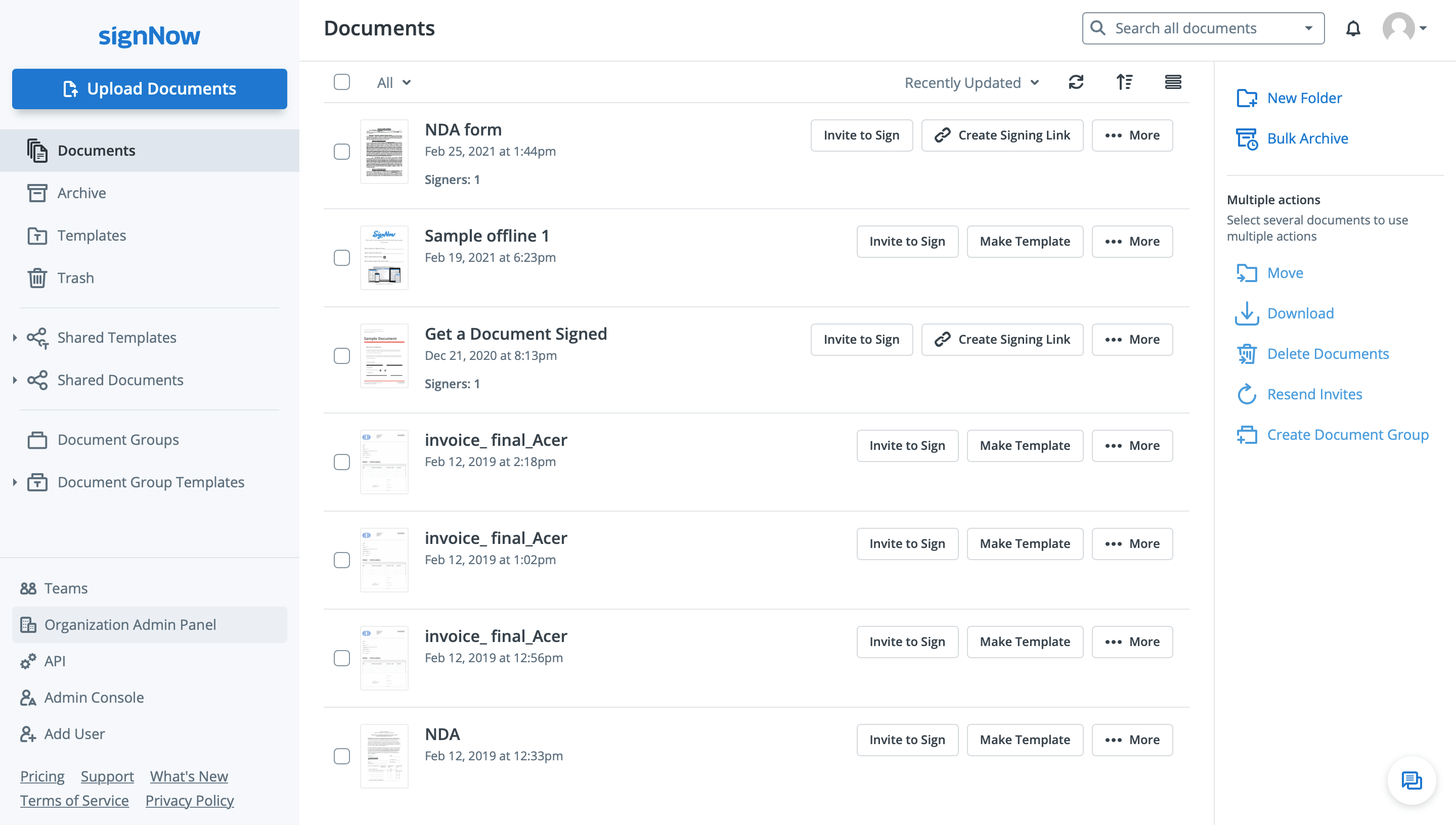
Choose your organization.
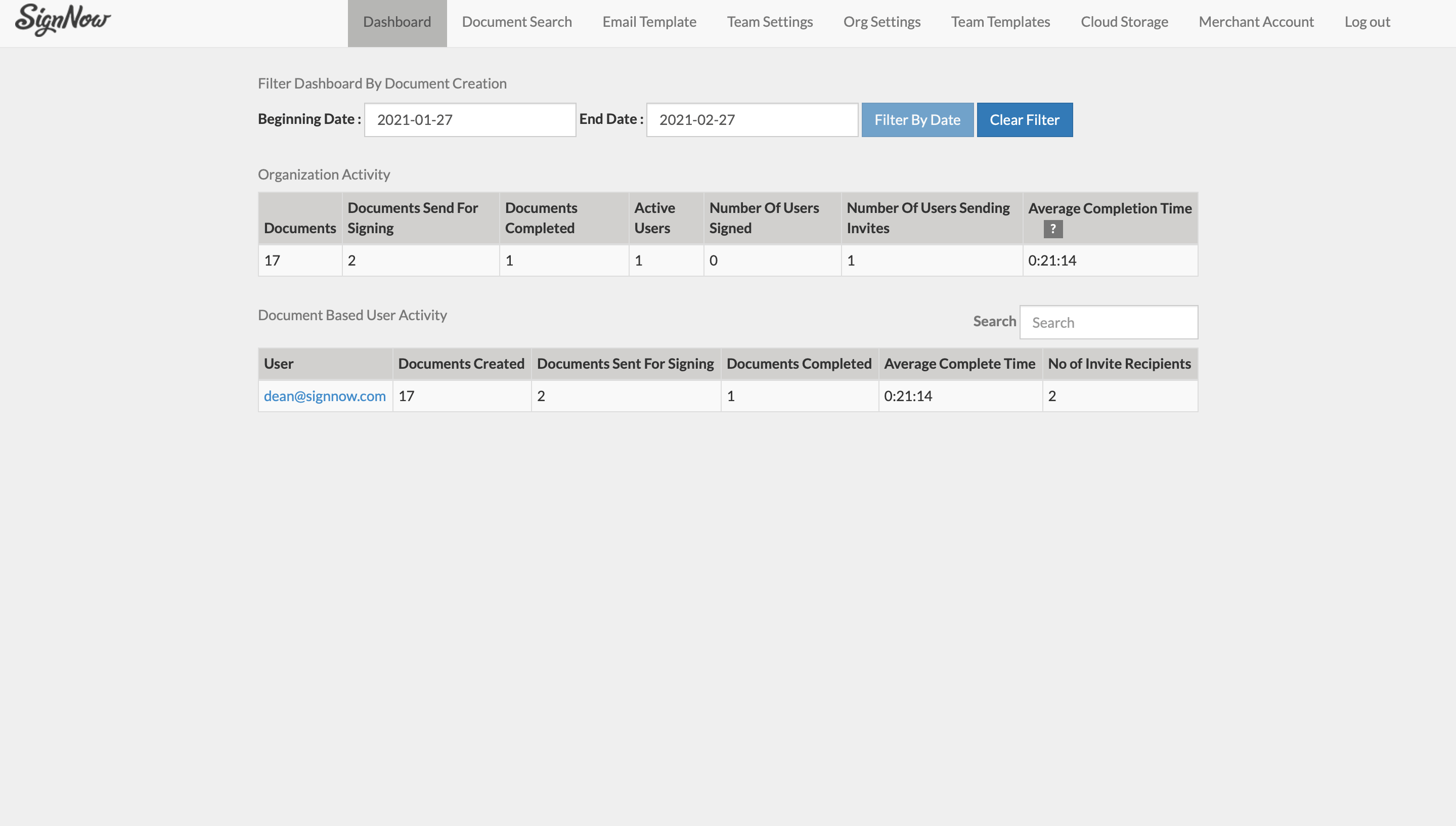
In the Dashboard tab, you can find various quantitative data about your organization’s document turnover (for example, the overall number of documents stored, the number of users who signed documents or who sent signing invites, and more).
To view more details, click on a user’s email address.
You can set up a date filter to see the stats for a specific period. To do so, enter a date range using the Beginning Date and End Date boxes.
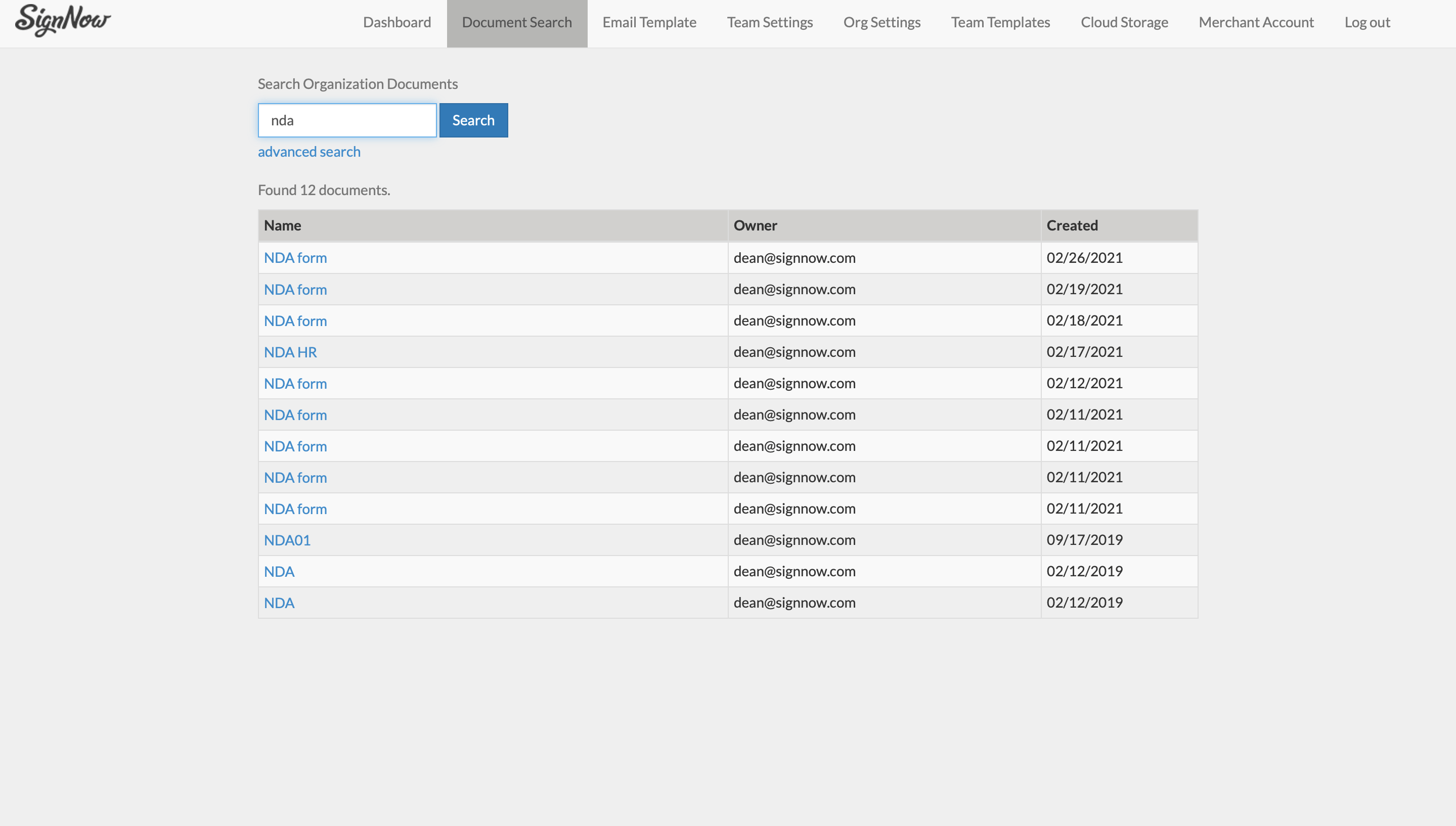
Go to the Document Search tab to find a specific document shared by your organization. Enter your keywords in the search box and click Search.
All documents that match your search request will be displayed in the table below. Click on any document to download it or view its history.
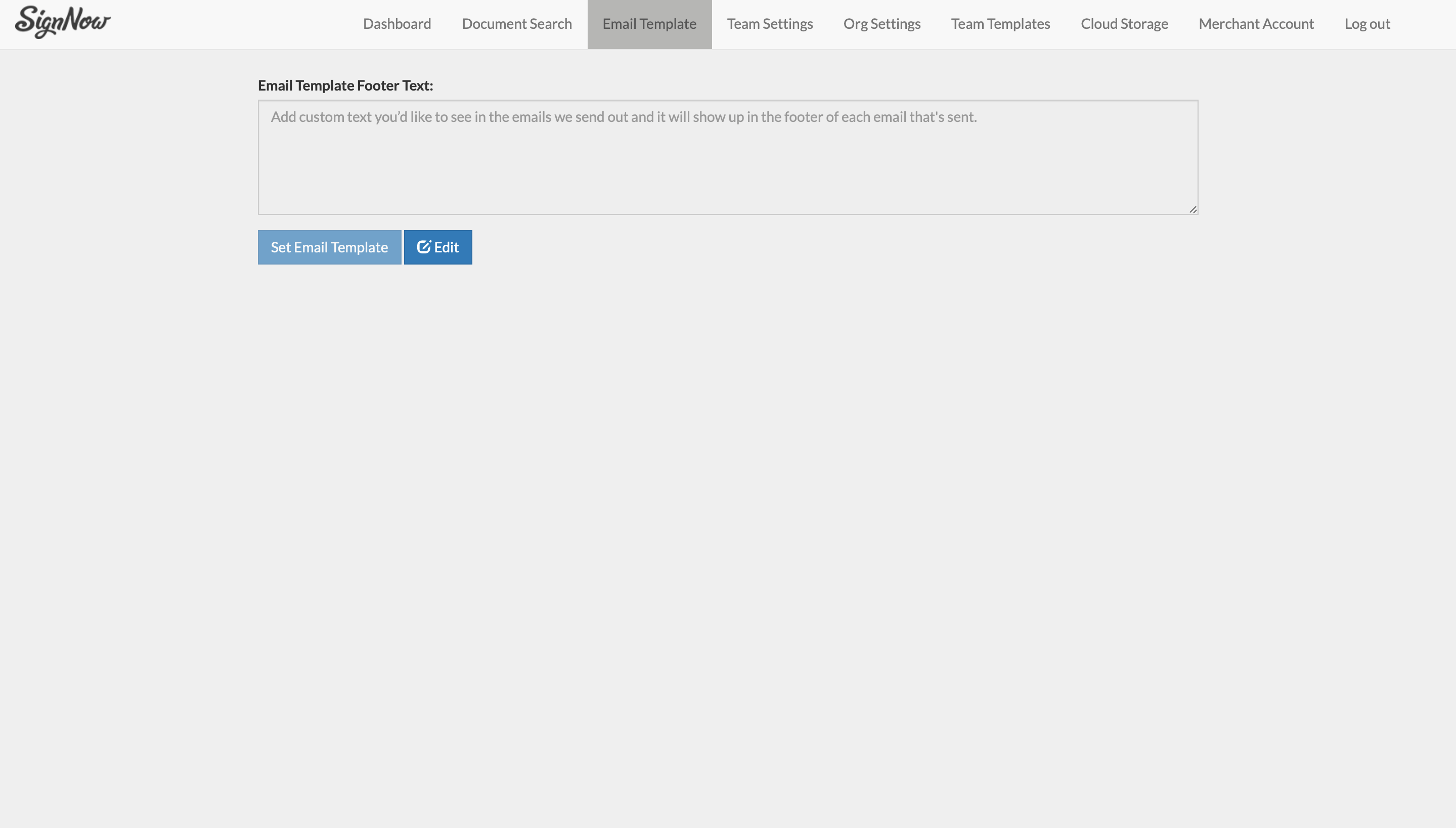
In the Email Template tab, you can edit the footer text that appears in every signing invite your organization sends via airSlate SignNow. Click the Edit button to change the text.
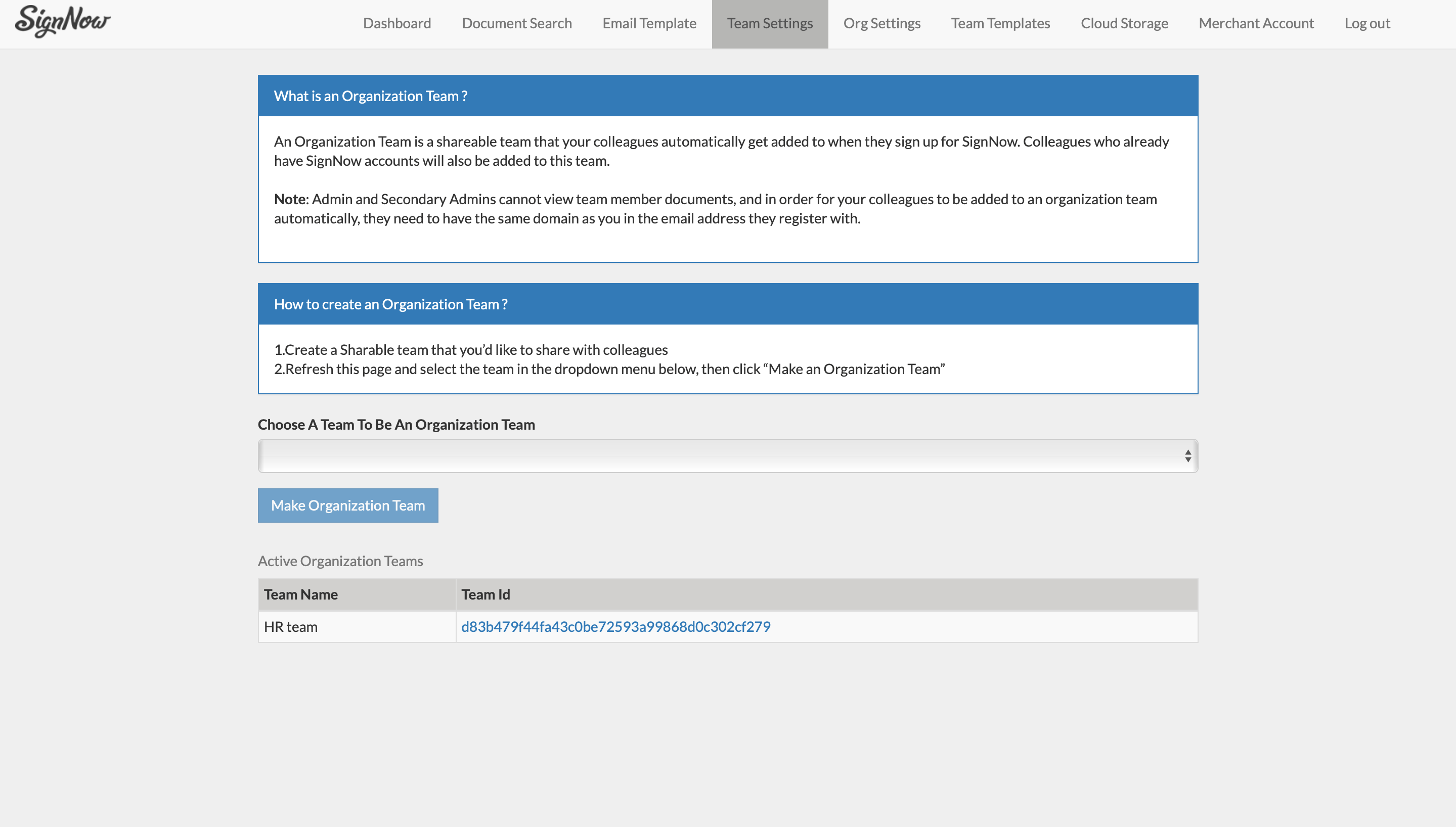
Head over to the Team Settings tab and choose your default organization team from the dropdown. Your colleagues will automatically be added to this team once they register for airSlate SignNow. Teammates who already have their accounts will also automatically join the team.
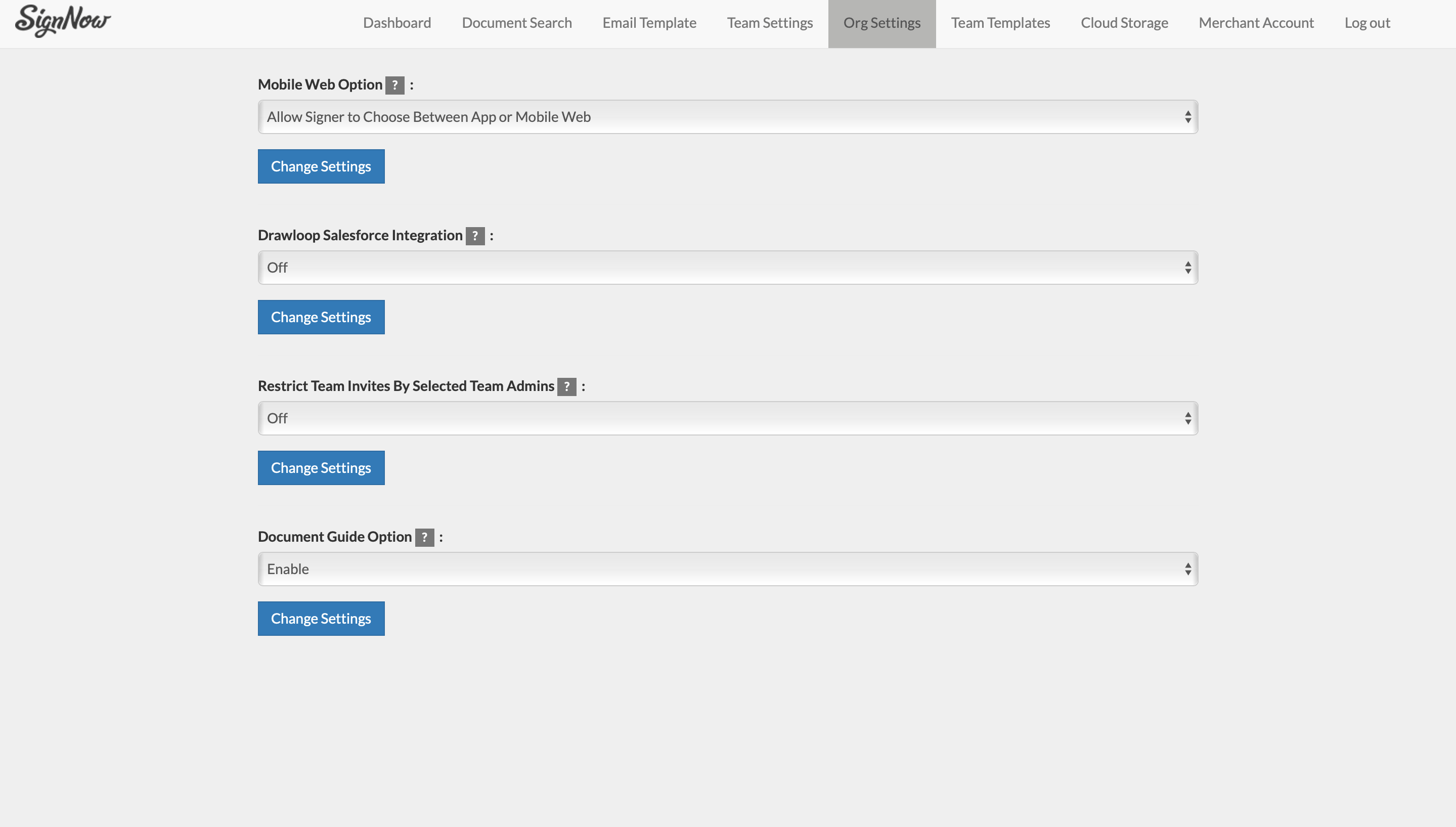
In the Org Settings tab, you can set a few other options that will apply to all airSlate SignNow users within your organization. Here you can restrict mobile web app usage, enable or disable the Drawloop for Salesforce integration, restrict team invites by selected team admins, or toggle the document wizard feature.
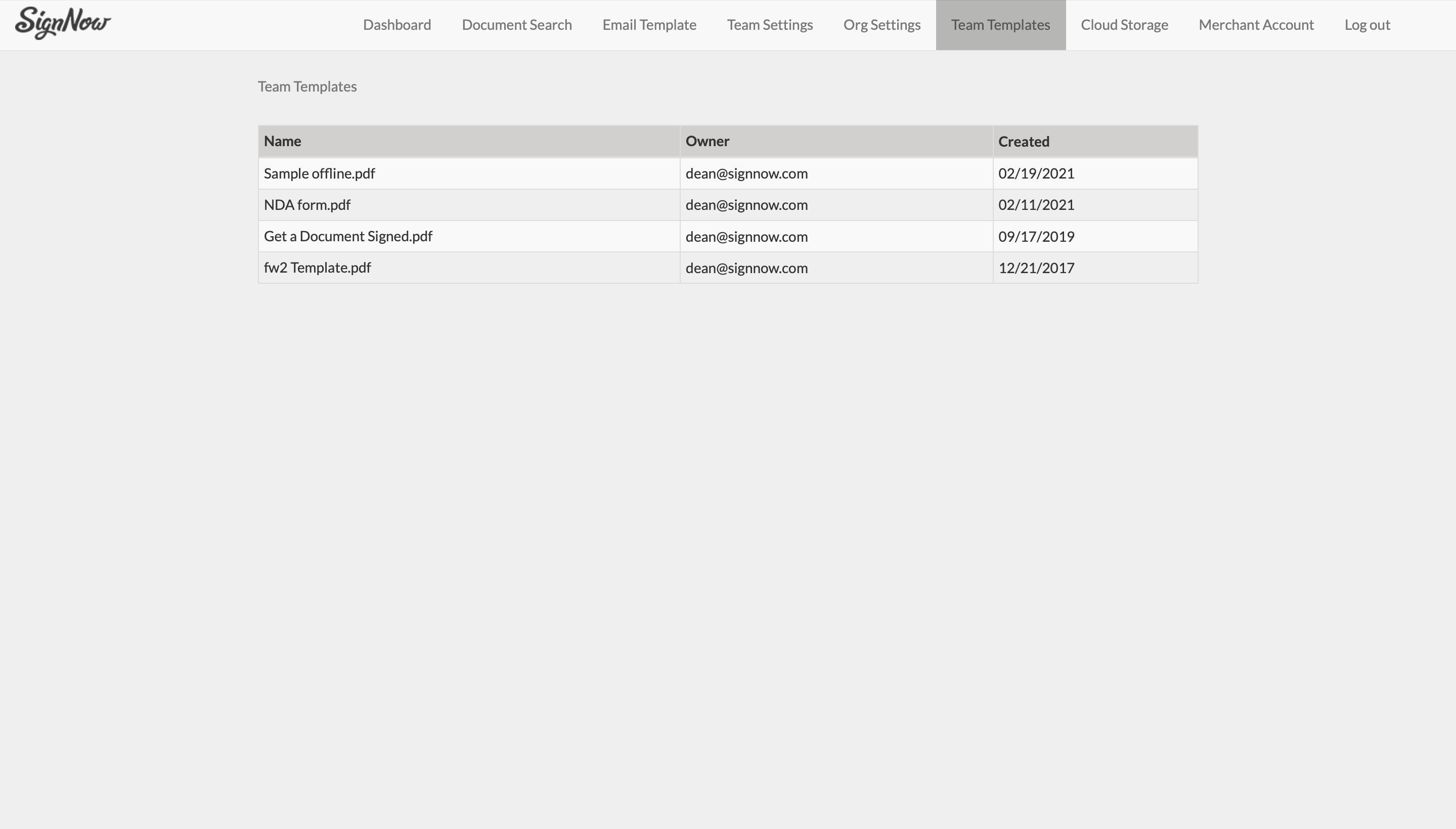
Check out the Team Templates tab to view all your shared templates.
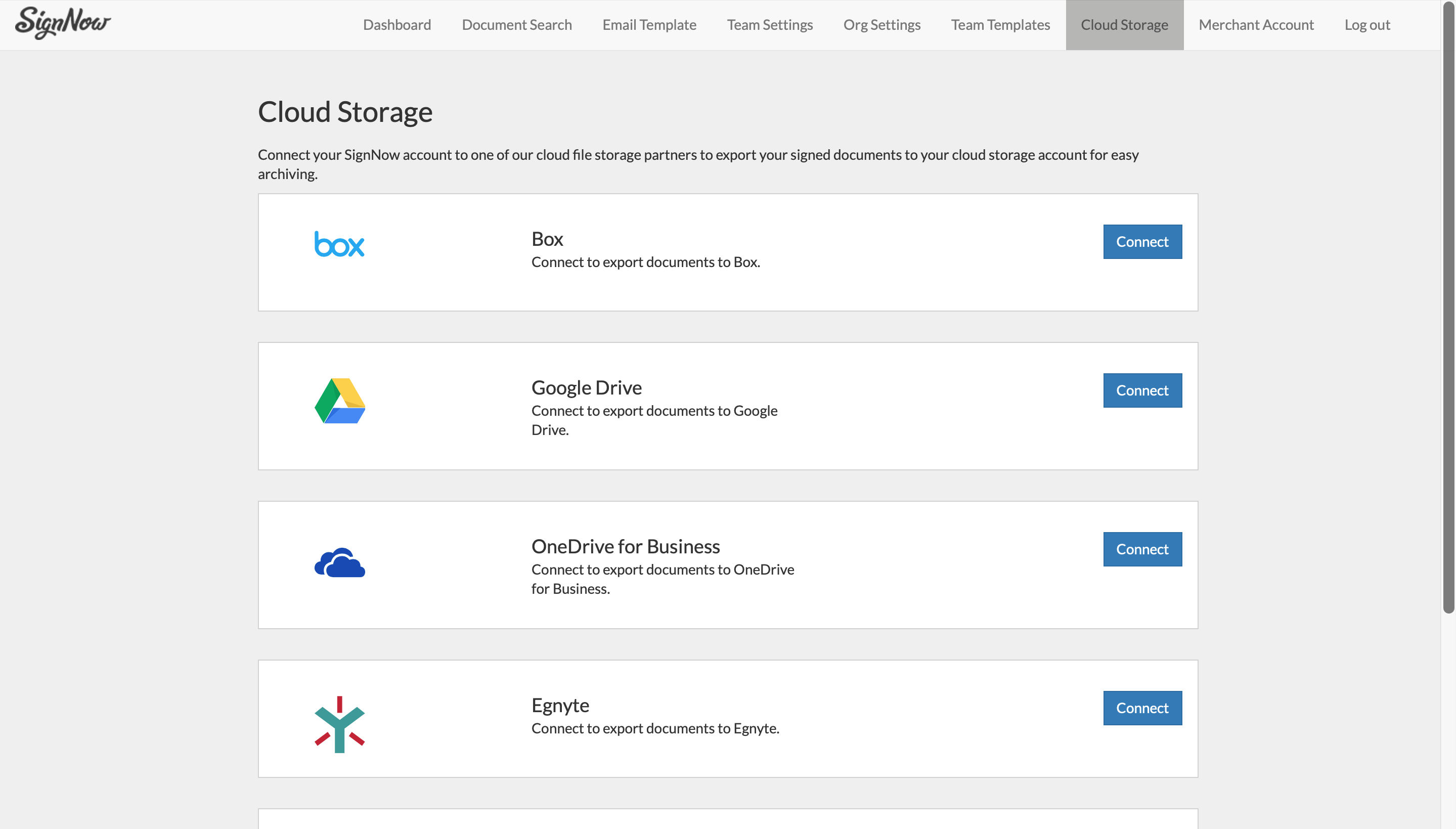
Open the Cloud Storage tab to review and manage your cloud integrations. With airSlate SignNow, you can export documents to any platform on the list. To enable the integration, click Connect next to the cloud provider you use.
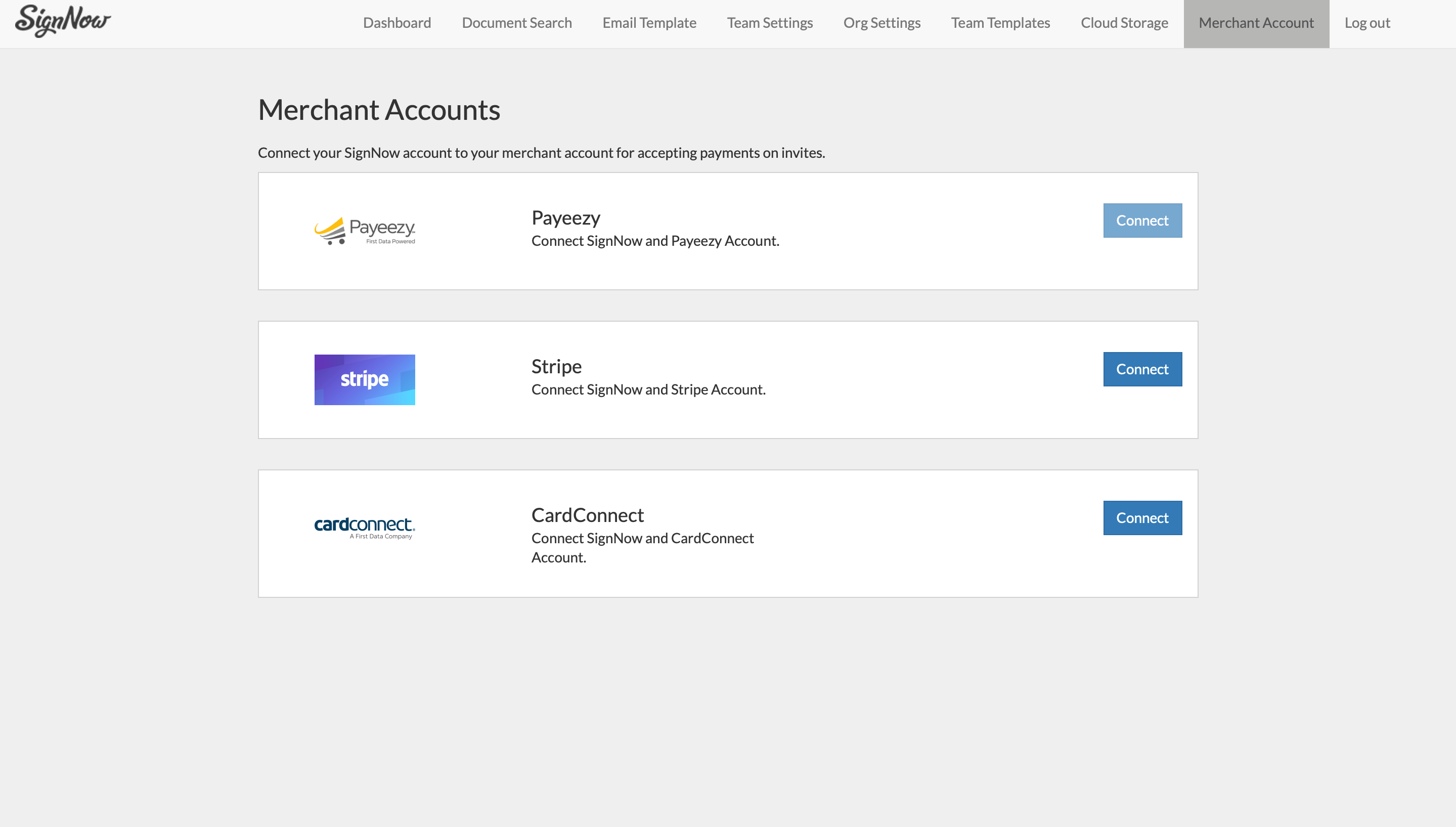
If you request payments upon signing documents, connect your preferred payment method in the Merchant Account tab.