Valid Electronic Signature for Secure Transactions

Remove paperwork and optimize document management for higher efficiency and endless possibilities. Discover the best manner of doing business with airSlate SignNow.

Award-winning eSignature solution

What a valid electronic signature means under U.S. law

A valid electronic signature is a reliable means of identifying a signer and expressing their intent to be bound by a record, accepted under U.S. statutes such as ESIGN and UETA. Validity depends on intent, consent to do business electronically, and an association between the signature and the signed record. Technical controls, an audit trail, and the ability to verify the signer and preserve the integrity of the document support evidentiary weight. Different industries require additional safeguards for regulated data, and providers typically document compliance practices to demonstrate how signatures meet legal criteria.

Why confirming signature validity matters

Ensuring an electronic signature is valid reduces legal uncertainty and supports enforceability, preserves a clear audit trail, and helps organizations meet sector-specific compliance obligations in the United States.

Why confirming signature validity matters

Common challenges when implementing valid electronic signatures

  • Inconsistent signer authentication increases risk of disputes and reduces evidentiary strength.
  • Poor document lifecycle controls can allow unauthorized edits after signing and weaken enforceability.
  • Lack of audit logs or missing metadata complicates incident response and legal review.
  • Failure to align workflows with sector rules (e.g., HIPAA, FERPA) exposes organizations to compliance penalties.

Typical users and their responsibilities

Compliance Officer

Responsible for defining legal and regulatory requirements, validating which signature types meet ESIGN and UETA for specific transactions, and overseeing policies for retention, access controls, and audit readiness across systems.

Operations Manager

Manages template design and workflow configuration, ensures signer authentication and document integrity settings are applied consistently, and measures turnaround times to optimize the signature process within organizational SLAs.

Organizations that rely on legally valid electronic signatures

Companies across healthcare, education, finance, real estate, and human resources use valid electronic signatures to streamline agreements while meeting regulatory obligations.

  • Healthcare providers and payers handling patient consents and medical records.
  • Financial services for account opening, loan agreements, and disclosures.
  • HR and operations teams for onboarding, tax forms, and policy acknowledgements.

Adopting consistent authentication, record retention, and audit practices helps these organizations reduce processing time and maintain defensible records.

Core platform features that support valid electronic signatures

Platforms that support lawful signatures include features for authentication, document integrity, auditing, and administrative control to meet organizational needs.

Signer authentication

Multiple verification options such as email confirmation, SMS codes, knowledge-based authentication, and optional multi-factor authentication for higher-assurance transactions.


Audit trail

Comprehensive metadata including timestamps, IP addresses, field-level changes, and signer events to establish an evidence record for each transaction.

Field validation

Form field types and required checks enforce data completeness and correct formatting prior to signature acceptance, reducing errors.

Document integrity

Cryptographic hashing and secure finalization prevent edits after signature and make tampering evident during verification.

Access controls

Role-based permissions and administrative controls ensure only authorized users can send, modify, or access signed records.

Compliance options

Settings for retention, export, and configured agreements help organizations meet HIPAA, FERPA, and sector-specific obligations.

be ready to get more

Choose a better solution

Integrations and connectivity that preserve legal validity

Integrations let organizations keep consistent records and preserve signature context when moving documents across systems.

Google Docs integration

Allowing documents to be prepared and sent directly from Google Docs while retaining audit metadata and final signed copies in connected storage for recordkeeping.

CRM connectors

Bi-directional links with CRM systems sync contact records, contract status, and signed PDFs to maintain a single source of truth for customer transactions.

Cloud storage

Automated saving of signed PDFs to repositories like Dropbox or enterprise storage ensures document preservation and consistent retention policies.

Open API

APIs facilitate server-side signing, automated workflows, and integration with identity providers to keep authentication consistent and auditable across applications.
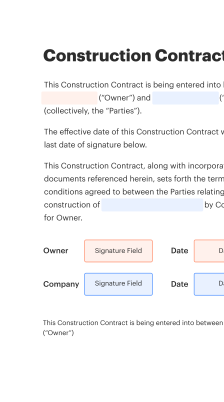
How valid electronic signatures are captured in an online flow

A structured signing flow ties identity, intent, and record integrity together to create a defensible signed record.

  • Initiate: Upload document and assign roles
  • Authenticate: Verify signer identity before access
  • Sign: Signer applies electronic signature
  • Record: System stores audit trail and final PDF
Collect signatures
24x
faster
Reduce costs by
$30
per document
Save up to
40h
per employee / month

Quick steps to obtain a valid electronic signature

Follow a concise workflow to maximize legal defensibility and reduce rework when collecting electronic signatures.

  • 01
    Prepare document: Convert to a final, uneditable format
  • 02
    Add signature fields: Place required fields and form checks
  • 03
    Authenticate signer: Use email verification or MFA
  • 04
    Capture signature: Record timestamp and audit data

Managing audit trails and evidence for signed transactions

A consistent audit process ensures signed records remain verifiable and defensible in the U.S. legal context.

01

Record signer identity:

Capture email and authentication method
02

Timestamp events:

Log date and time for each action
03

Log IP address:

Include network origin data
04

Preserve document hash:

Store cryptographic fingerprint
05

Store final PDF:

Save signed, flattened copy
06

Retention metadata:

Attach retention policy info
be ready to get more

Why choose airSlate SignNow

  • Free 7-day trial. Choose the plan you need and try it risk-free.
  • Honest pricing for full-featured plans. airSlate SignNow offers subscription plans with no overages or hidden fees at renewal.
  • Enterprise-grade security. airSlate SignNow helps you comply with global security standards.
illustrations signature

Recommended workflow settings to support valid electronic signatures

Configure workflow defaults to enforce authentication, retention, and notification behavior so signed records remain defensible and accessible.

Setting Name Configuration
Reminder Frequency 48 hours
Signature Expiration 90 days
Access Control Role-based
Audit Trail Retention 7 years
Signing Order Sequential

Platform compatibility and device requirements for valid signatures

Ensure your signing platform supports modern browsers, mobile OS versions, and secure network protocols to maintain integrity and accessibility.

  • Browsers supported: Chrome, Edge, Safari
  • Mobile platforms: iOS and Android
  • Minimum TLS: TLS 1.2+

Confirm that the chosen solution provides native mobile experiences, responsive web signing, and secure transport protocols so signers can execute valid electronic signatures across devices without compromising auditability.

Security controls that support signature validity

TLS encryption: Encrypts data in transit
At-rest encryption: Protects stored documents
Multi-factor authentication: Strengthens signer identity
Audit logging: Records signature events
Role-based access: Limits administrative actions
Document hashing: Detects post-sign changes

Practical examples where valid electronic signatures matter

Real-world scenarios illustrate how technical controls and compliant workflows preserve enforceability and accelerate processing.

Healthcare consent forms

Patients sign intake and release forms electronically to document consent and treatment preferences

  • Signature authentication via verified email or MFA
  • Faster admission and clear records for audits

Resulting in improved compliance and reduced paper handling for clinics.

Employment onboarding

New hires complete tax and policy acknowledgements online to formalize employment status

  • Prebuilt templates with required fields and validation checks
  • HR reduces processing time and centralizes records

Leading to consistent onboarding and defensible personnel files.

Best practices to ensure signatures are secure and legally sound

Adopt policies and technical controls that align with U.S. legal standards and your industry’s compliance requirements to reduce risk.

Define acceptable signature types and policies
Document which transactions can use standard electronic signatures versus those requiring higher-assurance methods; align policies with ESIGN, UETA, and internal legal guidance to ensure consistent enforcement and auditability.
Apply tiered authentication based on risk
Use simple email verification for low-risk agreements but require multi-factor authentication or identity proofing for financial, healthcare, or high-value contracts to strengthen evidentiary value.
Preserve comprehensive audit trails
Capture signer identity details, timestamps, IP addresses, field-level history, and document hashes and store these records alongside the signed PDF for compliance and dispute resolution.
Implement retention and access controls
Set retention schedules consistent with legal and regulatory requirements, limit access through role-based permissions, and maintain secure backups for long-term availability.

Frequently asked questions about valid electronic signatures

Answers to common questions about legal validity, authentication, and technical controls for electronic signatures in U.S. contexts.

Feature comparison: signNow and other major U.S. eSignature platforms

Compare core capabilities that affect the legal validity and operational use of electronic signatures across platforms commonly used in the United States.

Feature signNow (Recommended) DocuSign
Legal recognition
Comprehensive audit trail
Bulk Send functionality
API access for automation
be ready to get more

Get legally-binding signatures now!

Risks when signature validity is not ensured

Contract disputes: Invalidated agreements
Regulatory fines: Noncompliance penalties
Data breaches: Exposure of PHI
Operational delays: Re-execution costs
Reputational harm: Loss of trust
Legal costs: Litigation expenses

Plan attributes across signNow and competing platforms

High-level plan and feature attributes for common eSignature vendors; signNow is listed first as the featured option for comparison.

Plan/Attribute signNow (Featured) DocuSign Adobe Sign Dropbox Sign PandaDoc
Entry plan name Business Personal Individual Essentials Free eSign
API access Available Available Available Available Available
Bulk Send Available Available Available Available Available
HIPAA support Available Available Available Contact Sales Contact Sales
Free trial Trial available Trial available Trial available Trial available Trial available
Enterprise capabilities Advanced controls Advanced controls Enterprise features Enterprise options Advanced features

Simplify challenging workflows

Generate, execute, and maintain workflows of any complexness, digitally from virtually anywhere. Scalable electronic signature features ensure you can share documents with the right people in the correct sequence and determine roles for each receiver. Perform document workflows faster and easier than ever before.

Automate document management

Optimize sophisticated signing tasks with airSlate SignNow�s highly effective features to improve your operation. Control your automatic signature workflows to ensure they're running at top performance with instant notifications and alerts.

Enhance in team communication

Get teams together in a safe, shared workplace. Manage documents, use form templates and notices to produce better cross-organization interaction. Free your employees from having to spend time on repeated actions so that they can concentrate on valuable, business-critical projects.

Integrate into your current framework

Run your tasks with best-in-class integration. Assemble Salesforce, Microsoft Teams, and SharePoint in one business flow. Link up your software to a single system for endless possibilities and higher productiveness.

Remain compliant with industry-leading data safety

Feel confident knowing that your data remains secure by the most recent in encryption security. airSlate SignNow is GDPR and eIDAS certified and gives you awareness into your signing process with court-admissible audit trails. Set up user authorization and roles to manage who has access to what.


walmart logo
exonMobil logo
apple logo
comcast logo
facebook logo
FedEx logo
be ready to get more

Get legally-binding signatures now!