Verify eSign Request with SignNow's Secure Solution

Get rid of paper and automate document management for more performance and countless possibilities. Discover a greater strategy for running your business with airSlate SignNow.

Award-winning eSignature solution

What verify esign request Means and How It Works

A verify esign request is the process that initiates, authenticates, and confirms an electronic signature transaction for a digital document. It covers sender configuration, recipient identity checks, signature capture, and automated recordkeeping so a completed file includes an evidentiary audit trail. In the United States, a properly configured verify esign request aligns with ESIGN and UETA requirements by capturing intent, consent, and retention of signed records. Technical steps typically include preparing the document, selecting authentication methods, sending the request, and preserving logs and copies for future verification and audits.

Why verify esign request Matters for Legal and Operational Reliability

A well-constructed verify esign request reduces signature disputes, ensures admissibility under ESIGN/UETA, and provides consistent audit evidence for compliance and internal controls.

Why verify esign request Matters for Legal and Operational Reliability

Common Challenges When Implementing verify esign request

  • Incomplete identity verification can create legal uncertainty and increase repudiation risk in contract disputes.
  • Misconfigured retention settings may violate recordkeeping policies or hamper regulatory audits and discovery requests.
  • Using weak authentication methods can expose transactions to fraud or unauthorized access by third parties.
  • Poorly formatted documents or missing signature fields lead to signing delays and increased manual intervention.

Representative Roles Handling verify esign request

Legal Counsel

Corporate legal teams draft and approve signature workflows, specify authentication requirements, and use the verify esign request audit trail to support contract enforcement and litigation preparedness. They focus on preserving intent and evidence that align with ESIGN and UETA standards.

HR Manager

HR managers send employment offers, onboarding paperwork, and policy acknowledgments through verify esign request flows, ensuring completed forms are stored according to retention policies and accessible for compliance and internal audits.

Primary Users and Teams That Rely on verify esign request

  • Legal departments: enforce contract standardization, maintain chain-of-custody, and support dispute resolution.
  • HR and onboarding: collect consent forms, tax documents, and employment agreements quickly and consistently.
  • Sales and procurement: finalize quotes, purchase orders, and NDAs while tracking signature completion.

Cross-functional adoption increases operational consistency and reduces manual signature handling across organizational processes.

Key Tools to Improve verify esign request Accuracy and Speed

A set of core features helps ensure verify esign request transactions are fast, auditable, and aligned with organizational policies for signature capture and retention.

Templates

Create reusable document templates that include pre-placed signature fields, conditional logic, and role assignments to reduce errors and maintain consistent document structure across repeated verify esign request processes.


Bulk Send

Distribute identical verify esign request documents to multiple recipients in a single operation, track individual completions, and reduce administrative time for mass acknowledgments or policy updates.

Conditional Fields

Use conditional logic to show or hide fields based on prior inputs, minimizing signer confusion and ensuring required information is captured only when relevant to the verify esign request workflow.

Automated Reminders

Configure scheduled reminders and escalation notifications to prompt recipients who have not completed a verify esign request, improving completion rates and shortening turnaround time.

Advanced Auth

Apply stronger identity verification methods such as knowledge-based authentication, SMS verification, or government ID checks to increase confidence in signer identity for higher-risk verify esign request transactions.

Role Permissions

Assign granular permissions to control who can create, send, edit, or view verify esign request documents, maintaining separation of duties and protecting sensitive workflows.

be ready to get more

Choose a better solution

Integrations That Streamline verify esign request

Integrations connect verify esign request workflows to content and business systems to reduce manual steps and preserve context across processes.

Google Docs

Embed a verify esign request directly from a Google Docs file to preserve document formatting, maintain version history, and reduce manual downloads when sending contracts for signature through an integrated workflow.

CRM Systems

Link verify esign request actions to CRM records so customer agreements attach automatically to accounts, update deal stages upon completion, and maintain a clear record of signed documents tied to sales activity.

Dropbox

Send files stored in Dropbox as verify esign request documents while saving signed copies back to the selected Dropbox folder for centralized storage and easy retrieval.

Custom API

Use an API integration to initiate verify esign request flows from internal systems, automate field population, and capture completion webhooks for downstream processing and archival.
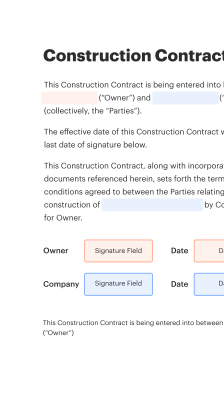
How verify esign request Operates Across Platforms

verify esign request follows a consistent lifecycle: document preparation, recipient authentication, signature capture, and secure archival with audit metadata.

  • Document Setup: Add fields, tags, and templates.
  • Authentication: Apply SMS, email, or ID checks.
  • Signature Capture: Collect electronic or typed signatures.
  • Archiving: Store signed copies with logs.
Collect signatures
24x
faster
Reduce costs by
$30
per document
Save up to
40h
per employee / month

Step-by-Step: Preparing a verify esign request

Follow these core steps to create a compliant verify esign request that captures identity, intent, and retention data before sending to signers.

  • 01
    Prepare Document: Upload and confirm required fields.
  • 02
    Set Roles: Assign signer roles and order.
  • 03
    Choose Auth: Select verification method per signer.
  • 04
    Send Request: Dispatch and monitor signature progress.

Managing Audit Trails for verify esign request Transactions

A reliable audit trail captures signer identity, timestamps, IP addresses, and document hashes to support legal admissibility and internal recordkeeping.

01

Capture Timestamp:

Record each action time
02

Signer IP:

Log originating IP address
03

Document Hash:

Store tamper-evident checksum
04

Authentication Log:

Save verification steps
05

Version History:

Preserve prior document versions
06

Export Options:

Provide PDF with audit report
be ready to get more

Why choose airSlate SignNow

  • Free 7-day trial. Choose the plan you need and try it risk-free.
  • Honest pricing for full-featured plans. airSlate SignNow offers subscription plans with no overages or hidden fees at renewal.
  • Enterprise-grade security. airSlate SignNow helps you comply with global security standards.
illustrations signature

Typical Workflow Settings for verify esign request Automation

These common workflow settings help organizations standardize verify esign request behavior, reminders, and retention across teams.

Setting Name Configuration
Reminder Frequency 48 hours
Expiration Period 30 days
Signer Order Sequential
Authentication Level Email or MFA
Retention Policy 7 years

Platform and Device Considerations for verify esign request

  • Desktop Browsers: Chrome, Edge, Safari
  • Mobile Platforms: iOS and Android
  • Network Needs: Stable internet required

Ensure recipient devices meet minimum browser and OS versions, and validate authentication methods (SMS, app-based MFA) for mobile signers to avoid signing failures and ensure a smooth verify esign request experience.

Security and Compliance Controls for verify esign request

Encryption: AES-256 at rest
Transport Security: TLS 1.2+ in transit
Access Controls: Role-based permissions
Authentication: Multi-factor options
Audit Trail: Tamper-evident logs
Secure Storage: Redundant cloud backups

Industry Use Cases for verify esign request

verify esign request supports a wide range of industry workflows where identity, timing, and recordkeeping matter.

Healthcare Records

A hospital sends consent forms electronically to patients for procedures

  • uses identity verification
  • stores signed forms in a HIPAA-compliant archive

Leading to secure, auditable patient consent and reduced paper handling.

Real Estate Transactions

An agent circulates purchase agreements to buyers and sellers online

  • uses two-factor authentication
  • captures signature timestamps and IP addresses

Resulting in a defensible transaction record and faster closings.

Best Practices for Secure and Accurate verify esign request

Follow established practices to reduce risk and increase the reliability of verify esign request transactions across teams and systems.

Standardize templates and field placement across your organization
Define approved document templates, mandatory fields, and signer roles so each verify esign request follows the same structure; this reduces signer errors, ensures consistent metadata capture, and simplifies audit reviews.
Match authentication level to transaction risk
For routine acknowledgements use basic email verification; for high-value contracts or regulated data require multi-factor or identity-document checks to align verification strength with legal and operational risk.
Preserve complete audit trails and backup copies
Keep tamper-evident logs, signer IP and timestamp details, and redundant signed document storage to support ESIGN/UETA admissibility and to respond quickly to disputes or regulatory inquiries.
Train users and monitor configuration changes regularly
Provide role-based training on verify esign request setup and periodically review settings, templates, and retention policies to prevent misconfiguration and ensure ongoing compliance.

FAQs About verify esign request

Common questions about verify esign request configuration, legal standing, and troubleshooting for signers and administrators.

Quick Feature Comparison: verify esign request Capabilities

Comparison of common verify esign request capabilities showing basic availability and support between signNow and DocuSign for common enterprise needs.

Feature signNow (Recommended) DocuSign
Legally binding in US
HIPAA support Available Available
Bulk Send
API access
be ready to get more

Get legally-binding signatures now!

Retention and Compliance Deadlines Related to verify esign request

Key retention periods and deadlines commonly applied to signed records and related compliance tasks in U.S. contexts.

Short-term retention interval:

30 days

Standard legal retention period:

7 years

HIPAA-related document retention:

6 years

Tax-related signed records:

3 to 7 years

Contract archival review:

Annual review

Operational Risks When verify esign request Is Mismanaged

Disputed Contracts: Loss of enforceability
Regulatory Fines: Compliance penalties
Data Breach: Unauthorized access
Audit Failures: Non-compliant records
Business Delays: Signing bottlenecks
Reputational Harm: Customer distrust

Representative Pricing and Plan Comparison for verify esign request

High-level plan and pricing distinctions for common eSignature providers to consider when mapping verify esign request needs to budget and features.

Plan Type / Vendors signNow (Recommended) DocuSign Adobe Sign HelloSign PandaDoc
Entry Plan Price Per-user monthly plan with fixed price Per-user tiered pricing Per-user subscription Per-user basic plan Per-user subscription with limits
Bulk Send Included Available on business plans Available on business plans Available on enterprise Limited on basic Available on pro plans
API Included Available on paid tiers Available on paid tiers Included in enterprise API on business API on business plans
Advanced Auth Options SMS and ID checks available Wide auth options Enterprise authentication Basic MFA MFA available
Document Retention Configurable retention policies Configurable retention Enterprise storage options Basic storage Configurable archives

Streamline challenging workflows

Generate, deliver, and control workflows of any complexness, digitally from near any place. Scalable electronic signature features let you share contracts with the right users the right way and assign roles for every receiver. Execute document workflows faster and simpler than ever before.

Automate document managing

Optimize complex signing tasks with airSlate SignNow�s effective features to boost your operation. Control your automated eSignature workflows to guarantee they're running at peak performance with quick notices and reminders.

Enhance in team communication

Get teams together in a protected, shared workplace. Handle paperwork, use form templates and notifications to create more effective cross-company interaction. Free your employees from having to hang out on repetitive routines to enable them to center on valuable, business-critical projects.

Integrate into your current systems

Manage your jobs with industry-leading integration. Assemble Salesforce, Microsoft Teams, and SharePoint all in one business stream. Hook up your software to a single environment for endless possibilities and higher performance.

Stay compliant with best-in-class data protection

Feel safe understanding that your data remains secure by the newest in encryption security. airSlate SignNow is GDPR and eIDAS compliant and gives you transparence into your signing experience with court-admissible audit trails. Configure user access permissions and roles to control who has access to what.


walmart logo
exonMobil logo
apple logo
comcast logo
facebook logo
FedEx logo
be ready to get more

Get legally-binding signatures now!