Write Digital Signature with SignNow

Get rid of paperwork and optimize document management for more performance and limitless opportunities. Explore a greater strategy for running your business with airSlate SignNow.

Award-winning eSignature solution

What it means to write digital signature

A digital signature is an electronic method that binds a signer to a document using cryptographic techniques and metadata to verify identity and integrity. When you write digital signature using an eSignature service, the system captures signer credentials, timestamp, and an audit trail so the signature can be validated later. In U.S. contexts, compliant solutions implement ESIGN and UETA principles, maintain tamper-evident records, and support authentication methods appropriate to the transaction and risk profile.

Why writing a digital signature matters for business

Writing a digital signature replaces slow paper processes with verifiable electronic records that reduce turnaround time and administrative cost while meeting U.S. electronic signature laws.

Why writing a digital signature matters for business

Common challenges when you write digital signature

  • Choosing appropriate authentication: balancing ease of use with identity assurance for different document types and risk levels.
  • Document formatting issues: signatures can fail or misalign if source PDFs lack consistent fields or flattened layers.
  • Regulatory alignment: ensuring practices meet ESIGN, UETA, HIPAA, or FERPA requirements for protected records.
  • Integration complexity: connecting eSignature flows to CRMs, document storage, and identity providers without breaking workflows.

Typical user profiles for writing digital signatures

HR Manager

An HR Manager uses digital signatures to execute employment agreements, tax forms, and onboarding checklists. They need role-based templates, bulk send for batches of new hires, and audit trails to show signature timestamps and IP addresses for compliance and internal recordkeeping.

Real Estate Agent

A Real Estate Agent relies on secure electronic signing for offers, disclosures, and closing documents. They require mobile-friendly signing, authentication options for buyers, and configurable signing order to coordinate multiple parties and maintain legally admissible records.

Who commonly writes digital signatures

Organizations across sectors use digital signatures for contracts, forms, and approvals to speed processes and maintain records.

  • Small businesses processing client agreements and invoices with limited administrative resources.
  • Human resources teams handling offer letters, onboarding, and policy acknowledgements.
  • Healthcare and education administrators executing consent forms and protected records under HIPAA or FERPA.

Broad adoption includes small teams and large enterprises that need verifiable, auditable signature records while complying with applicable U.S. regulations.

Additional features that improve the signature experience

Beyond basic signing, these capabilities streamline administration, support scale, and help integrate electronic signatures into broader business systems.

Bulk Send

Send a single document to many recipients with personalized fields and track individual responses to accelerate mass agreement collection and batch onboarding processes.


Conditional Fields

Show or hide form elements based on signer input to simplify forms and ensure only relevant data is requested from each participant, reducing errors.

SSO Support

Integrate single sign-on with corporate identity providers so users authenticate with existing enterprise credentials and administrators control access centrally.

Role-Based Templates

Assign template access by role so teams reuse consistent, approved documents while maintaining version control and governance across departments.

Webhooks

Use webhooks to notify internal systems when documents change status so CRMs, ERPs, or contract repositories stay synchronized without manual intervention.

Document Retention

Apply configurable retention rules and archival policies that align with legal, regulatory, and company recordkeeping requirements for signed documents.

be ready to get more

Choose a better solution

Core tools that support writing digital signatures

These foundational features help ensure signatures are legally defensible, secure, and integrated into existing business systems to support repeatable workflows.

Signature Fields

Configurable signature and data fields let administrators place signing spots, checkboxes, and inputs directly on documents so signers provide required consent and information in the correct locations before finalization.

Templates

Reusable templates speed repeated transactions by preserving field placements, required signers, and workflow logic so common documents can be issued consistently and with fewer errors across teams.

Authentication Options

Multiple signer verification methods—email, SMS, knowledge-based, or identity provider integrations—allow administrators to match authentication strength to transaction sensitivity and regulatory needs.

Audit Trail

A detailed, tamper-evident audit log captures signer events, timestamps, IP addresses, and device metadata, providing admissible evidence of the signing transaction for compliance and dispute resolution.
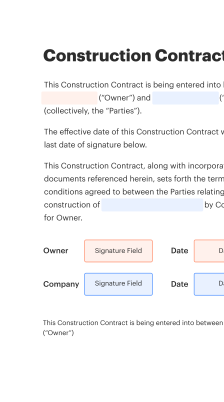
How the process works when you write digital signature

A typical signing flow includes document preparation, signer authentication, signature application, and record retention for audit purposes.

  • Upload: Add document to the signing platform.
  • Tag fields: Place signature and data fields.
  • Authenticate: Verify signer identity as required.
  • Finalize: System captures timestamp and audit trail.
Collect signatures
24x
faster
Reduce costs by
$30
per document
Save up to
40h
per employee / month

Step-by-step: how to write digital signature

Follow these essential steps to prepare a document, authenticate signers, and complete a valid digital signature transaction.

  • 01
    Prepare document: Upload PDF and define signature fields.
  • 02
    Assign signers: Add recipient emails and signing order.
  • 03
    Choose authentication: Select email, SMS, or ID verification.
  • 04
    Complete signing: Signers apply signatures and receive confirmations.

Managing audit trails when you write digital signature

Create, store, and review audit trails so every signing event is recorded and can be validated in legal or compliance reviews.

01

Capture events:

Record timestamps and signer actions.
02

Log metadata:

Store IP and device details.
03

Preserve document hash:

Compute and retain file checksum.
04

Export records:

Provide downloadable audit reports.
05

Tamper evidence:

Detect post-signing changes.
06

Retention policy:

Apply legal hold rules.
be ready to get more

Why choose airSlate SignNow

  • Free 7-day trial. Choose the plan you need and try it risk-free.
  • Honest pricing for full-featured plans. airSlate SignNow offers subscription plans with no overages or hidden fees at renewal.
  • Enterprise-grade security. airSlate SignNow helps you comply with global security standards.
illustrations signature

Typical workflow settings when you write digital signature

Configure these workflow settings to standardize signing processes, ensure timely completion, and maintain consistent compliance controls across teams.

Setting Name Configuration
Reminder Frequency 48 hours
Signing Order Sequential or Parallel
Authentication Level Email or SMS
Document Retention Period 7 years
Webhook Notifications Enabled

Supported platforms for writing digital signatures

Most modern eSignature solutions support web browsers, native mobile apps, and tablet interfaces so signers can complete transactions on common devices.

  • Desktop browsers: Chrome, Edge, Safari
  • Mobile apps: iOS and Android
  • Tablet support: Responsive tablet UI

Ensure your chosen platform supports current browser versions, provides a mobile app if field signing is needed, and integrates with corporate single sign-on or identity providers to simplify user access and administration.

Security features to protect written digital signatures

Encryption in transit: TLS session encryption
Encryption at rest: AES-256 storage encryption
Access controls: Role-based permissions
Multi-factor authentication: Optional 2FA methods
Audit logging: Immutable event logs
SOC2 compliance: Independent controls attestation

Industry examples of writing digital signatures

These concise case notes show typical document flows and measurable outcomes when organizations adopt reliable eSignature practices.

Healthcare consent forms

A regional clinic moved patient consent forms online to reduce clerical time and improve access.

  • Templates prefilled with patient data
  • Role-based authentication and signed timestamps

Resulting in faster intake, clearer records, and stronger HIPAA-aligned auditability for clinical review.

Real estate transactions

A brokerage standardized purchase agreements and disclosures with electronic signing to coordinate buyers, sellers, and lenders.

  • Sequential signing order for multiple parties
  • Mobile signing and document version tracking

Leading to shorter closing cycles, fewer lost pages, and auditable signatures admissible in state filings.

Best practices for secure and accurate digital signatures

Adopting consistent procedures reduces error, strengthens compliance, and makes signature evidence more reliable across common document types and teams.

Match authentication to document risk level
Use stronger verification (such as two-factor or identity verification) for high-value contracts, regulatory forms, or documents containing protected health or student data, and reserve simple email verification for low-risk acknowledgements.
Standardize templates and field placement
Create centrally managed templates for recurring agreements to ensure required fields are present, reduce signer confusion, and minimize missing or misplaced signatures that could invalidate a document.
Preserve complete audit trails
Ensure the platform captures signer metadata, timestamps, and document hashes at the moment of signing and stores records securely to support later validation or legal review.
Limit access and enforce least privilege
Grant team members only the permissions needed to manage and send documents; use role-based controls and single sign-on to centralize user management and reduce account misuse risks.

FAQs about how to write digital signature

Answers to common questions about creating, validating, and managing digital signatures, focused on practical concerns and compliance in the United States.

Quick feature and compliance comparison for writing digital signatures

A concise comparison of key capabilities and compliance support across leading eSignature providers to help assess suitability for U.S. use cases.

Feature and Regulatory Comparison Table signNow (Recommended) DocuSign Adobe Sign
Federal ESIGN and UETA Compliance Status
HIPAA and Student Data Support Limited
Bulk Send Capacity per Day 1000+ 5000+ 2000+
API Availability and Integration Options
be ready to get more

Get legally-binding signatures now!

Risks when writing digital signatures incorrectly

Contract invalidation: Legal challenge
Data breach: Exposure risk
Regulatory fines: Monetary penalties
Reputational harm: Trust loss
Operational delays: Workflow stoppage
Evidence gaps: Weak audit trail

Pricing and plan comparison for writing digital signatures

High-level pricing and plan differences that commonly matter when selecting an eSignature provider for routine and enterprise use in the United States.

Plan and Feature Comparison signNow (Featured) DocuSign Adobe Sign Dropbox Sign PandaDoc
Starting Monthly Price From $8/user/mo From $10/user/mo From $34/user/mo From $12/user/mo From $19/user/mo
Enterprise Features Included Templates, API, SSO Templates, API, SSO Templates, API, SSO Templates, API Templates, API, CRM
API Access Level Full API access Full API access Full API access API available Full API access
HIPAA Compliance Option Available Available Available Available Available
Bulk Send Capability Included Add-on available Included Limited Included
Free Trial or Tier 14-day trial available Trial available Trial available Free limited tier Trial available

Make simpler challenging workflows

Create, deliver, and maintain workflows of any intricacy, digitally from near any place. Scalable eSignature features let you share documents with the right people in the right order and assign roles for each recipient. Execute document workflows faster and easier than ever before.

Automate document managing

Improve complicated signing procedures with airSlate SignNow�s powerful features to enhance your business. Manage your automatic signature workflows to ensure they're running at maximum efficiency with immediate notices and alerts.

Enhance in team communication

Get teammates together in a protected, shared environment. Handle paperwork, use form templates and notices to produce better cross-organization interaction. Relieve your staff from having to hang out on repetitive routines to enable them to center on beneficial, business-essential tasks.

Integrate into your existing framework

Run your jobs with best-in-class integration. Collect Salesforce, Microsoft Teams, and SharePoint all in one business stream. Connect your software to a single system for countless opportunities and higher productiveness.

Remain compliant with best-in-class data protection

Feel safe understanding that your data is protected by the most recent in encryption security. airSlate SignNow is GDPR and eIDAS certified and provides you visibility into your signing experience with court-admissible audit trails. Configure user authorization and rights to manage who has access to what.


walmart logo
exonMobil logo
apple logo
comcast logo
facebook logo
FedEx logo
be ready to get more

Get legally-binding signatures now!