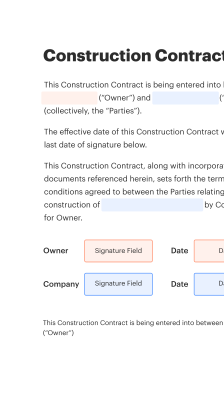
What is the contracts for teenage behavior
A contract for teenage behavior is a formal agreement between a parent or guardian and a teenager that outlines expected behaviors and responsibilities. This document serves as a tool to set clear guidelines regarding acceptable conduct, consequences for not adhering to these guidelines, and rewards for positive behavior. It can help foster communication and accountability, ensuring that both parties understand their roles and expectations. The contract can be tailored to address specific issues, such as curfews, academic performance, or household responsibilities, making it a versatile resource for families.
How to use the contracts for teenage behavior
Using a behavior contract for teenagers involves several straightforward steps. First, parents and teenagers should discuss the behaviors that need to be addressed and agree on the terms of the contract. This collaborative approach encourages buy-in from the teenager, making them more likely to adhere to the agreed-upon behaviors. Once the terms are established, the contract can be drafted, ensuring that it is clear and concise. After both parties review the document, they can eSign it using airSlate SignNow, allowing for a secure and efficient signing process. This electronic method also facilitates easy access to the contract for future reference.
Steps to complete the contracts for teenage behavior
Completing a contract for teenage behavior involves a few essential steps:
- Identify key behaviors: Discuss and list the specific behaviors that need to be addressed.
- Set clear expectations: Define what acceptable behavior looks like and outline consequences for not meeting these expectations.
- Draft the contract: Create a document that includes all agreed-upon terms, ensuring clarity and mutual understanding.
- Review together: Go through the contract with your teenager to ensure they understand and agree with the terms.
- eSign the document: Use airSlate SignNow to electronically sign the contract, making it easy to store and retrieve.
Key elements of the contracts for teenage behavior
A well-structured behavior contract should include several key elements to ensure its effectiveness:
- Parties involved: Clearly state the names of the parent or guardian and the teenager.
- Behavior expectations: List specific behaviors that are expected, such as curfews, chores, or academic performance.
- Consequences: Outline the consequences for failing to meet the expectations, which can include loss of privileges or additional responsibilities.
- Rewards: Specify any rewards for meeting or exceeding expectations to encourage positive behavior.
- Duration of the contract: Indicate how long the contract will remain in effect and when it will be reviewed or revised.
Security & Compliance Guidelines
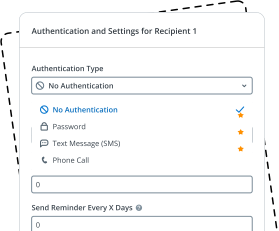
When using electronic signatures for behavior contracts, it is essential to adhere to security and compliance guidelines. Ensure that the platform used, such as airSlate SignNow, complies with the Electronic Signatures in Global and National Commerce (ESIGN) Act and the Uniform Electronic Transactions Act (UETA). These regulations ensure that electronic signatures are legally binding and secure. Additionally, use strong passwords and enable two-factor authentication on your account to protect sensitive information. Always store completed contracts in a secure location, ensuring that only authorized individuals have access to them.
Digital vs. Paper-Based Signing
Choosing between digital and paper-based signing for behavior contracts involves considering several factors. Digital signing through platforms like airSlate SignNow offers convenience, allowing for immediate access and storage of documents. It also enables easy sharing and collaboration, as contracts can be sent for signature from any device. In contrast, paper-based signing may require physical presence and can lead to delays in processing. Digital signatures are generally more secure, as they often include encryption and authentication features that protect the integrity of the document. Ultimately, opting for digital signing can streamline the process and enhance accessibility for both parties.