Qu'est-ce que add password to pdf document et pourquoi l'utiliser
L'ajout d'un mot de passe à un document PDF consiste à chiffrer le fichier et à restreindre l'accès aux personnes disposant du mot de passe. Cette mesure protège le contenu contre l'ouverture non autorisée, la copie ou l'impression et s'intègre souvent aux flux de signature électronique pour protéger les pièces jointes sensibles. Dans un contexte professionnel, la protection par mot de passe complète d'autres contrôles d'accès comme l'authentification multi‑facteur et les certificats numériques, tout en restant compatible avec les exigences de conformité américaines pour la confidentialité et la tenue des dossiers.
Raisons pratiques pour appliquer add password to pdf document
Protéger des informations sensibles avant partage, limiter l'accès non autorisé et réduire le risque d'exposition de données tout en conservant la traçabilité dans les workflows numériques.
Problèmes courants sans protection par mot de passe
Fuite d'informations confidentielles lorsque les fichiers sont partagés par erreur ou interceptés.
Modifications non autorisées de contenu si le PDF n'est pas verrouillé contre l'édition.
Perte de contrôle sur l'impression et la reproduction de documents sensibles.
Difficultés à démontrer qui a accédé au document sans mécanismes d'audit fiables.
Profils d'utilisateurs types pour add password to pdf document
Responsable RH
Le responsable des ressources humaines protège les contrats d'embauche, dossiers de performance et informations personnelles des employés en appliquant des mots de passe aux PDF avant l'envoi. Il combine cette protection avec des autorisations d'accès et des délais de conservation pour respecter les politiques internes et les obligations légales.
Avocat d'entreprise
L'avocat d'entreprise sécurise les mandats, accords et documents confidentiels en chiffrant les PDF et en contrôlant la distribution. La protection par mot de passe est utilisée conjointement avec des preuves d'authenticité et des pistes d'audit pour soutenir la validité des transactions.
Qui utilise add password to pdf document dans les organisations
Services variés comme les ressources humaines, les finances et les services juridiques appliquent souvent la protection par mot de passe aux PDF pour contrôler l'accès aux documents sensibles.
Responsables RH qui partagent des dossiers de paie et des formulaires contenant des données personnelles.
Équipes juridiques qui gèrent contrats et pièces confidentielles nécessitant confidentialité.
Comptabilité et finance qui transmettent relevés, factures et rapports sensibles.
L'utilisation régulière de mots de passe dans les workflows permet d'ajouter une couche simple mais efficace de protection adaptée aux contrôles internes et aux exigences réglementaires.
soyez prêt à en obtenir plus
Choisissez une meilleure solution
Fonctionnalités essentielles pour add password to pdf document
Fonctions clés à rechercher lors de l'implémentation de la protection par mot de passe sur des PDF dans un environnement professionnel.
Chiffrement fort
Chiffrement AES 256 bits pour sécuriser le contenu du PDF au repos et empêcher l'accès sans mot de passe, compatible avec standards industriels et adapté aux échanges confidentiels entre parties.
Contrôles d'accès
Possibilité de définir permissions distinctes pour l'ouverture, l'édition et l'impression afin de restreindre les actions autorisées pour chaque destinataire dans un cadre collaboratif sécurisé.
Gestion centralisée
Administration des mots de passe et des politiques de sécurité via une console centrale pour appliquer des règles cohérentes et suivre les accès dans une organisation.
Audit et journalisation
Enregistrement des événements d'accès et d'authentification pour fournir une piste d'audit exploitable dans les contrôles internes et les obligations de conformité.
Flux opérationnel pour add password to pdf document
Vue d'ensemble séquentielle montrant comment la protection par mot de passe s'insère dans un processus de partage sécurisé.
Préparation: Sélectionnez le document à protéger.
Configuration: Choisissez options de chiffrement et permissions.
Distribution: Envoyez ou partagez le PDF protégé.
Suivi: Consultez les logs d'accès et les audits.
Collectez les signatures
24x
plus rapidement
Réduisez les coûts de
$30
par document
Économisez jusqu'à
40h
par employé / mois
Procédure rapide pour add password to pdf document
Étapes simples pour appliquer un mot de passe à un PDF dans un flux numérique standard.
01
Importer: Téléversez le fichier PDF dans la plateforme.
02
Sélectionner sécurité: Choisissez l'option de protection par mot de passe.
03
Définir mot de passe: Saisissez et confirmez un mot de passe robuste.
04
Appliquer et enregistrer: Enregistrez le PDF chiffré et distribuez-le selon vos règles.
soyez prêt à en obtenir plus
Pourquoi choisir airSlate SignNow
Essai gratuit de 7 jours. Choisissez le forfait dont vous avez besoin et essayez-le sans risque.
Une tarification transparente pour des forfaits complets. airSlate SignNow propose des abonnements sans dépassements ni frais cachés au renouvellement.
Sécurité de niveau entreprise. airSlate SignNow vous aide à vous conformer aux normes de sécurité mondiales.
Paramètres recommandés pour automatiser add password to pdf document
Paramètres types à configurer pour intégrer la protection par mot de passe dans un workflow automatisé.
Setting Name
Configuration
Règle d'application automatique
Documents financiers
Mot de passe par défaut
Généré automatiquement
Expiration de mot de passe
90 jours
Notification
Email au propriétaire
Exigences techniques pour add password to pdf document selon l'appareil
Vérifiez compatibilité navigateur, version d'application et capacités de chiffrement avant d'appliquer des mots de passe à des PDF sur différents appareils.
Bureau Windows/macOS:Navigateur moderne
App mobile:iOS/Android pris en charge
Intégrations cloud:API et stockage cloud
Assurez-vous que les destinataires disposent d'un lecteur PDF compatible et que vos politiques de sécurité sont cohérentes entre postes de travail, mobiles et services cloud pour éviter les problèmes d'accès.
Mesures de sécurité associées à add password to pdf document
Chiffrement standard:Chiffrement AES 256 bits
Contrôle d'accès:Permissions par document
Protection à l'impression:Blocage de l'impression
Protection à la modification:Verrouillage de l'édition
Cas d'utilisation concrets de add password to pdf document
Deux exemples pratiques montrent comment la protection par mot de passe s'intègre aux process métier pour sécuriser l'accès et assurer la conformité.
Recrutement sécurisé
Un service RH envoie des lettres d'offre chiffrées aux candidats
mot de passe communiqué séparément par téléphone
réduit le risque d'accès non autorisé aux données personnelles
Garantissant la confidentialité lors de l'embauche et minimisant les fuites d'information.
Transmission de contrats
Un cabinet juridique partage des contrats signés électroniquement au format PDF protégé
mot de passe géré par le département juridique
empêche les modifications et l'impression non autorisées
Assure l'intégrité des documents et facilite la traçabilité en cas de litige.
Bonnes pratiques pour sécuriser vos PDF avec un mot de passe
Recommandations opérationnelles pour maximiser l'efficacité et la sécurité lors de l'utilisation des mots de passe sur des documents PDF.
Utiliser mots de passe robustes et uniques
Générez des mots de passe longs, alphanumériques et uniques pour chaque document lorsque possible, et évitez de réutiliser les mêmes codes pour plusieurs fichiers afin de limiter les risques en cas de compromission.
Transmettre le mot de passe par canal séparé
Communiquez le mot de passe via une méthode distincte du fichier protégé, par exemple par téléphone sécurisé ou messagerie chiffrée, pour réduire la probabilité d'interception lorsqu'un document est envoyé par email.
Associer chiffrement et contrôle d'accès central
Combinez la protection par mot de passe avec des politiques d'accès centralisées et des sessions authentifiées pour éviter que le simple mot de passe ne soit le seul mécanisme de sécurité.
Conserver pistes d'audit et politiques de rétention
Documentez qui a accédé aux fichiers et conservez des journaux selon vos obligations légales et internes afin de pouvoir démontrer conformité et répondre rapidement en cas d'incident.
Si le mot de passe a été perdu, vérifiez d'abord les archives de l'administrateur ou la console de gestion centralisée si la plateforme le permet. À défaut, la restauration sans mot de passe n'est pas possible pour des fichiers chiffrés correctement; il faut alors recourir à une copie non chiffrée ou à des sauvegardes.
Le mot de passe restreint l'ouverture, l'édition et souvent l'impression, mais ne remplace pas les DRM avancés. Pour empêcher la copie, activez les permissions d'impression et d'extraction, et combinez‑les avec des politiques d'accès et des pistes d'audit.
La plupart des lecteurs PDF modernes supportent les PDF protégés par mot de passe. Informez les destinataires du mot de passe et testez l'ouverture sur plateformes courantes pour éviter des problèmes de compatibilité imprévus.
L'utilisation d'un mot de passe pour protéger un PDF n'affecte généralement pas la validité d'une signature électronique; assurez‑vous que votre solution répond aux exigences ESIGN et UETA pour l'acceptation et conservez les pistes d'audit nécessaires pour preuve.
Ne transmettez jamais le mot de passe dans le même canal que le document. Préférez un appel téléphonique, un SMS sécurisé ou une messagerie chiffrée et limitez la durée de validité du mot de passe.
Après migration, vérifiez les paramètres de chiffrement et métadonnées. Les permissions et mots de passe doivent être réappliqués ou importés correctement; sinon, restaurez depuis la sauvegarde ou reconfigurez les règles de sécurité.
Comparaison: signNow protégé par mot de passe vs processus papier
Tableau comparatif rapide mettant en évidence différences de sécurité, de traçabilité et d'efficacité entre signNow protégé par mot de passe et les méthodes papier.
Criteria
signNow (Recommended)
Paper-Based
Protection par mot de passe
Oui
Non
Piste d'audit complète
Oui
Non
Contrôles d'accès granulaires
Oui
Limité
Sauvegarde et rétention
Cloud backup
Physique uniquement
préparez-vous à obtenir plus
Recueillez dès maintenant des signatures juridiquement contraignantes !
Perte de confiance client:Impact réputationnel rapide
Actions légales:Procédures judiciaires possibles
Coûts de remédiation:Dépenses opérationnelles élevées
Comparaison tarifaire indicative pour solutions avec add password to pdf document
Aperçu des niveaux tarifaires pour des solutions répandues offrant la protection par mot de passe et des fonctions de signature électronique.
Criteria
signNow (Recommended)
DocuSign
Adobe Sign
HelloSign
Nitro Sign
Plan de départ
Plans à partir de $8/mois
Plans à partir de $10/mois
Inclus avec Acrobat Pro $14.99/mois
Plans à partir de $15/mois
Plans à partir de $9.99/mois
Utilisateur professionnel
Abonnements multi‑utilisateurs disponibles
Forfaits équipe et entreprise
Licences pour entreprises disponibles
Forfaits équipe disponibles
Offres pour entreprises disponibles
Fonctions de sécurité
Chiffrement et permissions
Chiffrement et authentification
Chiffrement intégré
Chiffrement et gestion des clés
Chiffrement et contrôle d'accès
Intégrations courantes
Google, Salesforce, Dropbox
Salesforce, Microsoft
Adobe Cloud, Microsoft
Dropbox, Google
Microsoft, Google
Essai gratuit
Essai disponible
Essai disponible
Essai disponible
Essai disponible
Essai disponible
Comment protéger par mot de passe un document avec airSlate SignNow
Pour ajouter une couche supplémentaire de protection à votre transaction eSignature et garantir que seul vous et votre destinataire pouvez accéder à un document, utilisez l'authentification à deux facteurs. Sécurisez votre fichier avec un mot de passe.
Préparez votre document pour l'envoi
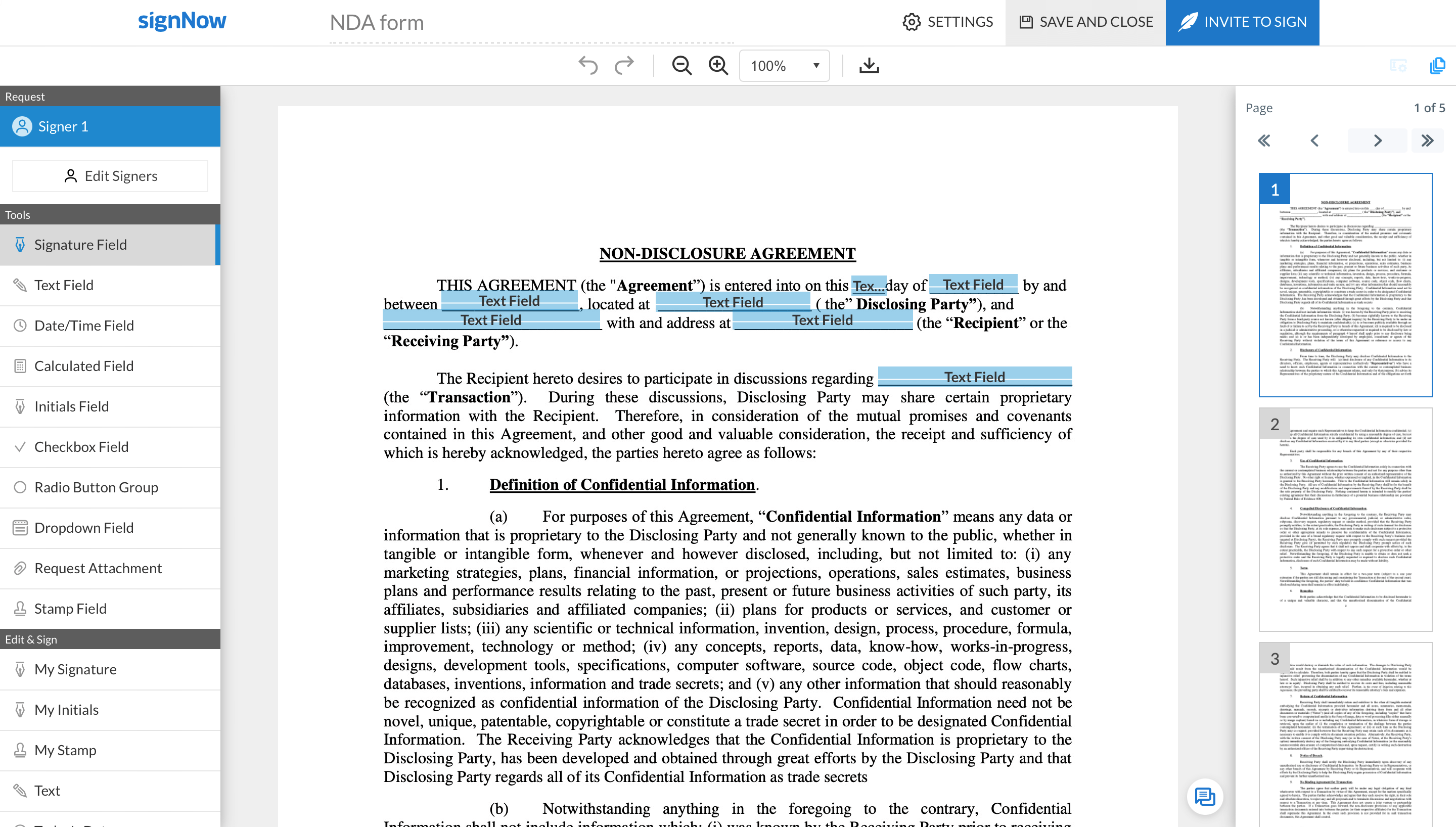
Une fois que vous avez ajouté des champs remplissables à un document et attribué des rôles de signature, cliquez sur Inviter à signer.
Générez et appliquez un mot de passe
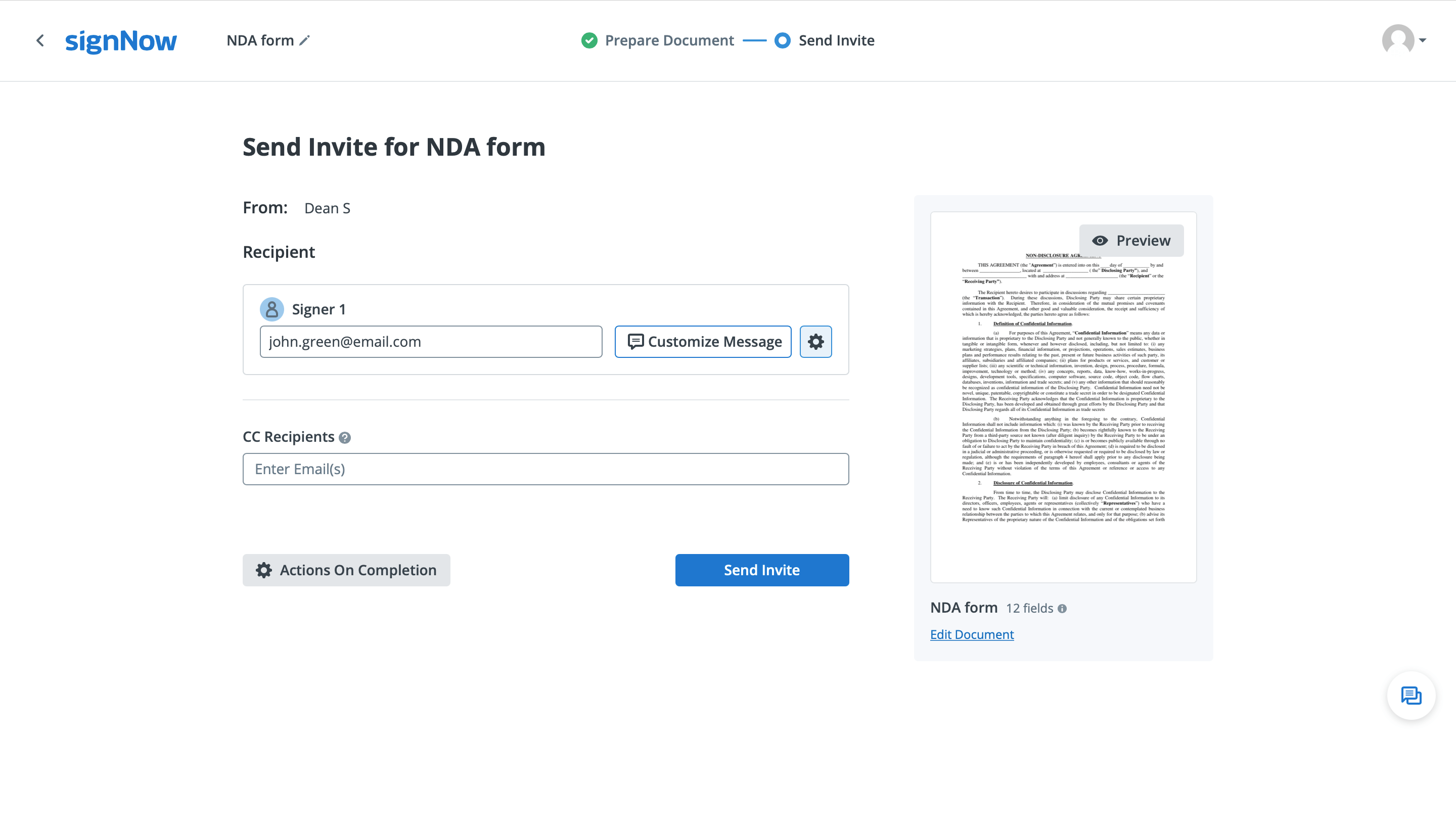
Lors de la finalisation de votre invitation eSignature, cliquez sur l'icône roue dentée à côté de l'adresse e-mail de votre signataire pour accéder aux paramètres avancés.
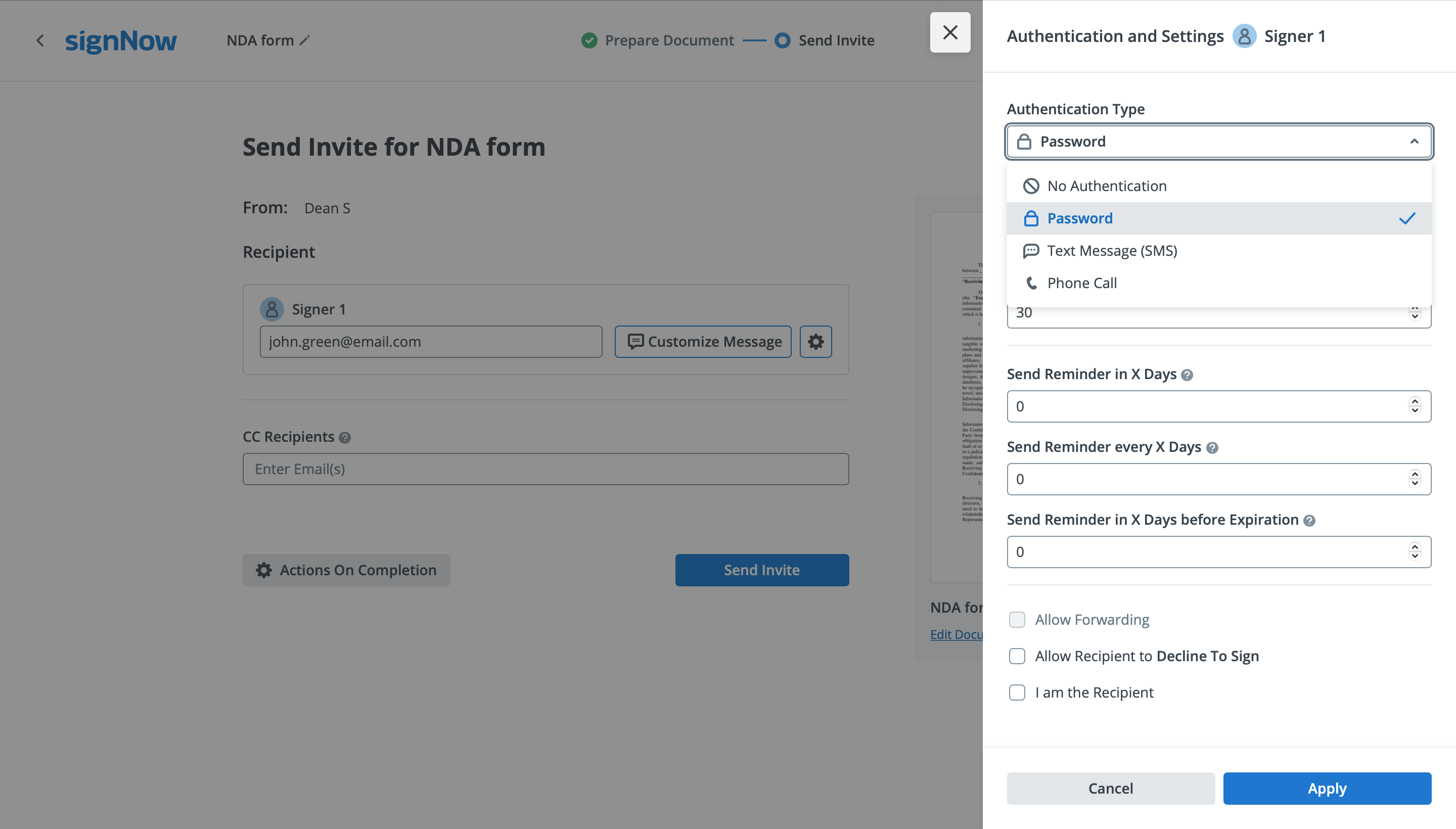
Sélectionnez Mot de passe dans le menu déroulant Type d'authentification. Ensuite, entrez votre mot de passe dans la case ci-dessous et cliquez sur le bouton Appliquer.
Une fois terminé, envoyez votre invitation à signer. Désormais, votre destinataire devra entrer le mot de passe que vous avez créé pour accéder à votre document. N'oubliez pas de communiquer ce mot de passe à votre signataire (par e-mail, téléphone, en personne, etc.). Sinon, il ne pourra pas signer votre document.
Nous utilisons des cookies pour améliorer la sécurité, personnaliser l'expérience utilisateur, renforcer nos activités de marketing (y compris la coopération avec nos partenaires de 3e partie) et pour d'autres usages professionnels. Cliquez ici pour lire notre politique en matière de cookies. En cliquant sur « Accepter », vous acceptez l'utilisation des cookies. ... Lire plusLire moins