Signature Numérique Pour CRM Pour La Santé : Essayez Un Tout Nouveau CRM
Solution eSignature primée




Faites avancer votre entreprise avec la solution de signature électronique airSlate SignNow
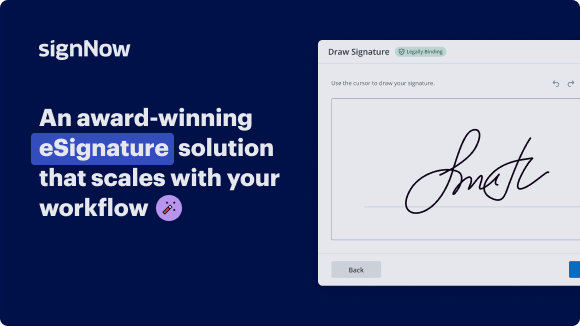
Ajoutez votre signature juridiquement contraignante
Créez votre signature en quelques secondes sur n'importe quel ordinateur de bureau ou appareil mobile, même hors ligne. Tapez, dessinez ou téléchargez une image de votre signature.
Intégrez via l'API
Offrez une expérience de signature électronique fluide depuis n'importe quel site web, CRM ou application personnalisée — partout et à tout moment.
Envoyez des documents conditionnels
Organisez plusieurs documents en groupes et envoyez-les automatiquement aux destinataires selon un ordre basé sur les rôles.
Partagez des documents via un lien d'invitation
Collectez des signatures plus rapidement en partageant vos documents avec plusieurs destinataires via un lien — pas besoin d'ajouter les adresses e-mail des destinataires.
Gagnez du temps avec des modèles réutilisables
Créez un nombre illimité de modèles pour vos documents les plus utilisés. Facilitez leur remplissage en ajoutant des champs personnalisables.
Améliorez la collaboration d'équipe
Créez des équipes dans airSlate SignNow pour collaborer en toute sécurité sur des documents et des modèles. Envoyez la version approuvée à chaque signataire.
Découvrez les signatures électroniques airSlate SignNow en action


Solutions airSlate SignNow pour une meilleure efficacité
Gardez les contrats protégés
Améliorez la sécurité de vos documents et protégez vos contrats contre tout accès non autorisé grâce à l'authentification à deux facteurs. Demandez à vos destinataires de prouver leur identité avant d'ouvrir un contrat pour digital signature for crm for healthcare.
Restez mobile lors de la signature électronique
Installez l'application airSlate SignNow sur votre appareil iOS ou Android et concluez des accords de n'importe où, 24h/24 et 7j/7. Travaillez avec des formulaires et des contrats même hors ligne et digital signature for crm for healthcare plus tard lorsque votre connexion Internet est rétablie.
Intégrez les signatures électroniques dans vos applications métier
Intégrez airSlate SignNow dans vos applications métier pour digital signature for crm for healthcare rapidement sans changer de fenêtres ou d'onglets. Profitez des intégrations airSlate SignNow pour gagner du temps et de l'effort lors de la signature électronique de formulaires en quelques clics.
Générez des formulaires remplissables avec des champs intelligents
Mettez à jour n'importe quel document avec des champs remplissables, rendez-les obligatoires ou facultatifs, ou ajoutez des conditions pour leur apparition. Assurez-vous que les signataires remplissent correctement votre formulaire en attribuant des rôles aux champs.
Concluez des accords et soyez payé rapidement
Collectez des documents auprès de clients et partenaires en quelques minutes au lieu de semaines. Demandez à vos signataires de digital signature for crm for healthcare et ajoutez un champ de demande de paiement à votre exemple pour collecter automatiquement les paiements lors de la signature du contrat.
Collecter les signatures
24x
plus rapide
Réduire les coûts de
$30
par document
Économisez jusqu'à
40h
par employé / mois
Les avis de nos utilisateurs parlent d'eux-mêmes

Kodi-Marie Evans
Directeur des opérations NetSuite chez Xerox

Samantha Jo
Partenaire Entreprise Client chez Yelp


Megan Bond
Gestion du marketing numérique chez Electrolux







soyez prêt à en obtenir plus
Pourquoi choisir airSlate SignNow
-
Essai gratuit de 7 jours. Choisissez le forfait dont vous avez besoin et essayez-le sans risque.
-
Tarification honnête pour des forfaits complets. airSlate SignNow propose des abonnements sans frais supplémentaires ni frais cachés lors du renouvellement.
-
Sécurité de niveau entreprise. airSlate SignNow vous aide à respecter les normes de sécurité mondiales.

Configurer la signature numérique pour le CRM de santé avec airSlate SignNow
La signature numérique de airSlate SignNow pour le CRM est votre solution technologique pour gérer vos processus documentaires liés à la santé tout en restant conforme aux cadres de référence de l'industrie. Avec notre CRM, vous pouvez ajouter, modifier et gérer de nouveaux et anciens signataires, et avoir une vue d'ensemble de votre base de contacts.
Voici vos premières étapes pour commencer avec le CRM de airSlate SignNow :
- Créer un compte ou vous connecter à votre compte existant. Si vous n'avez pas encore utilisé airSlate SignNow, consultez les options d'abonnement et choisissez votre essai gratuit.
- Accédez à l'onglet Contacts et consultez-le. Sur votre gauche, localisez l'onglet Contacts et commencez à ajouter de nouveaux contacts avec leurs informations essentielles.
- Modifiez et supprimez les contacts existants dans votre CRM. Si vous avez déjà envoyé certains documents pour exécution, ces contacts apparaîtront automatiquement dans le CRM. Vous pouvez les gérer depuis un seul endroit sans compromettre les fichiers avec lesquels vous avez interagi.
- Vérifiez les détails du contact et les fichiers associés. Cliquez sur Voir pour voir les détails du contact d'un utilisateur et les documents qui y sont liés.
- Envoyez un document pour signature et collecte de données. Sélectionnez Envoyer une invitation à côté du contact souhaité → Ajouter des destinataires → Ajouter des champs → Poursuivre. Personnalisez votre message d'accompagnement et informez vos contacts de ce qu'ils doivent faire après avoir terminé les termes de votre papier.
L'interface de notre CRM est intuitive, facile à comprendre et ne nécessite pas de compétences techniques particulières. Obtenez plus de contrôle sur vos opérations documentaires et améliorez constamment l'expérience de vos employés, de vos clients et de vos partenaires commerciaux. Essayez notre solution de signature numérique avec CRM intégré pour la santé.
Comment ça marche
Stocker et partager des documents en toute sécurité
Enregistrez vos modifications et partagez
Transférer le formulaire exécuté à votre destinataire
Fonctionnalités airSlate SignNow appréciées par les utilisateurs





soyez prêt à en obtenir plus
Obtenez des signatures juridiquement contraignantes dès maintenant !
FAQ
-
Qu'est-ce qu'une signature numérique pour le CRM pour la santé ?
Une signature numérique pour le CRM pour la santé est une méthode sécurisée et juridiquement contraignante pour signer des documents électroniquement dans un système CRM de santé. Elle améliore le processus de signature en garantissant que les documents sont authentifiés et inviolables, facilitant ainsi des opérations plus fluides dans la gestion de la santé. -
Comment airSlate SignNow s'intègre-t-il aux CRM de santé ?
airSlate SignNow s'intègre parfaitement aux CRM de santé populaires, permettant aux utilisateurs de gérer les documents et signatures des patients directement depuis leur plateforme CRM. Cette intégration rationalise les flux de travail en combinant la gestion des données des patients avec des capacités de signature numérique sécurisées, améliorant ainsi l'efficacité des opérations de santé. -
Quelles sont les options de tarification pour la signature numérique de airSlate SignNow pour le CRM de santé ?
airSlate SignNow propose des plans tarifaires compétitifs adaptés aux organisations de santé, garantissant que la signature numérique pour le CRM de santé reste rentable. Les utilisateurs peuvent choisir parmi des abonnements mensuels ou annuels pour trouver un plan qui correspond le mieux à leur budget et à leurs besoins opérationnels. -
Quelles fonctionnalités airSlate SignNow offre-t-il pour les signatures numériques ?
airSlate SignNow offre des fonctionnalités robustes pour les signatures numériques, notamment des modèles personnalisables, la signature multi-parties et le stockage sécurisé des documents signés. Ces fonctionnalités sont conçues pour améliorer l'expérience utilisateur et renforcer la conformité, en particulier pour les applications de santé. -
AirSlate SignNow peut-il aider à la conformité dans le domaine de la santé ?
Oui, la signature numérique de airSlate SignNow pour le CRM de santé aide les organisations à maintenir la conformité avec les réglementations du secteur telles que HIPAA. En garantissant des signatures sécurisées et traçables, elle offre une tranquillité d'esprit en protégeant les informations sensibles des patients et en respectant les exigences légales. -
Quels sont les avantages d'utiliser des signatures numériques dans le domaine de la santé ?
L'utilisation de signatures numériques dans la santé améliore les délais de traitement des documents, réduit l'utilisation de papier et augmente l'efficacité globale des opérations. La signature numérique pour le CRM de santé simplifie le processus de signature, permettant aux prestataires de soins de se concentrer davantage sur les soins aux patients plutôt que sur la paperasserie. -
AirSlate SignNow est-il convivial pour les professionnels de la santé ?
Absolument ! airSlate SignNow est conçu pour être facile à utiliser, ce qui le rend accessible aux professionnels de la santé avec différents niveaux d'expertise technique. Son interface intuitive permet aux utilisateurs d'adopter rapidement les signatures numériques pour le CRM de santé sans formation approfondie.
Ce que disent les utilisateurs actifs — digital signature for crm for healthcare


Obtenez plus pour digital signature for crm for healthcare
- Tarification CRM airSlate SignNow vs. Zoho CRM pour les organisations
- Tarification CRM airSlate SignNow vs. Zoho CRM pour les ONG
- Tarification CRM airSlate SignNow vs. Zoho CRM pour les organisations à but non lucratif
- Tarification CRM airSlate SignNow vs. Zoho CRM pour PME
- Tarification CRM airSlate SignNow vs. Salesforce pour les entreprises
- Tarification CRM airSlate SignNow vs. Salesforce pour petites entreprises
- Tarification CRM airSlate SignNow vs. Salesforce pour les équipes
- Tarification CRM airSlate SignNow vs Salesforce pour les organisations
Découvrez d'autres digital signature for crm for healthcare
- Légalité de la signature électronique pour la lettre ...
- Déverrouillez le pouvoir de la légitimité de la ...
- Légitimité de la signature électronique pour ...
- Légitimité de la signature électronique pour les ...
- Améliorez la légitimité de la signature ...
- Déverrouillez le pouvoir de la légalité de la ...
- Déverrouiller le pouvoir de la légalité de la ...
- Assurer la conformité avec les lois australiennes sur ...
- Légitimité de la signature numérique pour la ...
- Améliorez la légitimité de la signature numérique ...
- Légitimité de la signature numérique pour traiter le ...
- Assurer la légalité de la signature numérique pour ...
- Comprendre la légalité de la signature électronique ...
- Assurer la légalité de la signature électronique ...
- Comprendre la légalité des signatures électroniques ...
- Déverrouiller le pouvoir de la légitimité de la ...
- Améliorez la légitimité des contrats de freelance ...
- Légitimité de la signature électronique pour les ...
- Assurer la légitimité de la signature électronique ...
- Améliorez la légitimité de la signature ...
être prêt à en obtenir plus