eSign Pour La Gestion De La Relation Client Pour L'expédition : Essayez Un Tout Nouveau CRM
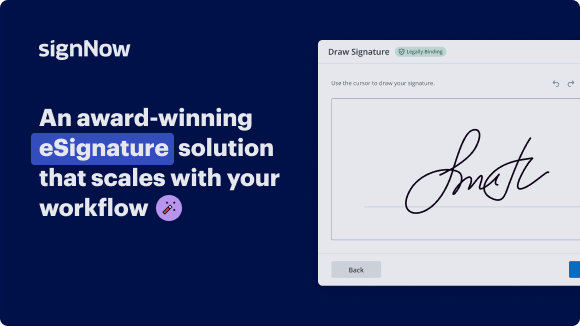
Solution eSignature primée




Faites avancer votre entreprise avec la solution de signature électronique airSlate SignNow
Ajoutez votre signature juridiquement contraignante
Intégrez via l'API
Envoyez des documents conditionnels
Partagez des documents via un lien d'invitation
Gagnez du temps avec des modèles réutilisables
Améliorez la collaboration d'équipe
Découvrez les signatures électroniques airSlate SignNow en action


Solutions airSlate SignNow pour une meilleure efficacité
Les avis de nos utilisateurs parlent d'eux-mêmes











Pourquoi choisir airSlate SignNow
-
Essai gratuit de 7 jours. Choisissez le forfait dont vous avez besoin et essayez-le sans risque.
-
Tarification honnête pour des forfaits complets. airSlate SignNow propose des abonnements sans frais supplémentaires ni frais cachés lors du renouvellement.
-
Sécurité de niveau entreprise. airSlate SignNow vous aide à respecter les normes de sécurité mondiales.

Configurer l'eSign pour la gestion de la relation client pour l'expédition avec airSlate SignNow
La signature électronique de airSlate SignNow pour la gestion de la relation client est votre solution technologique pour gérer vos transactions basées sur des documents d'expédition tout en restant conforme aux cadres de référence de l'industrie. Avec notre CRM, vous pouvez créer, modifier et gérer de nouveaux signataires et obtenir une vue d'ensemble de votre base de contacts.
Voici vos premières étapes pour commencer avec le CRM de airSlate SignNow :
- Créer un compte ou vous connecter à votre compte existant. Si vous n'avez pas encore utilisé airSlate SignNow, explorez les options d'abonnement et choisissez votre essai gratuit.
- Accédez à l'onglet Contacts et explorez-le. Sur votre gauche, localisez l'onglet Contacts et commencez à ajouter de nouveaux contacts avec leurs informations essentielles.
- Modifiez et supprimez les contacts existants dans votre CRM. Si vous avez déjà envoyé certains fichiers pour exécution, ces contacts apparaîtront automatiquement dans le CRM. Vous pouvez les gérer depuis un tableau de bord unique sans compromettre les documents avec lesquels vous avez interagi.
- Vérifiez les informations de contact et les documents associés. Cliquez sur Voir pour voir les détails du contact d'un utilisateur et les documents qui y sont liés.
- Envoyez un document pour signature et collecte de données. Choisissez Envoyer une invitation à côté du contact souhaité → Ajouter des destinataires → Ajouter des champs → Poursuivre. Personnalisez votre message d'accompagnement et informez vos contacts de ce qu'ils doivent faire après avoir terminé les termes de votre document.
L'interface de notre CRM est intuitive, facile à utiliser et ne nécessite pas de connaissances techniques particulières. Prenez plus de contrôle sur vos processus documentaires et améliorez continuellement l'expérience de vos employés, de vos clients et de vos partenaires commerciaux. Essayez notre solution d'eSign avec la gestion de la relation client intégrée pour l'expédition.
Comment ça marche
Fonctionnalités airSlate SignNow appréciées par les utilisateurs





Obtenez des signatures juridiquement contraignantes dès maintenant !
FAQ
-
Qu'est-ce que l'eSign pour la gestion de la relation client pour l'expédition ?
L'eSign pour la gestion de la relation client pour l'expédition fait référence au processus de signature électronique qui permet aux entreprises du secteur de l'expédition d'obtenir des signatures légalement contraignantes sur des documents importants. Cette solution rationalise le flux de travail et améliore l'efficacité, ce qui entraîne des délais de traitement plus rapides et une satisfaction client accrue. -
Comment airSlate SignNow peut-il améliorer mon CRM pour l'expédition ?
AirSlate SignNow s'intègre parfaitement à votre gestion de la relation client pour l'expédition, vous permettant d'envoyer des contrats, accords et documents d'intégration pour eSignature. Cette fonctionnalité réduit les processus manuels, minimise les erreurs et améliore l'efficacité globale de votre CRM, en améliorant les interactions avec les clients. -
Quelles sont les options de tarification pour airSlate SignNow ?
AirSlate SignNow propose des plans tarifaires flexibles adaptés aux besoins de différentes entreprises, y compris celles axées sur l'eSign pour la gestion de la relation client pour l'expédition. Vous pouvez choisir parmi des forfaits de base à avancés, tous offrant une manière économique de gérer vos besoins de signature de documents. -
Puis-je suivre mes documents avec airSlate SignNow ?
Oui, airSlate SignNow offre un suivi complet pour tous les documents envoyés pour eSignature. Les utilisateurs de la gestion de la relation client pour l'expédition peuvent suivre l'état de leurs documents en temps réel, en s'assurant qu'ils restent informés et peuvent faire un suivi rapidement avec les clients si nécessaire. -
Quels sont les principaux avantages de l'utilisation d'airSlate SignNow pour les entreprises d'expédition ?
L'utilisation d'airSlate SignNow pour l'eSign pour la gestion de la relation client pour l'expédition offre de nombreux avantages, notamment une efficacité améliorée, une réduction de la paperasserie et une conformité renforcée. Ces avantages conduisent à des délais de traitement plus rapides et à un flux de travail plus rationalisé, contribuant à un meilleur service client. -
AirSlate SignNow offre-t-il une compatibilité mobile ?
Absolument ! AirSlate SignNow est entièrement compatible avec les appareils mobiles, permettant aux utilisateurs d'envoyer et de signer électroniquement des documents depuis n'importe quel appareil. Cette flexibilité est particulièrement bénéfique pour ceux qui gèrent la relation client pour l'expédition, car elle vous permet de gérer les documents en déplacement. -
Quelle est la sécurité d'airSlate SignNow pour mes documents d'expédition ?
AirSlate SignNow privilégie la sécurité, en utilisant des méthodes de cryptage avancées et en respectant les normes mondiales pour protéger vos documents. Lors de l'utilisation de l'eSign pour la gestion de la relation client pour l'expédition, vous pouvez faire confiance au fait que les informations sensibles restent confidentielles et sécurisées tout au long du processus de signature.
Ce que disent les utilisateurs actifs — esign for customer relationship management for shipping


Obtenez plus pour esign for customer relationship management for shipping
- Logiciel de Proposition de Vente Pandadoc pour l'Industrie Pharmaceutique
- Logiciel de Proposition de Vente Pandadoc pour les Ressources Humaines
- Logiciel de Proposition de Vente Pandadoc pour les RH
- Logiciel de proposition commerciale Pandadoc pour le divertissement
- Logiciel de Proposition Commerciale Pandadoc pour le Commerce
- Pmaps rfp pour la comptabilité et la fiscalité
- Pmaps rfp pour les médias de communication
- Pmaps rfp pour l'industrie de la construction
Découvrez d'autres esign for customer relationship management for shipping
- Numérisez ma signature facilement avec airSlate ...
- Découvrez notre visionneuse PDF gratuite avec ...
- Découvrez le meilleur outil d'analyse de signature en ...
- Découvrez le logiciel de signature électronique ...
- Rationalisez votre flux de travail avec notre ...
- Découvrez le meilleur outil de signature de document ...
- Téléchargez un signataire PDF en masse gratuit pour ...
- Rationalisez votre flux de travail avec notre outil de ...
- Découvrez une inscription au portail resman sans ...
- Accédez facilement au téléchargement du fichier ...
- Découvrez les meilleurs outils de signature numérique ...
- Découvrez le meilleur lecteur PDF pour plusieurs ...
- Découvrez le meilleur outil de signature PDF gratuit ...
- Découvrez des solutions de signature électronique ...
- Signez et remplissez en ligne votre document PDF ...
- Découvrez le meilleur logiciel de signature ...
- Découvrez le meilleur éditeur PDF web gratuit pour ...
- Découvrez les meilleurs outils de signature de ...
- Signez des documents sans effort avec notre solution de ...
- Ajoutez facilement une signature électronique à ...