SignNow's Customer Relationship Management Vs Pipedrive for Banking

Check out the reviews of the airSlate SignNow CRM vs. Pipedrive to compare the benefits, features, tools, and pricing of each solution.

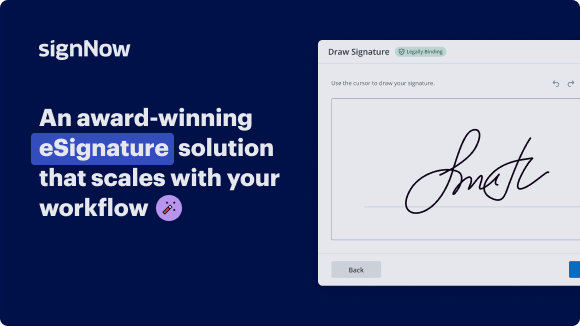
Award-winning eSignature solution

Overview: comparing signNow and Pipedrive for banking workflows

This comparison examines how signNow and Pipedrive address banking use cases that combine customer relationship management needs with electronic signature and document workflow requirements. signNow is primarily an eSignature and document workflow platform with integrations and APIs often used to extend CRM capabilities, while Pipedrive is a sales-focused CRM that can incorporate eSignature via integrations. The analysis focuses on security, compliance with U.S. regulations, document workflows, integration complexity, and operational fit for retail and commercial banking teams seeking reliable customer onboarding, loan processing, and contract execution.

Why this comparison matters for banks

Banks must balance regulatory compliance, secure signature capture, and customer data workflows; understanding whether to use an eSignature-first platform with CRM integrations or a CRM with signature add-ons affects implementation risk, operational cost, and auditability.

Why this comparison matters for banks

Common banking challenges addressed by CRMs and eSignatures

  • Ensuring U.S. regulatory compliance for signed records and data handling under ESIGN and UETA can be complex across vendors.
  • Integrating eSignature workflows with core banking systems and loan origination platforms often requires middleware and mapping work.
  • Maintaining tamper-evident audit trails and defensible signature evidence under audits and litigation is operationally demanding.
  • Balancing customer convenience with strong authentication increases friction if not configured with bank-grade identity controls.

Representative banking user profiles

Loan Officer

A loan officer needs fast, mobile-capable signature collection, prefilled document templates, and reliable audit trails to close consumer and small business loans while minimizing time spent on administrative follow-up and ensuring records meet regulatory scrutiny.

Compliance Officer

A compliance officer requires configurable retention policies, granular access controls, and clear, tamper-evident audit logs to demonstrate adherence to ESIGN, UETA, and applicable privacy obligations during internal reviews and external examinations.

Which banking teams use signNow or Pipedrive

Banking departments choose tools based on use case: onboarding, lending, or relationship management requires different capabilities from eSignature and CRM systems.

  • Retail branch teams handling account openings and signatures for consumer products.
  • Commercial lending groups managing contract execution and multi-party approvals.
  • Compliance and risk teams overseeing audit trails, retention, and regulatory reporting.

Selecting a primary platform depends on priorities: document security and compliance versus native CRM sales process features and pipeline management.

Additional features relevant to banking operations

Beyond core capabilities, banks evaluate authentication, access control, and automation features when selecting platforms for regulated workflows.

Authentication

Support for multi-factor, SMS OTP, and knowledge-based verification to meet varying assurance requirements for different transaction types.

Conditional Fields

Logic-driven fields that appear based on responses, reducing signer error and ensuring only relevant disclosures are presented during document completion.

Mobile Signing

Responsive signing experiences and native app options enabling customers to review and sign securely from smartphones and tablets with consistent audit capture.

API Access

A documented, RESTful API enabling integration with core banking systems, loan origination software, and custom CRMs for automated document lifecycle control.

Role-Based Access

Granular permissioning for administrators, reviewers, and signers to limit document visibility and editing to authorized personnel only.

Retention Policies

Configurable document retention and legal hold settings to meet bank recordkeeping and examination requirements while supporting defensible deletion.

be ready to get more

Choose a better solution

Core features banks evaluate in signNow and Pipedrive integrations

Banks often prioritize a short set of features when choosing between an eSignature-first platform with integrations and a CRM with signature add-ons.

CRM Integration

Bi-directional syncing and prefill capabilities that map customer records to document fields reduce duplicate data entry and ensure agreements reflect up-to-date account information while supporting automated workflows and status updates.

Bulk Send

Ability to send identical documents to many recipients with variable fields, useful for large notifications, disclosures, or batch account updates where consistent tracking and return of signed copies are required.

Template Library

Centralized, bank-approved templates with conditional logic and required fields that enforce compliance, speed document preparation, and reduce legal review cycles for commonly used consumer and commercial forms.

Audit Trail

A tamper-evident record of each transaction including timestamps, IP addresses, and signer actions to support regulatory examinations and dispute resolution with clear evidentiary detail.

How signNow and Pipedrive typically interact in a bank

Typical interaction models show where each system contributes during customer onboarding and contract execution.

  • Data Flow: CRM holds customer data, eSignature populates documents
  • Triggering: CRM events initiate document send actions
  • Execution: Recipients sign via web or mobile
  • Recording: Signed copies and audit logs return to CRM
Collect signatures
24x
faster
Reduce costs by
$30
per document
Save up to
40h
per employee / month

Quick setup steps for eSignature-CRM workflows

High-level setup for connecting an eSignature tool with a CRM to support banking document workflows.

  • 01
    Connect CRM: Authorize API integration between systems
  • 02
    Map Fields: Link CRM attributes to document fields
  • 03
    Create Templates: Build reusable, bank-compliant templates
  • 04
    Enable Routing: Set signing order and authentication

Managing audit trails and signed records

Steps to ensure auditability and preserve signature evidence across banking transactions.

01

Record Capture:

Store signed PDFs with metadata
02

Timestamping:

Record UTC timestamps for actions
03

Signer Details:

Capture name, email, and IP
04

Action Log:

Log each signer interaction
05

Signature Hashing:

Apply cryptographic hashes
06

Export Options:

Support audit package export
be ready to get more

Why choose airSlate SignNow

  • Free 7-day trial. Choose the plan you need and try it risk-free.
  • Honest pricing for full-featured plans. airSlate SignNow offers subscription plans with no overages or hidden fees at renewal.
  • Enterprise-grade security. airSlate SignNow helps you comply with global security standards.
illustrations signature

Suggested workflow configuration for banking document automation

A recommended baseline configuration to support repeatable, compliant signing workflows between an eSignature provider and a bank CRM.

Setting Name Configuration
Reminder Frequency 48 hours
Expiration Period 30 days
Authentication Method SMS OTP
Template Assignment Role-based templates
Webhook Endpoint CRM callback URL

Supported platforms for signing and administration

Platform compatibility affects customer experience and operational deployment; confirm supported browsers and mobile OS versions before roll-out.

  • Web Browsers: Chrome, Edge, Safari supported
  • Mobile OS: iOS and Android native apps
  • Desktop Clients: Browser-based admin console

For mobile-first customers, verify native app support and offline signing behavior; for enterprise deployments, validate browser requirements and SSO compatibility with existing identity providers.

Key security controls to evaluate

Encryption: AES-256 at rest and TLS
Access Controls: Role-based permissions
Audit Logs: Detailed transaction records
Multi-Factor Auth: Optional two-factor
Data Residency: US-based storage options
Third-Party Audits: SOC 2 compliance status

Banking use cases showing real workflows

Two practical examples illustrate how banks combine eSignature and CRM capabilities to streamline customer onboarding and loan processing while preserving compliance evidence.

Retail Loan Origination

A regional bank digitized consumer loan documents for remote signing and prefilled borrower data from its CRM to reduce manual entry

  • Integrated signNow templates with CRM fields for autofill
  • Reduced processing time and errors for loan officers

Resulting in faster closings and clearer audit trails for regulatory review.

Commercial Account Opening

A commercial banking team used an integrated workflow to collect multi-party signatures and supporting documents through a single portal

  • Combined CRM contact records with eSignature routing and conditional fields
  • Improved coordination across relationship managers and legal review teams

Leading to shorter processing cycles and a defensible chain of custody for signed contracts.

Best practices for secure and accurate banking eSignature workflows

Practical guidance to reduce risk and improve operational outcomes when combining eSignature and CRM processes in banking environments.

Standardize and approve templates centrally
Maintain a controlled library of bank-approved templates reviewed by legal and compliance to ensure consistent language, required disclosures, and accurate positioning of mandatory fields across all customer-facing agreements.
Use role-based access and least privilege
Grant signing and administrative permissions only to necessary personnel, separate duties between originators and approvers, and audit permission changes to reduce internal misuse or accidental exposure of sensitive documents.
Document authentication policies and exceptions
Define and record risk thresholds for authentication, maintain a record of approved exceptions, and periodically review authentication logs to ensure controls remain aligned with threat and regulatory expectations.
Test integrations and audit exports before production
Validate field mappings, webhook reliability, and full audit-package exports in a test environment to ensure signed documents and metadata persist correctly through CRM synchronization and backup workflows.

FAQs About signNow's customer relationship management vs pipedrive for banking

Common questions banks ask when deciding between an eSignature-first solution with CRM integrations and a CRM that adds signature capability.

Feature comparison: signNow, Pipedrive, and Adobe Sign

Concise availability and capability comparison to highlight functional differences relevant to banking workflows and compliance responsibilities.

Feature signNow (Recommended) Pipedrive Adobe Sign
eSignature Legal Validity
Native CRM Capabilities Limited Extensive Minimal
Direct Banking Integrations API-based Third-party API-based
Advanced Audit Trail Detailed Basic Detailed
be ready to get more

Get legally-binding signatures now!

Retention and legal hold guidelines for signed banking records

Suggested retention timeframes and hold practices that reflect common regulatory expectations; banks should align retention with specific statutes and exam guidance.

Consumer account documents:

Retain 3 to 7 years depending on statute

Loan and mortgage files:

Keep 7 years post-closure commonly

Deposit agreements and disclosures:

Retain at least 3 years

Anti-money laundering records:

Retain 5 years per regulations

Legal hold preservation:

Suspend deletions immediately upon notice

Risks and potential penalties for banks

Noncompliance fines: Civil penalties
Breach exposure: Regulatory action
Reputational harm: Customer distrust
Invalid signatures: Contract disputes
Data loss: Operational disruption
Audit findings: Remediation costs

Pricing and plan comparison across common vendors

High-level plan and capability comparison showing typical entry offerings and support characteristics; specific pricing and contract terms vary and should be confirmed with each vendor for banking deployments.

Plan signNow (Featured) Pipedrive Adobe Sign DocuSign OneSpan
Entry Plan Name Business Essential Individual Personal OneSpan Sign (Cloud)
Typical Starting Price $8/user/month $14.90/user/month $9.99/user/month $10/user/month Contact sales
API Availability Yes, public API Yes, public API Yes, public API Yes, public API Yes, enterprise API
Banking-Focused Features Compliance and integrations CRM sales features Enterprise compliance tools Enterprise ecosystem Strong security focus
Support Options Email and phone support Email support Enterprise support tiers 24/7 enterprise support Enterprise professional services
walmart logo
exonMobil logo
apple logo
comcast logo
facebook logo
FedEx logo
be ready to get more

Get legally-binding signatures now!