Comparaison De SignNow Et iSales Pour Les Entreprises
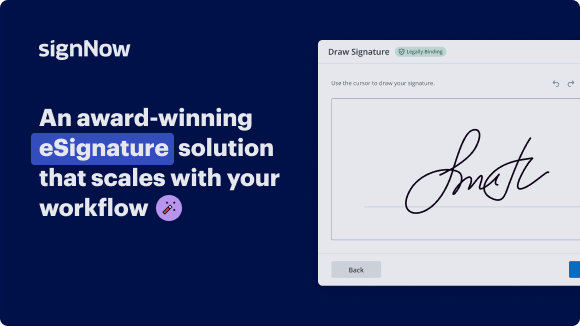
Solution eSignature primée




Faites avancer votre entreprise avec la solution de signature électronique airSlate SignNow
Ajoutez votre signature juridiquement contraignante
Intégrez via l'API
Envoyez des documents conditionnels
Partagez des documents via un lien d'invitation
Gagnez du temps avec des modèles réutilisables
Améliorez la collaboration d'équipe
Découvrez les signatures électroniques airSlate SignNow en action


Solutions airSlate SignNow pour une meilleure efficacité
Les avis de nos utilisateurs parlent d'eux-mêmes











Pourquoi choisir airSlate SignNow
-
Essai gratuit de 7 jours. Choisissez le forfait dont vous avez besoin et essayez-le sans risque.
-
Tarification honnête pour des forfaits complets. airSlate SignNow propose des abonnements sans frais supplémentaires ni frais cachés lors du renouvellement.
-
Sécurité de niveau entreprise. airSlate SignNow vous aide à respecter les normes de sécurité mondiales.

Comment choisir entre airSlate SignNow pour petites entreprises et Salesforce pour petites entreprises et réaliser vos workflows d'approbation de documents les plus efficaces
Les technologies d'aujourd'hui dictent de nouvelles conditions et méthodes pour faire des affaires. Considérez les signatures électroniques - ne sont-elles pas impossibles à réaliser sans ? Choisir la solution logicielle la plus adaptée avec une fonctionnalité puissante et des conditions raisonnables est crucial pour chaque organisation. Évaluez airSlate SignNow pour petites entreprises vs. Salesforce pour petites entreprises afin de sélectionner le meilleur outil pour des workflows de gestion de documents efficaces.
Suivez le guide ci-dessous pour faire correspondre airSlate SignNow pour petites entreprises vs. Salesforce pour petites entreprises :
- Connectez-vous ou inscrivez-vous pour votre essai gratuit de 7 jours afin de découvrir toutes les capacités étendues de la plateforme.
- Gérez votre profil dans le menu Mon compte, et configurez les notifications et signatures par défaut.
- Ouvrez Contacts et ajoutez les emails, noms et détails de l'organisation de toutes les personnes avec lesquelles vous travaillez.
- Cliquez sur Importer ou Créer et choisissez un fichier depuis votre appareil, le cloud ou le catalogue de modèles en ligne.
- Créez un formulaire remplissable avec des champs obligatoires, optionnels ou conditionnels attribués à chaque partie.
- Faites glisser et déposez le Champ de Signature pour tous les participants et signez le document vous-même si nécessaire.
- Envoyez des demandes de signature personnalisées aux contacts déterminés de votre base de données.
- Obtenez l'approbation de vos documents en quelques minutes et organisez-les dans des dossiers spécifiques.
Notre plateforme vous permet également de créer des équipes et de collaborer sur divers workflows, de créer des modèles réutilisables, et même de demander la notarisation de documents depuis votre compte. Découvrez ces options et d'autres logiciels, considérez les plans tarifaires, et faites votre choix le plus gagnant entre airSlate SignNow pour petites entreprises et Salesforce pour petites entreprises pour améliorer l'efficacité de votre workflow !
Comment ça marche
Fonctionnalités airSlate SignNow appréciées par les utilisateurs





Obtenez des signatures juridiquement contraignantes dès maintenant !
FAQ
-
Quelles sont les principales différences entre SignNow CRM et Salesforce pour petites entreprises ?
Lors de la comparaison de SignNow CRM et Salesforce pour petites entreprises, les principales différences résident en facilité d'utilisation et en prix. SignNow offre une interface plus simplifiée et est généralement plus abordable, ce qui en fait une excellente option pour les petites équipes. Salesforce, bien que puissant, peut être complexe et coûteux, ce qui peut ne pas être faisable pour une petite entreprise. -
Quelles sont les principales fonctionnalités de SignNow CRM qui bénéficient aux petites entreprises ?
SignNow CRM fournit des fonctionnalités essentielles adaptées aux petites entreprises, notamment des modèles de documents, la signature intégrée à l'application et des workflows automatisés. Ces fonctionnalités simplifient le processus de signature, améliorent la collaboration en équipe et réduisent le temps consacré à la gestion de la paperasserie. En revanche, les fonctionnalités de Salesforce peuvent être plus encombrantes et destinées à des entreprises plus grandes. -
Comment SignNow CRM s'intègre-t-il avec d'autres outils par rapport à Salesforce ?
SignNow CRM offre des intégrations fluides avec diverses applications, améliorant la productivité des petites entreprises. Bien que Salesforce supporte également les intégrations, leur complexité peut constituer un obstacle pour les petites entreprises recherchant des configurations rapides. Dans le débat 'signnow crm vs salesforce pour petites entreprises', une intégration facile est un avantage de SignNow. -
Quelle est la structure tarifaire de SignNow CRM par rapport à Salesforce ?
En ce qui concerne les prix, SignNow CRM est considérablement plus économique que Salesforce pour les petites entreprises. SignNow propose des plans tarifaires flexibles adaptés aux contraintes budgétaires des petites organisations, tandis que Salesforce peut représenter une charge financière avec ses frais d'abonnement. Donc, si vous recherchez des options économiques, SignNow est la meilleure solution. -
Quelle plateforme offre le meilleur support client pour les petites entreprises : SignNow CRM ou Salesforce ?
SignNow CRM excelle en fournissant un support client personnalisé adapté aux besoins des petites entreprises, garantissant une assistance rapide aux utilisateurs. Bien que Salesforce dispose d'un système de support client, les petites entreprises trouvent souvent difficile de naviguer dans la plateforme en raison de son ampleur. Cela fait de SignNow CRM un choix plus attrayant pour ceux qui ont besoin d'un support pratique. -
SignNow CRM peut-il aider ma petite entreprise à améliorer la gestion des documents ?
Absolument ! SignNow CRM simplifie la gestion des documents grâce à la signature électronique facile, au stockage dans le cloud et aux fonctionnalités d'accès partagé, essentielles pour les petites entreprises. En automatisant les workflows de documents, les équipes peuvent gagner du temps et se concentrer davantage sur leurs activités principales. C'est un avantage de SignNow dans la discussion 'signnow crm vs salesforce pour petites entreprises'. -
Quelles fonctionnalités de sécurité offre SignNow CRM pour les petites entreprises ?
SignNow CRM inclut des fonctionnalités de sécurité robustes telles que le stockage crypté des documents et des contrôles d'accès utilisateur sécurisés, essentiels pour les petites entreprises manipulant des informations sensibles. Ce niveau de sécurité est comparable à celui de Salesforce, mais l'accent mis par SignNow sur la simplicité permet aux petites entreprises de mettre en œuvre facilement ces mesures sans formation approfondie.
Ce que disent les utilisateurs actifs — signNow crm vs salesforce for small businesses


Obtenez plus pour signNow crm vs salesforce for small businesses
- Logiciel de proposition de restauration pour les entreprises
- Logiciel de proposition de restauration pour petites entreprises
- Logiciel de proposition de restauration pour les équipes
- Logiciel de proposition de restauration pour les organisations
- Logiciel de proposition de restauration pour les ONG
- Logiciel de proposition de restauration pour les organisations à but non lucratif
- Logiciel de Proposition RFP pour les Entreprises
- Logiciel de proposition RFP pour les entreprises
Découvrez d'autres signNow crm vs salesforce for small businesses
- Déverrouillez le pouvoir de la légitimité de la ...
- Légitimité de la signature électronique pour ...
- Légitimité de la signature électronique pour les ...
- Améliorez la légitimité de la signature ...
- Déverrouillez le pouvoir de la légalité de la ...
- Déverrouiller le pouvoir de la légalité de la ...
- Assurer la conformité avec les lois australiennes sur ...
- Légitimité de la signature numérique pour la ...
- Améliorez la légitimité de la signature numérique ...
- Légitimité de la signature numérique pour traiter le ...
- Assurer la légalité de la signature numérique pour ...
- Comprendre la légalité de la signature électronique ...
- Assurer la légalité de la signature électronique ...
- Comprendre la légalité des signatures électroniques ...
- Déverrouiller le pouvoir de la légitimité de la ...
- Améliorez la légitimité des contrats de freelance ...
- Légitimité de la signature électronique pour les ...
- Assurer la légitimité de la signature électronique ...
- Améliorez la légitimité de la signature ...
- Maximisez la légitimité de la signature électronique ...