Caption
Identify the document with a clear title and case or reference number when applicable so recipients can immediately recognize its purpose and link it to related records.
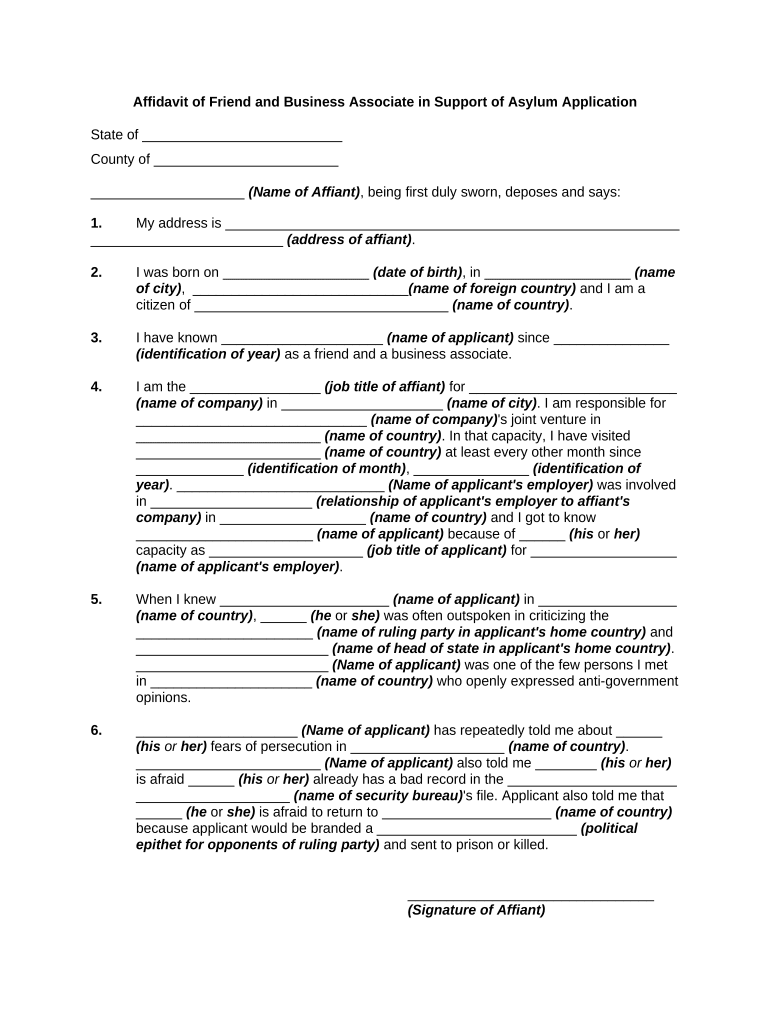
Creating a clear, properly executed affidavit produces a dated, sworn record that third parties and tribunals can rely on, reducing disputes and evidentiary gaps.

Typical users include private individuals, attorneys, title and escrow officers, and government staff who need sworn factual statements for administrative or legal purposes.
The individual who makes and signs the sworn statement. The affiant must provide accurate identity information, sign under oath, and be available to attest to the facts if required by a tribunal or agency.
A licensed notary verifies identity, administers the oath or affirmation, and completes the jurat or acknowledgment. Proper notarial wording and a current notary commission are required for acceptance.
Identify the document with a clear title and case or reference number when applicable so recipients can immediately recognize its purpose and link it to related records.
Provide the affiant’s full legal name, mailing address, date of birth or other identifying details, and the relationship to the subject matter to establish attribution and standing.
Present facts in numbered paragraphs, chronological order, and only include facts the affiant personally observed or knows to be true to avoid hearsay or speculation.
Attach and label supporting documents (A, B, C), reference each exhibit in the narrative, and ensure each exhibit is described precisely in the affidavit text.
Include the jurat or notary block showing the oath or affirmation, notary signature, commission expiration, and notarial seal as required by state law.
Provide the affiant’s signature, printed name, and date; include lines for witness signatures if the jurisdiction or document requires them.
| Field | Configuration |
|---|---|
| Identity Verification | Require government ID and SMS or knowledge-based authentication |
| Signature Type | Choose typed, drawn, or PKI-backed signature |
| Notary Mode | Select in-person or remote online notarization workflow |
| Export Format | Enable PDF/A or certified PDF output |
Ensure your chosen system can export a tamper-evident signed PDF, store the audit trail, and support remote or in-person notarization per jurisdictional rules.
Follow the court’s local rules and filing deadlines for submitted evidence
Recording offices may require notarized originals for property matters
Agencies often set specific windows for evidence submission
Affidavit date can affect limitations and equitable tolling arguments
Retention obligations typically begin on the statement date
Affiant and drafter finalize factual narrative and exhibits
Notary administers oath and completes jurat or acknowledgment
Submit to court, agency, or recording office as required
Store signed original and audit trail for retention period
A property owner documents chain-of-title facts in numbered paragraphs to support a recording correction
An individual files a sworn identity affidavit to certify a name change and attach supporting documents
| signNow | DocuSign | Adobe Sign | PandaDoc | HelloSign | |
|---|---|---|---|---|---|
| Starting Price | $8/user/mo | $15/user/mo | $14/user/mo | $19/user/mo | $15/user/mo |
| Free Trial | Yes, 7-day free trial | Yes | Yes | Yes | Yes |
| Bulk Send | Yes | Yes | Yes | Yes | No |
| Audit Trail | Yes | Yes | Yes | Yes | Yes |
| HIPAA Compliant | Yes | Yes | Yes | No | No |