Establishing secure connection…Loading editor…Preparing document…

Affidavit of Real Property

This template is fully customizable. Edit the text, fill out the fields, and send it for signature. Give it a try!
Affidavit of Real Property

What an Affidavit of Real Property Is and when it’s used

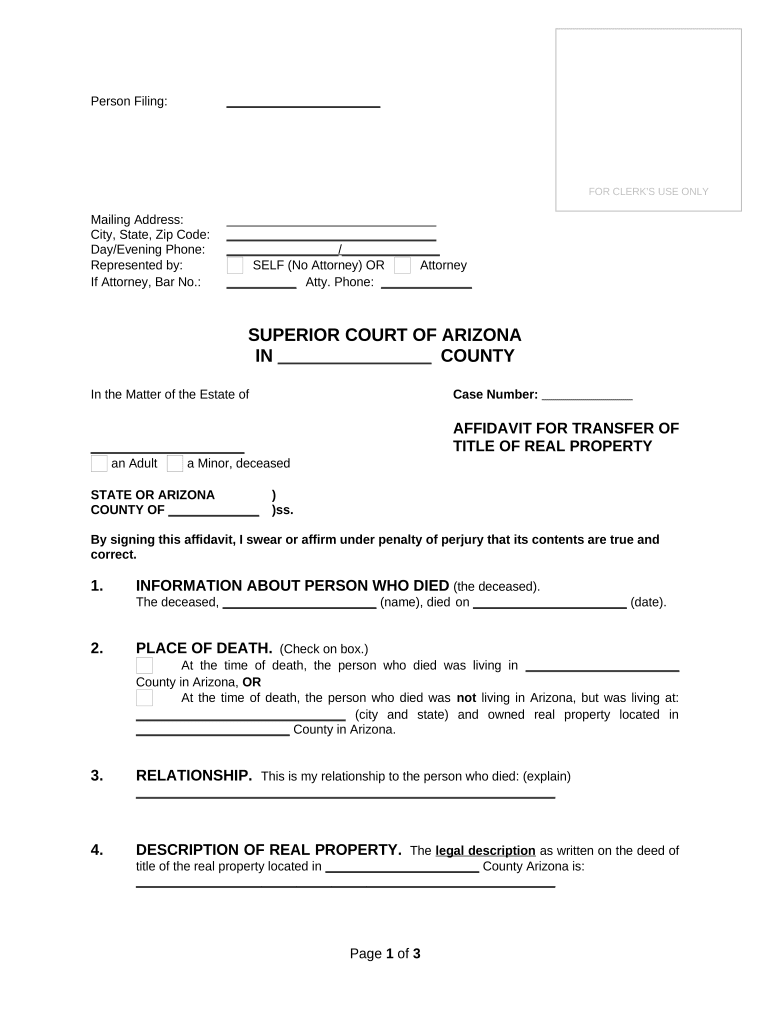
An Affidavit of Real Property is a sworn written statement used to certify facts about real property ownership, encumbrances, occupancy, or improvements. It accompanies real estate closings, title transfers, or recording submissions when parties, lenders, or title officers require formal attestation. The affidavit is executed under penalty of perjury, typically signed by an owner or authorized agent, and commonly requires notarization or remote online notarization where permitted. Use precise legal descriptions and supporting documents to avoid recording delays or title objections.

Why a clear affidavit matters for title and recording

A properly drafted affidavit reduces title exceptions, speeds closings, and creates a sworn record for title examiners and county clerks. When complete and notarized, it helps resolve gaps in chain-of-title and prevents later disputes over ownership or encumbrances.

Why a clear affidavit matters for title and recording

Who typically prepares and signs this affidavit

Several parties rely on an Affidavit of Real Property to verify facts and clear title requirements before recording or closing.

  • Property owners and sellers who attest to ownership, occupancy, or recent improvements and must swear to facts under penalty of perjury.
  • Title and escrow officers who request affidavits to clear exceptions discovered during title search or to document stale liens.
  • Lenders, investors, and closing attorneys who require sworn confirmation of property status to fund or insure transactions.

Core elements to include in a professional affidavit

A complete Affidavit of Real Property combines factual description, signer identification, legal declaration language, and authentication details required for recording and title clearance.

Property Description

Full legal description or parcel ID, street address, and county. Accurate legal metes-and-bounds or assessor parcel number prevents misfiling and title confusion.
Affiant Identity

Declarant name, role or title, and contact information. If acting for an entity, include corporate capacity and authority citation or power of attorney reference.

Statement of Facts

Clear, numbered factual statements (ownership, occupancy dates, improvements, lien history). Avoid hearsay; attach documentary evidence where possible.

Legal Attestation

Language swearing the truth under penalty of perjury. Include governing state law reference where required by local recording offices.

Signature Block

Printed name, signature, and date. If signed on behalf of an entity, include signer title and corporate seal as required.

Notarial Clause

Notary acknowledgement or jurat with notary signature, commission details, and RON session or audio-video record identifier if used.

Step-by-step: completing and executing the affidavit

Follow these sequential steps to prepare a recording-ready affidavit and avoid common processing delays.

  • 01
    Draft the affidavit: Assemble facts, exhibits, and the legal description.
  • 02
    Verify identity: Confirm signer identity with acceptable ID documents.
  • 03
    Notarize the document: Complete notary or RON steps per state rules.
  • 04
    File or record: Submit to the county recorder or title agent.

How to configure an online affidavit workflow

Set these basic workflow fields to collect required inputs, apply authentication, and route completed affidavits to proper parties.

Field Configuration
Signer Authentication Email + SMS code or higher for identity assurance
Required Attachments Permit PDFs, invoices, closing statements as mandatory
Notary Integration Enable RON provider or in-person notary field
Final Distribution Send signed copy to title agent, lender, and affiant

Where completed affidavits typically go

Once signed and notarized, identify recipients and recording destinations to ensure proper delivery and acceptance.

  • County Recorder: Record the affidavit along with the deed or related instruments.
  • Title Company: Provide to clear exceptions during title insurance issuance.
  • Lender or Servicer: Send when requested for underwriting or loan closing files.
  • Homeowner Association: Deliver copies if HOA approval or acknowledgment is required.

Technical and format requirements for eSubmission

Use standard file types and verification methods to avoid upload errors and ensure auditability.

  • File formats: PDF, PDF/A, DOCX accepted by most systems
  • Signature records: Include audit trail and timestamp
  • Integrations: Connect with title or cloud storage platforms

Typical timelines and processing expectations

Timelines vary by county, title insurer, and lender; treat the following as common sequencing and internal deadlines to plan around.

Drafting timeframe:

Prepare affidavit at least 3 business days before closing

Notarization timing:

Complete notarization on or before the closing date

Recording window:

Record within 7–30 days post-closing, per county practice

Title clearance:

Allow 1–5 business days after submission for review

Retention after filing:

Keep copies per retention policies and statutory periods

Risks and potential penalties for incorrect affidavits

Recording Rejection: Clerks may refuse defective instruments
Perjury Exposure: False statements risk criminal penalties
Title Insurance Delay: Insurer may delay or deny coverage
Lien Surprises: Unreported liens can surface later
Notary Invalidity: Improper notarization can void the affidavit
Contractual Disputes: Incorrect facts may trigger litigation

Common mistakes that cause processing delays

  • Incomplete legal descriptions or missing parcel numbers lead to recording clerk rejections and title examiner requests for clarification.
  • Signer name mismatches between ID, deed, and affidavit cause notary refusals and slow title insurance issuance.
  • Failure to attach supporting exhibits such as invoices, permits, or prior recorded instruments forces additional discovery and supplemental affidavits.
  • Using noncompliant notarial wording or omitting the jurat/acknowledgement results in rejection or demands for re-execution.

eSignature vendor comparison for affidavit signing

Compare common vendor characteristics for executing and distributing sworn affidavits; signNow is listed first per comparison conventions.

signNow DocuSign Adobe Sign PandaDoc HelloSign
Starting Price $8/user/mo $15/user/mo $14/user/mo $19/user/mo $15/user/mo
Free Trial 7-day free trial Varies by plan Varies by plan Varies by plan Varies by plan
Bulk Send Yes Yes Yes Yes No
Audit Trail Yes Yes Yes Yes Yes
HIPAA Compliant Yes Yes Yes No No

Real-world examples of affidavit use

Below are two concise case examples showing how organizations used an affidavit to clear title or meet compliance needs.

Martin Properties — Closing Efficiency

A regional broker used an affidavit to confirm recent improvements and occupancy dates for a resale property.

  • The affidavit closed a title exception.
  • The clear sworn statement allowed timely funding and recording, reducing lender holdbacks and avoiding a second closing visit.

Fertility Centers of Illinois — Compliance

A healthcare facility attached an affidavit to confirm ownership of medical equipment on site.

  • It clarified asset location.
  • Including the sworn affidavit with supporting invoices and a BAA where PHI touched the record prevented administrative delays and satisfied internal audit requirements.

Practical tips to avoid rework and re-submission

Following a few consistent practices significantly reduces the likelihood of affidavit rejections or title objections.

Use precise legal descriptions
Copy the legal description directly from the recorded deed or assessor's records to ensure the county recorder links the affidavit to the correct parcel.
Attach supporting exhibits
Include invoices, permits, and prior recorded instruments as labeled exhibits to corroborate factual statements and speed title review.
Verify signer authority
When executing for an entity, attach a corporate resolution or power of attorney to demonstrate capacity to sign and avoid later challenges.
Confirm notary and recording rules
Check state RON acceptance, witness requirements, and local clerk formatting requirements before executing and submitting the affidavit.

Frequently asked questions about affidavits of real property

Answers to common questions about validity, notarization, and electronic execution help clarify acceptable practices for US transactions.


Need help? Contact support

be ready to get more
Join over 28 million airSlate SignNow users