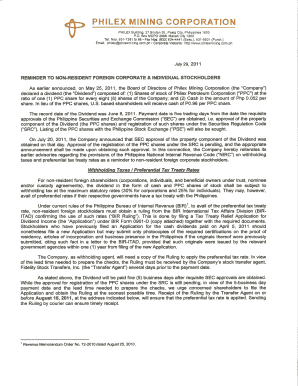
Application for Tax Treaty Relief
What the Application for Tax Treaty Relief Is and when it applies
Why completing a correct application matters
A properly completed Application for Tax Treaty Relief ensures correct withholding at source, reduces the risk of over-withholding for foreign workers or vendors, and documents the payer’s due diligence for IRS reporting and audit purposes.
Who prepares and reviews these applications
Typical preparers include foreign employees, visiting scholars, independent contractors, and authorized withholding agents or payroll teams.
- Foreign Individual filer — Completes personal identification, treaty article citation, and substantiating residency documentation; often coordinates with employer payroll.
- Withholding Agent / Payroll — Reviews eligibility, determines withholding rate, and retains the application for tax records and potential IRS examination.
- Tax Advisor or Certifying Agent — Provides treaty interpretation, completes supporting forms where needed, and may submit claims or refunds to the IRS.
Keep the completed application with payroll and tax records; retention and accessibility affect compliance with IRS and industry recordkeeping rules.
Step-by-step: Completing the Application for Tax Treaty Relief
-
01Collect identity documents: Obtain passport, visa, and residency certificate before starting.
-
02Identify treaty basis: Locate the treaty article and specify the income type it covers.
-
03Complete fields: Enter names, dates, TINs, and the period in MM/DD/YYYY format.
-
04Submit and retain: Give the application to the withholding agent and keep a signed copy.
How eSubmission and review typically flow
-
Upload application: Sender uploads PDF or completed form to payer portal.
-
Attach documents: Attach residency certificate and passport images.
-
Wh- agent review: Withholding agent verifies treaty eligibility and TINs.
-
Apply withholding: Agent updates payroll withholding per approved claim.
Recommended eSubmission settings for secure processing
| Field | Configuration |
|---|---|
| Authentication method | Email with optional SMS OTP for signer verification |
| Signature type | Electronic signature with audit trail; PKI if required |
| Record retention | Retain signed copy in tamper-evident storage for required period |
| Notifications | Automated email confirmations to payer and signer |
Platform capabilities to support electronic treaty relief claims
Choose an eSubmission platform that supports secure upload, signer authentication, and reliable audit trails.
- File formats: PDF and DOCX supported
- Authentication: Email, SMS OTP, KBA optional
- Audit trail: Timestamp, IP, user actions
Timing and common deadlines to watch
Provide W-9/W-8 when requested:
Supply upon payer request to avoid backup withholding
Form 1099-NEC deadline:
Jan 31 for recipient and IRS filing
Form 1099-MISC deadlines:
Jan 31 to recipient; paper to IRS Feb 28; electronic Mar 31
Individual tax return:
Form 1040 due Apr 15 (Oct 15 with extension)
Treaty claim timing:
Submit before or at the time of payment to influence withholding
Key processing milestones after submission
Submission
Signer uploads application and supporting documents.
Initial verification
Withholding agent checks residency and TIN validity.
Decision and update
Agent approves treaty relief and adjusts payroll withholding.
Record retention
Signed application is stored with payroll and tax records.
Common mistakes that delay or invalidate claims
- Using inconsistent names between passport, payroll records, and tax identification documents causes verification failures and delays.
- Omitting a certificate of tax residency or providing an expired residency document commonly results in rejection by the withholding agent.
- Entering incorrect treaty article or income type can lead to incorrect withholding and requires corrected filings or refund requests.
- Failing to apply for a U.S. TIN when required may trigger backup withholding at statutory rates.
Penalties and compliance risks to be aware of
eSignature vendor comparison for submitting and retaining treaty relief applications
| signNow | DocuSign | Adobe Sign | PandaDoc | HelloSign | |
|---|---|---|---|---|---|
| Starting Price | $8/user/mo | $15/user/mo | $14/user/mo | $19/user/mo | $15/user/mo |
| Free Trial | 7-day free trial | Varies by plan | Varies by plan | Varies by plan | Varies by plan |
| Bulk Send | Yes | Yes | Yes | Yes | No |
| Audit Trail | Yes | Yes | Yes | Yes | Yes |
| HIPAA Compliant | Yes | Yes | Yes | No | No |
| Envelope Cap | No cap | 100 envelopes/user/year | Varies by plan | Varies by plan | Varies by plan |
Frequently asked questions and troubleshooting
-
What documents prove residency?
Provide a certificate of tax residence issued by the foreign tax authority, a recent tax return, or other government-issued residency certificate to support treaty claims. The withholding agent will rely on those documents to apply reduced withholding.
-
Can the application be e-signed?
Yes. Electronic signatures meet ESIGN and UETA standards when intent, consent, attribution, and reliable retention are present. Ensure the platform records an audit trail and stores an unalterable copy.
-
Is a U.S. TIN always required?
A U.S. TIN is typically required to claim treaty benefits for payroll and certain payments. If absent, backup withholding may apply until a TIN is provided; apply for an ITIN or SSN as appropriate.
-
What happens if the application is incomplete?
Withholding agents may delay relief, apply statutory withholding, or request corrected documentation. Rejections can lead to over-withholding and require refund claims.
-
How long should records be kept?
Follow IRS retention rules (minimum 3 years from filing) and industry-specific requirements such as HIPAA (6 years). Some states require longer retention—consult counsel for state specifics.
-
Who signs on behalf of an entity?
An authorized officer or agent with authority to bind the entity must sign. Retain documentation of signatory authority such as corporate resolution or power of attorney when applicable.