Establishing secure connection…Loading editor…Preparing document…

Commercial Security Agreement

This template is fully customizable. Edit the text, fill out the fields, and send it for signature. Give it a try!
Commercial Security Agreement

What a Commercial Security Agreement Is and when it applies

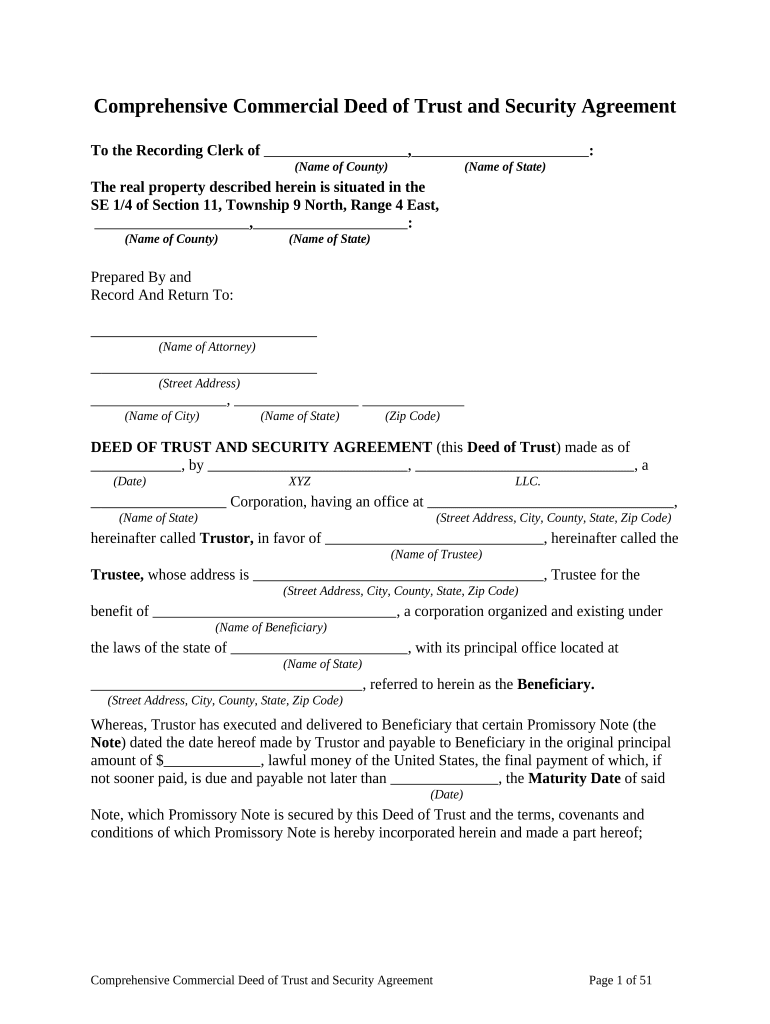
A Commercial Security Agreement is a legally binding contract that creates a security interest in personal or business property to secure repayment of an obligation. It identifies the secured party and debtor, describes the collateral, and grants the secured party enforcement rights on default. These agreements are commonly paired with a UCC-1 financing statement to perfect the interest. The document governs priority among creditors, sets remedies for enforcement, and establishes the effective date and governing law for disputes.

Why a clear Commercial Security Agreement matters

A well-drafted agreement clarifies collateral scope, reduces dispute risk, and supports priority when filing a UCC-1. Precision protects lenders and borrowers by defining default events, remedies, and notice procedures under governing law.

Why a clear Commercial Security Agreement matters

Who commonly prepares and signs these agreements

Typical users include commercial lenders, finance teams, in-house counsel, and borrowing entities that need secured credit arrangements.

  • Commercial lenders and banks: Draft, approve, and perfect security interests for loan collateral.
  • Corporate borrowers and CFOs: Confirm collateral descriptions and execution authority for signing.
  • Outside counsel and title agents: Review priority language and coordinate UCC-1 filing and recordings.

Key signer roles and responsibilities

Lender — Credit Manager

Responsible for specifying collateral, approving credit terms, and ensuring perfection steps (UCC-1 filing where required). The credit manager coordinates legal review and enforces remedies on borrower default, working with counsel for perfection and enforcement actions.

Borrower — Chief Financial Officer

Signs to grant the security interest and confirms the accuracy of collateral descriptions and asset ownership. The CFO arranges internal approvals and ensures the borrower meets representation and warranty obligations before execution.

Core clauses to include in a professional Commercial Security Agreement

Include clearly written sections that define parties, collateral, secured obligations, perfection mechanics, events of default, and remedies so the security interest is enforceable and marketable.

Parties

Full legal names, entity types, and organization jurisdictions for secured party and debtor.
Collateral Description

Specific, itemized description of property or a properly drafted category description under UCC rules.

Secured Obligations

Precise statement of the debts, obligations, and contingencies secured by the collateral.

Perfection

Mechanism for perfection (UCC-1 filing, fixture filing, or recording) and filing jurisdiction.

Default & Remedies

Events of default, acceleration, repossession rights, and sale procedures consistent with state law.

Governing Law

Choice of law, venue, and any waiver of jury trial or notice procedures where permitted.

Essential information to capture in the form

Secured Party: Name and address
Debtor: Name and jurisdiction
Collateral: Precise category
Obligation: Amount or reference
Effective Date: MM/DD/YYYY
Signatures: Names, titles, dates

Step-by-step: preparing, signing, and perfecting the agreement

A clear sequence reduces errors: draft with counsel, confirm collateral language, execute correctly, and file any required financing statements without delay.

  • 01
    Draft Agreement: Prepare terms and collateral descriptions with legal review.
  • 02
    Obtain Approvals: Secure internal sign-off and board or credit committee approvals where required.
  • 03
    Execute Document: Collect authorized signatures and dates from all parties.
  • 04
    Perfect Interest: File UCC-1 or record fixture financing statements as applicable.

Configuring a digital completion workflow for this agreement

Set up signer order, authentication, and templates so documents route correctly and all audit data is captured.

Field Configuration
Signer Authentication Email + optional SMS code or KBA
Signature Type Typed or drawn e-signature, or digital (PKI) if required
Routing Order Sequential or parallel signer order
Document Retention Store signed PDF and audit trail

Digital signing and integration considerations

Ensure your eSignature provider supports the authentication, retention, and integrations your workflow requires.

  • Authentication: Email, SMS, KBA options
  • Integrations: Salesforce, NetSuite, Google Workspace
  • Document Types: PDF, DOCX support

Where to file, send, and record after signing

Filing depends on collateral type: personal property interests use Secretary of State filings, while fixtures or real property may require county recording.

  • Personal Property: File UCC-1 with state Secretary of State
  • Fixtures / Real Property: Record fixture financing statement at county recorder
  • Deliver to Parties: Provide fully executed copies to both parties
  • Monitor and Renew: Track expiration and file continuations when needed

Key timing and filing deadlines to track

Timely filings and continuation steps preserve priority; note statutory filing windows and administrative deadlines where applicable.

UCC-1 Effective Period:

Typically five years (UCC §9-515)

Continuation Window:

File continuation within six months before expiry

Amendment Filing:

Amend promptly when collateral or parties change

Termination Statement:

File upon full satisfaction of obligation

Notary / RON Rules:

Follow state RON and notary timelines

Common preparation mistakes to avoid

  • Using informal or vague collateral descriptions that fail to meet UCC specificity requirements and lead to rejections during perfection.
  • Failing to confirm the debtor's exact legal name and jurisdiction, which can render a financing statement ineffective against third parties.
  • Delaying UCC-1 filing after execution, which can cause loss of priority to competing secured parties with earlier filings.
  • Neglecting to update or terminate financing statements after payoff, creating clouded title and unnecessary lien searches.

Consequences of incorrect or missing steps

Perfection Failure: Loss of priority
Invalid Signature: Potential unenforceability
Late Filing: Subordinated lien position
Incomplete Collateral: Partial recovery only
Improper Jurisdiction: Filing rejection risk
Missing Termination: Title clouding

Comparing eSignature pricing and feature basics for document workflows

Basic vendor pricing and capability differences affect cost and compliance choices; signNow is listed first for direct comparison across typical features.

signNow DocuSign Adobe Sign PandaDoc HelloSign
Starting Price $8/user/mo $15/user/mo $14/user/mo $19/user/mo $15/user/mo
Free Trial 7-day free trial Varies by vendor Varies by vendor Varies by vendor Varies by vendor
Bulk Send Yes Yes Yes Yes No
Audit Trail Yes Yes Yes Yes Yes
HIPAA Compliant Yes Yes Yes No No

Real examples of secure digital execution in practice

The following examples show how organizations use digital signing and careful filings to secure interests and speed transactions.

Optica Ventures — COO

The team adopted standardized security agreements to speed onboarding and reduce errors.

  • They used consistent collateral templates across deals.
  • As a result, execution times shortened and fewer UCC amendments were required, improving operational consistency and easing priority searches for subsequent financings.

BIS — CEO

BIS prioritized compliant, trackable signing with audit trails for every security agreement.

  • Audit trails documented consent and signer attribution.
  • This reduced disputes over execution validity and provided reliable evidence during enforcement, while simplifying coordination with state filing offices.

Practical tips for accurate and efficient completion

Follow these safeguards to reduce rework and preserve priority when creating and filing Commercial Security Agreements.

Verify legal names and statuses
Confirm the debtor and secured party names against state business registries; inconsistent names are a common cause of UCC-1 rejections and priority disputes.
Use clear collateral language
Draft collateral descriptions to match accepted UCC categories or provide specific lists so searchers and courts can identify covered assets precisely.
Coordinate filing jurisdiction
File where the collateral rules require (state SOS for personal property, county recorder for fixtures) and confirm indexing conventions to ensure discoverability.
Keep execution records
Retain signed PDFs, notarizations, RON session logs, and audit trails to support future enforcement or defense of perfection and priority.

Frequently asked questions about Commercial Security Agreements

Answers to common legal, filing, and eSignature questions to help avoid delays or enforceability problems.


Need help? Contact support

be ready to get more
Join over 28 million airSlate SignNow users