Establishing secure connection…Loading editor…Preparing document…

Acquisition Agreement

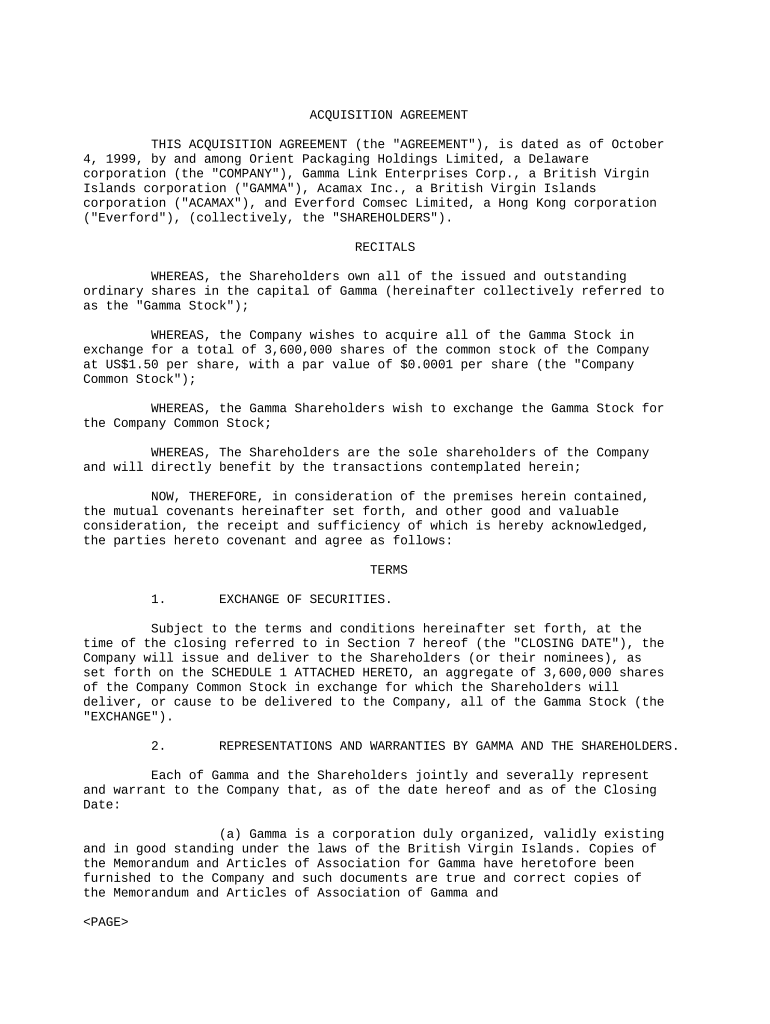
This template is fully customizable. Edit the text, fill out the fields, and send it for signature. Give it a try!
Acquisition Agreement

What an Acquisition Agreement Is and when it applies

An Acquisition Agreement is a legally binding contract that sets the terms and conditions for one party to acquire assets, equity, or a business from another party. It defines purchase price, payment terms, representations and warranties, covenants, closing conditions, indemnities, and post-closing obligations. In the United States these agreements commonly appear in mergers, stock purchases, and asset sales and are governed by contract law along with any industry- or state-specific statutes. Accurate execution, clear exhibits, and complete signatures are essential to make the agreement enforceable and to support subsequent filings or recordings.

Why a clear Acquisition Agreement matters

A well-drafted Acquisition Agreement reduces commercial uncertainty by allocating risk, setting closing conditions, and describing remedies for breach. Clear terms speed due diligence, reduce post-closing disputes, and identify regulatory or tax obligations that affect price and timing.

Why a clear Acquisition Agreement matters

Who typically prepares and signs an Acquisition Agreement

Different roles participate at various stages: legal counsel drafts and negotiates; finance teams model and approve; executives authorize; signatories complete execution at closing.

  • Buyers and their counsel draft and negotiate deal terms and handle financing approvals.
  • Sellers and their counsel prepare disclosures, schedules, and required corporate authorizations.
  • Lenders, escrow agents, and closing agents coordinate payments, liens, and recording.

Parties should confirm authority to sign, resolve any shareholder or board approvals, and assemble required supporting documents before execution.

Core elements to include in a professional Acquisition Agreement

Use a consistent structure so reviewers can quickly find obligations, conditions, and remedies. Each component should link to exhibits or schedules where supporting detail is needed.

Purchase Terms

Defines purchase price, payment mechanics, escrow, and adjustments for working capital or liabilities; ties numbers to schedules.
Assets & Equity

Specifies which assets or shares transfer, excluded assets, and the legal mechanism for conveyance to avoid ambiguity.

Representations

Seller and buyer assertions about authority, title, financials, and compliance; materiality thresholds and knowledge qualifiers defined.

Covenants

Ongoing obligations before and after closing, including noncompete, confidentiality, and transition assistance.

Closing Conditions

List of conditions precedent, regulatory approvals, third-party consents, and required closing deliverables.

Indemnities

Scope, survival period, limitations, caps, and procedures for claims and defense—often a key negotiated area.

Step-by-step: preparing and executing an Acquisition Agreement

Follow a clear sequence to minimize delays: prepare, review, negotiate, finalize, sign, and complete post-closing filings.

  • 01
    Prepare: Collect corporate approvals, disclosures, and schedules.
  • 02
    Negotiate: Resolve price, reps, covenants, and indemnity terms.
  • 03
    Finalize: Insert exhibits and confirm final figures and approvals.
  • 04
    Execute: Sign, notarize if required, and arrange delivery or recording.

How to configure an online signing workflow

Configure fields, signer order, and authentication to match your closing process; map documents to folders for tracking.

Field Configuration
Signature Field Mandatory; require date and printed name
Initials Field Optional; use for multi-page acknowledgment
Date Field Auto-fill MM/DD/YYYY
Signer Authentication Email plus SMS code or knowledge-based verification

Typical routing and delivery flow for execution

A predictable routing order reduces signature delays. Define signer roles and escrow or closing agent responsibilities in advance.

  • Upload Document: Sender uploads final agreement and exhibits
  • Place Fields: Assign signature, initials, and date fields
  • Add Signers: Enter signer emails and role order
  • Execute: Signers authenticate and complete signing

Technical considerations for eSigning and delivery

Confirm format compatibility, signer authentication, and integrations before sending the agreement for signature.

  • File Formats: PDF, DOCX, and HTML supported
  • Integrations: Salesforce, NetSuite, Microsoft 365 supported
  • Authentication: Email, SMS code, and advanced options

Use audit trails and secure storage to preserve evidentiary records; confirm any required BAA, SSO, or API access ahead of execution.

Common deadlines and timing expectations

Acquisition transactions follow predictable time points; parties should set and confirm these dates in the agreement and related schedules.

Due Diligence Period:

Typically 14–60 days depending on transaction scope

Signing Date:

Date parties execute final agreement

Closing Date:

Date when funds and title transfer

Post-Closing Deliverables:

Deliver schedules, releases, and final lien searches

Recording/Filings:

Record deeds or UCCs promptly after closing

Common mistakes to avoid when preparing an Acquisition Agreement

  • Leaving schedules incomplete, which can create post-closing disputes and claims.
  • Using vague consideration language like 'fair market value' without a formula or appraisal method.
  • Failing to confirm corporate authority or necessary shareholder approvals before signing.
  • Neglecting to plan for required recordings, releases, or third-party consents in the closing timeline.

Key risks and potential legal consequences

Breach Damages: Monetary liability and specific performance risk
Tax Exposure: Recharacterization or failed allocation risks
Recording Errors: Title defects and lien priority loss
Regulatory Penalties: Antitrust or licensing enforcement exposure
I-9/Employment: Fines for improper onboarding documentation
1099/Reporting: Penalties under IRC §6721 for incorrect information returns

Essential security and compliance features for signed agreements

Encryption: TLS 1.2/1.3 in transit; AES-256 at rest
Audit Trail: Detailed timestamp, IP, and action log
HIPAA Support: BAA available for protected health information
ESIGN/UETA: Meets ESIGN and UETA legal requirements
21 CFR Part 11: Capabilities for FDA-regulated records
SOC 2 / ISO: SOC 2 Type II and ISO 27001 certified

eSignature vendor pricing and feature comparison for Acquisition Agreements

Compare entry pricing and key feature differences when selecting an eSignature provider for acquisition workflows; signNow appears first for reference.

signNow DocuSign Adobe Sign PandaDoc HelloSign
Starting Price $8/user/mo $15/user/mo $14/user/mo $19/user/mo $15/user/mo
Free Trial 7-day free trial Varies by vendor Varies by vendor Varies by vendor Varies by vendor
Bulk Send Yes Yes Yes Yes No
Audit Trail Yes Yes Yes Yes Yes
Envelope Cap No envelope cap 100 envelopes/user/year Varies by plan Varies by plan Varies by plan

Real-world examples of online execution in acquisitions

These brief cases show how digital execution and secure workflows supported closing and compliance in actual transactions.

Optica Ventures

The interface is simple and easy to use for our team and customers

  • Enabled remote signing across multiple counterparties
  • By removing in-person steps, the company completed closings more quickly while preserving audit records and customer experience.

Martin Properties

We process and execute documents online with compliance and security

  • Mobile signing allowed closings while on site
  • The team reduced turnaround time on purchase agreements and maintained consistent records for title and escrow coordination.

Practical tips to reduce risk and speed closing

Adopt consistent habits to reduce negotiation friction, ensure enforceability, and make post-closing administration simpler.

Use clear schedules
Attach detailed exhibits for assets, liabilities, and excluded items so parties and title vendors can verify transfers without ambiguous references.
Confirm signing authority
Obtain corporate resolutions, board minutes, or officer certificates showing signers have authority; include certificates as closing deliverables.
Standardize signature process
Define signer order, authentication method, and document copies to be distributed so each party receives consistent executed originals and audit logs.
Plan filings early
Identify recording, UCC, or regulatory filings needed post-closing and allocate responsibility and budget in the agreement to avoid delays.

Frequently asked questions about executing an Acquisition Agreement

Answers below address common legal and practical concerns when drafting, signing, and storing acquisition documents.


Need help? Contact support

be ready to get more
Join over 28 million airSlate SignNow users