Establishing secure connection…Loading editor…Preparing document…

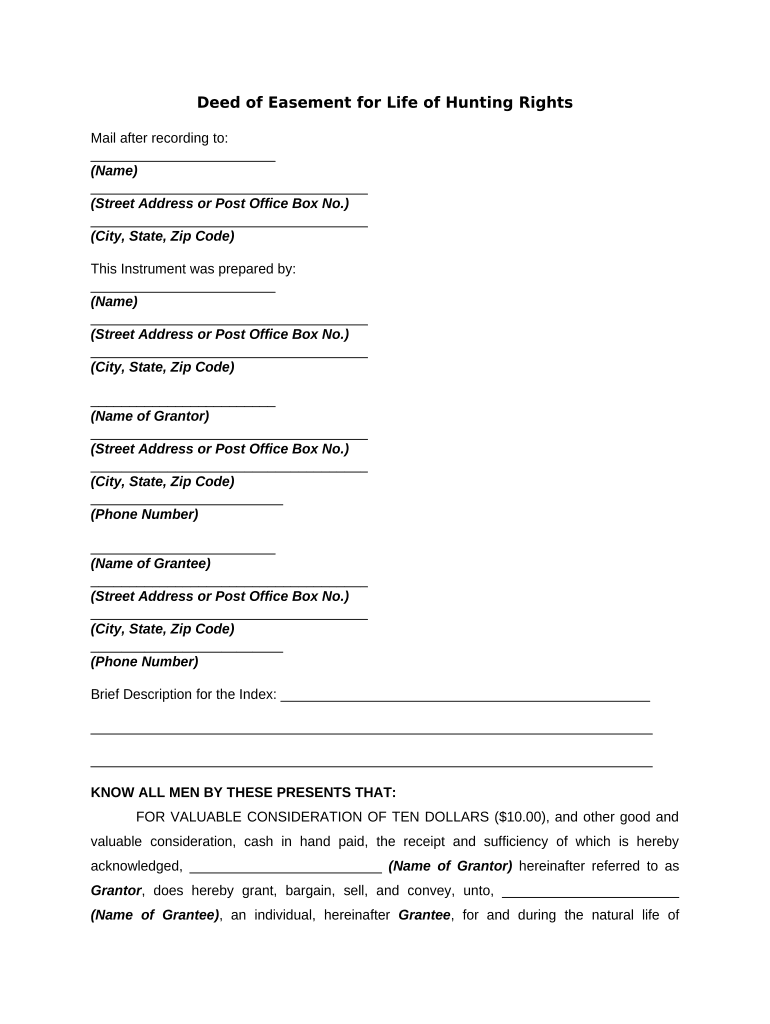
Easement Deed

This template is fully customizable. Edit the text, fill out the fields, and send it for signature. Give it a try!
Easement Deed

What an Easement Deed Is and When it’s Used

An Easement Deed is a written instrument that grants a nonpossessory property interest allowing one party limited use of another party’s land for a specific purpose, such as access, utilities, or drainage. It identifies the grantor and grantee, describes the servient and dominant parcels by legal description, defines scope and duration, and usually includes consideration, maintenance allocation, and recording instructions. Recorded easement deeds place notice on title and affect future owners; unrecorded easements may remain enforceable between parties but risk priority issues versus later purchasers.

Why a Clear Easement Deed Matters

A well-drafted Easement Deed clarifies the permitted uses, protects property rights, and reduces future disputes over scope, access, and maintenance.

Why a Clear Easement Deed Matters

Who Typically Prepares and Signs an Easement Deed

Several parties commonly need or prepare easement deeds depending on the purpose: property owners, utilities, developers, and municipal agencies.

  • Property owners and buyers: grant or receive access, ingress/egress, or utility rights; often require title company review.
  • Utility and infrastructure providers: secure rights-of-way for pipes, lines, or drainage with detailed location and maintenance terms.
  • Local governments and developers: record public or private easements for streets, sidewalks, stormwater, or conservation purposes.

Essential Information to Include in the Easement Deed

Grantor Name: Full legal name
Grantee Name: Full legal name
Legal Description: Metes and bounds
Easement Type: Access, utility, drainage
Consideration: Dollar amount or nominal
Signatures/Notary: Execution date and notarization

Step-by-Step: Preparing, Signing, and Recording an Easement Deed

Follow these sequential steps to create an enforceable easement deed and preserve priority on title.

  • 01
    1. Confirm Parties: Verify grantor/grantee identity and authority.
  • 02
    2. Obtain Legal Description: Use recorded metes/bounds or a survey.
  • 03
    3. Draft Clear Terms: Define scope, duration, and maintenance responsibilities.
  • 04
    4. Execute and Notarize: Sign before a notary and any required witnesses.

Preparing an Online Easement Deed Workflow

Configure a repeatable digital workflow to collect signatures, route for review, and retain final records.

Field Configuration
Authentication Method Email link, SMS code, or higher assurance
Template Options Reusable template with survey exhibits attached
Routing Order Title company or attorney, then grantee, then grantor
Record Retention Store signed PDF and audit trail securely

Where the Easement Deed Goes After Signing

After execution, route the deed to the notary, record with the county recorder, and deliver copies to interested parties.

  • Notary Acknowledgement: Notary completes acknowledgment and journal entry.
  • County Recording: Recorded at the recorder or clerk’s office for notice.
  • Title Company: Provide recorded copy for title updates and insurance.
  • Retain Copies: All parties keep signed, recorded PDF with audit trail.

Digital Signing and eSubmission for Easement Deeds

Electronic signatures are widely accepted for many real estate agreements but must meet legal and local recorder requirements.

  • Authentication Options: Email, SMS, or KBA
  • File Formats: PDF/A or PDF with embedded audit trail
  • Integration Needs: Title systems or document management

Confirm your county recorder accepts electronically signed or notarized documents; some jurisdictions require wet-ink or RON-specific formats.

Typical Timing and Processing Expectations

Timing depends on county procedures, notary availability, and whether remote notarization is used; plan for document review, execution, and recording steps.

Document Review Period:

Allow several days for title and survey review.

Execution and Notarization:

Schedule signing with notary availability in mind.

Recording Turnaround:

Processing ranges by county from same-day to several weeks.

Title Update:

Title companies update records after recorded instrument indexed.

Dispute Window:

Prompt recording reduces risk from intervening purchasers.

Risks and Consequences of an Incorrect Easement Deed

Clouded Title: May impede future sales
Unenforceable Grant: If not properly executed
Boundary Disputes: Ambiguous descriptions cause litigation
Invalid Authority: Unauthorized grantor voids easement
Priority Loss: Failure to record reduces notice
Tax Impact: Changes in property tax treatment

Common Errors to Avoid When Preparing the Deed

  • Using a street address instead of a complete legal description, which can make the deed unrecordable or ambiguous.
  • Failing to notarize or to comply with state witness rules, risking enforceability against third parties.
  • Drafting overly broad or vague use language that leads to disputes about permitted activities or maintenance obligations.
  • Neglecting to coordinate recording with the title company, which can cause priority issues with subsequent purchasers.

Practical Tips for Accurate and Efficient Completion

Adopt these practices to reduce rework, improve enforceability, and accelerate recording.

Use Precise Legal Descriptions
Always attach a recorded survey or plat reference. Ambiguity in the property description is the most common cause of recording rejections and later boundary disputes; a survey exhibit resolves most issues.
Define Scope and Maintenance Clearly
Specify permissible uses, access points, dimensions, and which party is responsible for upkeep. Clear maintenance allocation prevents recurring conflicts and supports enforceability in equity or contract.
Coordinate With Title and Lender
Review the deed with the title insurer and any mortgagee to determine endorsement requirements and ensure the easement will not impair financing or closing timelines.
Record Promptly After Execution
Record the deed at the county recorder promptly to provide constructive notice; prompt recording protects priority against intervening purchasers and preserves intended rights.

Real-World Examples of Easement Deed Use

These brief case summaries show how parties apply easement deeds in practice and what issues the document resolves.

Martin Properties (Access Easement)

Martin Properties needed an access easement for a new driveway adjacent to a neighbor’s parcel.

  • The deed attached a survey and limited vehicle access hours.
  • The recorded instrument clarified maintenance responsibility, avoided a later trespass dispute, and allowed the project to proceed without altering lot lines.

Utility Provider (Right-of-Way)

A utility company secured a perpetual utility easement across private land for underground conduit.

  • The agreement defined a 10-foot wide corridor and restoration obligations.
  • Recording the deed and providing the title company with a marked plat ensured the easement was reflected in subsequent title commitments.

eSignature Pricing Comparison for Easement Deed Workflows

Below is a concise vendor comparison focused on starting price, trial options, bulk send, audit trail, HIPAA compliance, and envelope caps where applicable.

signNow DocuSign Adobe Sign PandaDoc HelloSign
Starting Price $8/user/mo $15/user/mo $14/user/mo $19/user/mo $15/user/mo
Free Trial 7-day free trial Varies by vendor Varies by vendor Varies by vendor Varies by vendor
Bulk Send Yes Yes Yes Yes No
Audit Trail Yes Yes Yes Yes Yes
HIPAA Compliant Yes Yes Yes No No
Envelope Cap No envelope cap 100 envelopes/user/year Varies Varies Varies

Frequently Asked Questions About Easement Deeds

Answers to common questions about execution, e-signing, recording, corrections, and revocation for easement deeds in the U.S.


Need help? Contact support

be ready to get more
Join over 28 million airSlate SignNow users