Establishing secure connection…Loading editor…Preparing document…

Letter Regarding Property Disposition and Legal Separation

This template is fully customizable. Edit the text, fill out the fields, and send it for signature. Give it a try!
Letter Regarding Property Disposition and Legal Separation

What this Letter Is and When it’s Used

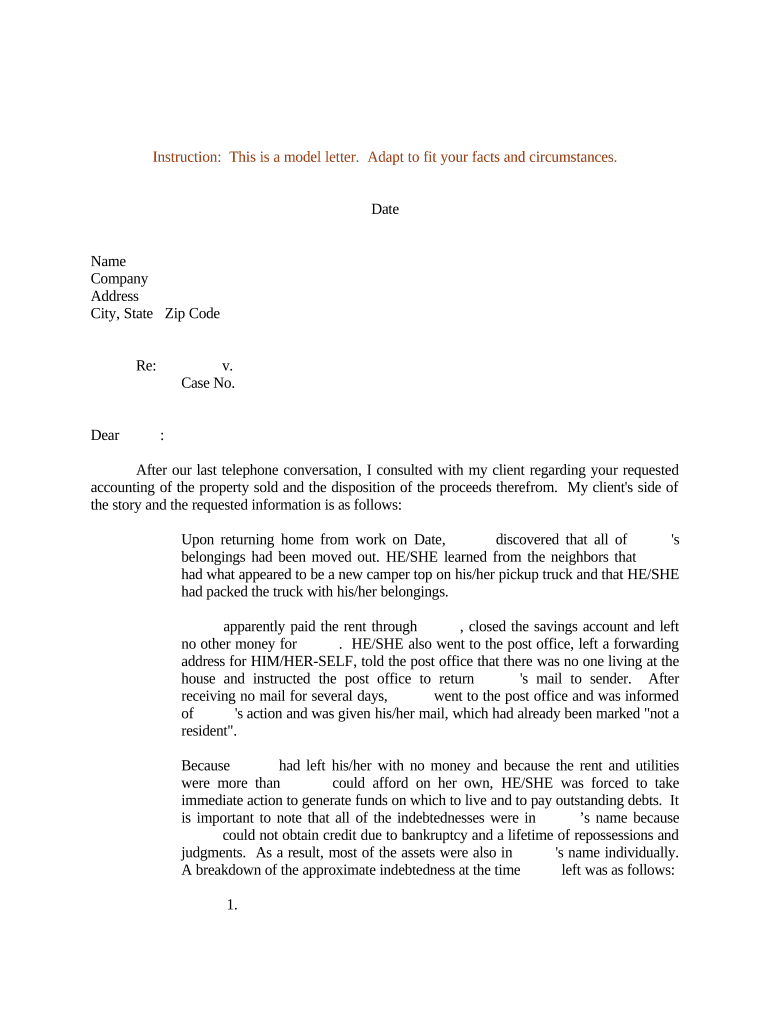
A Letter Regarding Property Disposition and Legal Separation is a formal written notice that documents how parties agree to handle ownership, transfer, or custody of property during a legal separation. It records the property items affected, the proposed disposition (sale, transfer, retention, or joint management), and any interim possession or maintenance arrangements. The letter is often used to preserve rights, notify lenders or tenants, support temporary court filings, or provide evidence for later divorce or probate proceedings where property status is disputed or needs formal acknowledgement.

Why a Clear, Written Letter Matters

A concise letter creates an auditable record of intent and agreed interim arrangements, reducing miscommunication and preserving legal positions. It can limit exposure to title challenges, creditor claims, and misunderstanding between parties while separation is pending.

Why a Clear, Written Letter Matters

Who Typically Prepares or Receives This Letter

The letter is suitable for individuals, their attorneys, and third parties (lenders, tenants, escrow agents) who need a clear written record without immediately filing a court motion.

  • Separating spouses or partners preparing interim property allocations and possession terms.
  • Real estate agents or property managers notifying tenants or lenders of changed responsibilities.
  • Attorneys preparing evidence for family court or advising clients on temporary arrangements.

Core Elements to Include in a Professional Letter

Include clear identification, specific disposition instructions, timeframes, and signature blocks so the letter functions as a reliable record and can support court filings if needed.

Party Details

Full legal names, contact information, and relationship to the property so recipients can verify authority and match to title records or leases.
Property Description

Precise legal description or street address and identifying details for vehicles or personal property to avoid ambiguity in disposition or transfer instructions.

Disposition Plan

Clear instruction whether property will be sold, transferred, retained, or jointly managed, including who will handle listing, sale proceeds, or storage responsibilities.

Interim Possession

Specify who has physical possession during separation, responsibilities for maintenance, insurance, utilities, and access limitations to avoid disputes.

Timeframe

Dates for when the disposition takes effect, deadlines for actions (e.g., sale listing, transfer documents), and conditions that trigger changes to the plan.

Signatures

Signature and date lines for all parties and any witness or notary blocks required by state law to support enforceability and future recordation.

Essential Data Fields to Capture

Party Names: Full legal names
Property ID: Address or VIN
Disposition: Sale/Transfer/Retain
Effective Date: MM/DD/YYYY
Signatures: Sign and date
Notary Block: If required

Step-by-Step: Preparing the Letter

Use this concise sequence to draft, review, and finalize a legally useful notice of property disposition during separation.

  • 01
    Draft Details: List parties, property, and the proposed disposition.
  • 02
    Set Dates: Specify effective and deadline dates in MM/DD/YYYY.
  • 03
    Review: Have counsel or neutral reviewer check for clarity.
  • 04
    Execute: Sign, date, notarize or witness if required.

How to Complete and Route the Letter Online

Configure a straightforward e-signing workflow to capture consent, authentication, and retention for later verification.

Field Configuration
Upload Document PDF or DOCX
Add Signer Fields Signature, date, initials
Authentication Level Email + SMS code
Retention Settings Enable audit log and secure storage

Where to Send or File the Completed Letter

Choose recipients and filing destinations based on the letter’s purpose—notification, recordation, or court support.

  • Other Party: Deliver signed copy to the other party and their counsel.
  • Lender / Escrow: Send to mortgage servicer or escrow for title or payoff adjustments.
  • County Recorder: Record only if instructions modify recorded title or grant an interest.
  • Family Court: Attach as exhibit for temporary orders or settlement discussions.

Distribution and Digital Signing Considerations

Preserve signed copies with a tamper-evident audit trail and store originals per retention rules to support future recordation or court submission.

  • File Formats: PDF and DOCX supported
  • Integrations: Works with common cloud storage
  • Authentication: Email, SMS, or KBA

Typical Timeframes and Deadlines to Watch

Identify and communicate key dates — effective date, response deadlines, and any filing windows — to avoid missed rights or court opportunities.

Effective Date:

Date when dispositions and obligations begin

Response Deadline:

Allow reasonable period (e.g., 14–30 days)

Notarization Window:

Complete notarization before any recording deadline

Court Filing Timeline:

Attach letter when filing temporary relief motions

Title or Lender Notification:

Notify lenders promptly to avoid default notices

Key Risks and Potential Legal Consequences

Invalid Transfer: Transfer may be void if not authorized
Tax Exposure: Reporting and capital gains consequences
Title Cloud: Unrecorded changes can create title defects
Court Rejection: Temporary orders may ignore informal letters
Creditor Claims: Creditors may assert rights against proceeds
Fiduciary Risk: Breach exposures for trustees or agents

Practical Tips for Accurate and Efficient Completion

Follow these practical recommendations to reduce disputes and streamline handling of property disposition during separation.

Verify Legal Names and Titles
Confirm each party’s legal name and capacity (owner, trustee, agent). Errors here complicate title transfers and can require corrective affidavits or additional filings.
Use Specific Monetary Terms
Spell out numbers and the method for dividing proceeds or allocating debt; avoid vague phrases that invite interpretation or later renegotiation.
Document Chain of Custody
Keep dated records of possession, keys, and transfers; photographs and signed handover receipts help prove condition and date of transfer for future disputes.
Coordinate with Third Parties
Notify lenders, insurers, and title companies early to align payoff instructions, insurance coverage, and recording requirements to avoid unintended defaults or lapses.

Real-World Use Cases

Two representative scenarios show how the letter can be applied to reduce confusion and preserve rights while separation matters are resolved.

Real Estate Interim Management

A separating couple agreed to list a rental property and divide net proceeds 50/50

  • One party will manage tenant communications during sale
  • The letter documented possession duties, repair responsibilities, and the sale timeline so escrow and tenants received a single authoritative instruction set.

Personal Property Transfer

Partners recorded an agreed transfer of a vehicle to Party A, who assumed the loan and insurance

  • Party B retained personal effects from the vehicle
  • The letter established who would notify the lender and the effective transfer date to prevent title disputes and ensure proper insurance coverage.

Who May Sign or Authorize the Letter

Property Owner

Any registered owner of the property may sign to assert their interim position; when ownership is shared, all titled owners should sign to avoid conflicting claims or later invalidation of transfer instructions.

Attorney Representative

An attorney with signed authority or limited power of attorney may sign on behalf of a party; include a clear statement of authority and attach the power of attorney document to the letter.

Frequently Asked Questions and Concise Answers

Answers below address common execution, notarization, and enforceability questions for Letters Regarding Property Disposition and Legal Separation.


Need help? Contact support

be ready to get more
Join over 28 million airSlate SignNow users