Establishing secure connection…Loading editor…Preparing document…

Escrow Agreement

This template is fully customizable. Edit the text, fill out the fields, and send it for signature. Give it a try!
Escrow Agreement

What an Escrow Agreement Is and How It Works

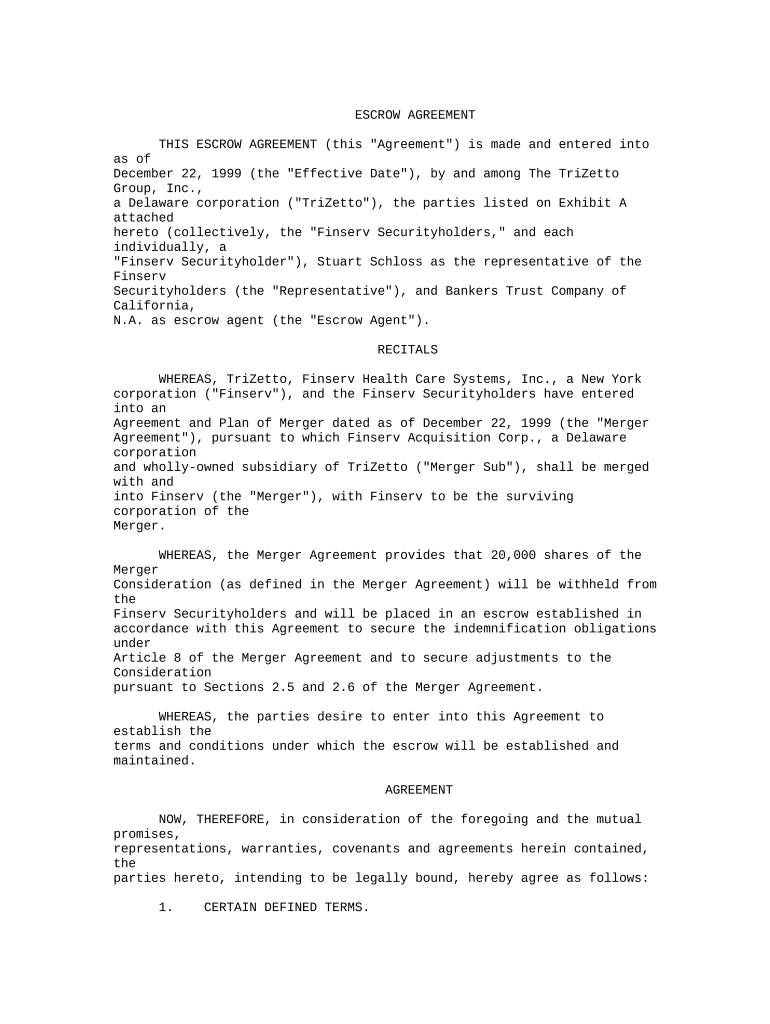
An Escrow Agreement is a written contract in which two or more parties deposit money, documents, or other assets with a neutral third party (the escrow agent) to be held and disbursed only when specified conditions are met. It defines each party's obligations, the agent's duties and authority, acceptable proof for releases, fee allocation, and dispute resolution procedures. Typical use cases include real estate closings, M&A holdbacks, and conditional payments. When signed electronically, enforceability depends on meeting ESIGN/UETA standards for intent, consent, attribution, and record retention.

Why Use an Escrow Agreement

An Escrow Agreement reduces counterparty and delivery risk by placing assets with a neutral custodian until objective release triggers occur. It clarifies release mechanics, fees, and remedies and supports reliable audit trails when combined with compliant electronic signatures under ESIGN and state UETA provisions.

Why Use an Escrow Agreement

Who Typically Prepares and Signs These Agreements

Typical users who prepare or sign Escrow Agreements include buyers, sellers, lenders, brokers, attorneys, and escrow agents across transactions requiring neutral asset custody.

  • Real estate buyers and sellers completing property closings and conditional deposits.
  • Corporate parties in mergers, acquisitions, and escrowed purchase-price transactions.
  • Lenders, title companies, and attorneys acting as or instructing escrow agents.

Essential Elements of a Professional Escrow Agreement

A well-drafted Escrow Agreement sets roles, deposit and release rules, recordkeeping, fees, and dispute processes so the agent can act confidently and quickly when release conditions occur.

Parties

Identify each party with legal name, capacity, address, and authorized signatory details. Include tax IDs when relevant for reporting and notice addresses for communications and service.
Escrow Agent Duties

Specify duties, powers, acceptable investments, fee schedule, indemnities, and standards of care. Define conditions under which the agent may refuse instructions and requirement to follow written instructions.

Deposit Terms

Describe timing, method of delivery, account routing, escrow account controls, and required receipts or confirmations for funds or documents deposited, including electronic transfer identifiers and acknowledgment procedures.

Release Conditions

List precise, measurable triggers and acceptable evidence. Include alternate triggers for failures and procedures for contested release requests with timelines for response and escalation.

Fees & Expenses

State who pays agent fees, prorations, interest handling, and responsibility for third-party costs, including calculation methods and due dates; clarify fee dispute resolution and default remedies.

Dispute Resolution

Specify governing law, venue, arbitration clauses, costs allocation, interim injunctive relief options, attorney fees, and enforcement mechanisms for judgments to reduce post-closing litigation risk.

Step-by-Step: Prepare and Execute an Escrow Agreement

Follow these steps to prepare and execute a compliant Escrow Agreement, from drafting to agent acceptance and final disbursement.

  • 01
    Draft Terms: Define parties, escrow property, release conditions, fees, and dispute resolution.
  • 02
    Select Agent: Confirm agent's authority, contact details, and fee schedule in writing.
  • 03
    Execute Agreement: Obtain signatures, dates, and notarization if required by state law.
  • 04
    Deposit Assets: Deliver funds or documents to agent and obtain receipt and audit trail.

Typical Escrow Agreement Workflow

Typical Escrow Agreement workflow from document preparation through final disbursement, recordkeeping, and audit trail capture.

  • Upload Document: Prepare final agreement and upload PDF.
  • Place Fields: Insert signature, date, and initial fields.
  • Add Signers: Assign roles and order signing.
  • Execute & Archive: Sign, record audit trail, and store copies.

Digital Workflow Settings for Escrow Documents

Configure your digital escrow workflow settings to ensure secure signing, proper authentication, and reliable recordkeeping.

Field Configuration
Authentication Method Email link, SMS code, or KBA per transaction risk.
Signature Type Typed, drawn, or digital certificate (PKI) options.
Retention Settings Automatic storage in encrypted vault for retention period.
Notifications Email and optional SMS alerts for each signing milestone.
Audit Trail Capture IP, timestamps, and actions for compliance.

Platform and Integration Considerations for eSubmission

For eSubmission and distribution, ensure platform supports required integrations, formats, and authentication methods before sending.

  • File Formats: PDF, PDF/A, DOCX supported
  • Integrations: Salesforce, NetSuite, Google Workspace connectors
  • Authentication: Email, SMS, KBA, SAML SSO options

Pricing and Feature Snapshot for eSignature Vendors

Pricing and feature comparison for common eSignature vendors relevant to Escrow Agreement workflows; signNow listed first per product data.

signNow DocuSign Adobe Sign PandaDoc HelloSign
Starting Price $8/user/mo $15/user/mo $14/user/mo $19/user/mo $15/user/mo
Free Trial Yes, 7-day free trial Yes, trial available Yes, trial available Yes, trial available Yes, trial available
Bulk Send Yes Yes Yes Yes No
Audit Trail Yes Yes Yes Yes Yes
HIPAA Compliant Yes Yes Yes No No
Envelope Cap No cap 100 envelopes/user/year Varies by plan Varies by plan Varies by plan

Key Dates to Track in an Escrow Agreement

Key dates to track in an Escrow Agreement include deposit deadlines, closing, contested-release windows, and records retention triggers.

Deposit Deadline:

Date by which funds or documents must be delivered.

Closing Date:

Scheduled date for performance and disbursement.

Agent Response Window:

Timeframe for agent to accept instructions or object.

Contested-Release Period:

Period parties may dispute release before court intervention.

Record Retention Start:

Date retention clock begins for audit and regulatory purposes.

Milestone Timeline from Drafting to Disbursement

Sequential milestones for an Escrow Agreement help participants monitor progress from negotiation through final distribution and archive.

01

Negotiation & Drafting

Agree commercial terms and draft the escrow provisions.

02

Agent Certification

Agent accepts duties and confirms fee schedule.

03

Deposit & Verification

Deliver assets and obtain proof of receipt.

04

Condition Met: Release

Confirm triggers satisfied; agent disburses per instructions.

Security and Compliance Considerations for Escrow Documents

Encryption: TLS 1.2/1.3 in transit; AES-256 at rest
Certifications: SOC 2 Type II; ISO 27001; PCI DSS
HIPAA: BAA available; HIPAA-compliant workflows
ESIGN/UETA: Compliant with ESIGN and UETA
21 CFR Part 11: Supports FDA compliance features
Accessibility: WCAG 2.0 Level AA support

Key Risks and Potential Consequences of Errors

Agent Liability: Civil damages for wrongful distribution
Delayed Closing: Economic loss and contractual breach
Tax Withholding: Backup withholding risk if TIN missing
Notarization Errors: Invalidation of recorded instruments
Ambiguous Language: Litigation and reformation requests
Recordkeeping Failures: Regulatory fines or penalties

Common Preparation Mistakes to Avoid

  • Vague release conditions that allow parties to interpret triggers differently, causing delays, disputes, and possible court intervention to determine intent and entitlement.
  • Failing to verify the escrow agent's licensing or authority in the transaction's jurisdiction, which can create enforceability issues or expose parties to agent misconduct risk.
  • Omitting acceptable proof formats (electronic vs. paper) for release events, leading to rejected claims and prolonged hold periods due to evidence disputes.
  • Not specifying fee allocation, dispute procedures, or fallback instructions, which leaves unresolved responsibilities and increases the chance of costly arbitration or litigation.

How an Escrow Agreement Differs from a Trust

Comparing Escrow Agreements to similar contract types clarifies custody, duration, and court oversight differences for practitioners.

Criteria Escrow Agreement Trust Agreement
Purpose conditional custody ongoing fiduciary management
Duration limited term potentially perpetual
Court Supervision less likely often supervised
Typical Uses closings, escrows estate planning, asset management

Real‑world Scenarios Where Escrow Agreements Apply

Practical examples illustrate drafting choices and release mechanics in common transactions.

Residential Closing

A title company held earnest money in escrow during a residential sale to ensure funds were available upon clear title and HOA approval.

  • Escrow safeguarded deposit while contingencies cleared.
  • By defining objective release triggers and acceptable evidence, the parties avoided litigation and enabled the title company to disburse funds within the agreed closing window without additional court involvement or delay.

M&A Escrow

In an acquisition, a portion of purchase price was placed in escrow to secure indemnity claims and post-closing adjustments for a defined holdback period.

  • Escrow funded claimant payments without reopening negotiation.
  • The agreement specified claims procedures, notice timelines, and arbitration for disputed claims. Clear definitions of covered liabilities and an auditor resolution clause reduced settlement friction and protected buyer and seller interests.

Best Practices for Clear, Enforceable Escrow Agreements

Practical tips help reduce disputes and speed disbursements; follow clear drafting, verification, and recordkeeping practices.

Use objective release triggers
Draft release conditions with measurable events (recording numbers, delivery receipts, certificate dates). Avoid subjective terms like 'reasonable satisfaction.' Specify acceptable proof formats and provide fallback instructions in case evidence is delayed or disputed.
Verify identities and entity authority
Confirm signer authority through corporate resolutions or government IDs. For entities, attach officer authorization or power of attorney. Accurate identity and capacity verification prevents later challenges to agent instructions and disbursement validity.
Prescribe dispute procedures
Include notice requirements, cure periods, escalation paths, and preferred dispute resolution mechanisms such as arbitration or specific courts. Timelines for objections and agent holdbacks reduce premature disbursement risk and litigation.
Maintain thorough audit trails
Require documented electronic evidence, timestamps, IP addresses, and agent receipts. Preserve originals and digital backups per retention policy to support regulatory requests, tax audits, or post-closing disputes.

Saving, Exporting, and Supporting Documents

Preserve executed Escrow Agreements and supporting exhibits in multiple formats to satisfy recordkeeping and regulatory access needs, including secure archival copies.

PDF/A

Save final signed copy as PDF/A for long-term preservation and compatibility with archive systems to ensure consistent rendering and evidentiary integrity.

DOCX

Retain an editable DOCX copy for future amendments, redlining, and to support conversion to other formats when updating agreement clauses during negotiations or revisions.

Audit Report

Export and store comprehensive audit trails that include signer identity, timestamps, IP addresses, and action history to provide compliance evidence and support disputes or regulatory inquiries.

Supporting Docs

Attach invoices, title reports, escrow receipts, indemnity agreements, and authorization letters as numbered exhibits; index them for quick retrieval during audits or claims resolution.

Frequently Asked Questions About Escrow Agreements

Common questions about Escrow Agreements, eSigning, notarization, and agent duties are answered below for practical compliance and execution guidance.


Need help? Contact support

be ready to get more
Join over 28 million airSlate SignNow users