Establishing secure connection…Loading editor…Preparing document…

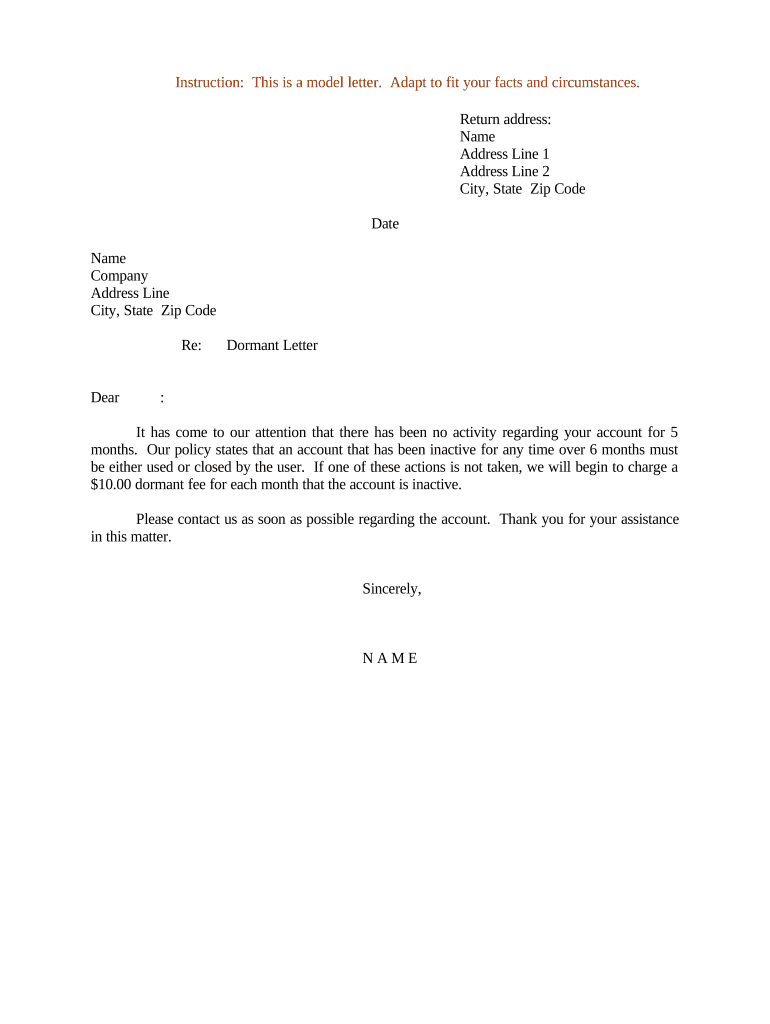
Dormant Account Notification Letter

This template is fully customizable. Edit the text, fill out the fields, and send it for signature. Give it a try!
Dormant Account Notification Letter

What a Dormant Account Notification Letter Is and When It’s Used

A Dormant Account Notification Letter is a formal written notice sent by a financial institution, broker, or account holder to an owner or beneficiary when an account shows no owner-initiated activity for a statutorily defined dormancy period. The letter explains that the account is classified as dormant or inactive, lists steps the recipient can take to reactivate the account, and warns of potential escheatment or transfer to the state if no response is received. It typically includes account details, contact information, and a deadline for response to preserve owner rights.

Why Sending a Clear Dormant Account Notification Letter Matters

A clear notification letter protects the institution’s compliance position by documenting notice to the owner, reducing the risk of later disputes or escheatment challenges, and increasing the chances the owner will reactivate the account. It also creates a reliable record for audit and regulatory review.

Why Sending a Clear Dormant Account Notification Letter Matters

Who Typically Prepares or Receives These Letters

Accurate sender identification and timely mailing are essential to satisfy state unclaimed property notice expectations and limit later liability.

  • Banks and credit unions: internal compliance or unclaimed property teams prepare letters for deposit and custodial accounts.
  • Broker-dealers and custodians: compliance and operations teams notify owners of inactive securities or brokerage accounts.
  • Businesses and payroll providers: HR or finance departments send notices for uncashed payroll, checks, or retained balances.

Core Elements to Include in a Professional Notification

A practical dormant account letter is concise and includes the minimum data regulators and recipients expect: identity of the sender, account identifiers, inactivity period, required owner action, and a clear response deadline.

Sender Details

Include the legal entity name, physical address, department or contact person, phone number, and an email address for inquiries to establish clear responsibility.
Account Identifiers

List the account number, account type, last known balance or status, and any customer reference number to allow the owner to confirm which asset is affected.

Dormancy Period

State the period of inactivity (for example, months or years without owner-initiated contact) that led to the dormancy classification.

Required Action

Tell the recipient exactly how to reactivate the account (e.g., contact phone, submit ID, make a deposit) and note documentation required to prove ownership.

Consequences

Explain potential consequences including escheatment to the state under applicable unclaimed property law if there is no timely response.

Response Deadline

Provide a clear deadline (MM/DD/YYYY) and state whether the deadline is legislative or institution-driven, and how the date is calculated.

Step-by-Step: Preparing and Issuing the Letter

Follow this sequence to prepare, send, and document a dormant account notice while preserving a clear audit trail and minimizing legal risk.

  • 01
    Confirm Dormancy: Verify account inactivity and balance; document the last activity date and reason for classification.
  • 02
    Assemble Data: Pull owner contact info, account identifiers, and any prior notices or communications for reference.
  • 03
    Draft Notice: Populate the template fields, include response instructions, and set a realistic deadline tied to policy or law.
  • 04
    Send and Record: Dispatch the letter by the chosen delivery method, then log dispatch details and retain proof of sending.

Typical Delivery and Tracking Workflow

A consistent delivery workflow reduces disputes and supports regulatory compliance; include tracking and evidence capture at each step.

  • Create Document: Use a standardized template to ensure required fields are present and consistent language is used.
  • Select Delivery: Choose certified mail, email with read receipt, or eDelivery as permitted by law and internal policy.
  • Capture Evidence: Save mailing receipts, email delivery status, or e-sign audit logs to the account file for proof of notice.
  • Monitor Response: Track responses against the deadline and escalate to escheatment processing only after exhausting cure opportunities.

Essential Account and Recordkeeping Data to Retain

Owner Name: Full registered name
Account ID: Institutional account number
Contact Info: Mailing/email/phone
Notice Date: Date notice sent
Delivery Proof: Mail receipt or email log
Response Record: Any owner reply or reactivation

Consequences of Incorrect or Missing Notices

Regulatory Risk: Exposure to unclaimed property audit and potential penalties
Reputational Risk: Customer complaints and reputational harm
Restitution Liabilities: Required return of funds plus interest or damages
Recordkeeping Violations: Failure to retain proof can worsen enforcement outcomes
Missed Recovery: Owner inability to reclaim funds if contact info was not validated
Operational Cost: Increased expense to resolve disputes and perform corrective outreach

Common Preparation and Delivery Pitfalls to Avoid

  • Using incomplete account identifiers that prevent owner matching to records.
  • Failing to document delivery evidence, leaving no proof of notice.
  • Setting ambiguous or inconsistent response deadlines in the body and header.
  • Sending to outdated or unverified contact information without attempt to update it.

Comparing eSignature Vendors for Dormant Account Notices

Choose an eSignature provider that supports evidence capture, HIPAA/financial compliance where required, and bulk sending for high-volume notice programs without introducing undue cost.

signNow DocuSign Adobe Sign PandaDoc HelloSign
Starting Price $8/user/mo $15/user/mo $14/user/mo $19/user/mo $15/user/mo
Free Trial 7-day free trial Varies Varies Varies Varies
Bulk Send Yes Yes Yes Yes No
Audit Trail Yes Yes Yes Yes Yes
HIPAA Compliant Yes Yes Yes No No

Frequently Asked Questions About Dormant Account Notification Letters

These answers address common points of confusion about drafting, sending, and defending dormant account notices in the U.S. regulatory environment.


Need help? Contact support

be ready to get more
Join over 28 million airSlate SignNow users