Establishing secure connection…Loading editor…Preparing document…

Internship Programs Under State and Federal Law

This template is fully customizable. Edit the text, fill out the fields, and send it for signature. Give it a try!
Internship Programs Under State and Federal Law

Understanding Internship Programs Under State and Federal Law

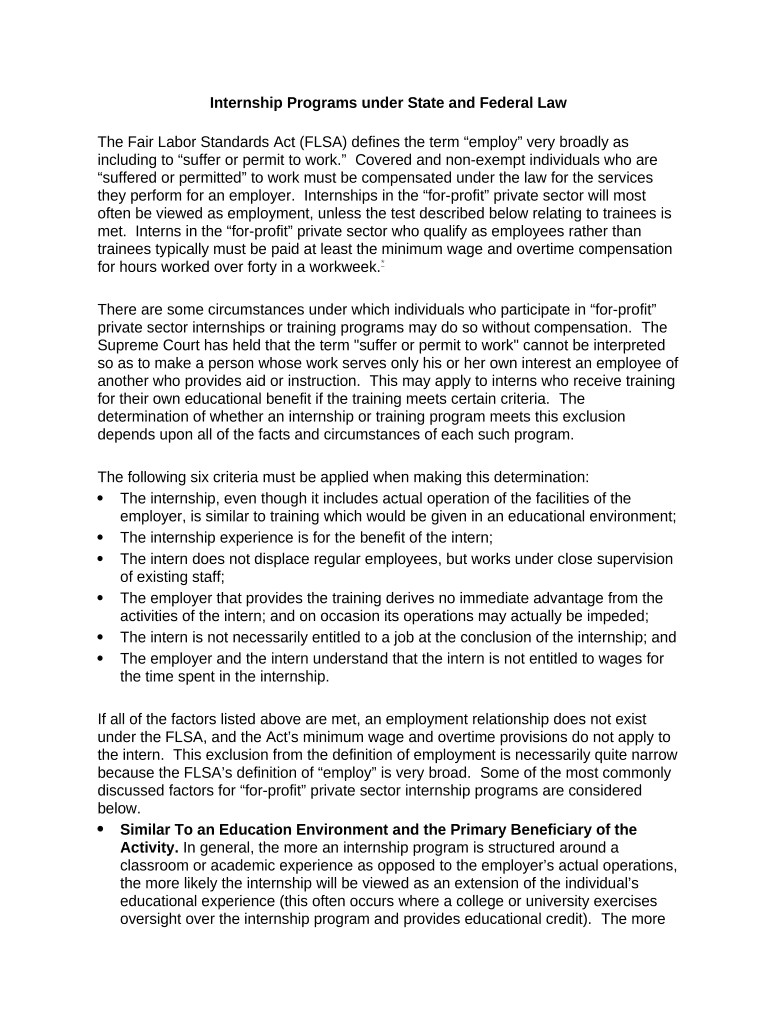
An Internship Programs Under State and Federal Law document sets out the structure, expectations, and legal terms governing internships offered by employers. It explains whether positions are paid or unpaid, describes learning objectives and supervision, and records compliance with federal standards like the Fair Labor Standards Act (FLSA) and applicable state labor laws. The document also addresses recordkeeping, confidentiality, intellectual property assignment where relevant, and any educational-credit arrangements. Properly drafted internship program materials reduce legal risk and clarify employer and intern obligations across jurisdictions.

Why a Clear Internship Program Document Matters

A written internship program clarifies pay status, duties, supervision, and learning goals while helping employers demonstrate compliance with FLSA and state rules. It also documents training content, timing, and any educational-credit arrangements to reduce wage-and-hour exposure and misunderstandings.

Why a Clear Internship Program Document Matters

Who Typically Prepares and Uses These Internship Program Documents

Employers, university career offices, HR teams, and legal counsel commonly prepare internship program documents to ensure consistent onboarding and regulatory compliance.

  • Employers and HR teams drafting program policies and offer letters for interns, including work scope and pay information.
  • Universities and academic programs coordinating credit-bearing placements and verifying learning objectives and supervision plans.
  • Legal and compliance teams reviewing program language to align with FLSA, state labor laws, and company policy.

Core Components of a Professional Internship Program Document

A robust internship program document organizes expectations, training, compliance, and risk allocation so all parties understand the arrangement.

Program Overview

Brief description of the internship purpose, department placement, and relationship to educational or organizational goals.
Duration & Hours

Start and end dates, expected weekly hours, schedule flexibility, and any overtime or shift rules applicable to paid roles.

Compensation Policy

Statement whether the internship is paid or unpaid, stipend details, reimbursable expenses, and any tie to academic credit.

Learning Objectives

Measurable training goals, supervised tasks, and assessment criteria that demonstrate a bona fide educational experience.

Supervision & Training

Supervisor assignment, mentoring plan, onboarding, and regular performance feedback intervals.

Compliance & Records

Required documentation, retention period, confidentiality obligations, and applicable state or federal legal citations.

Step-by-Step: Drafting and Issuing an Internship Agreement

Follow these sequential steps to prepare, review, and deliver a compliant internship agreement with clear expectations.

  • 01
    Draft Terms: Define role, learning objectives, duration, hours, and compensation.
  • 02
    Legal Review: Have counsel review pay status and state-specific labor requirements.
  • 03
    Supervisor Sign-Off: Confirm training plan and supervision responsibilities with the assigned manager.
  • 04
    Deliver and Record: Provide the agreement to the intern and retain a signed copy in personnel files.

Typical Processing Flow for Internship Program Documents

This overview shows the common routing from draft to a signed, stored record for compliance and audit purposes.

  • Prepare Template: HR or legal creates a standard internship template reflecting company policy.
  • Customize for Role: Insert role-specific duties, supervisor, and compensation details.
  • Review & Approve: Legal and HR approve final language and pay classification.
  • Sign and Store: Obtain intern signature, distribute copies, and retain record per retention rules.

Configuring a Digital Workflow for Internship Agreements

Set up a repeatable digital workflow to assign, sign, and retain internship documents efficiently.

Initiation Trigger New internship requisition in HR system
Document Template Standardized internship agreement with fillable fields
Approval Steps Legal review then department head approval
Signature Sequence Intern signs then HR and supervisor countersign
Storage Location Secure personnel file repository with access controls

Digital Delivery and eSignature Considerations

Ensure the chosen platform supports audit trails, secure storage (AES-256), and the ability to reproduce signed records to meet ESIGN and UETA requirements for enforceability.

  • Authentication: Email plus optional SMS or ID verification
  • Document Formats: Use PDF or DOCX to preserve formatting
  • Recordkeeping: Store signed copies and audit trails securely

Key Deadlines and Timing Considerations

Track dates that affect pay, tax reporting, and program milestones to avoid penalties and administrative issues.

Start Date Documentation:

Collect signed agreement on or before the intern's first workday.

I-9 Requirements:

Complete Form I-9 by the first day for employment; retain for required period per 8 CFR §274a.2.

Wage Payments:

Follow payroll schedule and state pay laws for paid interns.

Tax Reporting:

Issue W-2/1099 forms by statutory deadlines when applicable.

Program Reviews:

Schedule midpoint and final evaluations to document learning outcomes.

Comparison: eSignature Platforms for Internship Documents

Platform choice affects cost, workflow features, and compliance capabilities; the table compares common vendor price points and capabilities.

signNow DocuSign Adobe Sign PandaDoc HelloSign
Starting Price $8/user/mo $15/user/mo $14/user/mo $19/user/mo $15/user/mo
Free Trial 7-day free trial Varies by plan Varies by plan Varies by plan Varies by plan
Bulk Send Yes Yes Yes Yes No
Audit Trail Yes Yes Yes Yes Yes
Envelope Cap No envelope cap 100 envelopes/user/year Varies Varies Varies

Common Mistakes When Preparing Internship Program Documents

  • Failing to document learning objectives and supervision, which can undercut an unpaid classification and invite wage claims.
  • Using inconsistent compensation language across templates, causing payroll errors and potential tax reporting issues.
  • Neglecting state-specific rules for minors or industry licensing, resulting in noncompliance and administrative penalties.
  • Not retaining signed records or audit trails, making it difficult to defend practices in disputes or audits.

Penalties and Legal Risks of Misclassifying Interns

Wage Claims: Back pay and penalties
Tax Liability: Incorrect reporting and withholding
Administrative Fines: State labor department penalties
Reputational Harm: Public scrutiny and university objections
Loss of Credit Eligibility: Academic partners may withdraw credit approval
Litigation Costs: Attorney fees and settlement exposure

Frequently Asked Questions: Internship Program Legal Issues

Answers to common questions about pay status, documentation, student credit, and digital execution of internship agreements.


Need help? Contact support

be ready to get more
Join over 28 million airSlate SignNow users