Establishing secure connection…Loading editor…Preparing document…

Letter of Apology for Accounting Errors

This template is fully customizable. Edit the text, fill out the fields, and send it for signature. Give it a try!
Letter of Apology for Accounting Errors

What a Letter of Apology for Accounting Errors Is and When to Use It

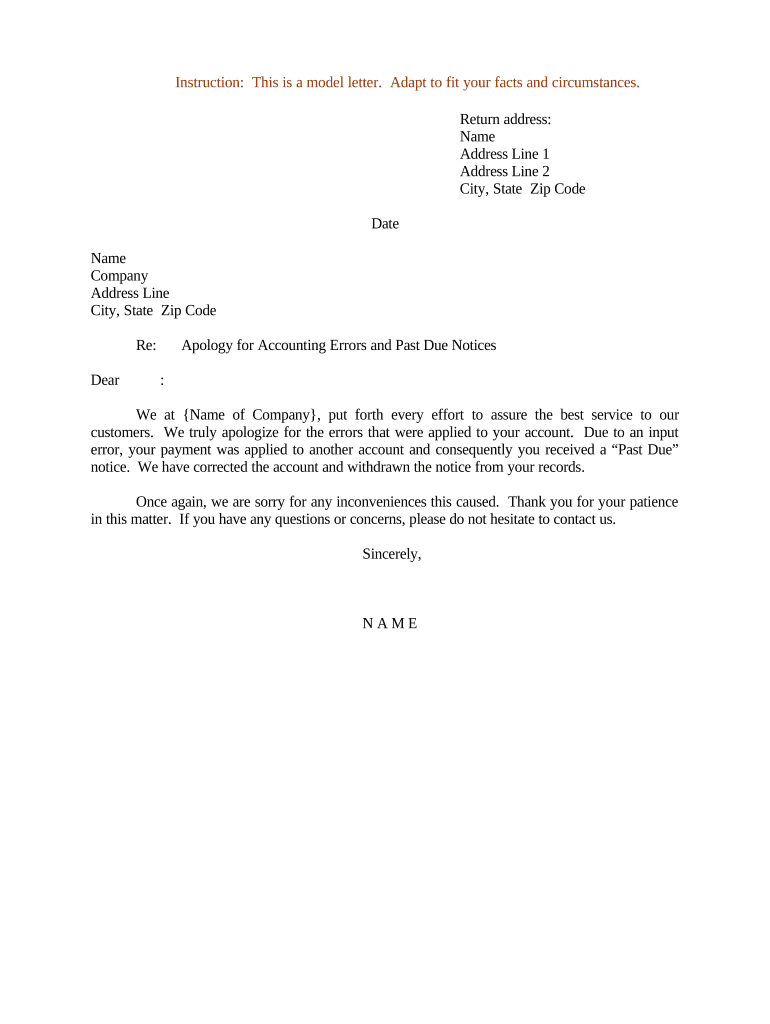
A Letter of Apology for Accounting Errors is a formal, written notice from an organization or accounting professional acknowledging mistakes in financial records, explaining the cause, describing corrective steps, and offering any remediation. It documents intent, preserves an audit trail, and helps restore trust with stakeholders such as clients, vendors, regulators, and internal governance. Use this letter when a material posting, invoice, payroll, tax, or reconciliations error has been confirmed, when corrections affect external reporting, or when a third party requests formal acknowledgement and remediation details.

Why a Clear, Timely Apology Letter Matters

A concise apology letter reduces reputational and legal risk by documenting acknowledgment, corrective measures, and timelines; it supports compliance with reporting obligations and creates a recorded trail that may be important for auditors, regulators, and contract counterparties. Where communications are electronic, ESIGN (15 U.S.C. ch. 96) and UETA principles validate e-sent letters when intent, consent, attribution, and retention are met.

Why a Clear, Timely Apology Letter Matters

Who Typically Prepares and Receives This Letter

The document should be signed by an authorized individual and retained with supporting records to evidence intent and remediation steps.

  • Accounting Manager notifying affected clients and internal stakeholders about reconciliations and refunds.
  • Chief Financial Officer informing board or external auditors of material misstatements and remediation.
  • External CPA or audit firm issuing a formal acknowledgement after discovering reporting or tax preparation errors.

Essential Elements to Include in the Letter

A professional apology letter should be brief, factual, and organized so recipients can clearly understand the error, impact, corrective actions, and contact points for follow-up.

Opening

Date the letter and state the issuing entity and purpose in one clear sentence to frame the communication and establish the record.
Acknowledgement

Concise admission of the error, including the accounting period or transaction reference so readers can identify the affected records.

Scope & Impact

Specify accounts, invoice numbers, transaction dates, and monetary amounts affected; clearly state whether the error changed external reporting or tax filings.

Cause

Briefly describe root cause (e.g., data entry, reconciliation, system mapping) without speculative language and avoid assigning unsupported blame.

Corrective Action

List immediate fixes taken, planned reconciliations, and controls implemented to prevent recurrence, with responsible parties and timelines.

Signature

Name, title, contact information, and signature of an authorized signer; include statement about retained supporting documents and next steps for the recipient.

Required Information and Fields at a Glance

Letter Date: MM/DD/YYYY format
Issuer Name: Full legal entity
Affected Account: Account or invoice ID
Monetary Amount: USD amount to two decimals
Action Timeline: Target completion dates
Contact Information: Phone and email

Step-by-Step: How to Complete the Letter

Follow these four steps to draft, authorize, and distribute a compliant apology letter with an auditable record.

  • 01
    Draft the Letter: Use factual language and reference affected records.
  • 02
    Review Internally: Have finance and legal review for accuracy and liability.
  • 03
    Authorize Signer: Ensure an authorized officer signs the letter before distribution.
  • 04
    Distribute & Retain: Send to affected parties and file with supporting documentation.

Typical Distribution and Tracking Workflow

A reliable workflow reduces confusion and creates an evidence trail for internal controls and external inquiries.

  • Prepare Draft: Create a versioned document in your records system.
  • Internal Approval: Route for finance and legal sign-off.
  • Sign and Timestamp: Apply signature and capture signing metadata.
  • Send and Archive: Deliver to recipients and store the final PDF with audit trail.

How to Configure an Online Workflow for the Letter

Set up fields and routing so the letter is completed, signed, and archived consistently across the organization.

Field Configuration
Letter Date Auto-populate with current date
Affected Account Required text field with validation
Amount Affected Numeric field, two-decimal format
Authorized Signature Signer field with verifier authentication

Digital Signing and Delivery Options

Select an eSignature method that satisfies identity needs and retention rules; ensure the platform captures IP, timestamp, and signer attribution for evidentiary value.

  • Email Delivery: Standard method with signed PDF return
  • Secure Portal: Recipient logs in to view and sign
  • In-Person / Kiosk: Use when stronger identity proofing required

Common Mistakes to Avoid When Preparing the Letter

  • Using vague language about amounts or dates that leaves recipients unclear about the actual impact and next steps.
  • Failing to have legal or compliance review when the error affects tax filings, external reporting, or regulated clients.
  • Distributing unsigned drafts or multiple conflicting versions that create confusion about the official record.
  • Not retaining supporting reconciliations and communications, which undermines remediation and audit responses.

Potential Consequences of Inaccurate or Late Notice

Tax Penalties: IRC §6721 reporting penalties
Contract Risk: Breach claims or indemnities
Regulatory Scrutiny: Possible agency inquiries
Audit Findings: Adverse external audit opinion
Reputational Harm: Client confidence erosion
Financial Restatement: Potential correction to statements

Recommended Timelines and Expectations

Use clear internal deadlines to coordinate remediation, external notices, and record updates; adjust timing when legal obligations apply.

Internal Notification:

Alert finance and legal within 3 business days of discovery where possible.

External Notice:

Send apology to affected parties within 5–10 business days depending on impact.

Corrected Statements:

Issue corrected invoices or statements within 30 days when practical.

Closure & Verification:

Complete remediation and provide verification within 60–90 days.

Record Retention:

Retain letter and supporting workpapers per retention policy (see retention timeline).

eSignature Options for Signing and Delivering the Letter

Compare common eSignature vendors for legal validity, bulk sending, audit trail, and HIPAA support when selecting a platform to sign and distribute apology letters.

signNow DocuSign Adobe Sign PandaDoc HelloSign
Starting Price $8/user/mo $15/user/mo $14/user/mo $19/user/mo $15/user/mo
Free Trial Yes, 7-day trial Varies Varies Varies Varies
Bulk Send Yes Yes Yes Yes No
Audit Trail Yes Yes Yes Yes Yes
HIPAA Compliant Yes Yes Yes No No

Frequently Asked Questions About Letters of Apology for Accounting Errors

Answers to common questions about drafting, signing, and retaining apology letters, including electronic execution and evidence preservation.


Need help? Contact support

be ready to get more
Join over 28 million airSlate SignNow users