Establishing secure connection…Loading editor…Preparing document…

Letter Regarding Mobile Home Repossession

This template is fully customizable. Edit the text, fill out the fields, and send it for signature. Give it a try!
Letter Regarding Mobile Home Repossession

What a Letter Regarding Mobile Home Repossession Is

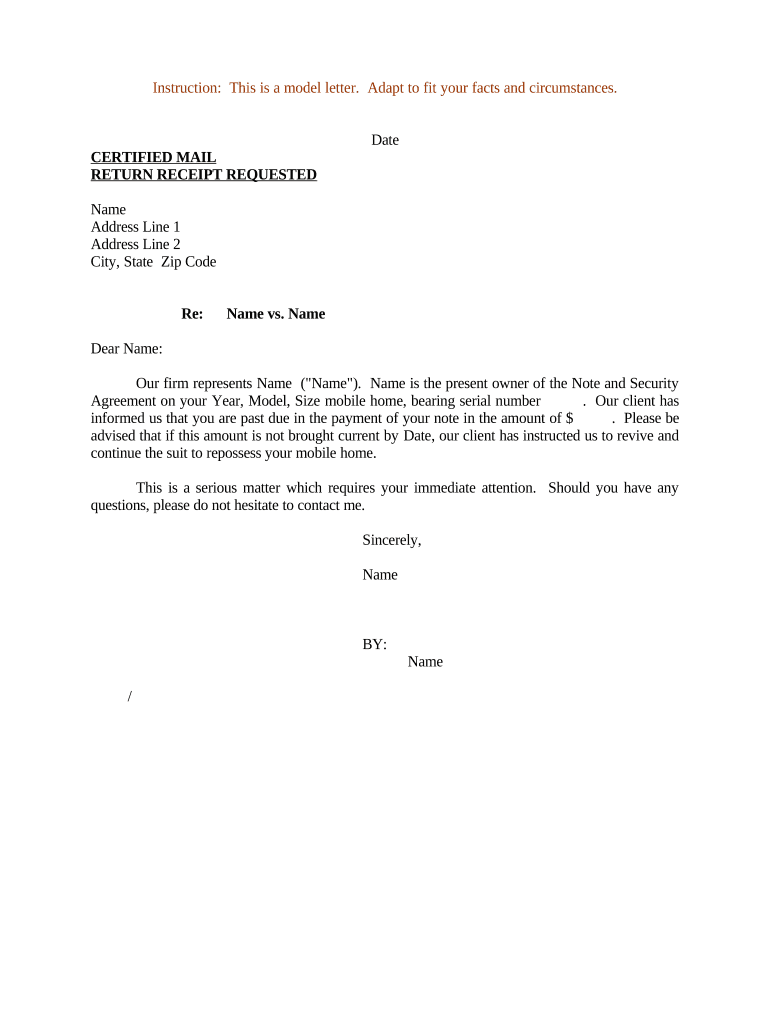
A Letter Regarding Mobile Home Repossession is a formal written notice sent by a secured creditor, lender, or their agent to the mobile home owner and any occupants to explain a pending or completed repossession due to default. The letter identifies the loan or security agreement, describes the event of default, states the date property was or will be taken, and summarizes the debtor's rights (cure, redemption, or reclaim procedures) and any storage or sale arrangements. It creates a record for compliance with state repossession law and UCC disposition requirements and may be subject to special electronic-signature limits under federal and state law.

Why a Clear Repossession Letter Matters

A clear, properly drafted repossession letter protects legal rights, reduces disputes, and documents compliance with statutory notice obligations. It gives the debtor specific information needed to cure the default or redeem the property, supports downstream sale or disposition steps, and provides evidence of notice that may be required in contested proceedings.

Why a Clear Repossession Letter Matters

Who Prepares and Receives These Letters

Typical senders include secured lenders, finance companies, repossession agents, and attorneys; recipients are titled owners, co-borrowers, and occupants.

  • Lenders and servicers who hold a security interest in a mobile home and must comply with UCC disposition rules.
  • Repossession and towing agents tasked with recovery, storage, and inventory who supply operational details.
  • Borrowers, co-owners, and registered occupants who need notice to exercise cure or redemption rights.

Effective letters reduce litigation risk and establish a factual timeline for repossession, sale, or redemption actions.

Core Elements to Include in the Letter

A professional repossession letter is structured, concise, and legally focused; include identification, default facts, statutory notices, remedies, logistics, and contact details.

Account ID

Provide the loan number, VIN or HUD tag, and any lease or title reference so the recipient can match the notice to their account.
Default Details

State the missed payments, dates of default, and a brief factual timeline explaining why repossession occurred or will occur.

Repossession Date

List the exact date and time of repossession (if already taken) and any inventory summary of items taken with the mobile home.

Cure & Redemption

Explain the dollar amount and deadline required to cure the default or redeem the property, including how payments must be made.

Disposition Plans

Describe intended storage location, sale method (public/private), minimum bid or setoff calculations, and timeline for disposition.

Contact Info

Provide a named contact, address, phone, and email for questions, requests for accounting, or to arrange redemption or retrieval.

Required Data Fields for the Letter

Debtor Identity: Full legal name
Property ID: VIN or HUD tag
Account Reference: Loan or contract number
Important Dates: Repossession and notice dates
Monetary Amounts: Balance, cure amount
Service Contact: Phone and mailing address

Step-by-Step: Drafting and Issuing the Letter

Follow a consistent process to avoid mistakes: collect facts, prepare statutory content, choose delivery method, and preserve proof of delivery.

  • 01
    Gather Records: Confirm title, loan, and default dates before drafting.
  • 02
    Draft Notice: Include statutory language and calculation of amounts owed.
  • 03
    Deliver Notice: Send by required method (mail, personal service, or permitted electronic delivery).
  • 04
    Preserve Proof: Retain delivery receipts, tracking numbers, and logs for compliance.

Process Flow: From Default to Disposition

Key actions occur in a standard sequence; document each step to support compliance with UCC disposition and state notice rules.

  • Confirm Default: Verify contract terms and outstanding balance before action.
  • Issue Notice: Draft and send repossession letter with required content.
  • Allow Cure: Permit any statutory cure or redemption period to run.
  • Dispose of Property: Sell or otherwise dispose in a commercially reasonable manner.

Configuring an Online Delivery and Signing Workflow

Set up delivery and authentication options to match the notice type and any legal restrictions on electronic delivery.

Field Configuration
Delivery Method Certified mail | Email with tracking
Signer Authentication Email link | SMS code | ID check
Proof Capture Timestamp | IP address | Audit trail
Retention Store signed PDF | Export audit log

Delivery Options and Platform Considerations

Choose a delivery and signing method consistent with statutory notice requirements and evidence retention needs.

  • Mail and Courier: Traditional option with return receipt.
  • Electronic Delivery: Permitted if debtor consents and law allows.
  • Audit Trail: Capture IP, timestamp, and actions.

Typical Timelines and Statutory Deadlines to Track

Timelines vary by state and contract; track cure deadlines, notice periods, and disposition windows carefully to avoid statutory challenges.

Notice Period:

Some states require advance notice prior to sale; check state law for exact timing.

Cure/Redemption Deadline:

Specify deadline in dollars and date; failure to allow required period may invalidate sale.

Storage and Retrieval:

State rules may require notice before charging storage or disposing of personal effects.

Commercially Reasonable Sale:

Disposition must be commercially reasonable under UCC Article 9.

Record Retention:

Retain notices and proof of delivery for the post-disposition statutory period.

Common Preparation and Delivery Errors to Avoid

  • Using incomplete property identifiers that prevent matching the notice to the correct title or account.
  • Failing to calculate cure amounts accurately, omitting towing or storage fees from the required notice.
  • Delivering notices electronically without debtor consent or where state law requires physical service.
  • Not preserving proof of delivery, such as certified mail receipts or authenticated audit logs.

Legal Risks from an Incorrect or Incomplete Letter

Notice Invalidity: Statutory noncompliance
Damages Exposure: Potential civil damages
Loss of Priority: Challenge to secured interest
Regulatory Fines: State consumer protection penalties
Storage Liability: Costs if property mishandled
Criminal Risk: Improper entry or theft allegations

eSignature Vendor Comparison for Delivering and Signing Repossession Letters

Comparing basic vendor capabilities and pricing helps choose a compliant delivery method; signNow appears first in this comparison of common features and starting prices.

signNow DocuSign Adobe Sign PandaDoc HelloSign
Starting Price $8/user/mo $15/user/mo $14/user/mo $19/user/mo $15/user/mo
Free Trial 7-day free trial, no card Varies by offer Varies by offer Free trial available Free trial available
Bulk Send Yes Yes Yes Yes Yes
Audit Trail Yes Yes Yes Yes Yes
HIPAA Compliant Yes Yes Yes No No
Envelope Cap No envelope cap 100 envelopes/user/year Varies by plan Varies by plan Varies by plan

Frequently Asked Questions About Repossession Letters

Answers to common legal and practical questions about preparing, delivering, and contesting a Letter Regarding Mobile Home Repossession.


Need help? Contact support

be ready to get more
Join over 28 million airSlate SignNow users