Establishing secure connection…Loading editor…Preparing document…

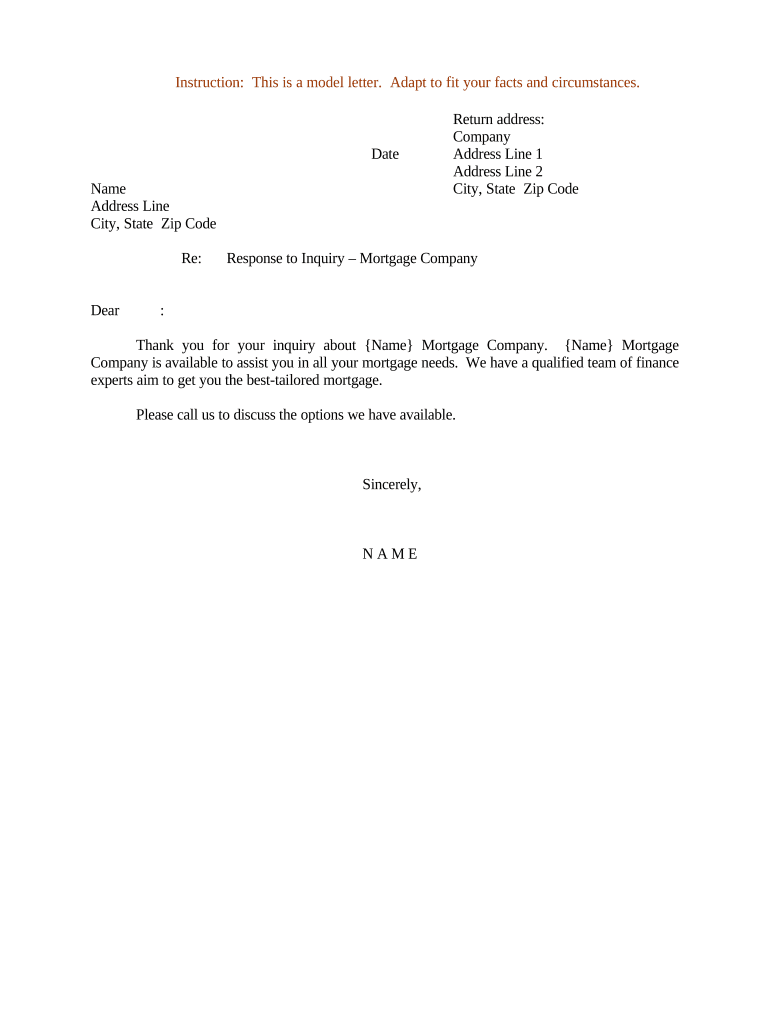
Letter Response to Mortgage Inquiry

This template is fully customizable. Edit the text, fill out the fields, and send it for signature. Give it a try!
Letter Response to Mortgage Inquiry

What a Letter Response to Mortgage Inquiry Is

A Letter Response to Mortgage Inquiry is a formal written reply from a borrower, servicer, title company, or other party addressing specific questions about a mortgage account, loan status, payoff amount, payment history, or title matters. The letter identifies the loan or account, summarizes requested data or clarifications, cites attachments or supporting documents, and states any next steps or timelines. Responses may be delivered on paper or electronically and should clearly show the responder's authority, contact details, and signature to ensure traceability and enforceability under ESIGN (15 U.S.C. ch. 96) or UETA.

Why a Clear Response Matters

A precise, documented response reduces disputes, improves recordkeeping, and speeds resolution with lenders or third parties. It protects both the responder and recipient by creating an auditable record that can be reproduced and relied on for compliance, servicing, or title clearing purposes.

Why a Clear Response Matters

Who Typically Prepares or Receives This Letter

Common users include borrowers, mortgage servicers, escrow and title officers, attorneys, and loan investors who need formal clarification or evidence about a loan account.

  • Borrowers seeking payoff figures, payment history, or corrections to account records.
  • Mortgage servicers responding to investor or escrow inquiries about account status.
  • Title and escrow officers requesting payoff statements or lien release confirmations.

A clear statement of authority and supporting attachments helps each recipient act promptly and reduces the risk of follow-up requests or processing delays.

Step-by-step: Drafting a Compliant Response

Follow these sequential steps to create a clear, auditable reply that meets lender and regulatory expectations.

  • 01
    Gather Info: Collect loan number, borrower name, property address, and account history.
  • 02
    Draft Response: State the inquiry point-by-point and provide concise answers with references.
  • 03
    Attach Evidence: Include payoff statements, payment receipts, or title documents as PDFs.
  • 04
    Sign & Send: Ensure authorized signature and deliver via tracked mail or secure eSubmission.

How to Set Up an Online Response Workflow

A standardized online workflow reduces errors and creates an audit trail for each response and attachment.

Document Field and Configuration Settings Platform control to set field behavior and validation and to require signers' authentication.
Upload document (PDF or DOCX) Accept PDF and DOCX files; convert DOCX to a secure, fillable PDF for signing.
Add fillable fields and validations Place loan number, date, initials, and required attachments fields with validation rules.
Signer authentication method Choose email link, SMS code, or knowledge-based verification where higher assurance is needed.
Routing order and notifications Set recipient order, automatic reminders, and completion notifications for auditability.

Digital Signing and Delivery Considerations

Use a platform that supports secure upload, tamper-evident signatures, and a detailed audit trail to preserve evidentiary value.

  • File formats: PDF, DOCX supported
  • Authentication: Email, SMS, or KBA
  • Integrations: CRM and storage links

Choose a solution that records timestamps, IP addresses, and signer attribution and that can export signed PDFs and machine-readable audit logs for compliance and records retention.

eSignature Vendor Comparison for Mortgage Inquiry Letters

Common vendor options vary by price, bulk capabilities, and compliance features relevant to mortgage servicing and title workflows.

signNow DocuSign Adobe Sign PandaDoc HelloSign
Starting Price $8/user/mo $15/user/mo $14/user/mo $19/user/mo $15/user/mo
Free Trial 7-day free trial, no credit card required No No Yes, limited Yes, limited
Bulk Send Yes Yes Yes Yes No
Audit Trail Yes Yes Yes Yes Yes
HIPAA Compliant Yes Yes Yes No No

Essential Sections to Include in the Letter

A professional response is structured, data-driven, and easy to verify. Include these core sections to ensure completeness and traceability.

Header

Identify sender, recipient, date, and subject line with the loan number prominently displayed to connect the reply to the correct account.
Inquiry Recap

Summarize the original inquiry briefly and list each question or issue you are addressing to avoid scope mismatch.

Response Body

Provide direct, numbered answers corresponding to each inquiry item and reference attached documents or statements when applicable.

Supporting Documents

List and attach payoff letters, transaction histories, title abstracts, or receipts that substantiate each factual statement in the response.

Authority and Signature

Include the signer's name, title, company, and contact details; state the signer's authority to provide the information.

Next Steps

Specify any follow-up actions, deadlines for the recipient, and how to request additional documentation or corrections.

Practical Tips to Reduce Errors and Delays

Adopt these practices to create clear, verifiable responses that minimize back-and-forth and support downstream processing.

Use precise loan identifiers
Always include the full loan number and property address to prevent misrouting; ambiguous identifiers often trigger follow-up requests and slow processing.
Keep tone factual and neutral
Avoid argumentative language; state facts, cite documents, and limit commentary to verifiable items to preserve legal clarity.
Attach clear supporting files
Provide PDFs of payoff statements, cancelled checks, or title reports with file names that reference the loan number for quick review.
Preserve audit trails for eSubmission
Retain signed PDFs and metadata (timestamps, IP addresses, signer identity) to support future compliance or dispute resolution.

Common Pitfalls That Cause Rejected or Delayed Responses

  • Missing or truncated loan numbers that prevent the recipient from reliably matching the reply to an account.
  • Unsigned or improperly authorized responses where the signer lacks clear authority or an accompanying notarization when required.
  • Inconsistent dates between the response and attached documents leading to questions about document validity.
  • Poorly labeled attachments or incompatible file formats that require manual conversion and delay processing.

Key Risks and Legal Consequences to Watch For

Incorrect TIN: Backup withholding 24%
Late Response: Contractual penalties possible
False Statement: Civil liability risk
Missing Notarization: Recording refused
Data Breach: Regulatory fines possible
Incomplete Audit Trail: Reduced evidentiary value

Real-world Examples of Responses in Practice

These case summaries show how organizations structure replies and the outcome improvements that follow clear documentation.

Martin Properties

A small property management firm standardized response templates to reduce turnaround time.

  • They paired templates with signed PDFs for consistency.
  • The firm reported fewer follow-ups and faster title clearances by consolidating evidence and maintaining a consistent audit trail for each mortgage inquiry.

Fertility Centers of Illinois

A healthcare-affiliated finance office needed HIPAA-compliant responses for patient loan queries.

  • They added limited-data attachments and a BAA with their e-sign vendor.
  • The organization preserved privacy, maintained compliance with health record rules, and reduced administrative burden when coordinating with lenders and servicers.

Typical Routing: From Draft to Delivered Response

A reliable routing flow ensures the right parties review and sign the response before final delivery to the requestor.

  • Upload Document: Store the draft in a secure repository for preparation.
  • Place Fields: Add signature, date, and loan ID fields as required.
  • Send to Lender: Route to the requesting party with tracking enabled.
  • Sign & Return: Authorized signer completes signature and returns final copy.

Typical Timeframes and Deadlines to Expect

Timelines depend on the requestor and document type; communicate expected response time clearly to avoid dispute.

Respond Within 30 Days:

Many servicers expect responses within 30 days of request to maintain timelines.

Immediate Acknowledgement:

Send a brief receipt within 48 hours to confirm you received the inquiry.

Expedited Requests:

Priority or foreclosure-related inquiries may require faster turnaround—confirm deadlines in writing.

Record Retention Start:

Use the response date as the official retention start for audit purposes.

Follow-up Window:

Allow a 7–14 day window for clarifying questions after initial response.

FAQs: Common Questions About Letter Responses to Mortgage Inquiries

Answers to frequent questions about formality, e-signatures, notarization, and evidence to include when responding to mortgage inquiries.


Need help? Contact support

be ready to get more
Join over 28 million airSlate SignNow users