Establishing secure connection…Loading editor…Preparing document…

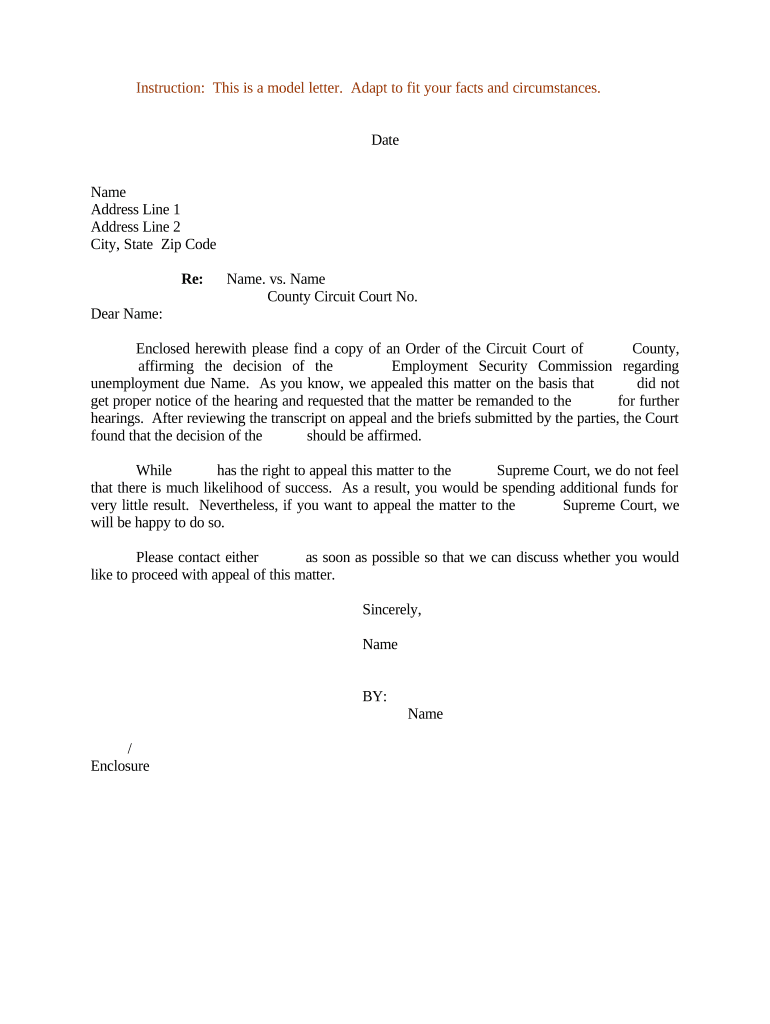
Letter Regarding Unemployment

This template is fully customizable. Edit the text, fill out the fields, and send it for signature. Give it a try!
Letter Regarding Unemployment

What a Letter Regarding Unemployment Is and When it’s Used

A Letter Regarding Unemployment is a formal employer-issued or claimant-prepared document that verifies employment history, separation details, and eligibility for unemployment benefits. It is commonly requested by state unemployment agencies, benefit administrators, lenders, and social service organizations to determine benefit entitlement, overpayment recovery, or eligibility for alternative assistance programs. The letter typically summarizes hire and separation dates, job title, earnings, and the employer’s statement regarding reason for separation. In the United States, electronic completion and signature are generally enforceable under ESIGN (15 U.S.C. ch. 96) and UETA where adopted, subject to statutory exceptions.

Why a Clear Unemployment Letter Matters

A concise, accurate letter reduces processing delays, limits disputes and appeals, and documents the facts that state agencies use to adjudicate claims. Proper formatting, complete dates, and an auditable signature trail support timely benefit decisions and reduce the risk of overpayment recoveries or employer penalties.

Why a Clear Unemployment Letter Matters

Who Typically Prepares or Requests This Letter

Each user has distinct needs—HR focuses on accuracy and legal risk, claimants on timeliness, and agencies on verifiable facts and documentation.

  • Human resources and payroll teams who must confirm employment dates and separation reasons for claims processing.
  • Claimants who supply documentation to state unemployment offices or to lenders verifying benefit eligibility.
  • State unemployment agencies and adjudicators who evaluate eligibility, determine benefit amounts, and identify potential overpayments.

Step-by-Step: Complete the Letter Quickly and Correctly

Follow these four steps in order to prepare, verify, and deliver a valid letter.

  • 01
    Gather records: Collect payroll, hire paperwork, and separation notice before drafting.
  • 02
    Draft contents: Populate all fields using required formats and precise dates.
  • 03
    Review internally: Have HR or legal review for accuracy and confidentiality concerns.
  • 04
    Deliver securely: Send to requester using a secure method with an audit trail.

Where the Letter Is Sent and Who Receives It

Letters are routed based on the request source; choose the delivery path that preserves confidentiality and creates a record.

  • State Agency: Direct submission to the agency handling the claim, per their intake instructions.
  • Claimant: Provide claimant a copy when requested; ensure redaction of unrelated personal data.
  • Third-Party Administrator: Send to authorized benefit administrators under documented consent or release.
  • Lender or Verifier: Deliver only the information specifically requested for verification purposes.

Digital Workflow Settings for eSubmission and Tracking

Configure the digital workflow to ensure authentication, a secure file format, and an auditable completion record.

Field Configuration
Signature field Required with date and signer name
Recipient authentication Email verification and optional SMS code
File format PDF/A preferred for long-term retention
Audit trail Enable IP, timestamp, and action logs

Technical Considerations for Secure Electronic Submission

Preserve an audit trail and encrypted storage; ensure any third-party platform used supports required compliance frameworks and secure integrations.

  • File formats: PDF, PDF/A, and DOCX are widely accepted
  • Integrations: Connectors for HRIS and cloud storage reduce manual handling
  • Authentication: Email, SMS, and stronger methods available

Timing and Typical Deadlines to Watch

Deadlines vary by state and requester; meet timelines promptly to avoid claim delays or denials.

Respond to requests:

Provide the letter as soon as possible; many agencies expect response within 7–30 days.

Appeal windows:

Claimants typically have 10–30 days to appeal agency decisions; timeliness affects outcomes.

Retain copies:

Keep records for the required retention period under applicable law.

Update inaccuracies:

Correct and reissue if facts change; document amendments and dates.

Internal deadlines:

HR should set SLA for responses to correspondence and agency requests.

Key Processing Stages from Request to Closure

A typical timeline moves from request through response, agency review, appeal, and final record retention.

01

Request Received

Document the date and requester details immediately.

02

Employer Response

Prepare and send the verified letter with attachments.

03

Agency Decision

Agency reviews records and issues an initial determination.

04

Appeal and Finalization

Complete appeals, then archive documentation per retention rules.

Common Preparation Mistakes to Avoid

  • Missing or inconsistent dates between payroll records and the letter cause verification delays and potential disputes.
  • Omitting a clear separation reason or using vague language such as 'no longer employed' limits agency ability to adjudicate claims.
  • Providing full Social Security numbers insecurely or to unauthorized recipients increases privacy risk and noncompliance.
  • Failing to include an auditable signature or delivery record undermines enforceability in electronic submissions.

Risks and Consequences of Incorrect or Late Letters

Benefit Denial: Inaccurate letters can result in claim denials and appeals
Overpayment Recovery: Incorrect facts may trigger overpayment demands and collections
Employer Penalties: Late or false statements can create state-level penalties
Privacy Exposure: Improper handling of SSNs or health data risks violations
Legal Liability: Deliberate misstatements may expose signers to liability
Administrative Burden: Errors frequently require supplemental documentation and reviews

Security and Compliance Checklist for the Letter

ESIGN / UETA: Ensure intent, consent, attribution, and retention
Encryption: Use TLS 1.2/1.3 in transit and AES-256 at rest
Audit Trail: Capture IP, timestamp, and action logs
HIPAA (if applicable): Execute a BAA when PHI is included
Access Controls: Limit access with role-based permissions
Retention Policy: Apply documented retention and disposal rules

Essential Elements to Include in a Professional Letter Regarding Unemployment

A complete letter contains standardized fields and clear, verifiable statements that agencies rely on for benefit decisions.

Employer Identification

Full company name, address, phone number, and an official contact person so the agency can verify the source and follow up.
Employee Identity

Employee full legal name, date of birth or last four SSN, and any other identifier required by the requester to match records.

Employment Dates

Exact hire date and last day worked using MM/DD/YYYY to support wage and eligibility determinations.

Job Title and Compensation

List job title, pay rate or salary, pay frequency, and last rate used to calculate weekly benefit amounts where relevant.

Separation Reason

A factual, neutral explanation of separation (e.g., RIF, layoff, resignation) without subjective opinions or speculative commentary.

Authorized Signature

Printed name, title, signature (electronic or handwritten), date, and a verifiable business email for further agency contact.

Supporting Documents to Attach and Accepted File Formats

Attach documents that corroborate the facts stated; choose widely accepted formats for exchange and archival.

Pay Records

Recent pay stubs or payroll reports showing final wages, pay frequency, and year-to-date earnings to support wage claims.

Separation Notices

Formal termination or layoff notices issued to the employee showing effective dates and any severance terms.

Tax Forms

W-2 or 1099 forms when requested to verify annual earnings; redact unnecessary personal data when appropriate.

Identification

A copy of government ID or employer records to confirm identity when requested under secure procedures.

Real-World Examples of Efficient Employer Responses

These examples show practical ways organizations improved response time and record integrity when providing verification letters.

Martin Properties (Real Estate)

Tim Martin found online execution reduced turnaround time for separation letters by removing paper routing.

  • The team used a standardized template and digital signature.
  • As a result, claim-related delays dropped and recordkeeping became auditable, simplifying later appeals and internal audits while protecting sensitive employee details.

Fertility Centers of Illinois (Healthcare)

John Butler emphasized integrated workflows to maintain compliance and continuity of care.

  • The HR team linked payroll exports to verification templates.
  • This approach ensured consistent data in each letter, protected PHI under required agreements, and allowed quick documentation of corrected information when disputes arose.

Typical Signers and Their Authority

HR Manager

An HR Manager or Director commonly signs or authorizes the letter on behalf of the employer. They are responsible for verifying payroll and separation facts, ensuring the letter reflects company records and complies with internal policies.

State Claims Representative

A state unemployment claims examiner may sign acknowledgments on agency forms or request employer certification. They evaluate submitted evidence and may follow up for clarification during adjudication.

How an Employer Letter Differs from a State Verification Form

Compare the employer-prepared letter with typical state verification forms to choose the correct format for submission.

Criteria Employer Letter State Verification Form
Formality less formal standardized agency form
Standard fields customizable predefined required fields
E-sign accepted yes, if esign/ueta compliant yes, per agency rules
Processing path direct to agency or claimant submit through agency portal

Representative eSignature Pricing and Feature Comparison

Basic pricing and capability differences among common eSignature vendors to consider for secure letter preparation and electronic submission.

signNow DocuSign Adobe Sign PandaDoc HelloSign
Starting Price $8/user/mo $15/user/mo $14/user/mo $19/user/mo $15/user/mo
Free Trial 7-day free trial Varies by vendor Varies by vendor Varies by vendor Varies by vendor
Bulk Send Yes (Premium tier) Yes Yes Yes No
Audit Trail Yes Yes Yes Yes Yes
HIPAA Compliant Yes (BAA) Yes Yes No No
Envelope Cap No cap 100 envelopes/user/year Varies by plan Varies by plan Varies by plan

Frequently Asked Questions About Letters Regarding Unemployment

Answers to common questions about validity, signatures, corrections, and handling sensitive data when preparing or submitting a Letter Regarding Unemployment.


Need help? Contact support

be ready to get more
Join over 28 million airSlate SignNow users