Establishing secure connection…Loading editor…Preparing document…

Letter Inviting Attendance to Nearsighted Conference

This template is fully customizable. Edit the text, fill out the fields, and send it for signature. Give it a try!
Letter Inviting Attendance to Nearsighted Conference

What the Letter Inviting Attendance to Nearsighted Conference Is

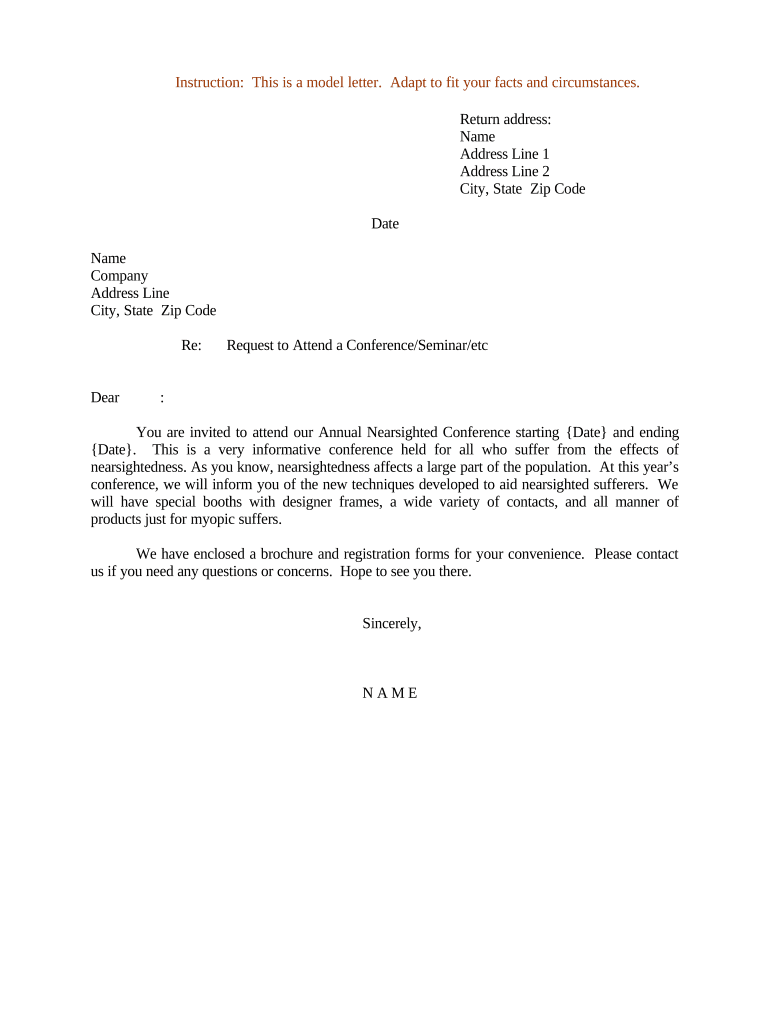
A Letter Inviting Attendance to Nearsighted Conference is a formal written invitation used by organizers to notify individuals or organizations about an upcoming professional meeting focused on myopia (nearsightedness). The letter typically states event purpose, dates, location (physical or virtual), agenda highlights, attendee eligibility, registration and RSVP instructions, and any fees or continuing education credits. It is used to secure commitments, provide logistical details, and document outreach efforts for planning, compliance, or grant reporting. A clear, complete letter reduces follow-up questions and improves attendance forecasting.

Why a Formal Invitation Letter Matters

A clear invitation letter centralizes event details, records attendee intent, and supports compliance for CE credits; electronic versions can be legally effective under the ESIGN Act (15 U.S.C. ch. 96) and UETA when consent and retention requirements are met.

Why a Formal Invitation Letter Matters

Who Typically Prepares and Receives This Letter

Event organizers, academic departments, hospital ophthalmology teams, professional societies, and continuing education managers commonly issue this letter when recruiting speakers, sponsors, or attendees.

  • Medical conference organizers and program managers responsible for scheduling, accreditation, and logistics for clinical sessions.
  • Hospital department chairs and clinic leads inviting staff, referring physicians, or patients to public education sessions.
  • Professional society contacts and university coordinators reaching out to members, researchers, and industry partners.

Core Elements to Include in the Invitation Letter

A professionally prepared letter organizes essential event information and next steps so recipients can decide, register, and prepare. Include accreditation, logistics, and contact details to minimize back-and-forth.

Event Header

Event title, sponsoring organization, and concise one-line description that clarifies subject and audience for quick recognition.
Date and Time

Full event dates, start and end times, and time zone information. Include session-level times if the conference spans multiple days.

Location Details

Physical venue name with address, room, or virtual platform details and any access codes or technical requirements for remote attendance.

Agenda Highlights

Short list of keynote speakers, major topics, and formats (lectures, panels, workshops) so invitees can assess relevance quickly.

Registration and Fees

Clear RSVP deadline, registration link or instructions, fees, and cancellation/refund terms; note any discounted or volunteer rates.

Contact and Accessibility

Primary contact for questions, accessibility accommodations, and instructions for requesting special requirements or CE credit documentation.

Step-by-Step: Preparing and Sending the Invitation

Follow these practical steps to prepare, review, and distribute the letter so responses are timely and records are consistent for event planning.

  • 01
    Draft the Letter: Populate template fields with event specifics and any accreditation language.
  • 02
    Attach Supporting Files: Include agenda, speaker bios, registration form, and CE instructions when applicable.
  • 03
    Review and Approve: Obtain program director or legal sign-off for accuracy and compliance.
  • 04
    Distribute: Send via appropriate channels and record delivery for follow-up.

How to Customize and Complete the Letter Online

Configure a digital workflow to reduce errors and automate reminders. The table below maps common settings to their recommended configuration.

Template Fields Use prefilled fields for recurring data to reduce manual entry and improve consistency.
Conditional Sections Show speaker or registration sections only when relevant to the recipient.
Signature Authentication Require signer email verification or SMS code for higher assurance.
Automated Reminders Set up reminder emails at defined intervals before RSVP deadline.
Integration Settings Connect registration forms to CRM or LMS for attendee tracking.

Where to Send or File the Completed Invitation

Choose the distribution path that matches your audience and recordkeeping needs; record each delivery method for follow-up and compliance.

  • Email Distribution: Send personalized invitations with attachments and tracked delivery receipts for auditability.
  • Event Portal Posting: Upload an official version to the conference website or registration portal for central access.
  • Postal Mailing: Use printed letters for stakeholders requiring hard copy; track via certified mail if necessary.
  • eSignature Submission: Use an eSignature platform to collect signed acknowledgements or speaker confirmations.

Distribution Channels and Technical Requirements

Select delivery methods that match audience accessibility and your recordkeeping obligations.

  • File Formats: Use PDF or DOCX for universal accessibility and preservation.
  • Integrations: Link registration to CRM or LMS (Salesforce, NetSuite, Google Workspace).
  • Authentication: Require email verification or stronger sign-in for speaker contracts.

Key Deadlines to Specify in the Invitation

Set clear, actionable deadlines in the letter so recipients know registration cutoffs, speaker material due dates, and cancellation windows.

RSVP Cutoff:

Specify date and time for attendee confirmation and registration closure.

Speaker Materials Due:

Provide a firm date for slides, bios, and disclosures to allow review.

Cancellation Deadline:

Note refund or substitution deadlines for registrants and sponsors.

Payment Due Date:

State final payment date for paid registration or exhibitor fees.

Badge Pickup:

Communicate when and where attendees collect credentials on-site.

Milestone Timeline from Draft to Final Headcount

A sequential milestone view helps coordinate tasks from initial invitation to final attendee confirmation and on-site preparations.

01

Draft Approval

Legal and program director sign-off on content and accreditation language.

02

Distribution

Send invitations and confirm delivery or posting to the portal.

03

RSVP Window

Collect responses and process payments within the defined timeframe.

04

Final Confirmation

Issue final attendee lists, badges, and materials two weeks before event.

Common Mistakes to Avoid When Preparing the Letter

  • Omitting time zone information for event times leads to attendee confusion and missed sessions.
  • Failing to include clear RSVP deadlines or payment instructions delays planning and increases administrative follow-up.
  • Neglecting accessibility or accommodation instructions can create compliance risks and reduce attendance.
  • Using inconsistent event names or dates across documents undermines CE accreditation and record reconciliation.

Risks and Consequences of Errors

Lost Attendance: Lower turnout and revenue loss
Accreditation Issues: CE credit disputes or denial
Privacy Exposure: HIPAA breach risk if PHI disclosed
Contract Invalidity: Improper signatures may void agreements
Reputational Harm: Confusion damages organizer credibility
Regulatory Penalties: Fines for noncompliance with data rules

Who Can Sign or Authorize the Invitation

Program Director

The program director or lead organizer is typically authorized to approve event content and sign invitations. This person must be listed by full name and title and have delegated authority to commit the organization to speakers, fees, or CE accreditation obligations.

Executive Signatory

An executive officer or department head should sign when the invitation creates contractual obligations or commits institutional resources; list name, title, and department to ensure proper authority for financial or legal commitments.

Practical Examples of Invitation Use

Two brief examples show how organizers adapt the letter for different audiences and objectives.

Academic Conference

An ophthalmology department issues invitations to researchers and clinicians with CE credit details and speaker submission guidelines

  • The letter includes submission deadlines and review contact details
  • The final paragraph clarifies registration fees, remote attendance options, and how accepted abstracts will appear on the program and CE certificates.

Public Health Outreach

A community hospital invites patients and community providers to a myopia awareness session with no fee and an RSVP requirement

  • The letter emphasizes accessibility accommodations and child-friendly content
  • It closes with contact information for transportation assistance, links to screening sign-ups, and instructions for caregivers to register dependents.

How to Save and Export the Completed Letter

Saving in the right format preserves layout and metadata for distribution, archiving, and eSignature verification.

PDF/A

Export as PDF/A for long-term preservation; preserves layout, embedded fonts, and metadata for reliable archival copies and legal records.

DOCX

Keep an editable DOCX when further edits are expected or when integrating with word-processing mail merge templates for personalized invitations.

HTML

Publish a web-hosted HTML version for portal access or responsive viewing on mobile devices; include plain-text alternatives for accessibility.

CSV Exports

Export RSVP and registration fields as CSV for CRM or spreadsheet import to track attendees and payments efficiently.

Notarization and Witness Steps When Authentication Is Required

If a signed acknowledgment or speaker contract requires notarization or witnesses, follow a clear sequence to satisfy legal authentication requirements.

01

Prepare Identification

Collect government-issued ID per notary or RON identity-proofing rules.

02

Choose Notarization Method

Decide between in-person notarization or remote online notarization where permitted.

03

Identity Proofing

Complete knowledge-based verification or credential analysis for RON sessions.

04

Witness Presence

Arrange required number of witnesses if the state or document requires them.

05

Notarial Act

Notary completes acknowledgement, signs, and affixes seal or RON certificate.

06

Record Audio/Video

For RON, retain the AV recording per state retention rules where required.

07

Provide Copies

Deliver signed copies to all parties and store master copy in records.

08

Update Logs

Log journal entries and update central repository for auditability.

How to Update or Revise an Issued Invitation

When details change, follow a controlled amendment process to preserve records, notify recipients, and obtain any necessary re-confirmations.

01

Issue Amendment:

Create a written amendment noting changed items and effective date.
02

Approve Change:

Obtain sign-off from the same authority that approved the original letter.
03

Notify Recipients:

Send revised letter and highlight changes for quick review.
04

Collect Reconfirmations:

Request updated RSVPs or signatures if commitments are affected.
05

Archive Versions:

Keep original and revised versions with version dates for audit trails.
06

Update Systems:

Sync registration lists, CRM, and calendar invites to reflect updates.

eSignature Pricing Comparison for Managing Invitation Letters

The table compares starting prices and key plan features across common eSignature vendors. signNow is listed first per vendor-comparison convention.

signNow DocuSign Adobe Sign PandaDoc HelloSign
Starting Price $8/user/mo $15/user/mo $14/user/mo $19/user/mo $15/user/mo
Free Trial 7-day trial Varies Varies Varies Varies
Bulk Send Yes Varies Varies Varies Varies
Audit Trail Yes Yes Yes Yes Yes
HIPAA Compliant Yes Varies Varies Varies Varies
Envelope Cap No cap 100 envelopes/user/year Varies Varies Varies

FAQs and Troubleshooting for Invitation Letters

Answers to common questions about preparing, distributing, and authenticating the Letter Inviting Attendance to Nearsighted Conference.


Need help? Contact support

be ready to get more
Join over 28 million airSlate SignNow users