Establishing secure connection…Loading editor…Preparing document…

Missouri LLC Dissolution

This template is fully customizable. Edit the text, fill out the fields, and send it for signature. Give it a try!
Missouri LLC Dissolution

What the Missouri LLC Dissolution Is and When It Applies

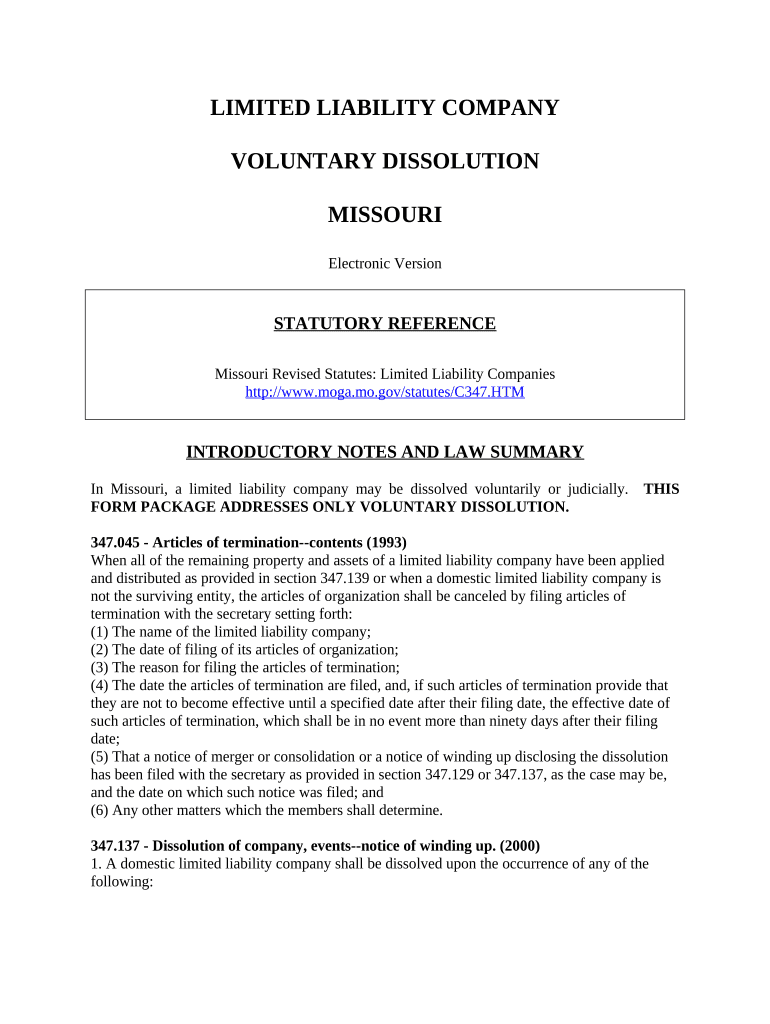
A Missouri LLC Dissolution is the formal process used to end a limited liability company's legal existence in Missouri. It typically begins with member approval under the operating agreement, followed by filing formal dissolution paperwork with the Missouri Secretary of State and completing wind‑up tasks such as settling liabilities, disposing of assets, filing final tax returns, cancelling licenses, and notifying creditors and vendors. Proper dissolution helps prevent future personal liability for members and stops recurring state fees or franchise taxes tied to an active LLC.

Why formal dissolution matters for Missouri LLCs

Completing a formal dissolution protects members from post‑dissolution claims, stops state filing obligations and fees, clarifies final tax responsibilities, and provides a documented end date for contracts and licenses.

Why formal dissolution matters for Missouri LLCs

Who typically completes a Missouri LLC Dissolution

Several parties are commonly involved in preparing and filing dissolution documents.

  • Managing members or managers who approve and sign the dissolution paperwork and lead wind‑up activities.
  • Corporate attorneys or business accountants who prepare filings, final tax returns, and advise on creditor notices.
  • Registered agents or third‑party filing services that submit documents to the Missouri Secretary of State on behalf of the LLC.

Roles vary by LLC structure and whether the company uses external counsel or an online filing provider.

Common signers and their roles

Managing Member

A managing member typically executes the Articles of Dissolution and any member resolutions. They coordinate creditor notices, asset distribution, and final tax filings on behalf of the LLC.

Registered Agent

The registered agent receives official state correspondence and may assist with submission of dissolution paperwork; they do not replace required member approvals or signatures.

Essential information to include on the dissolution form

LLC Legal Name: Exact name on record
SOS File Number: Missouri entity ID
Effective Date: MM/DD/YYYY format
Member Signatures: Authorized signer names
Final Address: Mailing address for notices
Authorized Contact: Phone and email

Risks of not completing dissolution correctly

Continued Tax Liability: State and federal taxes may continue
Personal Exposure: Members could face claims for unpaid obligations
Ongoing Fees: Annual reports and fees may still accrue
Administrative Action: State may administratively dissolve or penalize
Creditor Claims: Unnotified creditors can pursue collection
Recordkeeping Failures: Missing records hinder audits or disputes

Common mistakes when preparing dissolution paperwork

  • Failing to follow the operating agreement’s voting and notice rules can invalidate member approvals and delay dissolution.
  • Not filing final federal and state tax returns or failing to cancel business licenses and permits leaves unresolved liabilities.
  • Using an incorrect legal entity name or mismatched signer names between state records and documents can cause rejection.
  • Neglecting to notify creditors and close accounts increases the risk of post‑dissolution claims against members.

Step-by-step: completing a Missouri LLC Dissolution

Follow these primary steps to dissolve an LLC in Missouri and close its affairs correctly.

  • 01
    Approve Dissolution: Record member vote per operating agreement
  • 02
    Prepare Documents: Complete Articles of Dissolution form
  • 03
    File With State: Submit form and pay filing fee
  • 04
    Wind Up Affairs: Notify creditors, pay debts, distribute assets

How the dissolution filing and wind‑up process flows

Dissolution combines a legal filing step with operational wind‑up tasks; these elements often proceed in parallel.

  • Draft: Assemble required information and resolutions
  • File: Send Articles to Secretary of State
  • Notify: Inform creditors, vendors, and authorities
  • Close: Settle liabilities and distribute remaining assets

Key components to include in professional dissolution paperwork

A complete dissolution package covers formal approvals, the state filing, creditor notices, tax wrap‑up, and documentation of asset distributions.

Articles of Dissolution

A formal state filing that records the LLC’s intent to dissolve and the effective dissolution date; the Secretary of State uses this to terminate an entity’s active status.
Member Resolution

A written record that members approved dissolution under the operating agreement; includes vote results and authorizes signers to act on the LLC’s behalf.

Final Tax Filings

Federal and state final returns, payroll tax reports, and any applicable Form 8822 changes to close accounts and report final activity to the IRS and Missouri Department of Revenue.

Creditor Notice

A documented process for notifying known creditors and publishing notice where required so claims can be submitted during the wind‑up period.

Asset Distribution Plan

A clear schedule describing how assets will be liquidated and distributed to creditors and members, with documentation to support the allocations.

Record Retention Package

A compiled set of corporate records, final financial statements, tax documents, and the filed Articles retained according to regulatory and tax retention guidelines.

Download, save, and assemble supporting dissolution documents

Use standardized file formats and a consistent document package to make filing, review, and future audits simpler.

Preferred Formats

Save the executed Articles and resolutions as searchable PDF/A files to ensure consistent long‑term readability and to preserve signatures and formatting across systems.

Supporting Schedules

Include spreadsheets or ledgers showing asset dispositions, creditor payoffs, and distributions so reviewers can reconcile final balances to tax filings and closing statements.

Signed Originals

Keep signed originals or certified copies of member resolutions and any notarized affidavits in a secure physical or scanned archive with restricted access for recordkeeping.

Submission Copy

Prepare a separate copy for state filing that contains the Articles and any required coversheets, and retain a stamped or confirmed receipt of submission for company files.

Practical tips for accurate, efficient dissolution

Small procedural choices reduce rejection risk and simplify later audits or disputes.

Follow the operating agreement
Confirm quorum, vote thresholds, and notice periods in your operating agreement before recording approvals to avoid procedural defects that could invalidate the dissolution.
Use consistent entity naming
Always use the exact legal name and Secretary of State file number on filings and notices; inconsistencies commonly trigger processing delays and rejections.
Document creditor outreach
Keep written proof of creditor notifications, service attempts, and claim responses; this evidence helps defend against post‑dissolution claims.
Retain final records securely
Store final signed filings, tax returns, and distribution schedules for the legally required retention period and control access to preserve confidentiality.

Typical timelines and processing expectations

Timelines vary by workload, filing method, and whether additional notices or tax clearances are required.

State Processing:

Missouri SOS processing times vary by method and season

Effective Date:

Dissolution is effective on the date stated or on filing acceptance

Final Payroll Taxes:

File final payroll returns by regular IRS deadlines

Creditor Claims Window:

Allow reasonable time for claims; statutory windows may apply

Record Retention:

Keep records for required federal and state periods

Key milestones from vote to administrative closure

A clear milestone list helps coordinate filings, notifications, and tax obligations during wind up.

01

Member Approval

Document vote and authorize dissolution actions

02

File Articles

Submit dissolution form and fee to Secretary of State

03

Settle Debts

Notify creditors, pay validated claims, and resolve liabilities

04

Distribute Assets

Allocate remaining assets and complete final tax reporting

Configuring a digital workflow for dissolution paperwork

A repeatable online workflow reduces manual errors and centralizes signature capture and recordkeeping.

Field Configuration
Upload Document Use a clean, final PDF of Articles
Place Fields Add name, signature, date fields for each signer
Signer Order Define sequence when approvals must be ordered
Authentication Use email or SMS codes for signer identity

Digital filing and signature requirements

Verify file formats, signer authentication, and integration needs before e‑filing.

  • File Formats: PDF, DOCX supported
  • Integrations: Salesforce, NetSuite, Google Workspace
  • Authentication: Email, SMS, multi‑factor options

Ensure the chosen platform supports audit trails, secure storage, and any required notarization workflows before completing electronic signing.

How voluntary dissolution compares with administrative dissolution

Two common paths end an LLC: a member‑initiated voluntary dissolution and a state‑imposed administrative dissolution.

Document Type Voluntary Dissolution Administrative Dissolution
Who Files members secretary of state
Purpose close business penalty for noncompliance
Member Consent required not applicable
Typical Fee state filing fee state administrative fee

eSignature vendor comparison for handling dissolution documents

Key vendor differences for signing and managing dissolution paperwork; signNow is listed first per comparison rules.

signNow DocuSign Adobe Sign PandaDoc HelloSign
Starting Price $8/user/mo $15/user/mo $14/user/mo $19/user/mo $15/user/mo
Free Trial Yes, 7‑day free trial Varies Varies Varies Varies
Bulk Send Yes Yes Yes Yes No
Audit Trail Yes Yes Yes Yes Yes
HIPAA Compliant Yes Yes Yes No No
Envelope Cap No cap 100 envelopes/user/year Varies Varies Varies

Example scenarios showing how dissolution is completed

Two typical use cases illustrate how dissolution paperwork and wind‑up tasks are coordinated for small and asset‑heavy LLCs.

Small Service LLC Closure

A two‑member consulting LLC approves dissolution and documents the vote in the operating agreement

  • All known creditors were notified in 30 days
  • Final tax returns were filed, accounts closed, and remaining funds distributed to members with supporting ledgers retained for seven years.

Real Estate LLC Wind‑Up

A property holding LLC sells assets, pays secured creditors, and records lien releases

  • Title transfers followed closing
  • The Articles of Dissolution were filed after closing, with recorded deeds and settlement statements kept with dissolution documents for audits and buyer inquiries.

Frequently asked questions about Missouri LLC Dissolution

Answers to common questions about filing, taxes, notices, and recordkeeping when dissolving an LLC in Missouri.


Need help? Contact support

be ready to get more
Join over 28 million airSlate SignNow users