Establishing secure connection…Loading editor…Preparing document…

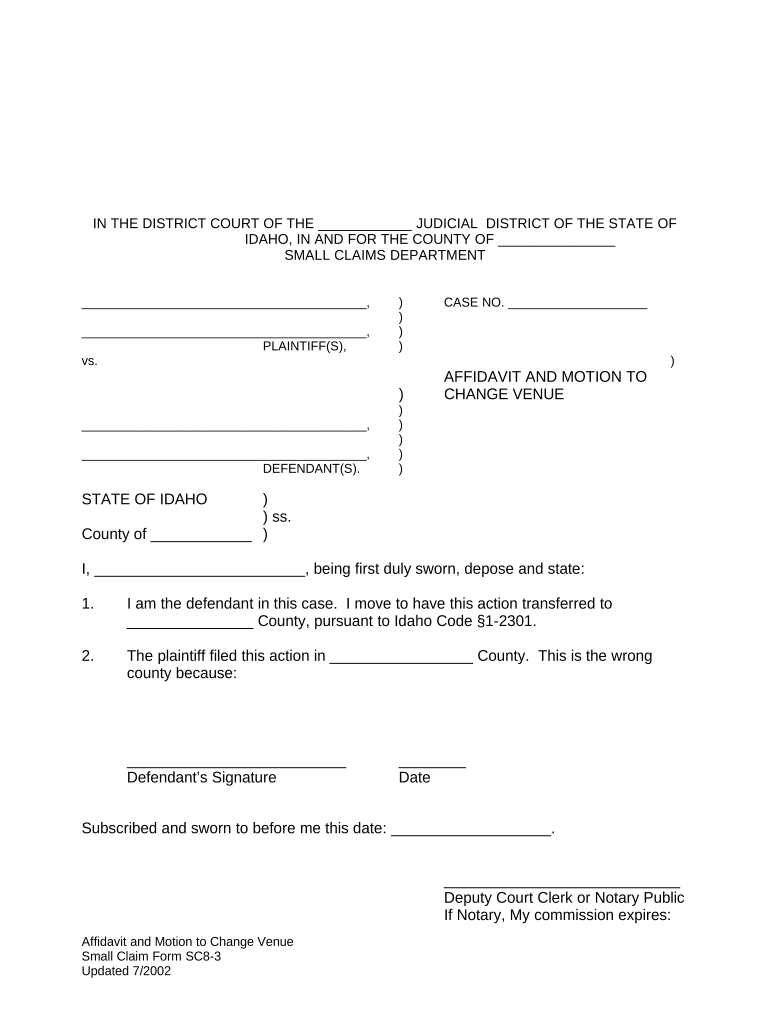
Motion for Change of Venue

This template is fully customizable. Edit the text, fill out the fields, and send it for signature. Give it a try!
Motion for Change of Venue

What a Motion for Change of Venue Is and When it Applies

A Motion for Change of Venue is a court filing asking a judge to transfer a pending case from one court or forum to another. In federal civil matters this often invokes 28 U.S.C. §1404(a) (convenience transfer) or 28 U.S.C. §1406 (defective venue); criminal venue questions may implicate Federal Rule of Criminal Procedure 21. The motion explains why the current forum is improper or inconvenient, presents factual support (affidavits, witness lists, documentary exhibits), and requests a proposed alternative forum or order.

Why Parties File a Motion for Change of Venue

Change-of-venue motions protect parties from prejudicial juries, reduce travel and litigation costs, and correct forum defects; federal transfers rely on 28 U.S.C. §1404(a) for convenience and interest-of-justice analysis.

Why Parties File a Motion for Change of Venue

Who Typically Prepares and Files This Motion

Courts and clerks will expect a clear caption, legal grounds, supporting affidavits, and a proposed order showing the requested transfer.

  • Plaintiff or plaintiff’s counsel seeking a more convenient forum or to avoid local prejudice.
  • Defendant or defense counsel arguing improper venue, forum non conveniens, or risk of biased jury.
  • Corporate in-house counsel coordinating venue strategy for multi-district or cross-border disputes.

Core Parts of a Professional Motion for Change of Venue

A complete motion presents jurisdictional facts, statutory or rule-based grounds, supporting evidence, and a proposed order; concise organization improves clarity for the judge and opposing counsel.

Caption

Court name, case title, docket number, parties and division to identify the matter precisely at the top of the filing.
Relief Requested

Clear statement of the requested transfer: the target court or division and the specific order sought from the judge.

Legal Basis

Statutory or rule citation (for example 28 U.S.C. §1404(a) or FRCP 21) with concise doctrinal support for transfer.

Factual Support

Affidavits, witness lists, travel distances, convenience factors, and other evidence demonstrating why the transfer serves justice.

Procedural History

Summary of prior venue-related filings, deadlines, and status to show context and timeliness.

Proposed Order

A ready-to-sign order specifying the new forum, case number assignment procedures, and any conditions for transfer.

Step-by-Step: How to Prepare and File the Motion

Follow a structured sequence to assemble evidence, file with the court, and notify opposing parties in line with local rules.

  • 01
    Draft Motion: Prepare legal grounds, facts, and a proposed order.
  • 02
    Attach Evidence: Include affidavits, witness lists, and supporting exhibits.
  • 03
    File With Clerk: Submit to the court clerk or e-filing portal per local rules.
  • 04
    Serve Opposing Parties: Provide service and certificate of service per procedural requirements.

Where to File and How the Filing Moves Through the System

Filing routes vary by jurisdiction; follow the court’s e-filing system, clerk’s office rules, and local civil procedure for timely processing.

  • Court Clerk: File via the court’s e-filing portal or in person with the clerk.
  • Opposing Counsel: Serve all counsel and file proof of service with the clerk.
  • Case Management: Judge or case manager schedules briefing and hearing dates.
  • Order Entry: Court issues transfer order and instructs docketing in the new forum.

How to Customize the Motion for Online Filing and eSubmission

Set up your document workflow to include fillable fields, attachments, signer roles, and export options for court e-filing compatibility.

Fillable Fields Case info, signatures, and dates configured for quick reuse.
Attachments Affidavits and exhibits appended as searchable PDFs.
Signer Roles Identify movant, counsel, and declarant signer actions.
Authentication Enable email or SMS codes for signer attribution.
Export Format Export as PDF/A or court-compatible PDF for e-filing.

Digital Signing and Submission: Platform Considerations

Ensure the chosen platform stores an audit trail and allows export of the signed filing and certificates for court submission.

  • File Formats: PDF and PDF/A required by most court e-filing systems.
  • Authentication: Email, SMS, or advanced signer verification as required.
  • Integrations: Connectors to cloud storage and case management systems.

Common Timelines and Response Deadlines to Expect

Timing is governed by local civil rules; early filing is generally required so the court can schedule briefing and hearings before trial.

Motion Filing:

File as early as practicable before trial or as local rules permit.

Opposition Deadline:

Typically 14–21 days, but local rules set exact timeframes.

Reply Deadline:

Often 7–14 days after the opposition is filed, per court rule.

Hearing Scheduling:

Court may set a hearing several weeks after briefing concludes.

Emergency Motions:

Seek expedited consideration if prejudice or imminent trial requires it.

Key Milestones from Filing to Court Decision

Track milestones to ensure timely service, briefing, and preparation for any evidentiary hearing the court may require.

01

File Motion

Clerk accepts and dockets the motion and proposed order.

02

Serve Parties

Opposing counsel and involved parties receive the filing.

03

Briefing Complete

Opposition and any reply are filed with the court.

04

Court Ruling

Judge rules or holds a hearing before deciding venue.

Common Mistakes to Avoid When Preparing the Motion

  • Relying on conclusory assertions without affidavits or concrete facts demonstrating inconvenience or prejudice.
  • Failing to follow local rules for service, page limits, or briefing schedules, leading to forfeiture or denial.
  • Submitting an incomplete proposed order or failing to specify the exact alternative venue requested.
  • Omitting key exhibits such as witness affidavits, travel-distance calculations, or documentary proof of forum connections.

Consequences of a Defective or Late Motion

Denial of Motion: Court may deny transfer without prejudice.
Waiver of Objection: Late objections to venue can be deemed waived.
Sanctions: Court may impose costs or sanctions for frivolous motions.
Trial Delay: Untimely filings can postpone proceedings.
Increased Costs: Duplicate filings and travel expenses may rise.
Record Complications: Transfer logistics can complicate evidence management.

Required Information and Security Considerations

Case Identifiers: Docket number and case caption
Party Details: Full legal names and counsel contacts
Signatures: Signed by attorney or movant
Confidential Exhibits: Mark and file under seal if required
Audit Trail: Preserve timestamp and signer metadata
Data Encryption: Use TLS in transit and AES-256 at rest

Practical Examples of When a Venue Change Is Sought

Two concise, practical examples illustrate common factual patterns supporting a transfer request.

Defense Seeks Impartial Jury

A local pretrial publicity campaign allegedly prejudiced potential jurors

  • Movant submits juror surveys and media clips
  • The defense requests transfer to a neighboring district for an impartial jury and reduced prejudice risk, attaching affidavits from local counsel and proposed voir dire plans.

Convenience for Witnesses

Most witnesses and critical documents are located in a different district

  • Party provides witness affidavits and distance/time analyses
  • The motion argues that transfer under 28 U.S.C. §1404(a) minimizes cost, reduces lost work time, and serves the convenience of parties and witnesses.

eSignature Pricing and Feature Snapshot for Filing and Signing

Comparison of common plan and feature dimensions for eSignature vendors to consider when preparing filings and sworn declarations; signNow is listed first per vendor-format requirements.

signNow DocuSign Adobe Sign PandaDoc HelloSign
Starting Price $8/user/mo $15/user/mo $14/user/mo $19/user/mo $15/user/mo
Free Trial 7-day free trial Yes Yes Yes Yes
Bulk Send Yes Yes Yes Yes No
Audit Trail Yes Yes Yes Yes Yes
HIPAA Compliant Yes Yes Yes No No
Envelope Cap No cap 100 envelopes/user/year Varies Varies Varies

Frequently Asked Questions About Motions for Change of Venue

Answers to common procedural and practical questions about preparing, filing, and evidentiary support for venue transfer motions.


Need help? Contact support

be ready to get more
Join over 28 million airSlate SignNow users