Establishing secure connection…Loading editor…Preparing document…

Civil Motion Form

This template is fully customizable. Edit the text, fill out the fields, and send it for signature. Give it a try!
Civil Motion Form

What the Civil Motion Form Is and When It’s Used

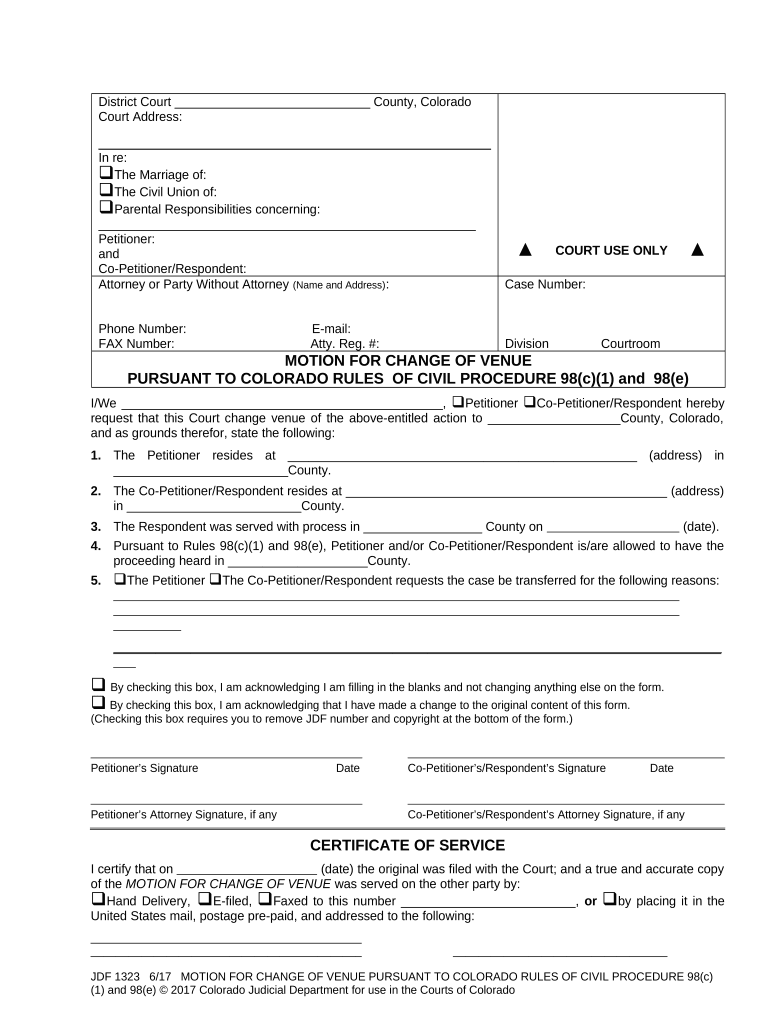
A Civil Motion Form is the written request a party files with a court asking the judge to issue a specific order, such as to compel discovery, continue a hearing, dismiss claims, or enter summary judgment. The form typically includes the case caption, motion title, concise statement of facts, legal grounds, requested relief, and a certificate of service. Courts require motions to follow local and federal procedural rules for formatting, timing, service, and supporting exhibits; failure to comply can lead to rejection or sanctions.

Why a Properly Prepared Civil Motion Matters

A correctly completed Civil Motion Form improves the chance the court will accept the filing, speeds judicial review, preserves advocacy points for hearing, and reduces risk of procedural denial or sanctions.

Why a Properly Prepared Civil Motion Matters

Who Typically Prepares and Files a Civil Motion

Accurate preparation reduces processing delays and helps preserve appellate issues by creating a clear, rule-compliant record.

  • Private attorneys preparing substantive motions, managing citations, and ensuring compliance with local rules and briefing schedules.
  • Self-represented litigants filing basic procedural motions, using court forms or templates to meet caption and service requirements.
  • Court clerks and judicial staff who review format, accept filings into the docket, and validate service certificates before processing.

Primary Signers and Filers

Attorney of Record

An attorney signs and files motions on behalf of a party, certifying that the motion complies with procedural rules and professional obligations; counsel also verifies service on opposing parties and can face Rule 11 or local rule sanctions for frivolous filings.

Pro Se Litigant

A self-represented party completes and signs the motion personally, certifying truth under penalty of perjury where required; courts often expect pro se filers to follow the same format and service rules as attorneys.

Step-by-Step: Preparing and Filing a Civil Motion

Follow a standard sequence to prepare, serve, and file a motion so it meets court formatting, timing, and service requirements.

  • 01
    Draft the Motion: Assemble caption, facts, legal argument, and exhibits.
  • 02
    Prepare Attachments: Compile declarations, exhibits, and proposed order.
  • 03
    Serve Opposing Parties: Serve per rule: e-file and email or mail as required.
  • 04
    File with Court: Submit via court e-filing system or clerk’s office.

Filing Flow: From Draft to Court Ruling

This sequence summarizes the operational flow for electronic or paper filing of a civil motion.

  • Authoring: Create motion text and assemble supporting documents.
  • Internal Review: Have counsel or staff check citations, format, and exhibits.
  • Service: Serve opposing counsel per local rule and record service.
  • Filing: Upload to court e-filing or deliver paper copy to clerk.

Suggested eFiling Workflow Settings for a Civil Motion

Configure your document and eSignature workflow to align with court e-filing and service expectations.

Field Configuration
Document Format PDF/A with searchable text for court compatibility
Signature Type Typed or drawn signature with audit trail
Service Record Attach certificate of service as separate exhibit
File Naming Include case number and motion title for clerk review

Technical Requirements for eSubmission and eSignature

Confirm local court e-filing rules and preferred submission methods before uploading to ensure acceptance.

  • File Types: PDF, PDF/A preferred
  • Authentication: Email or SMS code commonly acceptable
  • Integrations: Works with e-filing portals and cloud storage

Essential Sections of a Professional Civil Motion Form

A well-structured motion contains standard sections that judges and clerks expect; include each element clearly to facilitate review and ruling.

Case Caption

Place the court name, parties’ names, and docket number at the top of the first page; this identifies the filing and ensures the clerk attaches the motion to the correct case file.
Introduction

Begin with a concise statement of the relief requested and the procedural posture; a short introductory paragraph helps the court quickly understand the motion’s purpose.

Statement of Facts

Present relevant facts in numbered paragraphs with dates and citations to exhibits; factual clarity separates admissible facts from legal argument.

Legal Argument

Structure legal points with headings, cite controlling authority, and apply law to facts; avoid overlong exposition and include supporting case law or statutes.

Requested Relief

List each specific order sought using precise language (e.g., grant motion, stay proceedings, costs awarded) and include alternative or conditional requests if appropriate.

Certificate of Service

Document how, when, and to whom the motion was served, including full addresses and delivery method, to demonstrate compliance with service rules.

Security and Compliance Considerations for Electronic Motions

Encryption: TLS 1.2/1.3; AES-256
Audit Trail: Time-stamped signing history
Access Controls: Role-based permissions
HIPAA BAA: BAA available if PHI included
ESIGN/UETA: Legal e-signature frameworks
21 CFR Part 11: Available for FDA-regulated records

Common Pitfalls When Preparing Civil Motions

  • Using the wrong case caption or docket number leads to misfiling or clerical rejection and delays the court’s review.
  • Failing to attach or properly label exhibits causes the court to exclude evidence or strike portions of the filing.
  • Missing the local rule deadline for opposition or reply risks denial of the request and can foreclose relief.
  • Incomplete certificate of service or incorrect service method can lead to notice disputes and potential reservice requirements.

Consequences of Incorrect or Improperly Filed Motions

Denial of Motion: Case action prevented
Sanctions: Fee awards or disciplinary measures
Default Ruling: Adverse decision on issues
Rejection by Clerk: Document returned unread
Service Dispute: Opposition on notice grounds
Appeal Issues: Preservation of record affected

Typical Timing and Response Deadlines to Track

Deadlines vary by federal district and state court; consult local rules. Common calendar items to track when filing a motion are below.

Service Date:

Date opposing party receives the motion

Opposition Deadline:

Often 14 days from service (varies)

Reply Deadline:

Commonly 7 days after opposition filing

Hearing Date:

Set by court per its calendar

Ruling Period:

Judge issues order within variable timeframe

Key Milestones from Filing to Ruling

Track these sequential milestones when managing a motion to ensure timely service, response, and judicial consideration.

01

Draft and Review

Prepare motion, exhibits, and proposed order prior to service.

02

Serve Parties

Deliver motion per local rules and document service method.

03

Opposition and Reply

Monitor filings from opponents and file any permitted reply briefs.

04

Hearing and Decision

Attend hearing if scheduled; await written or oral ruling.

How the Civil Motion Form Differs from Similar Court Documents

Compare the motion form with related filings to choose the correct form type and avoid procedural missteps.

Document Type Motion Memorandum
Purpose request court order explain legal theories
Supporting Material declarations/exhibits citations and authority
Typical Length short to moderate longer legal brief
Filing Considerations service certificate needed often accompanies motion

eSignature Pricing and Feature Comparison for Civil Motion Workflows

Compare baseline pricing and capabilities for common eSignature vendors used in legal workflows; signNow appears first per vendor ordering rules.

signNow DocuSign Adobe Sign PandaDoc HelloSign
Starting Price $8/user/mo $15/user/mo $14/user/mo $19/user/mo $15/user/mo
Free Trial Yes, 7-day free trial No No Yes, limited Yes, limited
Bulk Send Yes Yes Yes Yes No
Audit Trail Yes Yes Yes Yes Yes
HIPAA Compliant Yes Yes Yes No No

Frequently Asked Questions About Civil Motion Forms and eFiling

Answers to common questions about electronic signing, service, formatting, and correcting mistakes when using Civil Motion Forms.


Need help? Contact support

be ready to get more
Join over 28 million airSlate SignNow users