Establishing secure connection…Loading editor…Preparing document…

Proposal and Acceptance for Sprinkler System Installation

This template is fully customizable. Edit the text, fill out the fields, and send it for signature. Give it a try!
Proposal and Acceptance for Sprinkler System Installation

What the Proposal and Acceptance for Sprinkler System Installation Is

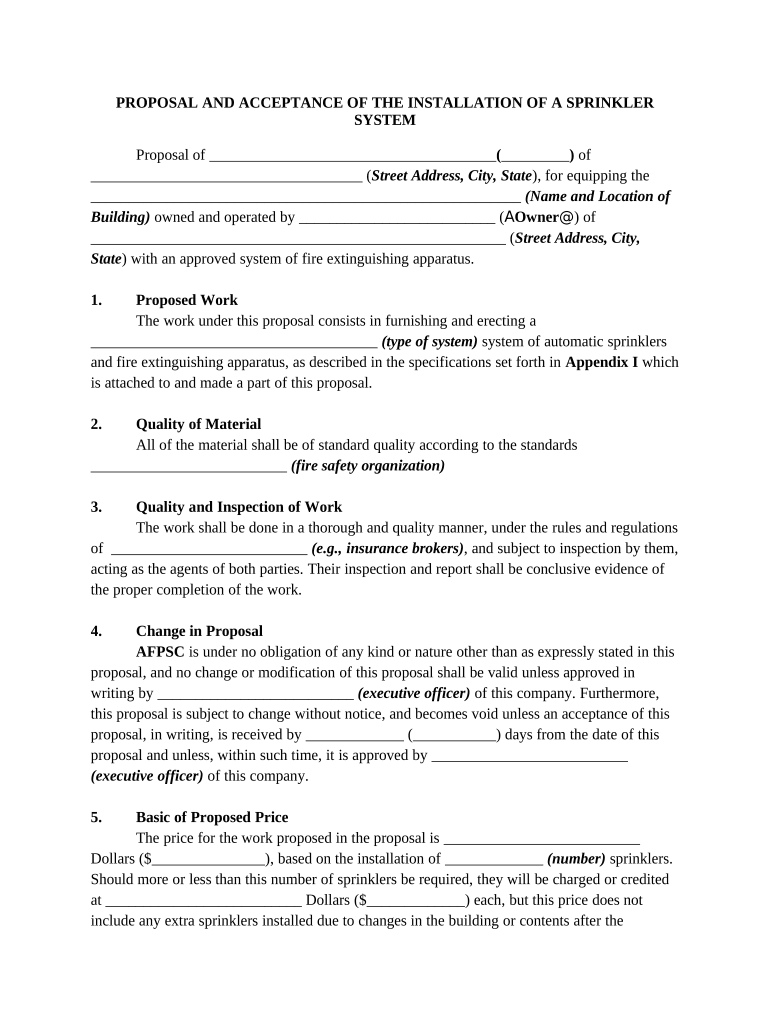
A Proposal and Acceptance for Sprinkler System Installation is a written agreement that records the installer’s proposed scope, materials, price, timeline, permit responsibilities, and any conditions for performing fire suppression work. When the property owner signs the Acceptance section, the proposal becomes a binding contract that sets performance obligations, payment terms, and warranty start dates. The form should plainly identify parties, site address, technical specifications (pipe, head type, zone layout), required permits, insurance and indemnity provisions, and signature blocks for authorized signatories to avoid disputes.

Why a Clear Proposal and Acceptance Matters

A concise, well-structured proposal reduces scope disputes, speeds project start, and clarifies responsibilities for permits, inspections, and payments. It documents mutual assent and key deliverables so both parties understand milestones and remedies if work deviates from the plan.

Why a Clear Proposal and Acceptance Matters

Who typically prepares and signs this document

Common participants include sprinkler contractors, property owners, facility managers, and project general contractors; each party has distinct responsibilities to confirm.

  • Sprinkler contractor — Prepares scope, pricing, schedule, and compliance details for owner review.
  • Property owner/manager — Reviews scope, requests clarifications, and signs acceptance to create contractual obligation.
  • General contractor — Coordinates site access, permits, and sequencing with other trades when acting as project lead.

Signatory roles and typical authorizers

Contractor Authorized Signer

A company officer or project manager with authority to bind the installing contractor signs on behalf of the vendor. This signer confirms pricing, warranty, insurance coverage, and that work will comply with applicable codes and permits; include printed name and title for attribution.

Owner / Property Manager

An owner, board designee, or authorized property manager signs the Acceptance, acknowledging scope, payment terms, and start date. If signing for an entity, include corporate title and confirm the signer has authority to bind the entity to the agreement.

Core components to include in a professional proposal

A clear proposal structure reduces ambiguity and protects both parties by documenting technical details, costs, schedule, and acceptance conditions.

Scope of Work

Precise description of tasks, installed materials, pipe sizes, head types, zoning, and any exclusions to prevent misinterpretation.
Materials & Specifications

List manufacturer names, model numbers, pipe material, fittings, and finish standards so substitutes require written approval.

Pricing & Payment

Itemize labor, materials, taxes, allowances, deposit and progress payment schedule, and late payment remedies.

Schedule & Milestones

Define mobilization date, inspection windows, completion target, and conditions for delays such as weather or permitting.

Permits & Inspections

State which party secures permits and schedules inspections; note responsibility for permit fees and changes.

Acceptance & Warranty

Acceptance signature block, punch-list process, warranty length, corrective scope, and start date for warranty coverage.

Key security and compliance controls to document

Encryption: TLS 1.2/1.3, AES-256
Audit Trail: Timestamps, IP, action log
HIPAA BAA: Available when PHI involved
ESIGN / UETA: Legal e-sign framework
21 CFR Part 11: Applicable for FDA-regulated records
Access Controls: Role-based signer permissions

Step-by-step: completing and executing the proposal

Follow these steps to prepare, review, and execute the Proposal and Acceptance reliably and in a way that supports enforceability.

  • 01
    Prepare Proposal: Draft scope, specs, price, and permit responsibilities.
  • 02
    Internal Review: Legal and operations verify obligations and insurance.
  • 03
    Send to Owner: Deliver via email or eSignature link for review.
  • 04
    Obtain Signatures: Capture authorized signatures and store executed copy.

Digital workflow settings for e-submission

Configure a clear signing workflow so signers receive the correct fields, authentication, and completed records automatically.

Field Configuration
Notification Method Email and optional SMS code for signer alerts
Authentication Email link plus optional SMS or ID check
Signing Order Contractor signs first then owner signs
Retention Store signed file and audit trail for seven years

How online signing and acceptance typically flows

A reliable online signing flow preserves intent and creates an audit trail demonstrating each party’s actions and timestamps.

  • Upload Document: Sender uploads completed proposal PDF or DOCX.
  • Place Fields: Insert signature, date, and initial fields.
  • Send Link: Generate signing link or invite by email.
  • Complete Signing: Signer authenticates and signs; certificate created.

Technical requirements and integrations for e-submission

Choose a platform that supports PDF/DOCX import, audit trails, and required signer authentication methods.

  • Supported Formats: PDF, DOCX, HTML
  • Integrations: Salesforce, NetSuite, Google Workspace
  • Authentication: Email, SMS code, KBA optional

Ensure the chosen provider can export certified signed PDFs, retain audit evidence, and meet any industry compliance needs such as HIPAA or 21 CFR Part 11 if applicable.

Practical tips to avoid disputes and speed approval

Small drafting choices reduce rework, accelerate approvals, and strengthen enforceability; follow these practical, proven measures.

Be Specific About Scope
Avoid vague phrases; reference drawings and line items so expectations and change order triggers are clear and measurable.
Use Clear Payment Triggers
Tie progress payments to inspections or milestones with defined metrics and dates to reduce payment disputes.
Document Permit Responsibilities
State who secures and pays for permits and list consequences if approvals delay the schedule.
Retain Executed Copies
Store signed files and audit trails in a secure system for the recommended retention period to meet regulatory needs.

Key dates and timing expectations to include

Define firm deadlines and contingency allowances so both parties understand permit, start, and completion timing.

Offer Expiration:

Specify number of days the proposal remains valid.

Start Date:

Target mobilization date following permit approval.

Permit Processing:

Allow time for municipal permit review and inspection scheduling.

Payment Milestones:

Tie deposit and progress payments to defined deliverables.

Warranty Start:

State when warranty coverage begins and its duration.

Common penalties and legal risks to watch for

Missing Signatures: Contract unenforceable
Ambiguous Scope: Leads to claims and change orders
Late Permits: Delay damages and cost shifts
Payment Disputes: Contractor lien or collection action
Code Noncompliance: Rework and municipal penalties
Incorrect Tax Forms: Withholding or IRS penalties

Comparison: signNow and common e-signature alternatives

Pricing and a few feature distinctions for common e-signature vendors to consider for proposal execution and recordkeeping needs.

signNow DocuSign Adobe Sign PandaDoc HelloSign
Starting Price $8/user/mo $15/user/mo $14/user/mo $19/user/mo $15/user/mo
Free Trial 7-day free trial Varies by plan Varies by plan Varies by plan Varies by plan
Bulk Send Yes Yes Yes Yes No
Audit Trail Yes Yes Yes Yes Yes
HIPAA Compliant Yes Yes Yes No No

Real-world examples of electronic proposal workflows

Two brief examples illustrate how digital execution improves turnaround and recordkeeping for construction-related proposals.

Optica Ventures (COO)

Optica Ventures adopted online signing to simplify customer interactions and approvals.

  • The platform made signatures easier for customers and staff.
  • Brian Fitzgibbons noted the interface was simple and easy for both his team and their customers, reducing follow-up calls and improving signature completion rates on project proposals.

Martin Properties (Founder)

A small property business digitized contract execution for on-site bids.

  • The workflow handled mobile signing and offline capture.
  • Tim Martin reported he could execute documents online with compliance and security, enabling faster project starts and clearer audit records for property maintenance contracts.

Frequent preparation errors that cause delays

  • Omitting exact model numbers or drawings, which creates scope disputes and costly change orders later.
  • Using vague payment terms or undefined milestones, leading to disagreements over release of progress payments.
  • Failing to state permit responsibility, which can delay mobilization while parties dispute fees and approvals.
  • Not matching signer name to legal entity records, creating problems for enforcement or lien filings.

Frequently asked questions and practical answers

Answers to common questions about enforceability, notarization, electronic signatures, corrections, and revocation for sprinkler installation proposals.


Need help? Contact support

be ready to get more
Join over 28 million airSlate SignNow users