Establishing secure connection…Loading editor…Preparing document…

Letter of Recommendation for Scholarship

This template is fully customizable. Edit the text, fill out the fields, and send it for signature. Give it a try!
Letter of Recommendation for Scholarship

What a Letter of Recommendation for Scholarship Is

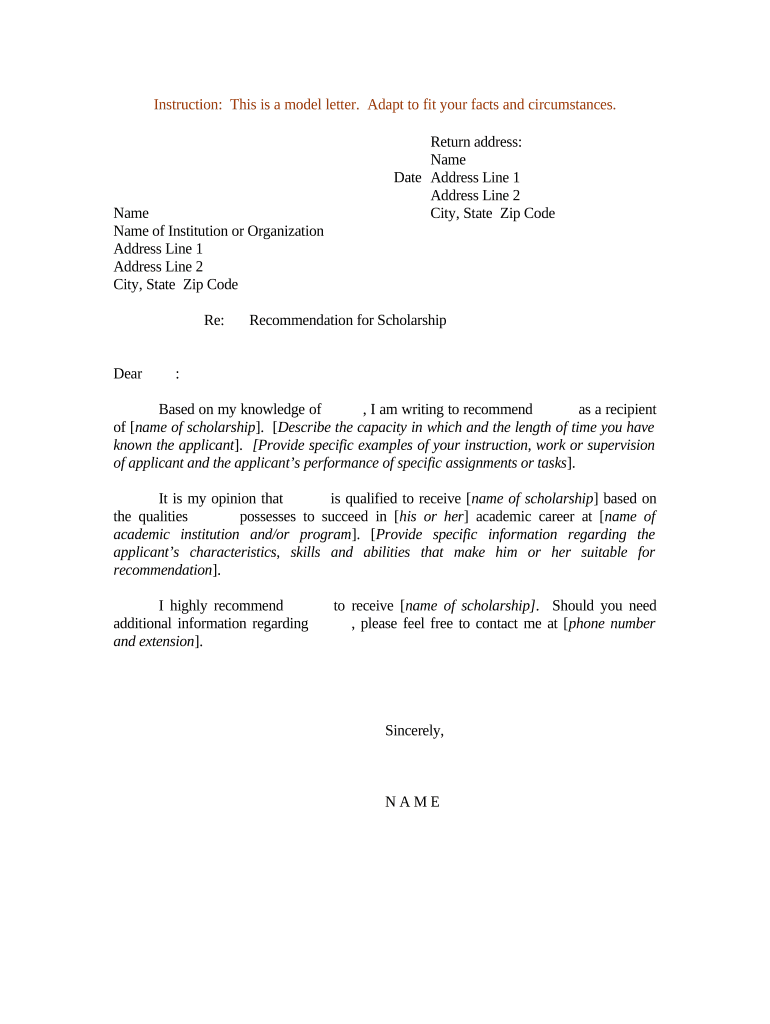
A Letter of Recommendation for Scholarship is a written assessment provided by an academic instructor, employer, or mentor describing an applicant's qualifications, achievements, character, and potential to meet scholarship criteria. It typically accompanies an application and may address academic performance, leadership, community service, and financial need. Issuers should be clear about the relationship to the candidate, the period of observation, and specific examples that support claims. Institutions use these letters to evaluate fit and comparative merit when awarding limited scholarship funds.

Why a Well‑Prepared Recommendation Matters

A focused, properly formatted letter strengthens an applicant's case by supplying evidence and context that transcripts and scores cannot. It helps selection committees compare soft skills, motivations, and situational performance reliably.

Why a Well‑Prepared Recommendation Matters

Who Writes and Who Uses These Letters

Recipients include scholarship committees, financial aid offices, and external foundations that require objective third‑party evaluations.

  • Faculty and instructors who taught the student and can attest to academic ability and classroom contributions.
  • Supervisors or employers who can describe work ethic, reliability, and relevant project outcomes.
  • Mentors, volunteer coordinators, or community leaders who observed leadership, service, or character.

Core Elements of a Professional Scholarship Recommendation

A strong letter balances factual detail, evaluative commentary, and professional tone. The six items below describe the structural and substantive elements reviewers expect.

Opening

Identify your role and relationship to the applicant, how long you have known them, and the context in which you observed their work or study to establish credibility and basis for evaluation.
Assessment

Provide a clear evaluative statement about the applicant's strengths and suitability for the scholarship, linking traits such as leadership or resilience to specific examples showing consistent behavior.

Evidence

Supply two or three concrete examples (projects, papers, initiatives, volunteer roles) that demonstrate the applicant's skills, impact, and growth rather than relying on generic praise.

Comparative Ranking

When appropriate, indicate how the applicant compares to peers (e.g., top 5% of students) and explain the basis for that ranking to give committees a benchmark for relative merit.

Limitations

Note any relevant contexts or limitations honestly (e.g., limited direct supervision, part‑time observation) so reviewers can correctly weight the recommendation.

Closing

Offer a concise concluding endorsement with contact information and willingness to answer follow‑up questions; include signature and date to authenticate the letter.

Step‑by‑Step: Preparing and Submitting a Letter

Follow these sequential steps to produce a clear, compliant letter and ensure timely delivery to the scholarship committee.

  • 01
    Request Details: Confirm deadline, submission method, and any form questions.
  • 02
    Draft Content: Write targeted examples and an evaluative conclusion.
  • 03
    Format and Sign: Use letterhead if available; sign and date the document.
  • 04
    Transmit: Send by the requested channel (portal, email, or mail) and keep delivery proof.

How to Set Up an Online Recommendation Workflow

Configure a predictable digital workflow so requests, drafts, approvals, and deliveries happen securely and on time.

Field Configuration
Request Form Include applicant name, program, deadline, and upload option.
Template Create a reusable letter template with editable sections.
Reviewer Access Grant access to designated recommenders via email invites.
Delivery Method Select portal upload, email attachment, or secure link.

Digital Submission and Platform Considerations

Ensure the chosen platform produces a time‑stamped, tamper‑evident PDF and retains an audit trail that shows signer identity, timestamp, and delivery history for institutional records.

  • File Types: PDF preferred
  • Signature: Typed or eSigned
  • Authentication: Email verification

Where and How Letters Are Typically Submitted

Submission channels vary by funder; use the method specified in application instructions and retain confirmation of delivery.

  • Scholarship Portal: Upload signed PDF directly to the reviewer portal.
  • Institutional Office: Email or upload to the financial aid or scholarship office.
  • External Foundation: Follow foundation portal or email submission rules.
  • Paper Mail: Seal on letterhead and send with tracking proof.

Timing: Typical Deadlines and Processing Expectations

Plan time for drafting, review, signing, and delivery; build in buffer time for revisions and any portal processing.

Request Lead Time:

Ask recommenders 4–6 weeks before deadline to allow thoughtful review.

Internal Deadlines:

Many campuses set internal cutoffs 1–2 weeks before external due dates.

Portal Cutoffs:

Portal timestamps typically determine on‑time receipt; submit earlier to avoid outages.

Confirmation:

Retain delivery receipts or portal confirmation emails.

Late Submissions:

Committees may reject late letters without exception—verify extension policies in advance.

Common Mistakes to Avoid

  • Missing or ambiguous relationship details that leave committees unsure of the recommender's perspective and credibility.
  • Generic language without examples, which makes comparative assessment difficult and reduces the letter's influence.
  • Failing to follow the scholarship's submission instructions (file type, portal, confidentiality settings), leading to disqualification.
  • Not signing or dating the letter, or uploading a draft without a signature, which can invalidate the recommendation.

Risks from Incorrect or Mishandled Letters

Rejection: Missing or late letters can cause application denial.
Attribution Error: Unsigned or improperly attributed letters may be rejected.
FERPA Exposure: Improper release of student records may breach 34 CFR Part 99.
Confidentiality Loss: Mislabeling sharing preferences can disclose sensitive material.
Authentication Failure: Weak signing processes can create disputes about authorship.
Recordkeeping Gaps: No delivery proof can complicate appeals or disputes.

Practical Examples of Effective Letters

Two anonymized examples illustrate structure and level of detail commonly viewed as strong by scholarship committees.

Academic Recommendation

As the student's research advisor for two years, I observed exemplary analytical skills and initiative in lab projects.

  • Led a yearlong study improving retention rates by 18%.
  • This measurable contribution, consistent work ethic, and clear leadership indicate strong potential for your scholarship and future academic success.

Employer Recommendation

As direct supervisor during an 18‑month internship, I evaluated their project management and client communication daily.

  • Managed a cross‑functional team that completed deliverables ahead of schedule.
  • Their reliability, client rapport, and problem‑solving make them a deserving candidate for financial support tied to professional development.

eSignature Pricing and Feature Comparison for Recommendation Letters

Comparing common eSignature providers on price and key features relevant to secure delivery and compliance for recommendation letters. signNow appears first per vendor ordering rules.

signNow DocuSign Adobe Sign PandaDoc HelloSign
Starting Price $8/user/mo $15/user/mo $14/user/mo $19/user/mo $15/user/mo
Free Trial Yes, 7‑day trial Varies by plan Varies by plan Varies by plan Varies by plan
Bulk Send Yes Yes Yes Yes No
Audit Trail Yes Yes Yes Yes Yes
HIPAA Compliant Yes Yes Yes No No

Frequently Asked Questions About Scholarship Recommendation Letters

Answers to common questions about format, privacy, electronic signatures, and retention to help recommenders and administrators avoid processing errors.


Need help? Contact support

be ready to get more
Join over 28 million airSlate SignNow users