Establishing secure connection…Loading editor…Preparing document…

Agreement to Rescind Contract of Sale

This template is fully customizable. Edit the text, fill out the fields, and send it for signature. Give it a try!
Agreement to Rescind Contract of Sale

What the Agreement to Rescind Contract of Sale Is

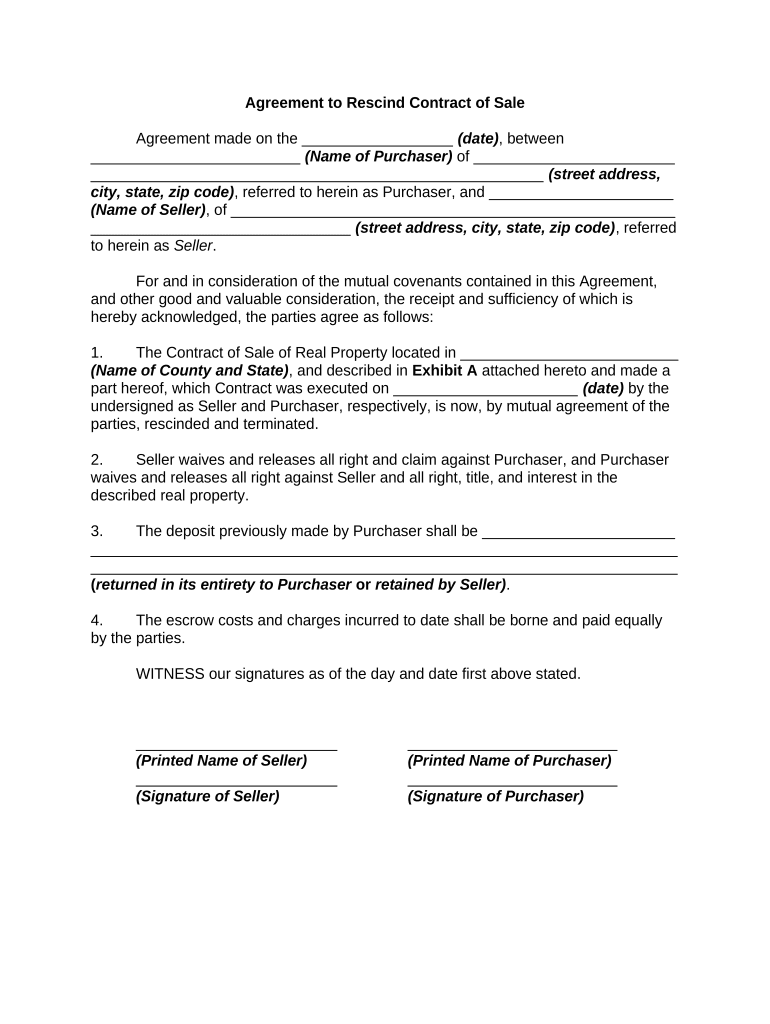
An Agreement to Rescind Contract of Sale is a written mutual agreement by contracting parties to cancel a previously executed sales contract and return parties to their pre-contract positions where possible. It records the parties, the contract being rescinded, the effective rescission date, the treatment of deposits or other consideration, and any mutual releases or obligations that survive rescission. The document creates a clear paper trail of the parties' intent to unwind the sale and reduces later disputes about the transaction's status.

Why a Formal Rescission Agreement Matters

A written rescission clarifies rights and duties, avoids ambiguity about returned funds or goods, and creates enforceable evidence of mutual consent to cancel the sale. It also supports accurate recordkeeping for taxes, liens, and title issues.

Why a Formal Rescission Agreement Matters

Who typically prepares or signs this Agreement

Parties directly involved in the original sale typically prepare and sign the rescission agreement, sometimes assisted by counsel or brokers.

  • Real estate brokers and buyers/sellers resolving a failed closing or title issue.
  • Attorneys handling contract disputes where mutual cancellation avoids litigation.
  • Lenders or title companies requiring written confirmation to release liens or escrow.

Signatory Roles and Authority

Seller (Authorized Signer)

The seller must be the named contracting party or an authorized representative with written authority. If an entity signs, include the signer's title and attach corporate authorization (board resolution or power of attorney) to show capacity and avoid later challenges.

Buyer (Authorized Signer)

The buyer likewise must be the named contracting party or a properly authorized agent. For individuals include government ID details where required; for businesses attach evidence of signing authority to reduce risk of disputed execution.

Core elements to include in a professional rescission agreement

A complete Agreement to Rescind Contract of Sale includes precise identification of the original contract, the parties, effective dates, treatment of funds and property, mutual releases, and execution details.

Parties

Full legal names and capacities of buyer and seller, including business entity type and state of organization when applicable.
Original Contract Reference

Clear citation of the original contract: title, date executed, and any contract or file number to avoid ambiguity.

Rescission Statement

Unambiguous language stating the parties mutually rescind the original sale, effective date of rescission, and whether rescission is retroactive.

Return of Consideration

Detailed description of returned funds, property, escrow disbursement instructions, deductions, and timing for reimbursements.

Mutual Releases

Mutual release clauses that waive future claims arising from the rescinded contract, except for expressly reserved claims.

Execution Blocks

Signature lines with printed names, dates, titles, and notary acknowledgement or witness blocks if required by law or contract.

Step-by-step: completing an Agreement to Rescind Contract of Sale

Follow these core steps to prepare, sign, and distribute a legally clear rescission agreement.

  • 01
    Draft Agreement: Identify the contract, state the rescission, and set terms for returned consideration.
  • 02
    Confirm Authority: Verify signers have authority and attach resolutions or POAs if entities are involved.
  • 03
    Sign and Notarize: Have parties sign; notarize or obtain witnesses where required by contract or state law.
  • 04
    Distribute Copies: Provide executed copies to buyer, seller, escrow, lender, and title or recording office as applicable.

Configuring an online rescission workflow

Set up fields and routing before sending to ensure a smooth eSignature process and correct record retention.

Field Configuration
Authentication Method Email verification or SMS code for signer identity
Signature Type Allow eSignature (audit trail) or require wet‑ink & notarization
Document Format Use PDF/A for long-term preservation
Notifications Auto-email executed copy to all parties and escrow

Delivery and technical requirements for eSigning and distribution

Choose a platform that supports secure eSign, audit trails, and the integrations you need to exchange executed copies.

  • Integrations: Salesforce, NetSuite, Google Workspace, Microsoft 365
  • File Formats: PDF/A, DOCX supported
  • Security: TLS in transit, AES-256 at rest

Where to send or file the executed agreement

Different parties and agencies may require copies; route executed documents promptly to avoid downstream issues.

  • Seller Copy: Provide a signed copy to the seller and their counsel
  • Buyer Copy: Send executed agreement to the buyer and any representative
  • Escrow or Lender: Deliver instructions for return of funds and confirm disbursement schedule
  • Title Company or Recorder: If recorded instruments were involved, provide documentation for release or correction

Timing considerations and common deadline triggers

Rescission timing depends on contract terms, statutory windows, and practical tasks like escrow refunds and title updates.

Contractual Rescission Window:

Follow any time limits stated in the original sale contract

Notice Effective Date:

Use the date of mutual execution or the specified effective rescission date

Escrow Refund Timing:

Specify when escrow funds will be returned and any hold periods

Recording or Release Actions:

Record releases or lien satisfactions promptly where required

Tax Reporting:

Update records for tax year considerations; consult tax advisor if necessary

Key milestones and processing stages

Track these sequential stages to ensure the rescission is complete and documented.

01

Draft Agreement

Prepare and review rescission terms and return-of-consideration plan

02

Execute Agreement

Obtain signatures, and notarization or witnesses if needed

03

Fund Reconciliation

Escrow or bank processes refunds and clears funds

04

Record & Close

File releases, notify title/lenders, and archive executed documents

Common mistakes to avoid when preparing a rescission agreement

  • Using vague language about returned consideration without specifying amounts, dates, or payment method can create disputes.
  • Failing to verify signatory authority for entities often leads to later challenges to the agreement's validity.
  • Not addressing third‑party interests such as liens, mortgages, or vendor claims can leave obligations unresolved.
  • Skipping notarization or witness steps required by contract or state law can limit enforceability in some contexts.

Potential risks and consequences of an incorrect rescission

Invalid Rescission: May lead to breach claims or litigation
Unreleased Liens: Third-party claims may survive rescission
Tax Reporting Issues: Incorrect reporting can trigger audits or penalties
Title Problems: Record discrepancies can delay future transfers
Statute Limits: Statute of limitations may bar later claims
Fraud Allegations: Insufficient documentation can prompt fraud allegations

Required identifying information and security items

Buyer Name: Full legal name as on ID
Seller Name: Full legal name as on ID
Property Details: Address or legal description
Contract Date: Original agreement date
Consideration Amount: Exact dollar amounts returned
Notary Details: Notary name, commission, and date

Comparison: eSignature vendor pricing relevant to rescission workflows

Pricing models vary by vendor and plan; signNow appears first for direct comparison. No datestamps are included in this summary.

signNow DocuSign Adobe Sign PandaDoc HelloSign
Starting Price $8/user/mo $15/user/mo $14/user/mo $19/user/mo $15/user/mo
Free Trial 7-day free trial Varies by plan Varies by plan Varies by plan Varies by plan
Bulk Send Yes (Business Premium+) Yes Yes Yes Limited
Audit Trail Yes Yes Yes Yes Yes
HIPAA Compliant Yes Yes Yes No No

Example scenarios using an Agreement to Rescind Contract of Sale

These concise examples show typical situations where a written rescission resolves practical issues quickly.

Failed Closing — Residential

Buyer financing fell through after contract execution

  • Parties agree to mutual rescission
  • The agreement specifies escrow refund timing, releases both parties from future performance, and instructs the title company to cancel pending transfer steps.

Commercial Sale — Due Diligence Issue

Significant undisclosed defect surfaced during due diligence

  • Buyer and seller negotiate rescission terms
  • The document returns deposits, allocates inspection costs, and includes mutual releases while reserving fraud claims if later proven.

Frequently asked questions about rescinding a contract of sale

Answers to common legal and practical questions about rescission, execution, notarization, and electronic signing.


Need help? Contact support

be ready to get more
Join over 28 million airSlate SignNow users