Establishing secure connection…Loading editor…Preparing document…

Letter Regarding Evaluation Report

This template is fully customizable. Edit the text, fill out the fields, and send it for signature. Give it a try!
Letter Regarding Evaluation Report

What the Letter Regarding Evaluation Report Is

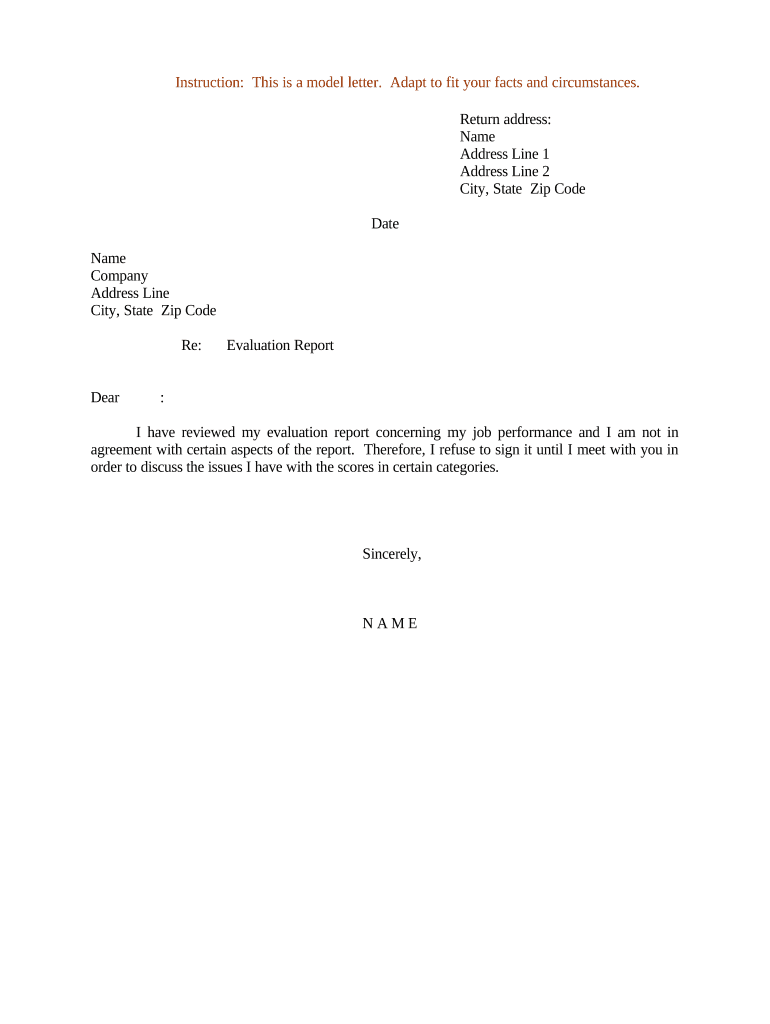
A Letter Regarding Evaluation Report is a formal written notice summarizing findings from an evaluation, appraisal, or assessment and communicating next steps, conclusions, or corrective actions to the recipient. Typical uses include personnel performance assessments, academic evaluation outcomes, compliance reviews, clinical or disability assessments, and independent expert reports. The letter documents the evaluator's conclusions, cites the supporting evidence or report, and sets deadlines or expectations for responses. It creates an auditable written record and establishes a clear paper trail for follow-up or dispute resolution, often accompanying the underlying evaluation document.

Why a Formal Letter Matters

A clear letter ensures the evaluation's conclusions are communicated unambiguously, creates an auditable record, and sets deadlines or remedial steps for the recipient. It reduces misunderstandings and helps satisfy regulatory or organizational documentation requirements.

Why a Formal Letter Matters

Who Typically Issues or Receives This Letter

Organizations and individuals use this letter when an evaluation’s findings must be formally communicated or recorded.

  • Human resources and supervisors notifying employees about formal performance or fitness-for-duty findings and required actions or appeals.
  • Academic administrators sending outcomes of academic evaluations, retention reviews, or accommodation determinations to students or faculty.
  • Healthcare or disability services communicating clinical evaluation results, functional assessments, or eligibility findings to patients or caregivers.

Use the letter when you need a concise, dated, and signed record that others can rely on for next steps, appeals, or compliance.

Essential Parts of a Professional Evaluation Letter

A well-structured letter balances clarity with recordkeeping. Include identification details, a concise findings summary, references to the full evaluation, required actions, and authoritative signatures to ensure legal and administrative utility.

Recipient Details

Include the recipient’s full legal name, job title or institutional role, mailing and email address, and any account or file number that links the letter to the evaluation record.
Evaluation Reference

Cite the evaluation title, author or evaluator, date of the report, and a short description of scope so the recipient can locate the full report promptly.

Summary of Findings

Provide a concise, factual summary of the key conclusions and any measured results or scores; avoid editorial language and link findings to relevant report sections when appropriate.

Required Actions

Specify actions the recipient must take, deadlines in MM/DD/YYYY format, and the consequences of noncompliance or failure to respond by those dates.

Supporting Documents

List attachments or exhibits (evaluation report, data tables, consent forms) and indicate whether originals or certified copies are maintained in the filer’s record.

Signature Block

Include the evaluator’s printed name, professional title, organization, contact details, signature, and signing date; identify who has authority to sign for organizations.

Step-by-Step: Preparing and Issuing the Letter

Follow these steps to draft, approve, and deliver an accurate Letter Regarding Evaluation Report.

  • 01
    Draft content: Draft the letter using a standard template tied to the evaluation report.
  • 02
    Internal review: Have legal or HR review for compliance and confidentiality concerns.
  • 03
    Sign and date: Obtain required signatures and record the signing date in MM/DD/YYYY format.
  • 04
    Deliver and record: Send via documented method and save a copy in the official file.

How to Set Up an Online Workflow for This Letter

Configure a repeatable digital workflow to reduce manual errors and capture an audit trail for each issued letter.

Field Configuration
Recipient Name Auto-populate from HR or case management system
Report Link Attach secure PDF and mark as read-only
Signature Field Require signer name, signature, and signing date
Notification Send signed copy to sender and recipient automatically

Typical Digital Delivery Flow

A standard electronic process ensures tracking and easier retention while preserving legal validity under U.S. esignature law.

  • Upload: Upload the letter and attach the evaluation report.
  • Assign fields: Place signature, date, and acknowledgment checkboxes.
  • Authenticate signer: Use email link or SMS code for signer verification.
  • Record: Capture timestamp, IP, and an audit trail.

Technical Considerations for eSubmission

Choose a platform that supports secure document upload, reliable audit trails, and appropriate signer authentication for your use case.

  • File formats: PDF and DOCX accepted
  • Authentication: Email, SMS, or KBA
  • Integrations: CRM and document storage

Ensure the chosen solution preserves evidentiary metadata (timestamps, IP addresses, signer identity) and can export a tamper-evident final document and audit record.

Common Timeframes and Deadlines to Include

Specify any appeal, response, or remediation deadlines clearly in the letter and record when the letter was sent to start statutory or policy clocks.

Acknowledgment deadline:

Request receipt acknowledgment within 7–14 days.

Response period:

Allow at least 10–30 days for written response.

Remediation window:

Specify corrective action timelines, often 30–90 days.

Record retention note:

State how long records will be retained.

Follow-up review:

Schedule a post-action review date where applicable.

Key Milestones from Evaluation to Final Resolution

Track milestones to ensure that statutory, organizational, and appeal timelines are respected throughout the process.

01

Evaluation Completed

Evaluator finalizes and dates the report.

02

Letter Issued

Sender signs and delivers the formal letter.

03

Recipient Response

Recipient submits rebuttal or requested documentation.

04

Final Decision

Organization documents any final determination or closure.

Common Preparation Errors to Avoid

  • Using ambiguous language that leaves key findings open to differing interpretations, which can create disputes and delay corrective action.
  • Failing to reference the specific evaluation report or page numbers, making it difficult for the recipient to verify findings or supporting data.
  • Missing or inconsistent dates (evaluation date, letter date, deadline dates), which can affect appeal periods and statutory timelines.
  • Not securing required signatures or failing to record the signer’s authority when an organizational representative signs on another’s behalf.

Core Information Elements to Include

Recipient Name: Full legal name
Evaluation ID: Report title or file number
Dates: Evaluation and letter dates
Findings Summary: Concise results
Action Items: Required steps and deadlines
Signatures: Evaluator or authorized official

Consequences of an Incorrect or Incomplete Letter

Appeal or Rebuttal Risk: Recipient may file a formal appeal
Regulatory Exposure: Noncompliance with record rules
Privacy Violations: Unauthorized PHI disclosure
Contractual Liability: Breach claims or damages
Operational Delay: Work stoppage or remediation costs
Reputational Harm: Stakeholder trust erosion

eSignature Solution Pricing Snapshot for Document Workflows

Compare typical starting prices and core availability criteria across common eSignature vendors; signNow is listed first per vendor ordering conventions.

signNow DocuSign Adobe Sign PandaDoc HelloSign
Starting Price $8/user/mo $15/user/mo $14/user/mo $19/user/mo $15/user/mo
Free Trial 7-day free trial Varies by vendor Varies by vendor Varies by vendor Varies by vendor
Bulk Send Yes Yes Yes Yes No
Audit Trail Yes Yes Yes Yes Yes
HIPAA Compliant Yes Yes Yes No No

FAQs and Troubleshooting for the Letter Regarding Evaluation Report

Answers to common questions about drafting, delivering, signing, and retaining the Letter Regarding Evaluation Report.


Need help? Contact support

be ready to get more
Join over 28 million airSlate SignNow users