Establishing secure connection…Loading editor…Preparing document…

Sample Letter of Authorization

This template is fully customizable. Edit the text, fill out the fields, and send it for signature. Give it a try!
Sample Letter of Authorization

What a Sample Letter of Authorization Is

A Sample Letter of Authorization is a signed written statement that grants one person or organization the power to act on behalf of another for a narrowly defined purpose. It names the parties, explains the permitted actions, sets effective dates, and notes any limitations or monetary caps. In the United States these letters are used to release records, permit third parties to discuss accounts, or authorize agents to complete transactions. When executed and retained correctly, the letter documents consent and helps third parties accept delegated authority without separate power-of-attorney filings.

Why a Clear Authorization Letter Matters

A properly drafted Sample Letter of Authorization reduces ambiguity about who may act and for what purpose, supports administrative processing, and creates evidence third parties can rely on when verifying authority.

Why a Clear Authorization Letter Matters

Who Typically Issues and Uses These Letters

Typical users complete a Sample Letter of Authorization when delegating routine tasks, requesting records, or authorizing payments on behalf of an individual or company.

  • Individuals authorizing record release to third-party requesters or service providers.
  • Business representatives delegating payment collection, vendor access, or administrative tasks.
  • Attorneys or agents acting under a limited power to handle specific transactions.

Confirm the signer has authority and keep the signed letter with related records for audit and compliance purposes.

Representative Signer Profiles

John A. Smith, CFO

John A. Smith, as the company's chief financial officer, signs letters authorizing banks and vendors to discuss account information with designated staff. Include board resolution or internal delegation documentation to demonstrate corporate authority.

Maria L. Gonzalez, Principal

Maria L. Gonzalez signs as the principal to authorize a third party to collect personal records or transact with utility companies. Provide matching government-issued ID and a dated signature to prevent disputes about identity or timing.

Step-by-Step: Prepare and Execute the Letter

Follow these sequential steps to prepare, authorize, and distribute a Sample Letter of Authorization, ensuring clarity and legal defensibility for third-party reliance.

  • 01
    Draft the Letter: Describe parties, purpose, limits, and dates.
  • 02
    Verify Identity: Match names to government ID before signing.
  • 03
    Sign and Date: All parties sign and include printed names.
  • 04
    Distribute Copies: Provide signed copies to all stakeholders and retain originals.

How the Authorization Process Typically Flows

The following flow shows how a Sample Letter of Authorization moves from drafting to final retention, including verification and delivery steps for third-party acceptance.

  • Upload Document: Store a digital copy in PDF or DOCX.
  • Add Fields: Place signature, date, and identification fields.
  • Authenticate Signer: Use email, SMS code, or ID check.
  • Save Audit Trail: Capture timestamp, IP, and action history.

Online Workflow Configuration for Electronic Completion

Configure an online workflow to collect signatures, authenticate signers, and route completed Sample Letter of Authorization to recipients and secure archives.

Field Configuration
Signature placement and naming Place signature and date fields near the signature block.
Signer authentication method Choose email link, SMS code, or ID verification.
Conditional field logic Show fields only when scope requires additional details.
Delivery and storage options Email copies to recipients and archive PDFs securely.

Technical and Integration Considerations

To share and submit a Sample Letter of Authorization electronically, confirm file formats, signer authentication, and any notarization or witness requirements in your jurisdiction.

  • File Formats: PDF and Word DOCX supported
  • Integrations: Works with Salesforce, Microsoft 365, NetSuite
  • Authentication: Email, SMS, or KBA options

Essential Components of a Professional Letter

A professional Sample Letter of Authorization includes clear headers, party identification, explicit scope and limitations, effective dates, signature blocks, and any notarization or witness acknowledgements required by law.

Header

Include the title 'Letter of Authorization', the issue date, and a concise statement of purpose so recipients can immediately identify the document's intent and applicable timeframe.
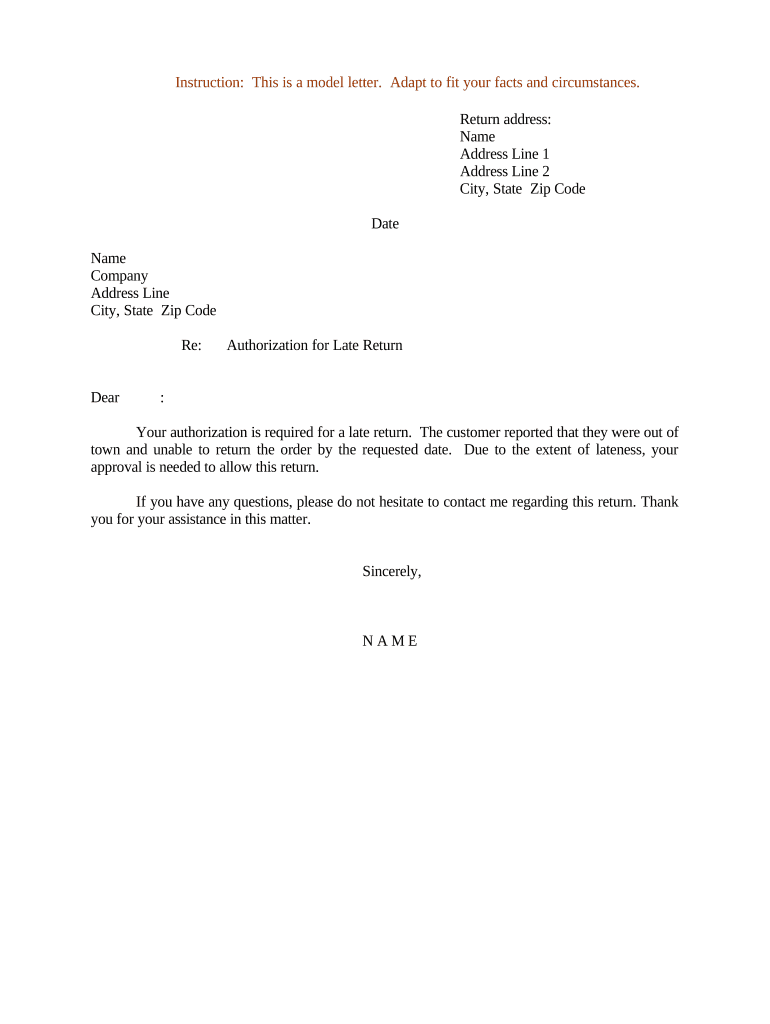
Parties Identified

List full legal names, addresses, and contact information for both the grantor and authorized party to reduce ambiguity during verification by third parties.

Scope

Specify precise permissions, limitations, monetary caps, and any excluded actions to reduce disputes and limit third-party reliance to intended activities.

Effective Term

State start and end dates or a triggering event; clarify whether the authorization is revocable and how revocation must be delivered to be effective.

Signature Block

Provide printed name, title, signature, and date for all signers; indicate whether electronic signatures are acceptable or whether notarization is required.

Notary/Witness

If state law or the relying party requires it, include space for notary acknowledgement and witness signatures with printed names and dates to ensure compliance.

Saving, Exporting, and Supporting Documents

Save executed letters in accessible formats and include supporting documents such as IDs, corporate resolutions, or prior authorizations to streamline verification and auditing.

Download Formats

Export the final document as PDF/A for archival integrity or as DOCX for editable records; retain the signed PDF for evidentiary use.

Supporting IDs

Attach legible copies of government-issued ID for signers to confirm identity during verification, notarization, or third-party acceptance processes.

Corporate Resolution

Include a board resolution or delegation letter when a company representative signs to document internal authority and reduce third-party reluctance to accept the authorization.

Additional Records

Retain related correspondence, email confirmations, and receipts showing acceptance or reliance by the authorized third party to build a coherent audit trail.

Practical Tips for Accurate Completion

Adopt consistent templates, verify signer identity, and maintain an auditable record to reduce disputes and administrative delays when using a Sample Letter of Authorization.

Use a consistent, approved template
Standardized language prevents omissions and inconsistent terms. Maintain a single approved template that includes required fields, notarization notes, and retention instructions so staff complete letters accurately and uniformly.
Verify supporting authority documentation before signing
Confirm corporate resolutions, power of attorney instruments, or government IDs before accepting a signed letter. Failure to verify increases risk of unauthorized acts and potential liability for relying third parties.
Record retention policy in place
Set retention schedules aligned with federal and state rules, including IRS and HIPAA requirements. Ensure secure storage with access controls and an index for quick retrieval during audits or litigation.
Clearly document revocation procedures and notice
State how a principal may revoke authorization, acceptable notice methods, and effective dates of revocation. Communicate revocation to all relying parties promptly and retain proof of delivery to avoid ongoing liability.

Common Preparation Errors to Avoid

  • Leaving the scope vague creates disputes and allows authorized parties to exceed intended powers; be specific about actions allowed, limits, and excluded items.
  • Using nicknames or initials instead of full legal names can prevent verification and trigger refusal by banks or government agencies.
  • Failing to date the authorization or using ambiguous date ranges complicates determinations of when authority began and ended.
  • Omitting required notarization or witness lines when state law or third-party policy requires them may render the letter ineffective.

Consequences of an Incorrect or Incomplete Letter

Invalid Authorization: Actions may be voided
Financial Penalties: Fines or restitution
Regulatory Violation: HIPAA or state penalties
Contract Liability: Breach claims possible
Tax Withholding: Backup withholding risk
Operational Disruption: Service delays and refusals

Key Dates and Timing Considerations

Timelines for a Sample Letter of Authorization depend on effective dates, revocation notices, third-party processing, and applicable retention obligations.

Effective start date (MM/DD/YYYY):

Determines when authorized actions may begin.

Term and expiration date:

Specify the end date or event that terminates authority.

Revocation notice period:

State any required notice period to revoke the authorization.

Third-party processing time:

Allow time for banks or agencies to accept and log the authorization.

Record retention deadline:

Follow retention rules such as the IRS three-year minimum when financial aspects apply.

Milestones from Draft to Archive

Key milestones show the lifecycle from drafting to archival; each stage clarifies responsibilities and timing expectations for the authorization process.

01

Preparation

Draft content and collect supporting documentation.

02

Authorization

Signers execute and notarize or witness as needed.

03

Submission

Deliver to third parties and confirm receipt.

04

Archival

Store signed originals and audit logs securely.

Representative eSignature Pricing and Feature Comparison

This table compares representative plan-level prices and selected feature indicators across signNow and common competitors for routine eSignature use.

signNow DocuSign Adobe Sign PandaDoc HelloSign
Starting Price $8/user/mo $15/user/mo $14/user/mo $19/user/mo $15/user/mo
Free Trial 7-day free trial Varies by plan Varies by plan Varies by plan Varies by plan
Bulk Send Yes (Business Premium) Yes Yes Yes No
Audit Trail Yes Yes Yes Yes Yes
HIPAA Compliant Yes Yes Yes No No

Typical Use Cases and Real-World Examples

These real-world examples show how organizations use a Sample Letter of Authorization to streamline operations and meet compliance requirements.

Optica Ventures — COO

Optica Ventures used a letter of authorization to delegate client onboarding tasks to an external coordinator, reducing manual follow-up.

  • Saved several staff hours each month.
  • Brian Fitzgibbons, COO, noted that a simple, easy-to-use interface helped customers complete authorization quickly and enabled the company to accelerate onboarding while preserving audit trails and compliance records.

Tech Data — CEO

Tech Data standardized authorization letters to grant vendor access for payments and reporting, improving internal controls.

  • Reduced processing delays for vendor billing.
  • Bob Dutkowsky, CEO, described improved internal and external customer service after standardizing forms and automating distribution, which decreased reconciliation time and supported faster revenue recognition.

Frequently Asked Questions and Troubleshooting

Answers to common questions about validity, notarization, revocation, and electronic submission of a Sample Letter of Authorization.


Need help? Contact support

be ready to get more
Join over 28 million airSlate SignNow users