Establishing secure connection…Loading editor…Preparing document…

Letter Regarding Cancellation

This template is fully customizable. Edit the text, fill out the fields, and send it for signature. Give it a try!
Letter Regarding Cancellation

What a Letter Regarding Cancellation Is and When It’s Used

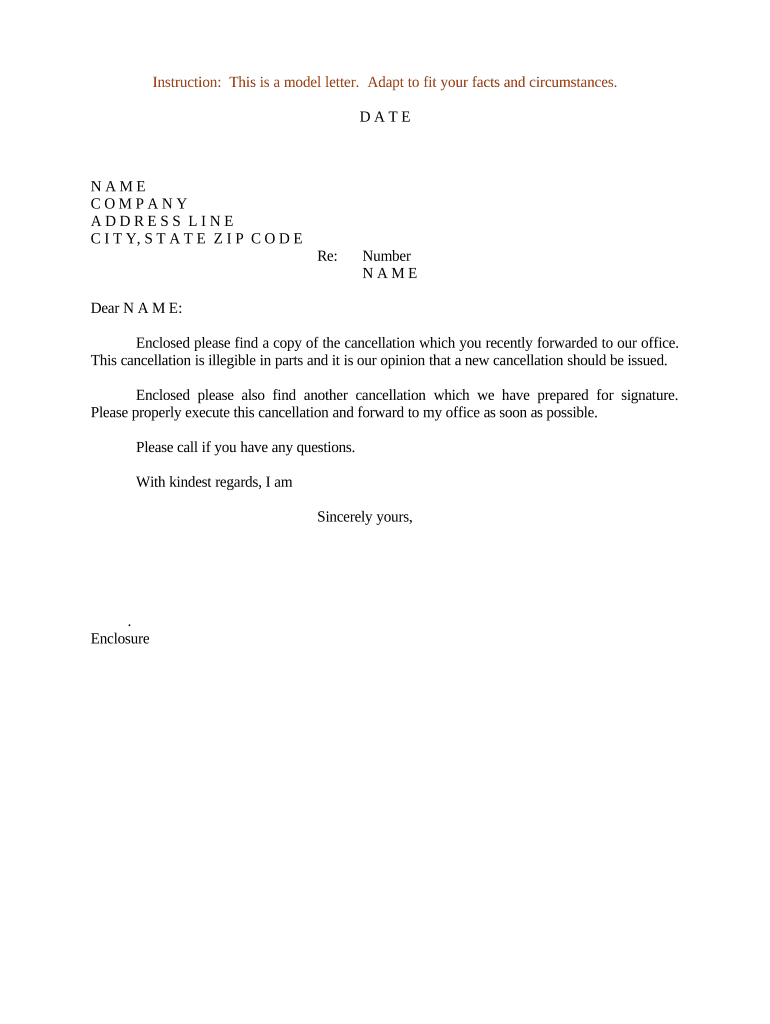
A Letter Regarding Cancellation is a written notice from one party to another stating the intent to terminate or cancel a contractual relationship, service agreement, subscription, reservation, or authorization. It documents the effective cancellation date, identifies the contract or account being cancelled, and states any required next steps such as returning property, settling outstanding charges, or discontinuing services. In many contexts the letter creates a formal record used for billing, dispute resolution, and regulatory compliance. For consumer-facing cancellations, federal rules under ESIGN and state UETA statutes also affect acceptance and retention of electronic versions.

Why a Clear Cancellation Letter Matters

A concise, well-drafted Cancellation Letter creates an auditable record of intent, reduces disputes over timing and responsibility, and triggers contractual or statutory processes. Properly documented cancellations protect both parties, support billing and refund calculations, and help preserve rights under applicable law.

Why a Clear Cancellation Letter Matters

Who Typically Sends or Receives a Cancellation Letter

Businesses, service providers, tenants, borrowers, and individual consumers use cancellation letters to end agreements or subscriptions; government agencies and schools also issue cancellations where required by regulation.

  • Consumers cancelling subscriptions, memberships, or recurring services who need a dated record showing when cancellation took effect.
  • Business contracting parties terminating vendor agreements, leases, or purchase orders who must meet notice provisions and preserve audit trails.
  • Legal and administrative teams issuing formal termination notices to meet contractual, regulatory, or court-driven requirements.

Accurate identification of parties and effective dates in the letter reduces the risk of billing disputes and helps determine applicable refund, notice, or cure periods under the underlying agreement.

Core Elements to Include in a Professional Cancellation Letter

A complete Letter Regarding Cancellation should be structured, unambiguous, and reference the underlying agreement and key dates. Include the following elements to ensure legal clarity and operational follow-through.

Sender Information

Full legal name, business name if applicable, mailing address, email, and phone so the recipient can verify identity and respond.
Recipient Details

Name of the individual or organization receiving notice plus account number, contract title, or service identifier to avoid ambiguity.

Reference to Agreement

Identify the contract or order by date and reference number and cite the clause permitting cancellation if applicable.

Effective Date

State the exact effective cancellation date; this controls billing, access termination, and time-based obligations.

Reason (Optional)

Provide a brief reason when required by the contract or to document material breaches or convenience terminations.

Next Steps

Specify actions required by either party—returns, final invoices, access removal, or refund timelines.

Step-by-Step: How to Prepare and Send Your Cancellation Letter

Follow this sequential checklist to draft, validate, and deliver a Letter Regarding Cancellation that minimizes risk and creates a clear record.

  • 01
    Gather documents: Collect the contract, invoices, and account records before drafting the letter.
  • 02
    Draft notice: Compose the letter including parties, contract reference, effective date, and next steps.
  • 03
    Review authority: Confirm the signatory has authority to cancel per contract or board resolution.
  • 04
    Deliver and retain: Send via tracked method (email with delivery receipt, registered mail, or eSignature) and keep a copy.

Where to Send and How the Cancellation Is Processed

Choose the recipient address or channel specified in the contract and select a delivery method that creates an audit trail.

  • Contract-specified address: Send to the notice address listed in the agreement to satisfy contractual notice provisions.
  • Corporate legal department: When available, deliver to legal or contract administration to ensure proper routing.
  • Email with read receipt: Email provides speed; include signed PDF and request a read/delivery receipt.
  • Registered or certified mail: Use trackable postal methods when a signed physical record is required.

Configuring an Online Cancellation Workflow

Set up a digital workflow that collects signer consent, captures the effective date, and preserves an audit trail for compliance.

Field Configuration
Signature Required, with timestamp and signer name
Effective Date Field Mandatory, MM/DD/YYYY format
Authentication Email or SMS code; use stronger methods for high-risk cancellations
Retention Store completed record in secure archive with audit trail

Digital Signing and eSubmission Considerations

Electronic delivery and signature reduce processing time but must meet legal and contractual acceptance criteria.

  • Authentication Level: Choose email, SMS, or KBA depending on contract threshold
  • Audit Trail: Capture IP, timestamp, and action history for evidentiary support
  • Format Support: Use PDF or DOCX to preserve formatting and metadata

Ensure the chosen platform provides ESIGN/UETA compliance, secure storage, and a reproducible audit trail; integrate with enterprise systems if required.

Key Timing Rules and Common Deadlines for Cancellation Letters

Timelines depend on the contract, regulatory requirements, and the delivery method. Track dates carefully to meet notice and cure periods.

Contract Notice Period:

Follow the time specified in the agreement, often 30–90 days

Billing Cycle Cutoff:

Effective date may align to the next billing cycle

Refund Window:

Refund eligibility tied to effective date and vendor policy

Consumer Protections:

Some consumer agreements require specific disclosures under state law

Electronic Consent:

For consumer-facing cancellations, obtain ESIGN consumer disclosure consent

Milestones: Typical Processing Stages After Sending a Cancellation

Track these sequential milestones from delivery to final account reconciliation so obligations and refunds are handled on time.

01

Letter Sent

Sender dispatches the cancellation notice by the chosen method.

02

Acknowledgement Received

Recipient confirms receipt and records the notice.

03

Service Termination

Access, service, or subscription ends on the effective date.

04

Final Reconciliation

Final invoice, refund, or settlement is calculated and issued.

Common Mistakes to Avoid When Preparing Cancellation Letters

  • Failing to reference the exact contract or account number, causing routing delays or misapplied cancellations.
  • Using an ambiguous effective date that creates disagreement about when services ended or refunds are due.
  • Not confirming the signer’s authority under the agreement, which can lead to invalidation of the notice.
  • Delivering via an untracked channel without retaining proof of delivery, complicating dispute resolution.

Risks and Potential Consequences of an Incorrect Cancellation Letter

Breach Claims: Counterparty may assert breach or damages
Lost Refunds: Missed deadlines can forfeit refunds
Billing Liability: Ongoing charges may continue until effective date is clear
Credit Impact: Unresolved billing disputes can affect credit
Regulatory Exposure: Consumer law violations may trigger fines
Evidentiary Weakness: Poor records complicate legal defenses

Example Scenarios: How a Cancellation Letter Is Used

Real-world examples show how precise language and timing affect outcomes across common cancellation scenarios.

Tenant Lease Cancellation

A tenant provides 30 days’ written notice

  • cites lease paragraph 9
  • landlord acknowledges receipt and schedules move-out inspection; final deposit reconciliation completed within 30 days.

Subscription Service Cancellation

A subscriber emails a signed cancellation with account ID

  • effective end of billing cycle
  • provider issues pro rata refund and confirmation email with timestamp and audit trail.

Essential Information to Include for Secure Processing

Account ID: Exact account or contract number
Signer Identity: Full legal name and title
Contact Details: Mailing address and email
Effective Date: MM/DD/YYYY format
Signature Method: Physical or electronic indicator
Delivery Proof: Tracking or audit-trail record

Typical eSignature Pricing Comparison for Sending a Letter Regarding Cancellation

Compare starting price and key features for common eSignature providers; signNow is listed first per vendor-comparison conventions.

signNow DocuSign Adobe Sign PandaDoc HelloSign
Starting Price $8/user/mo $15/user/mo $14/user/mo $19/user/mo $15/user/mo
Free Trial 7-day free trial Varies by vendor Varies by vendor Varies by vendor Varies by vendor
Bulk Send Yes Yes Yes Yes No
Audit Trail Yes Yes Yes Yes Yes
HIPAA Compliant Yes Yes Yes No No

Frequently Asked Questions About Cancellation Letters

Answers to common questions about validity, delivery, signature methods, and recordkeeping for cancellation notices.


Need help? Contact support

be ready to get more
Join over 28 million airSlate SignNow users