Debtor Details
Full legal name, account or reference number, current mailing address, phone, and email so the creditor can identify the account quickly and respond directly.
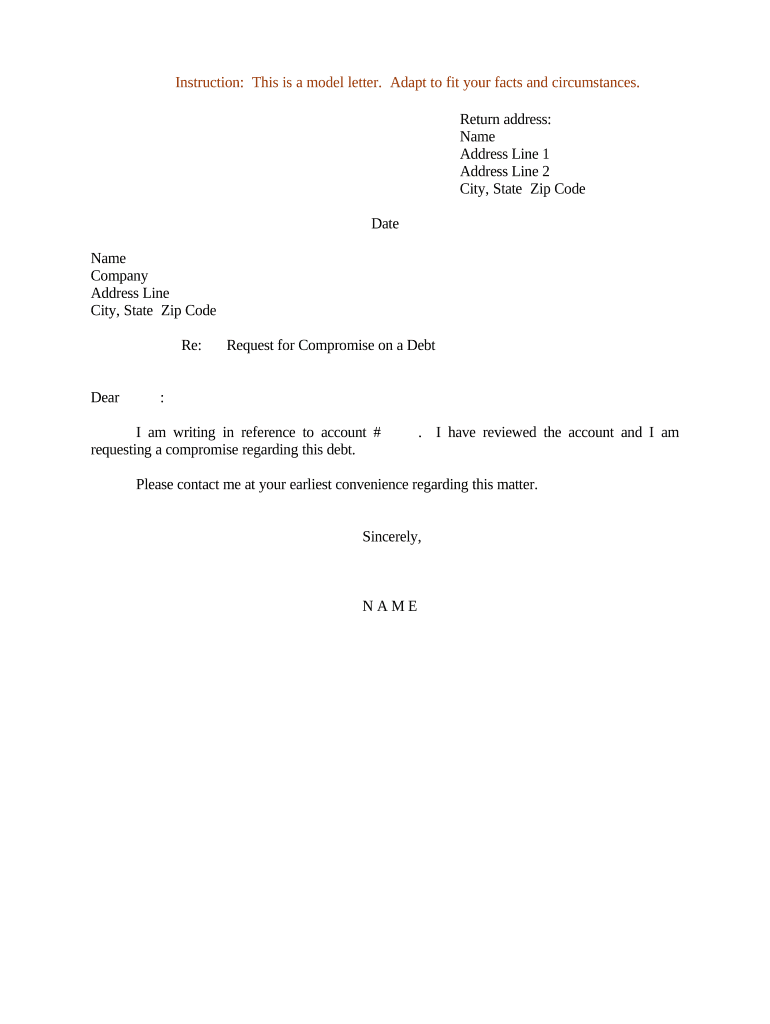
A formal letter creates a clear, dated record of your offer and the reasons for it, reduces misunderstandings, and improves the chances of a negotiated outcome without litigation. It helps creditors evaluate hardship and may prompt faster review when accompanied by supporting documentation.

Common senders include individual debtors, bankruptcy trustees, collection agencies acting for debtors, legal counsel, and nonprofit credit counseling organizations.
The person legally responsible for the debt should sign the letter. If the debtor is incapacitated or represented, include a power of attorney or written authorization demonstrating authority to negotiate and bind the debtor.
A lawyer, credit counselor, or designated agent may sign when they possess written authorization. Include an agency letter, POA, or retainer that explains the scope of settlement authority.
Full legal name, account or reference number, current mailing address, phone, and email so the creditor can identify the account quickly and respond directly.
Name and address of the creditor or collection agency and a contact name or department if available to ensure proper routing of the request.
A concise description of the financial hardship (job loss, medical bills, reduced income) explaining why full payment is not feasible and prompting consideration of compromise.
Clear offer specifying a lump-sum amount or payment plan, proposed payment dates, and whether acceptance will be conditioned on a release of further liability.
Attach recent pay stubs, bank statements, medical bills, or a hardship affidavit to substantiate claims and reduce follow-up requests from the creditor.
Signature, printed name, date, and position or relationship to the debtor; include authorization proof if an agent signs on the debtor’s behalf.
| Template Fields | Create placeholders for name, account number, date, settlement amount, and signature for consistent reuse. |
|---|---|
| Conditional Logic | Add conditional sections that appear for medical hardship or unemployment to tailor content automatically. |
| Signer Authentication | Require email or SMS code verification to confirm signer identity before submission. |
| Mandatory Attachments | Enforce upload of supporting documents such as pay stubs or bills before allowing submission. |
| Audit Trail | Enable automatic timestamps, IP logging, and a downloadable certificate of completion for recordkeeping. |
Use tools that support secure electronic signatures, tamper-evident PDFs, and a complete audit trail for enforceability.
Creditors often acknowledge receipt within 7–30 days; complex reviews may take 30–90 days.
Expect 1–3 rounds of offers over several weeks before an agreement is reached.
If acceptance is conditional, the creditor will set a deadline for payment or execution.
Time limits to sue vary by state; check state statute if litigation is a concern.
Keep copies of offers and responses for at least three years, longer if tax or legal issues apply.
A patient documents unaffordable bills and offers 40% of the balance as a lump-sum
An individual proposes a three-month payment plan at a reduced balance based on job loss
| signNow | DocuSign | Adobe Sign | PandaDoc | HelloSign | |
|---|---|---|---|---|---|
| Starting Price | $8/user/mo | $15/user/mo | $14/user/mo | $19/user/mo | $15/user/mo |
| Free Trial | 7-day free trial | Varies by vendor | Varies by vendor | Varies by vendor | Varies by vendor |
| Bulk Send | Yes | Yes | Yes | Yes | No |
| Audit Trail | Yes | Yes | Yes | Yes | Yes |
| HIPAA Compliant | Yes | Yes | Yes | No | No |