Establishing secure connection…Loading editor…Preparing document…

Letter of Intent for Purchase of Mining Assets

This template is fully customizable. Edit the text, fill out the fields, and send it for signature. Give it a try!
Letter of Intent for Purchase of Mining Assets

What the Letter of Intent for Purchase of Mining Assets Is

A Letter of Intent for Purchase of Mining Assets (LOI) is a preliminary written statement that outlines the principal terms under which a buyer proposes to acquire mining rights, equipment, leasehold interests, or mineral-producing properties from a seller. The LOI typically sets the purchase price or pricing formula, identifies the assets included, defines a due diligence period, and records any exclusivity or standstill obligations while parties negotiate a binding purchase agreement. Although often non-binding in its commercial terms, the LOI can create binding obligations for confidentiality, exclusivity, expense allocation, or governing law, and it frames the subsequent definitive agreement and closing timetable.

Why a Clear LOI Matters for Mining Asset Transactions

A concise LOI reduces ambiguity during negotiations, preserves key economic terms while parties complete technical and legal due diligence, and limits exposure by clearly allocating interim responsibilities. Properly drafted LOIs can protect bidding processes, preserve deal economics, and set enforceable confidentiality or exclusivity windows.

Why a Clear LOI Matters for Mining Asset Transactions

Who Typically Prepares and Signs a Mining Assets LOI

Several groups participate in creating and approving a mining-assets LOI; roles vary by transaction size and complexity.

  • Acquiring companies and corporate development teams seeking mineral rights or operational assets, often coordinating finance, technical, and legal reviews.
  • Private equity firms and project investors structuring conditional offers subject to environmental and title due diligence.
  • Seller representatives, owners, or asset managers responding with counterproposals and coordinating permit and title disclosures.

The LOI is a coordination tool: it aligns commercial terms while preserving each party’s rights pending a definitive purchase agreement.

Key Signatory Roles

Buyer — Acquisitions Director

An Acquisitions Director typically drafts offer terms with input from legal counsel and geotechnical advisors, and has authority to commit subject to board or investment committee approval. The individual coordinates financing, escrow arrangements, and obtains internal sign-off for binding purchase documents.

Seller — Asset Manager

The Seller’s Asset Manager compiles title reports, permits, and equipment inventories for due diligence, negotiates adjustments and exclusions, and signs on behalf of the owner where corporate authorizations permit. Sellers often reserve the right to continue limited operations prior to closing.

Essential Clauses and Structure of the Letter of Intent for Purchase of Mining Assets

A professional LOI organizes material commercial and procedural terms so both parties know the deal roadmap and immediate obligations. Key clauses balance commercial intent with protective interim measures.

Identification of Parties

Full legal names and entity types for buyer and seller, including jurisdiction of organization and authorized signatories that will execute the definitive purchase agreement.
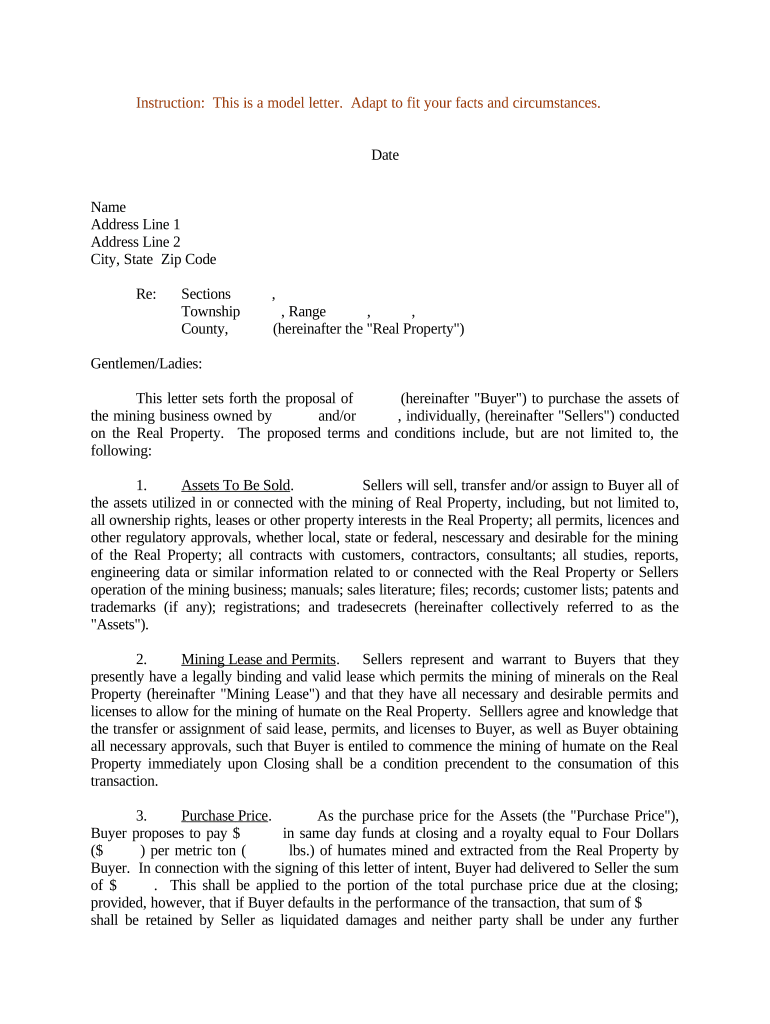
Assets Included

A clear, itemized description of the mining assets being offered (mineral rights, surface rights, equipment, permits, inventory), with attachments or exhibits as needed for clarity.

Purchase Price and Allocation

Total consideration, method of payment (cash, escrow, earnout), and allocation across different asset classes for tax and title purposes.

Due Diligence Period

Defined inspection window with specific deliverables (e.g., environmental reports, title clearance, equipment inspections) and conditions for extending or terminating the LOI.

Exclusivity and Confidentiality

Any binding exclusivity (no-shop) period and confidentiality obligations to protect sensitive data and prevent competing offers during diligence.

Closing Conditions and Timeline

Material conditions precedent to closing (regulatory approvals, permit transfers, third-party consents) and an estimated closing date or milestone schedule.

Step-by-Step: How to Complete the LOI

Follow a logical sequence to reduce rework and ensure all technical, legal, and financial items are documented before signature.

  • 01
    Draft Terms: Record price, assets, and basic conditions in the LOI draft.
  • 02
    Assemble Attachments: Attach title reports, equipment lists, and permit summaries.
  • 03
    Internal Reviews: Coordinate legal, technical, and finance review before circulation.
  • 04
    Execute LOI: Obtain authorized signatures and preserve executed copy for diligence.

How to Structure an Online LOI Workflow

Configure the LOI workflow so reviewers receive the correct fields and audit details while maintaining document control and traceability.

Template Create a single master LOI template to preserve consistent clauses across transactions.
Authentication Use email links or SMS two-factor authentication for signer verification.
Conditional Fields Show asset-specific schedules only when certain checkboxes are selected.
Routing Order Define sequential signing for seller, buyer, and escrow agent as needed.
Audit Trail Enable timestamp, IP capture, and certificate of completion for each signer.

Typical Online Signing Flow for a Mining LOI

An efficient e-sign workflow reduces turnaround time while preserving evidence of intent and signer attribution.

  • Upload Document: Sender uploads LOI and attachments in PDF or DOCX format.
  • Place Fields: Add signature, initial, and date fields plus conditional data fields.
  • Notify Signers: Send signer emails or generate public signing links per role.
  • Capture Audit Trail: System records timestamps, IPs, and authentication methods.

Technical Considerations for eSigning and eStorage

Choose a platform that supports required file formats, audit trails, and the authentication strength your transaction requires.

  • File Format Support: PDF, DOCX, and exported XML accepted
  • Integrations: Works with Salesforce and NetSuite
  • Authentication Options: Email, SMS, KBA, or SSO

Confirm the platform can produce a verifiable certificate of completion, store records securely, and integrate with your document management and escrow providers.

eSignature Pricing and Feature Comparison for LOIs

Compare baseline pricing and core features relevant to high-value LOIs. signNow is shown first per vendor ordering requirements.

signNow DocuSign Adobe Sign PandaDoc HelloSign
Starting Price $8/user/mo $15/user/mo $14/user/mo $19/user/mo $15/user/mo
Free Trial 7-day trial Varies Varies Varies Varies
Bulk Send Yes Yes Yes Yes No
Audit Trail Yes Yes Yes Yes Yes
HIPAA Compliant Yes Yes Yes No No

Security and Compliance Checklist for LOIs

Encryption: TLS 1.2/1.3 in transit; AES-256 at rest
Authentication: Supports email, SMS, KBA, and SSO methods
Audit Trail: Detailed timestamped logs and IP capture
Certifications: SOC 2 Type II and ISO 27001 available
Regulatory Coverage: ESIGN, UETA, 21 CFR Part 11 support
Privacy Compliance: GDPR and CCPA controls offered

Penalties and Legal Risks of an Improper LOI

Binding Obligations: Poorly worded exclusivity can create unintended enforceable covenants
Tax Exposure: Incorrect allocation of purchase price may change tax outcomes
Title Defects: Failure to identify liens risks post-closing liabilities
Environmental Risk: Insufficient environmental diligence can trigger cleanup liabilities
Regulatory Noncompliance: Unsupported permit transfers may delay or block closing
Recordkeeping Penalties: Missing or altered records can impair enforcement or audits

Common Mistakes When Preparing a Mining Assets LOI

  • Ambiguous asset descriptions that omit parcel IDs or lease numbers, causing scope disputes during closing.
  • Unclear payment mechanics or escrow conditions that delay fund disbursement or cause reconciliation errors.
  • Failing to allocate responsibility for environmental remediation discovered during due diligence.
  • Not specifying which documents survive execution, leading to missing warranty or confidentiality protections.

Representative Use Cases for a Mining Assets LOI

Practical examples illustrate how LOIs accelerate negotiation while protecting interim interests.

Mid-Size Consolidation Deal

A regional miner offered to buy adjacent leaseholds to expand operations, and used an LOI to set price and exclusivity while performing title review.

  • The LOI provided a 60-day diligence window.
  • The LOI’s clear asset schedule and escrow deposit reduced closing time and minimized disputes over excluded equipment during final negotiation.

Private Equity Acquisition

A private equity buyer issued an LOI contingent on environmental and reserve reports, with a structured earnout.

  • The LOI required seller cooperation for permitting transfers.
  • By defining post-closing indemnities and escrow mechanics in the LOI, both parties avoided protracted litigation after closing adjustments.

Practical Tips for Drafting an Effective LOI

Follow transaction best practices to make the LOI an effective negotiating instrument without creating unintended liabilities.

Be Precise About Assets
Use parcel numbers, lease IDs, and serial numbers where applicable so the asset boundary is indisputable and title searches are straightforward.
Limit Binding Provisions
Confine binding language to confidentiality, exclusivity, and allocation of costs; mark commercial terms as non-binding when that is intended.
Define Diligence Scope
List specific due diligence deliverables and access rights to facilities so inspections and report timelines are enforceable.
Coordinate Closing Steps
Include a realistic closing schedule and identify third-party consents needed so parties can sequence regulatory and title actions efficiently.

Common LOI Deadlines and Timing Expectations

Set clear, calendar-based deadlines for diligence, exclusivity, deposits, and target closing to avoid disagreement over timelines.

Exclusivity Period:

Typically 30–90 days; restricts seller from soliciting competing offers during diligence.

Due Diligence Deadline:

Often 30–120 days depending on scope and third-party testing schedules.

Earnest Deposit Deadline:

Specify payment date and escrow instructions (e.g., within 5 business days of LOI).

Closing Target Date:

Set a projected closing date and list conditions precedent to closing.

Expiration of Offer:

An LOI offer often expires if not accepted by a specified date to avoid open-ended obligations.

Key Transaction Milestones from LOI to Closing

Milestones create accountability; map them to responsible parties and link them to specific deliverables.

01

LOI Execution

Parties sign the LOI and any binding confidentiality or exclusivity provisions.

02

Due Diligence Completion

Buyer completes environmental, technical, and title reviews within the agreed window.

03

Definitive Agreement

Negotiate and execute the binding purchase agreement incorporating LOI terms as agreed.

04

Closing and Transfer

Satisfy closing conditions, disburse funds, and record transfers or assignments.

Supporting Documents to Attach to an LOI

Attaching relevant exhibits prevents later disagreement and streamlines the transition to the definitive purchase agreement.

Environmental Reports

Phase I and Phase II reports, tailings analyses, and remediation records provide baseline environmental condition evidence and guide remediation obligations.

Title and Lease Documents

Current title reports, lease agreements, and chain-of-title exhibits identify encumbrances, royalty burdens, and lessor/lessee obligations.

Equipment Inventories

Detailed lists with serial numbers, condition reports, and maintenance records support valuation and allocation of equipment included in the sale.

Permits and Licenses

List all material operating permits and the transferability requirements or consent processes required by regulators.

Frequently Asked Questions about LOIs for Mining Assets

Answers address typical legal, technical, and process questions encountered when preparing or signing an LOI for mining assets.


Need help? Contact support

be ready to get more
Join over 28 million airSlate SignNow users