Establishing secure connection…Loading editor…Preparing document…

Status Report Letter

This template is fully customizable. Edit the text, fill out the fields, and send it for signature. Give it a try!
Status Report Letter

What a Status Report Letter Is and When It's Used

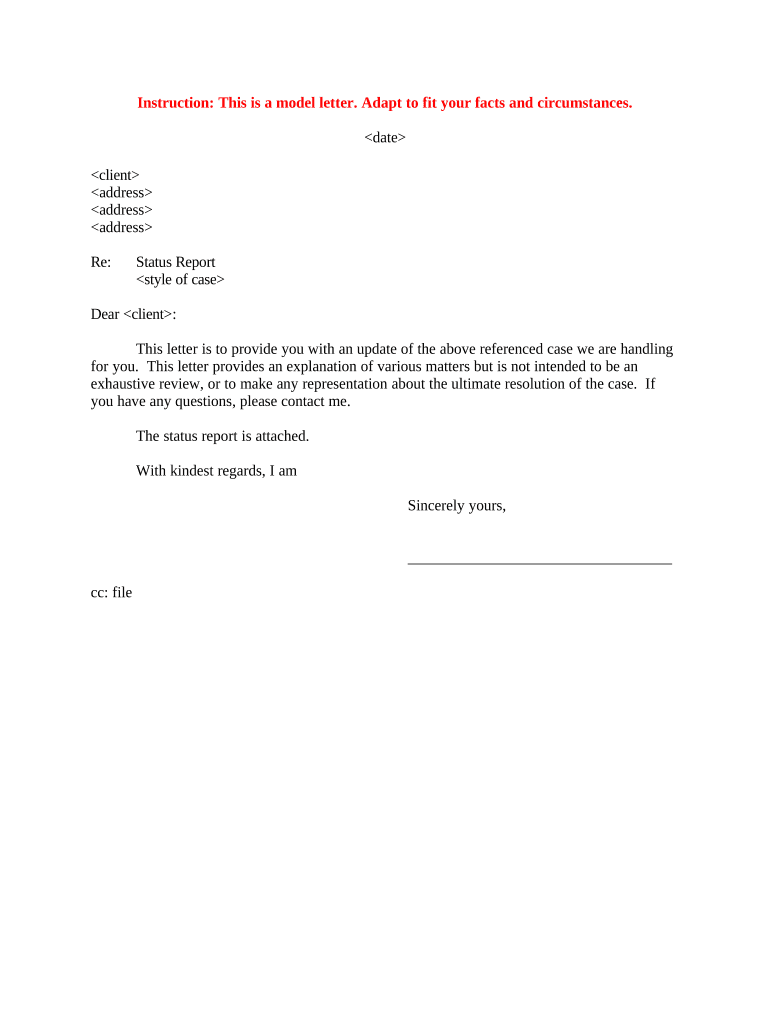
A Status Report Letter is a formal written update that summarizes progress, outstanding issues, and next steps for a project, contract, regulatory matter, or administrative request. It records the current condition of work, dates of key actions, responsible parties, and any deviations from the planned schedule. Organizations use Status Report Letters to create an auditable record, align stakeholders, and provide a clear basis for decisions or dispute avoidance. The format is concise, factual, and dated so the content can be referenced in future correspondence or legal review.

Why a Clear Status Report Letter Matters

A well-prepared Status Report Letter documents the state of affairs, reduces ambiguity, preserves evidence of notice and performance, and supports regulatory or contractual compliance. It provides a consistent record for auditors, project managers, and legal teams while reducing follow-up email volume.

Why a Clear Status Report Letter Matters

Who Typically Prepares and Receives These Letters

Typical authors include project managers, contract administrators, compliance officers, and outside counsel preparing factual updates for stakeholders.

  • Project managers providing milestone and schedule updates to sponsors and clients.
  • Legal or contract teams summarizing performance facts for negotiations or claims.
  • Compliance officers reporting status to regulators, auditors, or internal risk teams.

Essential Elements to Include in a Professional Status Report Letter

A professional Status Report Letter groups factual elements to make review quick and defensible; use numbered sections and dates to improve clarity.

Heading

Include a clear title, project or contract reference, and the report date to create an identifiable record for future reference.
Summary

One-paragraph executive summary stating current status (on track, delayed, completed) and concise reason for that status to orient the reader quickly.

Progress Details

List completed tasks, percent complete, and specific dates for milestones or deliverables to provide objective performance evidence.

Open Issues

Describe outstanding problems, their impact, proposed mitigation, and assigned owners so responsibilities and risks are plainly visible.

Next Steps

Schedule of immediate actions, responsible parties, and expected completion dates to communicate the forward plan and accountability.

Attachments

Reference supporting documents (logs, change orders, invoices) and include them as exhibits to preserve context and evidence.

Required Data Fields to Capture

Report Date: MM/DD/YYYY
Reference ID: Contract or project number
Author: Name and title
Recipient: Name and role
Status Summary: One-line status
Action Items: Owner and due date

Risks and Consequences of Inaccurate or Late Reports

Contract Disputes: Delayed remedies or claims
Regulatory Exposure: Noncompliance findings possible
Financial Impact: Delayed payments or penalties
Reputational Risk: Loss of stakeholder trust
Evidence Gap: Weak defense in disputes
Workflow Delays: Missed downstream deadlines

Common Preparation Errors to Avoid

  • Omitting exact dates or version numbers, which undermines the report's usefulness as an audit record and creates ambiguity in follow-up actions.
  • Mixing opinion with fact; include a separate analysis section rather than presenting speculative statements as factual updates to preserve credibility.
  • Failing to identify owners for open items; unnamed action items often remain unresolved and increase project risk and finger-pointing.
  • Attaching large unsummarized logs or data dumps without a short executive summary, which increases review time and raises the chance of missed issues.

How to Complete a Status Report Letter Step by Step

Follow this sequence to create a concise, reliable Status Report Letter that stands up to internal review and external scrutiny.

  • 01
    Collect facts: Gather dates, deliverables, and logs before drafting.
  • 02
    Write summary: Draft a one-paragraph executive overview first.
  • 03
    Detail items: List completed work, open issues, and owners.
  • 04
    Finalize and sign: Date, sign, and attach supporting exhibits.

Typical Routing and Approval Workflow

Status Report Letters usually follow a clear routing path to ensure timely review and recordkeeping; adapt this flow to your organization.

  • Author prepares: Draft and attach supporting documents.
  • Manager reviews: Verify facts and update action items.
  • Stakeholder review: Provide comments or approvals.
  • Archive copy: Store signed report in records system.

Configuring an Online Status Report Workflow

Set workflow settings that match your review, signature, and retention needs before sending the report for signatures or distribution.

Field Configuration
Author field Auto-populate from user profile
Signatures Require signer name and date
Routing Sequential or parallel approval
Retention Auto-save to records system

Digital Delivery Options and Technical Requirements

Determine how recipients will receive, authenticate, and sign the Status Report Letter before publishing the workflow.

  • File formats: PDF or DOCX preferred
  • Authentication: Email, SMS, or stronger
  • Integrations: CRM and storage connectors

Timelines and Processing Expectations

Establish explicit internal deadlines to ensure Status Report Letters are prepared, reviewed, and archived on a regular cadence.

Reporting cadence:

Weekly, biweekly, or monthly schedules

Manager review deadline:

Typically 2–3 business days

Stakeholder response:

Allow 5–7 business days for comments

Signed archive:

Finalize and store within 10 business days

Retention start:

Retention begins on report date

Key Milestones from Draft to Archived Record

Track these sequential milestones to measure processing progress and identify bottlenecks in the reporting cycle.

01

Draft Completion

Author completes draft and attaches evidence.

02

Internal Review

Manager verifies facts and approves revisions.

03

Signature Collection

Parties sign and date the final letter.

04

Archival

Signed letter saved to official records.

Real-World Uses of Status Report Letters

Organizations use Status Report Letters in project delivery, contract disputes, and regulatory reporting; below are two representative examples.

Optica Ventures — Project Update

The COO issued a monthly Status Report Letter to summarize milestones and budget status for investors.

  • The note listed completed tasks and next steps.
  • The formal letter created a dated audit trail that simplified investor Q&A and reduced ad hoc information requests during due diligence, improving transparency for external stakeholders.

Fertility Centers — Compliance Summary

The operations lead prepared a Status Report Letter after a system change to log compliance status and outstanding remediations.

  • It named owners and deadlines.
  • The signed letter provided a clear record for internal auditors and external reviewers, ensuring actions were tracked and reducing follow-up cycles.

Comparing eSignature Options for Signing and Distributing Status Report Letters

Basic pricing and feature availability vary by provider; signNow is shown first for direct comparison of common capabilities used when executing Status Report Letters.

signNow DocuSign Adobe Sign PandaDoc HelloSign
Starting Price $8/user/mo $15/user/mo $14/user/mo $19/user/mo $15/user/mo
Free Trial Yes, 7-day trial Varied Varied Varied Varied
Bulk Send Yes Yes Yes Yes No
Audit Trail Yes Yes Yes Yes Yes
Envelope Cap No cap 100 envelopes/user/year Varied Varied Varied

Frequently Asked Questions About Status Report Letters

Answers to common questions about use, signature, and retention of Status Report Letters to help avoid errors and ensure compliance.


Need help? Contact support

be ready to get more
Join over 28 million airSlate SignNow users