Establishing secure connection…Loading editor…Preparing document…

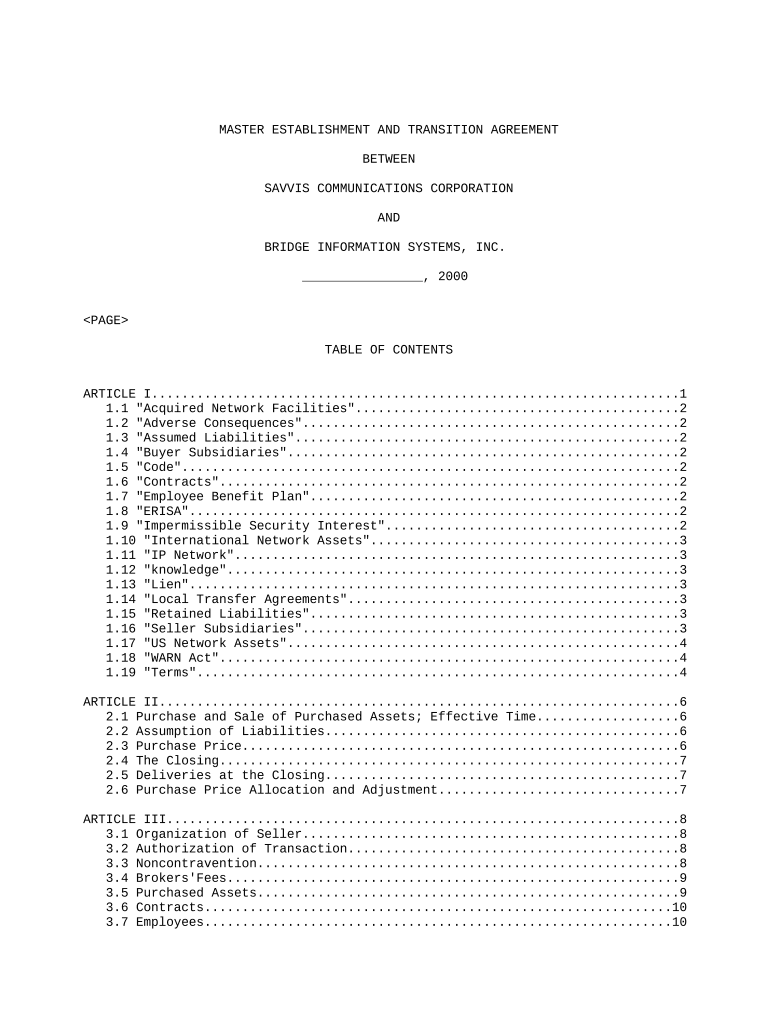
Transition Agreement

This template is fully customizable. Edit the text, fill out the fields, and send it for signature. Give it a try!
Transition Agreement

What a Transition Agreement Is and when it’s used

A Transition Agreement is a legally binding contract that sets out the terms, responsibilities, schedules, and deliverables for transferring services, assets, employees, or operations from one party to another. Typical uses include service-provider handoffs, mergers and acquisitions carryover periods, IT or facilities transitions, and vendor offboarding. The agreement clarifies the scope of work, transition timeline, resource allocation, data access, knowledge-transfer obligations, payment or cost-allocation provisions, and post-transition support. It helps reduce ambiguity, assign risk, and preserve business continuity while the parties complete the handover.

Why a clear Transition Agreement matters for risk and continuity

A well-drafted Transition Agreement reduces operational risk by documenting responsibilities, timing, and acceptance criteria, and it creates a contractual basis to manage disputes and recover costs.

Why a clear Transition Agreement matters for risk and continuity

Who typically prepares and signs a Transition Agreement

Organizations that routinely use Transition Agreements include acquirers and sellers, outsourced service providers, IT teams, real estate managers, and project stakeholders.

  • Corporate legal and contracts teams managing risk allocation and termination obligations, often coordinating with procurement and operations.
  • Project managers and operations leads who define scope, deliverables, and knowledge-transfer activities for a successful handoff.
  • Vendors, MSPs, and professional services firms responsible for exit assistance, final billing, and returning customer data or assets.

Signatories should be authorized representatives with authority to bind their organization, and internal stakeholders should confirm technical and financial details before signing.

Core sections to include in a professional Transition Agreement

Ensure the agreement contains clear sections for scope, timeline, responsibilities, acceptance criteria, confidentiality, and dispute resolution to avoid gaps during handover.

Scope

Define exactly what is transferred, excluded activities, and any deliverables or documentation that must be delivered during the transition period to avoid later disputes.
Timeline

Set milestone dates, phased handover steps, and final acceptance criteria. Tie payments or incentives to specific completion events when appropriate.

Roles

List responsibilities for each party, escalation points, designated transition managers, and resource commitments including personnel and equipment.

Data and IP

Specify data access, return or destruction obligations, intellectual property assignments, and any required data-transfer security measures.

Confidentiality

Include NDAs or confidentiality clauses covering shared materials and post-transition restrictions on use and disclosure of sensitive information.

Liability

Limitations of liability, indemnities, insurance requirements, and remedies for breach or failure to meet acceptance criteria should be plainly stated.

Step-by-step: completing and executing a Transition Agreement

Follow these sequential steps to prepare, approve, and sign a Transition Agreement with minimal rework.

  • 01
    Draft: Assemble scope, timeline, and exhibits before circulating for review.
  • 02
    Review: Legal, finance, and operational teams confirm obligations and costs.
  • 03
    Approve: Obtain internal sign-off from authorized approvers in writing.
  • 04
    Execute: Collect signatures and date the agreement when all revisions are final.

Typical digital workflow settings for online completion

Configure your eSignature workflow to match the agreement’s approval sequence and required authentication level.

Field Configuration
Signer Order Set to sequential or parallel based on approvals needed
Authentication Choose email link, SMS code, or KBA depending on sensitivity
Required Fields Mark signature, date, and key clauses as mandatory
Audit Trail Enable full event logging and certificate of completion

How electronic completion and routing typically works

An eSignature workflow expedites review and creates a tamper-evident audit trail; set routing and authentication to match legal risk.

  • Upload: Sender uploads the Transition Agreement document to the signing platform.
  • Prepare: Place fillable fields, initials, signature, and date tags in the document.
  • Send: Generate signing links or email invites to designated signers in the required order.
  • Complete: Signers authenticate, review, sign, and receive final copies with an audit record.

Technical and security considerations for eSubmission

Use a platform that supports required authentication, audit trails, and secure storage to preserve enforceability.

  • Authentication: Email, SMS, KBA, or SSO as needed
  • Audit Trail: Timestamp, IP, and action log
  • File Formats: PDF and DOCX supported

Choose integrations that match your systems (CRM, ERP, cloud storage) and ensure the provider offers necessary compliance certifications for your industry.

Common timing considerations and deadlines

Identify dates that drive obligations: effective date, milestone deadlines, acceptance windows, and final closeout. Missing dates can defer payments or extend liability.

Effective Date:

Date when obligations and timelines begin; enter as MM/DD/YYYY

Milestone Deadlines:

Specific due dates for deliverables; tie approval and payment to milestones

Acceptance Period:

Window for review and formal acceptance testing

Notice Periods:

Timeframes for termination, cure, or dispute notices

Record Retention:

Retention requirements that affect how long signed copies must be kept

Common mistakes to avoid when preparing a Transition Agreement

  • Vague scope descriptions that omit deliverables or exclude critical components, creating post-transition disputes and scope creep.
  • Missing acceptance criteria or subjective sign-off procedures that delay final closeout and payment.
  • Incorrect or inconsistent party names and signer authority information that can invalidate enforcement or delay bank/transfer approvals.
  • Failing to define data handling, IP ownership, or return-of-assets obligations, leading to privacy or licensing conflicts after transition.

Penalties and legal risks from an incorrect or incomplete Transition Agreement

Breach Exposure: Monetary damages and indemnity obligations
Operational Delay: Extended costs when milestones are unclear
Data Liability: HIPAA or privacy breaches if protected data mishandled
Contractual Disputes: Arbitration or litigation costs
Regulatory Risk: Sector fines where mandatory notifications were missed
Tax or Reporting: Incorrect tax treatment or reporting exposure

Typical eSignature vendor pricing and capability comparison for Transition Agreement signing

Compare starting price and key capabilities relevant to signing and storing Transition Agreements; signNow is listed first for side-by-side comparison.

signNow DocuSign Adobe Sign PandaDoc HelloSign
Starting Price $8/user/mo $15/user/mo $14/user/mo $19/user/mo $15/user/mo
Free Trial 7-day free trial Varies Varies Varies Varies
Bulk Send Yes Yes Yes Yes No
Audit Trail Yes Yes Yes Yes Yes
HIPAA Compliant Yes Yes Yes No No

Frequently asked questions about executing a Transition Agreement

Answers to common questions about enforceability, notary needs, digital signatures, and document updates for Transition Agreements.


Need help? Contact support

be ready to get more
Join over 28 million airSlate SignNow users