Establishing secure connection…Loading editor…Preparing document…

Underwriting Agreement

This template is fully customizable. Edit the text, fill out the fields, and send it for signature. Give it a try!
Underwriting Agreement

What an Underwriting Agreement Is and When it’s Used

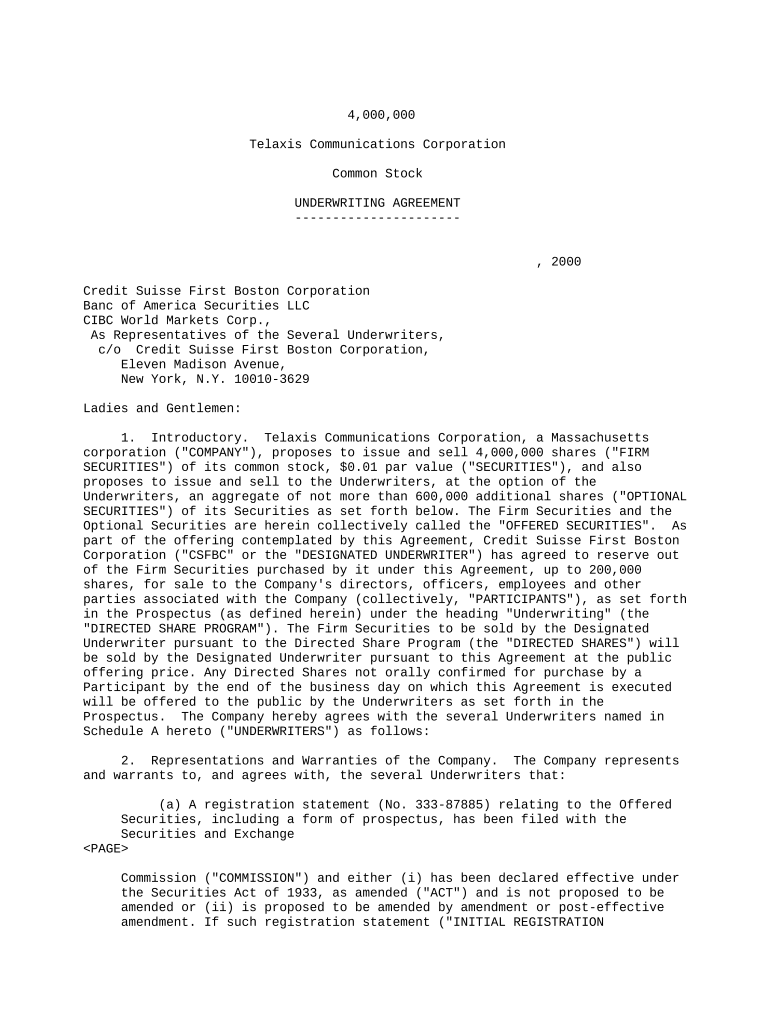
An Underwriting Agreement is a binding contract between an issuer and one or more underwriters that sets out the terms under which securities are purchased and distributed. It typically covers the underwriting commitment, purchase price or discount, representations and warranties, conditions to closing, indemnities, and allocation mechanics. The agreement defines the offering size, closing date, settlement instructions, and post-closing obligations such as registration and escrow arrangements. In public offerings the document coordinates issuer disclosures, underwriter responsibilities, and procedures for handling unsold allocations.

Why a Clear Underwriting Agreement Matters

A precise Underwriting Agreement reduces transaction risk by documenting pricing, allocation, conditions precedent, and liability allocation between issuer and underwriter; it streamlines closing and limits post-closing disputes while clarifying regulatory responsibilities.

Why a Clear Underwriting Agreement Matters

Typical Parties Who Prepare or Sign an Underwriting Agreement

The document is prepared and reviewed by distinct groups who each have specific responsibilities during negotiation and closing.

  • Issuers and corporate counsel: Draft and confirm disclosure, corporate authority, and deliverables for closing; coordinate filings with regulators.
  • Lead underwriter and syndicate counsel: Negotiate pricing, underwriting commitment, allocation, and indemnity provisions; manage distribution.
  • Transfer agent and escrow agent: Prepare settlement instructions and post-closing administrative processes.

Who Signs and Their Roles

Lead Underwriter

The lead underwriter (or bookrunner) signs for the underwriting syndicate and accepts responsibilities for allocation, stabilization, and payment. The role includes coordination with issuer counsel and responsibility for placing securities with investors on the agreed terms; ensure corporate authority and internal approvals are in place.

Issuer Representative

An authorized officer of the issuer signs to confirm corporate authority, accuracy of representations, and delivery of closing documents. The issuer must confirm board approvals, charter conformity, and that required disclosure has been provided to underwriters.

Key Legal and Security Considerations

Encryption: AES-256 at rest
Transit Security: TLS 1.2/1.3
Audit Trail: Timestamped events
Authentication: Multi-factor options
HIPAA BAA: Available if required
Compliance: ESIGN and UETA compliant

Legal Risks and Common Penalties

Misstatements: Indemnity exposure
Late Filings: Regulatory fines
Incorrect TINs: Backup withholding risk
I-9 Errors: DHS penalties possible
Data Breach: HIPAA or state penalties
Intentional Omission: Severe civil liability

Frequent Preparation Errors to Avoid

  • Using inconsistent party names across schedules and exhibits, which can create ambiguity about who has signing authority and may delay closing.
  • Failing to align the effective date with pricing and registration statements, which can affect liability periods and investor allocations.
  • Omitting required closing deliverables such as officer certificates, legal opinions, or escrow instructions, causing last-minute extensions.
  • Neglecting to confirm whether electronic signatures, remote notarization, or witness attestations satisfy jurisdictional requirements.

Principal Sections Found in an Underwriting Agreement

A professional Underwriting Agreement organizes responsibilities, pricing, and closing conditions into standard sections so parties can verify obligations quickly and reduce negotiation friction.

Parties

Identifies issuer, underwriter(s), and any selling shareholders; clarifies corporate status, addresses, and signing authority for each party.
Offering Terms

Specifies number of shares or securities, offering price, underwriting discount or fee, and allocation methodology among syndicate members.

Underwriter Commitment

Defines firm commitment, best efforts, or standby arrangement and the mechanics for purchase, payment, and settlement at closing.

Conditions Precedent

Lists required corporate approvals, legal opinions, absence of material adverse changes, and delivery items that must be satisfied before closing.

Indemnities & Liability

Allocates risk for misstatements, breaches of representations, and provides indemnification procedures and survival periods for claims.

Closing Deliverables

Details documents, officer’s certificates, legal opinions, escrow and registrar instructions, and any post-closing covenants or registration obligations.

Step-by-Step: Completing an Underwriting Agreement

Follow a defined sequence to populate key fields, confirm attachments, and obtain required approvals before circulating for signatures.

  • 01
    Prepare draft: Populate parties, offering size, price, and key dates.
  • 02
    Attach exhibits: Add schedules, legal opinions, and disclosure documents.
  • 03
    Internal review: Obtain board and counsel approvals before execution.
  • 04
    Execute and distribute: Collect signatures and circulate final copies to agents.

Where to Send or File the Executed Agreement

After execution, ensure distribution to all required parties and any relevant regulatory or administrative recipients to complete the offering workflow.

  • Issuer Counsel: Retains original and coordinates regulatory filings.
  • Lead Underwriter: Receives executed counterpart for syndicate records.
  • Transfer Agent: Gets closing instructions and post-closing registrant data.
  • Escrow/Paying Agent: Receives settlement instructions and funds handling details.

Digital Workflow Settings for Online Completion

Configure signing order, authentication, and field types to reflect the parties and risk profile for the transaction.

Field Configuration
Signing Order Issuer → Lead underwriter → Syndicate members
Authentication Email link with optional SMS code
Conditional Fields Show delivery items only if checkbox selected
Audit Trail Enable timestamp, IP, and user agent logging

Digital Signing and File Format Considerations

Choose a platform that supports secure PDFs, audit trails, and the authentication level your transaction requires.

  • Formats: PDF, DOCX supported
  • Integrations: CRM and storage integrations available
  • Authentication: Email, SMS, and advanced options

Timing and Typical Deadlines to Track

Several dates are critical in underwriting workflows: the effective date, pricing date, closing date, and any statutory reporting deadlines tied to the offering or tax reporting.

Effective Date:

Defines when obligations begin and triggers survival periods

Pricing Date:

Date the offering price and allocation are finalized

Closing Date:

Date securities are delivered and payment is made

SEC/Regulatory Filing:

File any required notices per applicable securities rules

Tax Reporting:

Prepare for year-end information returns and withholding obligations

Key Milestones from Negotiation through Closing

A clear milestone sequence helps teams coordinate deliverables and avoid last-minute delays during an offering.

01

Negotiation & Drafting

Finalize principal terms and draft the agreement.

02

Due Diligence

Underwriters complete legal and financial review.

03

Pricing & Allocation

Agree on final price and investor allocations.

04

Closing & Settlement

Exchange securities and funds; deliver closing certificates.

How an Underwriting Agreement Compares with Related Documents

Compare common document types to identify which best matches your transaction structure and obligations.

Document Type | Purpose | Typical Signers Type Purpose Signers
Underwriting Agreement primary sell securities issuer & underwriter
Purchase Agreement secondary asset sale terms buyer & seller
Subscription Agreement investor subscription terms investor & issuer
Commitment Letter preliminary intent to underwrite underwriter only

eSignature Vendor Comparison Relevant to Underwriting Agreement Execution

Choose a secure eSignature provider that supports audit trails, required compliance features, and the authentication level your underwriting workflow requires.

signNow DocuSign Adobe Sign PandaDoc HelloSign
Starting Price $8/user/mo $15/user/mo $14/user/mo $19/user/mo $15/user/mo
Free Trial 7-day free trial, no credit card Varies by vendor Varies by vendor Varies by vendor Varies by vendor
Bulk Send Yes Yes Yes Yes Yes
Audit Trail Yes Yes Yes Yes Yes
HIPAA Compliant Yes Yes Yes No No
Envelope Cap No cap 100 envelopes/user/year Varies by plan Varies by plan Varies by plan

Common Questions About Enforceability, Signatures, and Revisions

Answers to frequent concerns about electronic execution, state differences, and post-execution changes for Underwriting Agreements.


Need help? Contact support

be ready to get more
Join over 28 million airSlate SignNow users