Establishing secure connection…Loading editor…Preparing document…

Vermont Lien Form

This template is fully customizable. Edit the text, fill out the fields, and send it for signature. Give it a try!
Vermont Lien Form

What the Vermont Lien Form Is and when it matters

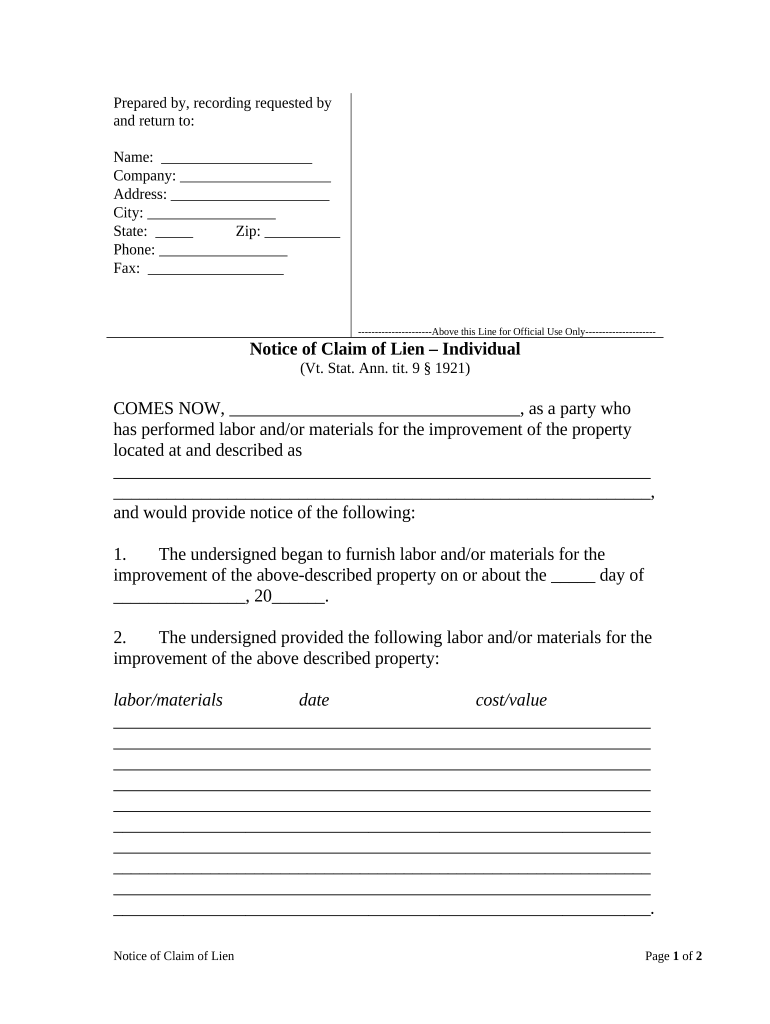
The Vermont Lien Form is the formal statement used to record a claimant’s secured interest against real property in Vermont when labor, materials, or services supplied to an improvement remain unpaid. Filing the form preserves statutory remedies, places a public record on title, and notifies the owner and other interested parties of the claim. Typical content includes claimant identity, property legal description, contract dates, amount claimed, basis for the claim, and a signature with any required acknowledgment or notarization. Local recording practices and exact procedural steps are governed by Vermont statute and county recording offices.

Why filing a Vermont Lien Form preserves rights

A properly prepared Vermont Lien Form preserves your statutory lien rights, establishes priority against later creditors, and provides formal notice to owners and lenders—essential protections when payment is disputed or delayed.

Why filing a Vermont Lien Form preserves rights

Who typically prepares and files this form

Construction contractors, subcontractors, and material suppliers commonly complete the Vermont Lien Form to protect payment rights on specific projects.

  • General contractors — file to record claims for unpaid labor and services on commercial or residential projects.
  • Subcontractors and suppliers — preserve lien priority when direct contract is with a general contractor.
  • Property owners' agents and attorneys — review or defend lien claims and prepare responses or releases.

Step-by-step: Completing a Vermont Lien Form

Follow these sequential steps to complete and preserve a lien claim in Vermont; confirm each step with county recording office rules and statutory deadlines before filing.

  • 01
    Prepare: Assemble contracts, invoices, and accurate property description.
  • 02
    Complete Form: Enter claimant, owner, amount, basis, and contract dates.
  • 03
    Authenticate: Sign and obtain any required notary acknowledgement.
  • 04
    Record: File with the appropriate county recorder or town clerk.

Core components that make the Vermont Lien Form effective

A professional lien form contains specific structural elements that improve clarity and enforceability when recorded and later relied upon in enforcement.

Claimant ID

Full legal name, business entity type, and contact details so the claimant can be identified and served with notices in subsequent proceedings.
Property Details

Precise legal description or parcel identifier, including county recorder references when available, to prevent ambiguity and ensure accurate recording.

Amount and Basis

Exact claimed amount with a short factual statement of the work or materials supplied that justify the lien claim under Vermont law.

Contract References

Attach or cite the contract, purchase orders, or invoice numbers and include start/completion dates to support the timing and validity of the claim.

Signature & Acknowledgment

Authorized signature, printed name, title, and any required notary acknowledgment or sworn statement to meet recording office standards.

Service and Filing Info

Proof of service to the owner, recordation block (clerk entry), and space for filing stamps and recording references for chain-of-title clarity.

Essential information required on the Vermont Lien Form

Claimant Name: Full legal name as on ID
Property Description: Legal description or parcel ID
Amount Claimed: Numeric dollar amount
Contract Dates: Start and completion dates
Owner Name: Recorded owner of property
Notary Acknowledgment: Notary signature and seal

How to set up an online workflow for the Vermont Lien Form

Configure your e-filing workflow so the form is completed, authenticated, and recorded consistently while preserving a verifiable audit trail.

Field Configuration
Upload Document Accept PDF and DOCX formats for source documents
Add Signature Fields Place signature, date, and initials where required
Signer Authentication Use email, SMS code, or KBA depending on risk
Retention Settings Enable automatic audit trail and secure storage

Technical considerations for digital completion and e-submission

Confirm file formats, signer authentication levels, and integration endpoints before moving to electronic signing and recording.

  • File Formats: PDF, DOCX supported
  • Integrations: Salesforce, NetSuite, Google Workspace
  • Authentication: Email, SMS, KBA options

Typical filing flow for a Vermont lien claim

This sequence outlines the common operational steps from form completion to recorded lien.

  • Draft: Complete form fields and attach supporting invoices
  • Authenticate: Sign and notarize as required
  • Record: Submit to county recorder or town clerk
  • Serve: Deliver notice to property owner and lenders

Comparing eSignature providers for Vermont Lien Form workflows

Vendor pricing and core features vary; signNow is listed first for direct comparison of starting price and key capabilities relevant to secure lien workflows.

signNow DocuSign Adobe Sign PandaDoc HelloSign
Starting Price $8/user/mo $15/user/mo $14/user/mo $19/user/mo $15/user/mo
Free Trial 7-day trial Varies Varies Varies Varies
Bulk Send Yes Yes Yes Yes No
Audit Trail Yes Yes Yes Yes Yes
HIPAA Compliant Yes Yes Yes No No

Potential consequences of incorrect or late filings

Loss of Lien Rights: Statutory forfeiture
Invalid Filing: Rejected by recorder
Legal Costs: Fees and litigation expenses
Sanctions: Court-ordered penalties possible
Title Issues: Clouded title and sale delays
Reputational Risk: Disputes with owners or contractors

Common preparation mistakes to avoid

  • Using an incomplete or informal property description that fails to match recorded deed language, leading to rejection or ambiguity.
  • Listing an incorrect claimant name or failing to match the business entity as shown on formation filings, which can invalidate the claim.
  • Missing statutory notice or service requirements to the owner or lender, which can forfeit lien rights even if the form is recorded.
  • Relying on unsigned or improperly notarized signatures where the recording office or statute requires notarization or sworn statements.

Real-world examples of lien form use

These examples show how organizations used e-sign and structured workflows to prepare or manage lien-related documents.

Tim Martin — Founder

Tim's firm moved lien processing online to reduce turnaround time and ensure compliance.

  • The team used mobile signing on-site.
  • The firm reported faster document return rates and reliable audit trails that simplified dispute resolution and title clearance.

Dan Rotelli — CEO

Dan's company standardized document formats for filing claims and releases.

  • They centralized storage and audit records.
  • This reduced administrative errors and made it straightforward to produce filing evidence for legal counsel and county recorders.

Representative users and their needs

Jane Smith Owner

Jane runs a regional contracting firm that regularly files lien claims to protect unpaid invoices. She prioritizes accurate property descriptions, clear invoice history, and reliable proof of service to preserve enforcement options.

Mark Lopez Attorney

Mark represents claimants and owners in lien disputes; he focuses on statutory compliance, precise pleading language, and preparing releases and foreclosure-ready documentation to expedite conflict resolution.

Frequently asked questions about the Vermont Lien Form

Answers to common questions on completion, filing, service, and validity of Vermont lien claims to help avoid procedural pitfalls.


Need help? Contact support

be ready to get more
Join over 28 million airSlate SignNow users