Establishing secure connection…Loading editor…Preparing document…

Welcome Letter to New Employee

This template is fully customizable. Edit the text, fill out the fields, and send it for signature. Give it a try!
Welcome Letter to New Employee

What a Welcome Letter to New Employee Is

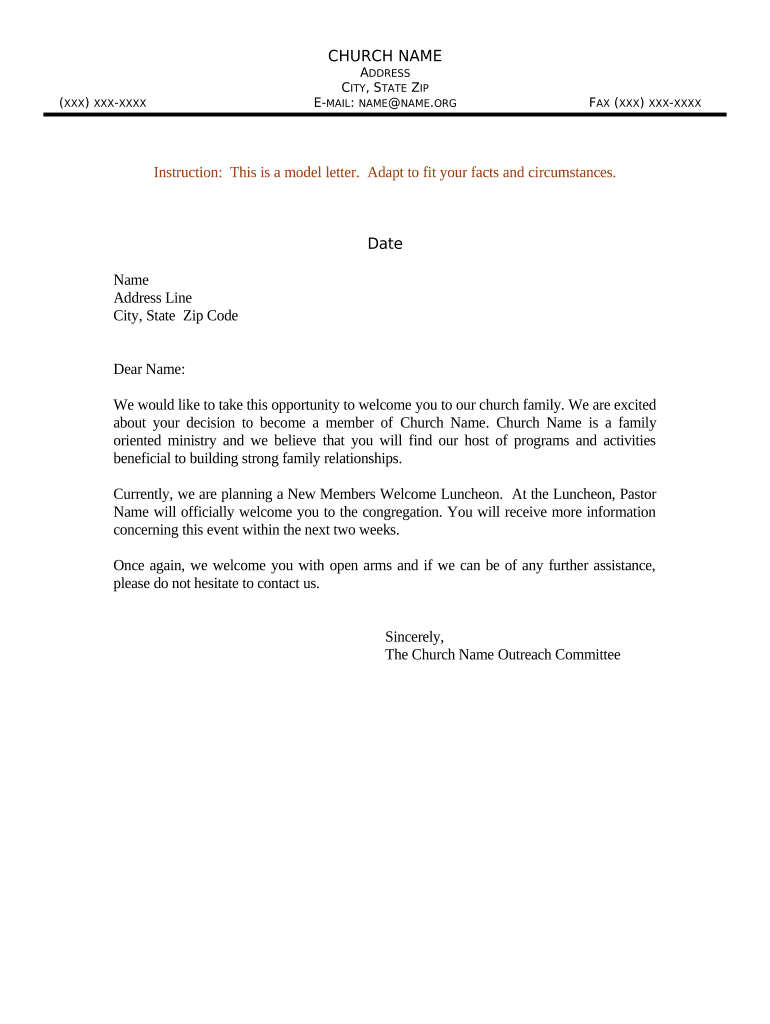
A Welcome Letter to New Employee is a written confirmation sent by an employer that outlines the new hire's start date, role, reporting details, and initial administrative steps. It typically accompanies an offer letter or onboarding packet and provides practical information about first-day logistics, point of contact, required documents, and any pre-employment steps such as background checks, I-9 completion, or benefits enrollment. The letter sets expectations for the first days and creates a record of the employer’s communications with the new employee.

Why a Clear Welcome Letter Matters

A concise welcome letter reduces confusion at onboarding, documents agreed terms, and helps ensure timely completion of mandatory forms.

Why a Clear Welcome Letter Matters

Who Prepares and Receives a Welcome Letter

Typical authors and recipients involved in issuing a welcome letter.

  • HR teams and recruiters preparing onboarding materials and start-date logistics.
  • Hiring managers issuing role-specific details and team integration notes.
  • New employees receiving instructions for paperwork, start time, and first-day contacts.

The document serves HR, hiring managers, and the employee as a short-term operational record and communication tool.

Core elements to include in a professional welcome letter

Include essential items that reduce onboarding friction and create a clear record for both parties.

Start Date

Exact start date and time, including timezone if remote, and instructions for where to report on the first day.
Position

Job title, department, reporting manager name, and brief description of first-week priorities or orientation sessions.

Compensation

Base salary or hourly rate, pay schedule, and any sign-on or pro-rated details referenced from the offer.

Required Documents

List of documents to bring or upload (e.g., Form I-9 identity documents, signed offer, tax forms, direct deposit info).

Benefits & Enrollment

High-level benefits eligibility date and contact or link for benefits enrollment timelines and forms.

First-Day Logistics

Parking, access badges, orientation schedule, remote login details, workspace setup, and primary point of contact.

Step-by-step: Preparing and issuing the welcome letter

Follow these sequential steps to produce a complete, compliant welcome letter ready for delivery and signature.

  • 01
    Draft Details: Assemble role, start date, compensation, and logistics.
  • 02
    Attach Forms: Add I-9, W-4, benefits info, and any state-specific forms.
  • 03
    Review for Accuracy: Verify names, dates, pay rates, and required deadlines.
  • 04
    Send for Signature: Deliver via secure eSignature or in-person with receipt tracking.

Configuring an online onboarding workflow

Map each workflow field and automation so new hires receive required documents in the correct order.

Field Configuration
Welcome Letter Template Use a versioned template with merge fields for name and start date
Document Bundle Bundle I-9, W-4, direct deposit, and benefits enrollment
Signer Authentication Enable email link or SMS code for employee verification
Completion Notifications Auto-notify HR and manager when all signatures are captured

Typical delivery and signature flow for digital welcome letters

A standard digital workflow ensures documents are routed, signed, and retained with an audit trail.

  • Upload Document: HR uploads the welcome letter and attachments to the signing platform
  • Place Fields: Add signature, initials, and date fields where required
  • Send to Signer: Generate a secure signing link or email invite to the new employee
  • Capture Audit Trail: Platform stores timestamps, IP addresses, and completion certificate

Delivery channels and technical considerations

Choose delivery methods that balance security, accessibility, and compliance for the new hire population.

  • Email Link: Convenient; ensure link expiry and access controls
  • In-Person: Useful for ID verification and notarization when required
  • Secure Portal: Centralized access with SSO and audit logs

For regulated industries, prefer platforms that support advanced authentication, audit trails, and retention to meet ESIGN, UETA, and sector-specific rules.

How to save and export the signed welcome letter

Preserve signed records in durable formats and maintain an accessible retention copy for compliance and HR reference.

PDF/A Export

Export final signed letter and attachments as PDF/A for long-term archival and to maintain signature appearance with embedded audit metadata.

Downloadable Copies

Provide the employee and HR with signed copies in PDF and optional DOCX for internal editing histories and recordkeeping.

Secure Cloud Storage

Store signed documents in encrypted cloud storage with role-based access and versioning to meet retention policies.

Audit Report

Save the signature certificate or audit trail alongside the document showing timestamps, IPs, and authentication steps.

Common timelines and deadlines to observe

Track key dates so onboarding tasks meet legal and payroll requirements.

Send Welcome Letter:

At offer acceptance or at least two weeks before start

I-9 Form Deadline:

Complete within 3 business days of hire (8 CFR §274a.2)

Payroll Enrollment:

Submit direct deposit before first payroll run

Benefits Enrollment:

Follow employer plan window, typically 30–60 days after start

Signed Copy Retention:

Retain signed letter as part of the personnel file immediately

Common mistakes that delay onboarding

  • Using informal names instead of legal names causes mismatches on I-9 and tax forms and delays verification.
  • Failing to list required identity documents or where to present them leads to incomplete I-9s within the 3-day window.
  • Sending unsecured attachments without encryption or link expiry risks exposure of personal data during transit.
  • Not capturing an audit trail when e-signing makes it harder to demonstrate consent or attribution if disputed.

Key legal risks from incorrect or missing welcome letter items

I-9 Violations: $281–$2,789 per violation
Data Exposure: HIPAA or state breach obligations
Tax Withholding Errors: Backup withholding or reporting issues
Offer Disputes: Ambiguous terms increase litigation risk
Unauthorized Access: Weak controls risk identity theft
Recordkeeping Failure: Regulatory noncompliance penalties

Real-world examples of digital onboarding workflows

Examples illustrate how organizations use eSignature to streamline onboarding and preserve records.

Optica Ventures — Brian Fitzgibbons

Optica uses a simple signing interface to reduce friction for distributed hires

  • The platform emphasizes ease of use for external recipients
  • "The interface is simple and easy-to-use for our team; more importantly, it is just as easy for our customers."

Martin Properties — Tim Martin

A real estate operator processes documents online for remote transactions

  • Digital signing supports mobile and offline workflows
  • "I can process and execute all of these documents online with 100% compliance and built-in security."

Comparison: eSignature pricing and key features

Basic pricing and common features for selected eSignature vendors. Use plan details to match volume, compliance, and integration needs.

signNow DocuSign Adobe Sign PandaDoc HelloSign
Starting Price $8/user/mo $15/user/mo $14/user/mo $19/user/mo $15/user/mo
Free Trial 7-day free trial Yes Yes Yes Yes
Bulk Send Yes Yes Yes Yes No
Audit Trail Yes Yes Yes Yes Yes
HIPAA Compliant Yes Yes Yes No No

Frequently asked questions about welcome letters and e-signatures

Answers to common questions on using electronic welcome letters, signatures, and retention.


Need help? Contact support

be ready to get more
Join over 28 million airSlate SignNow users