Streamline your b2c sales process for purchasing with airSlate SignNow
airSlate SignNow regularly wins awards for ease of use and setup




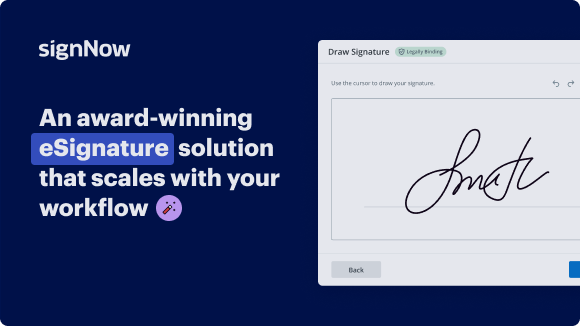
See airSlate SignNow eSignatures in action
Our user reviews speak for themselves









Why choose airSlate SignNow
-
Free 7-day trial. Choose the plan you need and try it risk-free.
-
Honest pricing for full-featured plans. airSlate SignNow offers subscription plans with no overages or hidden fees at renewal.
-
Enterprise-grade security. airSlate SignNow helps you comply with global security standards.
B2c sales process for Purchasing
b2c sales process for Purchasing
Improve your b2c sales process for purchasing today with airSlate SignNow's efficient and secure document signing solution. Don't let paperwork slow you down - try airSlate SignNow and experience the benefits for yourself!
Sign up for a free trial now and revolutionize your document management process with airSlate SignNow.
airSlate SignNow features that users love




Get legally-binding signatures now!
FAQs online signature
-
What are the steps involved in B2C process?
How Does the B2C Process Work? Marketing: The business creates awareness for its product or service through marketing activities, such as advertising, public relations, and social media. Sales: The business sells its product or service to consumers. ... Delivery: The business delivers the product or service to the consumer.
-
What is the B2C personal selling process?
By understanding the B2C sales process and implementing various sales techniques, businesses can improve sales performance. Key steps in the B2C sales process include lead generation, needs assessment, product presentation, closing the sale, customer service, and feedback and improvement.
-
What are the skills of B2C sales?
Some key B2C skills include: Customer service skills: The ability to effectively communicate with and assist customers is essential in B2C sales. This includes the ability to listen to customer needs and concerns, provide helpful information and assistance, and resolve any issues that may arise.
-
How is B2C marketing done?
B2C marketing refers to the approach businesses take to directly sell products and services to consumers. This method involves utilizing targeted digital campaigns, personalized communication, and active social media engagement, with a focus on addressing personal needs and interests to effectively drive sales.
-
What is the B2C buying process?
In a B2C environment, the product is being directly marketed and sold to the customer. There is no middle man in this process. Customers are directly interacting with the business during their purchase. With this model, customers tend to make purchases based on emotion.
-
What is B2C sales with an example?
Business to consumer, or B2C sales, is related to the selling of products to one individual consumer. An example of B2C includes retail sales, as the items sold are directly targeted and consumed by one individual person.
-
How do you do B2C sales?
The B2C sales process has 6 stages, which we are going to describe below. B2C Sales Process Stage 1: Lead Generation and Outreach. ... B2C Sales Process Stage 2: Needs Assessment. ... B2C Sales Process Stage 3: Product Presentation. ... B2C Sales Process Stage 4: Closed Sales with Follow-Up. ... B2C Sales Process Stage 5: Customer Service.
-
What is the process of B2C sales?
Business-to-consumer refers to the process of businesses selling products and services directly to consumers, with no middle person. B2C typically refers to online retailers who sell products and services to consumers through the internet.
Trusted e-signature solution — what our customers are saying


How to create outlook signature
Do you remember how you got your computer? Most of you probably made this decision because you don't have a computer or your old computer is not working well. So not having a new computer creates some problems and you determine that. Later, you start getting advice about computers from your tech-savvy friends. At the same time, you browse some electronics stores or do research on the Internet. In the next step, you identify several computers that you can buy and compare them with each other in terms of price, quality, functionality and so on. So you decide which computer is best for you and buy that product. After shopping, we have negative or positive thoughts such as : "I wonder if I made the right choice. Maybe I could find this model cheaper at another store?”. Some of us even think that we did not make the right decision and use the 14-day consumer right to return the product. This scenario is probably familiar to many of us. Now, let's look at the practical case that I talked about, which stages a buyer goes through before buying a product in business. As in the example of a computer, any buyer goes through 5 stages before buying any product. These stages are as follows: The first stage is problem recognition, the second stage is information search, the third stage is alternatives evaluation, the fourth stage is purchase decision, and fifth - post-purchase evaluation. So, how does understanding the buyer's journey through these stages benefit companies? The important point here is that businesses know this process and choose appropriate marketing strategies for each stage. So, businesses should know what stage they are in when communicating with customers and exhibit appropriate presentation and behavior. More precisely, it should implement appropriate advertising campaigns. Now let's take a closer look at these 5 stages. In the first stage, i.e. problem recognition stage, the consumer discovers that he needs or wants any product. At this point, the communication message of companies can play a big role. For example, a person who feels sleepy every day and has low productivity at work may perceive this as a problem. After discovering this problem, he may think that if he drinks a cup of coffee in the morning, his productivity will increase, and he decides to buy a home coffee machine. For this reason, the consumer moves to the second stage - the information search stage. At this time, he asks his close friends if they know of a place that sells coffee machines of good quality and reasonable price. He also searches online. As a result, he found a shop selling coffee machines with 3 different names. Then the buyer goes to the 3rd stage, i.e. comparison of alternatives. Finally he compares these 3 brands and decides to buy one. This is the 4th, i.e. decision-making stage. The decision made can be both rational and emotional. The effect of these factors, of course, varies from person to person. For example, in the decision-making process, someone may praise brand A more, and the buyer will be influenced by this and make an emotional decision to buy brand A. On the other hand, based on complete rationality, he can buy the B brand by examining all the product's indicators and making a final decision. It depends on the psychological state of the buyer at that moment. Let's say that the buyer buys brand A and after going home he thinks "did I really make the right decision?". Or he is completely satisfied with this product and makes his next purchase from the same store. Sometimes, after buying a product, the next day he thinks he made a wrong decision and replaces that product with another product. It should be noted that you can experience this process while buying each product. But these stages are imperceptibly fast in cheap products, and more noticeable in expensive products. For example, imagine that you buy a house that can be expensive for you, and a sparkling water that is very cheap. You spend seconds buying water, but maybe months buying a house. This means that you go through the stages we listed in the video faster when buying water, and slower when buying a house. Buyer stages take longer in B2B businesses and less time in B2C businesses. Here B2B means "Business to Business" and B2C means "Business to Customer". As an example, the company "Animators", which provides animation support to the "Easy Marketing" project and offers various animation services to businesses, can be cited as an example. Thus, "Animators" offers animation services to small and medium businesses to promote themselves or their products or services. This is considered a B2B sector. An example of the B2C sector is one of the world-famous companies, the chain of clothing stores "Zara". In this case, Zara's customer group is not individual companies, but ordinary people. Sometimes it happens that a company provides both B2B and B2C services. As a note, we plan to talk about this B2B and B2C topic in more detail in the next videos.
Show more