Empower Your Human Resources Workflow with airSlate SignNow's Customer Lifecycle Funnel
airSlate SignNow regularly wins awards for ease of use and setup




See airSlate SignNow eSignatures in action
Our user reviews speak for themselves











Why choose airSlate SignNow
-
Free 7-day trial. Choose the plan you need and try it risk-free.
-
Honest pricing for full-featured plans. airSlate SignNow offers subscription plans with no overages or hidden fees at renewal.
-
Enterprise-grade security. airSlate SignNow helps you comply with global security standards.
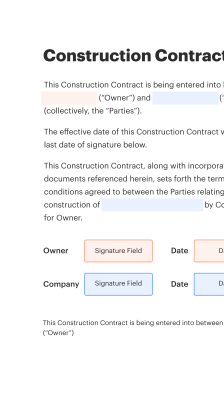
Customer lifecycle funnel for Human Resources
customer lifecycle funnel for Human Resources
Optimize your HR processes today with airSlate SignNow and experience a more efficient way of managing documents throughout the customer lifecycle funnel. Streamline your workflow, increase productivity, and enhance the overall HR experience for both your team and customers.
Sign up for a free trial of airSlate SignNow now and revolutionize your HR document management process!
airSlate SignNow features that users love





Get legally-binding signatures now!
FAQs online signature
-
What are the 4 stages of the marketing funnel?
Marketing funnel phases Awareness - Content focused on educating your audience. Evaluation - Customers determine whether they need your product. Conversion - Reasons to buy your product. Delight - Keeping your audience engaged.
-
What are the stages of a customer journey?
There are five stages to the customer journey: awareness, consideration, purchase/decision, loyalty, and advocacy. While the high-level stages are the same, there are nuances among the B2C and B2B customer journey stages. Not every customer journey is linear; the stages for each customer may not fall in the same order.
-
What is the customer life cycle model in CRM?
Customer life cycle in CRM is a process that involves identifying, acquiring, and retaining customers through strategic marketing campaigns. The 4 stage customer life cycle consists of four stages: acquisition, conversion, retention, and loyalty.
-
What are the five stages of a customer life cycle?
Customer lifecycle stages Marketing analysts Jim Sterne and Matt Cutler have developed a matrix that breaks the customer lifecycle into five distinct steps: reach, acquisition, conversion, retention and loyalty.
-
What are the six-six stages of the customer experience lifecycle?
Awareness, Engagement, Purchase, Retention/Loyalty, Growth, and Advocacy.
-
What are the stages of the customer journey funnel?
There are four stages of the marketing funnel: 1) awareness, 2) consideration, 3) conversion, and 4) loyalty. A brand's goal in each stage is to 1) attract, 2) inform, 3) convert, and 4) engage customers.
-
What are the 5 stages of the marketing funnel?
5 stages of the marketing funnel Awareness. Regardless of the marketing funnel stage in use, it begins with awareness. ... Consideration. As the lead leaves the awareness stage, they move into the consideration phase. ... Conversion. ... Loyalty. ... Advocacy.
-
What is the customer journey funnel?
What is a Customer Journey Funnel? A customer journey funnel is a path that customers take from initial awareness to the final purchase of a product or service. The funnel helps businesses track how well they are doing at acquiring leads and converting them into paying customers.
Trusted e-signature solution — what our customers are saying


How to create outlook signature
hey guys in today's video i will be talking about the six stages of employee life cycle understanding the employee life cycle and knowing how to engage with people in each stage enables you to attract the right talent and optimize your employee experience before we jump into that please do take a moment to subscribe to my channel for weekly videos on hr topics and click that bell icon so let's begin the first stage of employee life cycle is attraction regardless of how great your company product or services without the attraction of great talent your company may fail this makes the attraction stage one of the most crucial aspects to any organization's growth strategy also referred to as the employer brand it is the projection of the image of your organization as a great place to work both in the minds of current employees as well as potential candidates clients customers and any potential stakeholders so that they have a positive perspective of how it is to work with your company in order to build a great employer brand and attract the right talent there are several things that an organization can focus on first raise brand awareness endorsements from current and former employees are priceless and hence employee satisfaction will automatically help create brand awareness through this route organically second offer attractive benefits and compensation now being competitive with the compensation is one of the most obvious efforts and any organization can make to appeal to the top talent in their industry this does not mean that you need to pay the most to attract the best but you should never pay the lease either third is a company culture prospective candidates will choose a company to work with based on reasons like salary job title and job fitment but also they will choose to apply in any company because a brand resonates uniquely with them hence the company culture plays a crucial role the second stage of employee life cycle is recruitment this is where you seek out and recruit the best talent to join your organization recruitment can occur as a result of an existing role becoming vacant or a new position being created altogether there are two sources of recruitment internal and external some of the examples of internal recruitments are promotion rehiring former employees and employee referrals some of the examples of external recruitments are job portals executive search firms headhunters campus hiring etc within recruitment itself there are various stages from identification of the right job description sourcing candidates interviewing them shortlisting candidate verification and finally making an offer a small tip here do share your feedback even in case of rejections it helps to create a positive employer brand the next stage of employee life cycle is on boarding it's natural to be excited when you start a new job right there's a sense of optimism and potential that's why this is the ideal time to make people feel welcome safe and already at home a company must do a proper induction to induct the employees to company policies and culture the onboarding period is extremely critical to getting your new hires to adjust to the company culture and performance aspects of their new job as quickly and as smoothly as possible here are some of the key strategies that you can employ one share a job description now ideally this would have been shared at an interviewing stage but please do share and clarify on the expectations clearly second discuss the company's vision and values clarify any questions that they may have and get a sense of what the company values mean to them ensuring that their perspective aligns with success third outline your expectations clearly the job description will carry some of the detail but it is still critical to lead each new hire through your expectations from them along with explaining how they contribute to the larger organizational goal and fourth do follow-ups regularly completing the first week's induction stage and then leaving the new hire to fend for themselves is bound to result in a rapid decline in employee performance so schedule face-to-face meetings with each new employee after a few weeks checking in how they are performing how they are managing what the child what challenges they may be facing in integrating with the team and so on the next stage of employee life cycle is retention this is a key stage of employee life cycle that's because once employees have been with the company for a while there's a real risk that employers might start to take them for granted it is your that you focus your energies on keeping your top performers engaged and ensuring that they are happy and sufficiently challenged in their respective roles some measures that hr and people managers can take are first cultivate great relationships with your team members building and fostering an open honest and respectful relationship with everyone on your team is critical to keeping them motivated to stay with the company longer second seek employee feedback and measure t morale frequently communication should be a two-way process and one must always encourage upward feedback regular one-on-one meetings are a great way to do that it need not always be formal it could be informal the idea is to get a pulse of your team third understanding what motivates your employees not one employee is exactly the same and not one thing will motivate every single employee understanding what drives and motivates various team members helps you retain them better fourth and the last reward and recognition this could be monetary or otherwise simple thing is acknowledging and appreciating employees goes a long way [Music] the fifth stage of employee life cycle is development it is during this period that you begin to consistently encourage professional development which acts as a catalyst in their skill development and also helps provide them with a career path within the organization first and foremost identify the training needs this can be done during mid-year or annual performance evaluation then set the training objective identify the training methods deliver the training and finally evaluate post training some tips for career development are first offer a buddy system when experienced colleagues share their knowledge this allows effective dissemination of corporate culture while giving new employees support access to a trusted advisor and a go-to point for asking those questions that may seem stupid but usually aren't second encourage people at all stages to learn more whether it's internal or external learning modes like conferences seminars and physical or e-training to up-skill employees to keep them up-to-date with nutrients while expanding their knowledge and third some companies also sponsor courses for those who show promise this is of course if the budget allows for it nothing shows a company cares for its employees more than investing in the upskilling and training the final and the last stage of employee life cycle is employee separation for most employees there comes a point when their employment life cycle will reach its conclusion whether it's from retirement or from a new employment treating the separation process with equal importance as the on-boarding process is extremely critical when a team member leave it has an effect on other members as well also remember that the exiting employee continues to be your unspoken brand ambassador so you want this to be a very good experience for an exit process as well it is a responsibility of the manager and hr professionals to ensure that the employee who is leaving exits in a way that doesn't cause major disruption if you find yourself faced in a situation where a key employee separates from your organization unexpectedly there are a few key tips that you can use to minimize the effect of that disruption first understanding the reason behind the resignation what an employee states as their reason for resignation and what the actual reason are often not the same aim to dig deeper at what truly causes separation so you can avoid similar circumstances that led to it in future [Music] second remain positive you will obviously feel a sense of loss at a top performer leaving your team but it does not mean that you will never find a great replacement and [Music] third ask for honest feedback when someone leaves a company conduct an exit interview as it is one of the greatest opportunities to get honest feedback about what it is truly to work with an organization and finally fourth remind the team to keep for looking ahead oftentimes the loss of a valued employee can cause a decrease in overall team morale so aim to concentrate on reaffirming the commitment to the remaining team members reminding them that while their departure is disappointing the team will ultimately recover and grow [Music] so these were the six stages of employee life cycle hope this video gave you an overview of the employee life cycle if you like this video please do like comment and share do subscribe to my channel for the weekly short of hr information see you soon
Show more