Enhance Your Team's Efficiency with airSlate SignNow's Customer Lifecycle Funnel for Teams
airSlate SignNow regularly wins awards for ease of use and setup




See airSlate SignNow eSignatures in action
Our user reviews speak for themselves











Why choose airSlate SignNow
-
Free 7-day trial. Choose the plan you need and try it risk-free.
-
Honest pricing for full-featured plans. airSlate SignNow offers subscription plans with no overages or hidden fees at renewal.
-
Enterprise-grade security. airSlate SignNow helps you comply with global security standards.
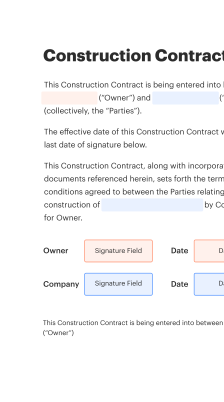
Customer Lifecycle Funnel for Teams
customer lifecycle funnel for teams
By leveraging airSlate SignNow's features, you can optimize your workflow and enhance team collaboration throughout the customer lifecycle funnel. Try out airSlate SignNow today and experience the convenience of seamless document management.
Sign up for a free trial now!
airSlate SignNow features that users love





Get legally-binding signatures now!
FAQs online signature
-
What is the CX lifecycle?
The customer experience lifecycle is a continuous cycle that begins when a potential customer first becomes aware of your brand and ends when they become an advocate for it.
-
What are the five stages of a customer life cycle?
Customer lifecycle stages Marketing analysts Jim Sterne and Matt Cutler have developed a matrix that breaks the customer lifecycle into five distinct steps: reach, acquisition, conversion, retention and loyalty.
-
What is the difference between customer lifecycle and funnel?
So, while a traditional sales funnel involves overlapping stages, lifecycle marketing is more about the customer — not the sale. This strategy is used to help brands strengthen the customer experience to encourage greater retention and brand loyalty.
-
What is the meaning of customer life cycle?
In terms of customer relationship management, the customer lifecycle describes the various stages a consumer goes through before, during and after they complete a transaction. Simply put, it's the Point A to Point B journey a customer takes until they make the final purchase.
-
What is a customer funnel?
A sales funnel, also called a purchase funnel, is the visual representation of the customer journey, depicting the sales process from awareness to action.
-
What is the life cycle of CRM?
Customer life cycle in CRM is a process that involves identifying, acquiring, and retaining customers through strategic marketing campaigns. The 4 stage customer life cycle consists of four stages: acquisition, conversion, retention, and loyalty.
-
What is the difference between sales funnel and customer lifecycle?
The lifecycle model breaks down the walls of the sales funnel and opens up the buyer's journey model. In other words, it maps to real-life, modern customer journeys. Instead of a single path with only one direction, lifecycle marketing looks at the buyer's journey as a series of many open pathways.
-
What is the difference between a funnel and a customer journey?
“Sales funnels focus on turning visitors into leads and leads into customers. The customer journey is a more detailed map. It shows how people go from just hearing about a product to actually buying it. People sometimes mix these up because they both involve how customers move along.
Trusted e-signature solution — what our customers are saying


How to create outlook signature
good afternoon everybody um let me just share my screen right now um and sanjay can you just just confirm you can see my screen yes i can okay great so um thanks again for having me as mentioned my name is sunder i lead international growth marketing analytics at uber and i'm here to talk today about life cycle marketing and funnel optimization um you know as kind of the brochure says the key learnings today are to understand how we can better understand our customers behavior and align it with our goals and to build effective lifecycle marketing strategies explore strategies to map user journeys and then how to get them back as active consumers and then finally how we improve conversion rates by you know delivering long-term customer value um you know what i wanted to do though a little bit differently is i actually wanted to talk more about how we as companies can set up our teams and and like really focus on the foundations because if i sat here and talked about specific strategies right they there's obviously this context of we're at uber b2c global um that might not necessarily apply to every company here so i wanted to actually focus a bit more on the overall foundational work and so the first thing i wanted to set up uh is how to set up your team to succeed right we talk about life cycle strategies all of those are built by teams whether it's a team of analysts crm experts performance marketing experts so how do you actually set up your team to get better at lifecycle marketing first more data does not equal better results i think this is a pretty common error that we see especially amongst companies that are trying to be data driven where if you have an issue throwing more data at it and having more data does not translate to better results in fact if you don't have the right processes in place you can actually get overwhelmed with your data and get analysis paralysis and you're sort of trapped in this like constant circle of really thinking about data and so what i what i recommend is you actually start with your basic first party data most of the data that we capture just through our apps or through our websites are often good enough to start lifecycle marketing strategies the most important part and i think throughout the deck i will say testing and more importantly culture of testing is by far the most important thing um that you can do in your company to actually get data informed or data driven results and when i say that what i really mean is you have to let mistakes happen and better yet you have to encourage them if you don't have a culture where mistakes are happening and you're learning from them then you're probably not innovating enough you're really not truly learning about your about your your part of the market so then you should test from end to end with first party data if you don't build the full life cycle and i mean life cycle within internally within your company of an idea then you're really not building a data-driven culture and so that goes from having people that feel comfortable sharing hypotheses to analysis testing stakeholder management execution by stakeholder management specifically what i mean is if you have an idea and you test it you need to have that culture of saying okay i'm going to present this to senior leadership i'm going to have buy-in i'm going to be cross-functional and collaborative have product you know there's so many parts of our companies that we work with and then you have to be able to execute it but if you can't do that with first party data with your own internal data and you don't have the right systems in place then then really adding more data doesn't really do much for you and so the final step is you know add more data once you've already touched these first four steps and can actually get really good at that is where you should add more data to get into better life cycle marketing retention strategies and then obviously when you think about life cycle marketing and what the steps are i'm gonna outline a few steps and they get from easier to harder but by easier i would not say less important in fact they're the most important they're the foundation on which you should build your life cycle marketing strategies and retention strategies and of course testing is essential between all of these steps like i said it's a really important part of us as growth marketers we really need to learn to build these cultures of testing first create high-level life cycles and then sub-life cycles and i'll go into a little bit about what that means exactly two monitoring in bi we often think of bi like just like a tableau or some person in the corner building these dashboards and in fact they're they're an integral part of life cycle marketing and um and retention marketing because if you don't have the right monitoring bi in place really all of your your work is going to come whether it's six months too late or a year too late and you're already hitting these cycles that are not what you want so monitoring and bi are really important three is funnel mapping and it's weird to say funnel mapping should be third but to me getting really nitty-gritty on like every little little step of your funnel is not going to be important if you don't have the mapping i mean the monitoring in place if you don't have the culture in place to be able to test on that so that's why i actually have it as third fourth is basic segmentation and again i'll get into a bit about like what that means to be basic segmentation you actually heard a little bit of it on the on the last panel where a lot of these companies that we're hearing present are sort of basic in their segmentation they're sort of foundational and then they're slowly building it over time and that's exactly the approach that i recommend is start simple start easy and then build and then the fifth is really the the bonus it's advanced segmentation in ml which i'll kind of touch into as well so how do you create high level life cycles so at uber um and i cover all lines of our business so the writer driver eater courier restaurants on the on the ubereats side so as you can imagine we have many different customers so i'm just gonna throughout this most of these examples pick the rider side because it's a little bit more aligned with what most of us know as customers uber writers they sign up they take a first trip they continue writing they churn and then they resurrect right those are at a high level the the life cycles that you can think about how do we define these lifecycles so sign up pretty easy easy take a first trip pretty easy right those are very distinct black and white uh lifecycle what about churn what about resurrect and i'll kind of go into how you can set up your companies to just build really simple life cycles and sublime cycles and then you know the second part is can we define more granular life cycles great you define this overall life cycle is there some parts of the uh the life cycle that we can even get even more specific with so here's an example defining the life cycle between sign up and first tree so if you look at the chart on the left on the x axis is days from sign up to first trip so obviously we're going to start on left it's about zero and then it's going to keep going to the right as you get further away from signing up and then on the y-axis we're looking at the cumulative conversion rate so over time as you can imagine um the cumulative conversion rate is going to go up over time but what do we see with this like this is a simple chart that any junior analyst should be able to pull it's fairly straightforward and what can we actually see with this first if you look to the left of the line right you're going to see an initial spike so very close to when you sign up most people are converting to their first trick and then what's the second thing you notice for me when i look at this i say okay well if you look to the right of this line it's effectively plateaued and so again what do we see there's an initial inflection point well maybe then the organic conversion rate is happening within the first couple days from sign up to first trip so most of the first trip conversion rates uh most sorry most of the first year conversions are happening immediately in the first few days from sign up so why don't we go ahead and call this period fresh sign ups so zero to say x days is fresh sign ups the second point is that point of plateau it's this right hand line right and so you can see after that that effectively we're not going to convert people it's going to be very minimal very like probably expensive probably not the highest quality conversions you know late adopters and things like that and so we're going to call these users stale signups and now from a simple chart that will take a junior analyst no more than 30 minutes to pull we've effectively created two life cycles and actually we've even made it three so you have fresh which is appeared to the left of the line let's call this the soft sign ups where they have some period to convert but it's going to take some effort and then everything to the right is stale so it becomes prohibitively harder this is again just simple foundational life cycle segmentation are now and now we've created an additional two sub-life cycles let's look at another example when you think of churn churn is always complicated for our business what does that mean for other businesses for example the travel business people might only take one or two trips in the entire year you know if you're an airline company how do you define churn you can define it in multiple different ways for us for example if we look at this chart if you look at the x-axis it's days from last trip and then on the on the y-axis we're saying the probability of taking a next trip so what we're seeing here is that the further away you get from your last trip you have a lower probability of taking another trip so essentially over time you you are more likely to have churned and so we can define churn as the average number of days around which the probability of taking a trip is almost zero so as you get closer to the the zero line we can just define this line and say okay you know what anyone who hasn't taken a trip in the past x days is churned again this is a chart that any analyst should be able to pull um but now you've already got just some basic foundational segments that are telling you you know what if we define anyone who hasn't taken a trip in x days churn we can now create life cycle marketing around them right we now know someone is churned and defined as churn which is simple segmentation so we can offer them a promotion we can send them an email maybe we can flag some of the new features we've built you know i think we all as marketers have a variety of tools at our disposal to how to resurrect someone but the first part of that is to define someone as churn and again simple chart very easy very straightforward and more importantly you can customize this for every different region if you want to so in the middle east this might look different than in the u.s um because of different use cases and so now by some a simple chart you can create life cycle segments that can be customizable for your region as well and that was just step one and again two basic charts that really just talk about two basic lifecycle segmentations the second step is monitoring and bi and again i think bi oftentimes has has this connotation where it's just like hey we build dashboards or um you know they're not important part and oftentimes you'll have stakeholders come in and ask for bi and they're really not going to action on it monitoring in bi is really fundamental and if you don't have actionable business intelligence and monitoring tools in place you're usually not going to be effective at lifecycle marketing growth accounting and just and i'll cover quickly what that means is extremely important and if you think about a growth comes from multiple different places it comes from churn resurrection acquisition and obviously just those that are currently reactive and so this is an example of a dashboard that we built in google sheets but is really effective so in the far left you have month one monthly active users of those users some of them have churned then we add people that were resurrecting so people that used to be churned that have now come back then we've acquired new users and now we have the second month's monthly active users and now we have a pretty decent picture of where is our growth coming from what are the different components of our growth and again very simple monitoring but highly effective churn as we all know can companies and good monitoring and good definitions of it are foundational to preventing it and if you just had month one monthly active users a month to monthly active users that's just going to be it's always going to look generally up and to the right until it's too late because all of a sudden your churn will become higher than your new acquisitions and then your monthly active users will start to go down so it's really important to get ahead of this curve by just building in very simple and basic um monitoring and business intelligence and then three the third part of this is funnel mapping so when we talk about like strategies for funnel mapping i i really almost don't even think there's a strategy it's really just simply getting down and just writing all the different pain points and touch points that a user has and then building that proper monitoring dashboarding so here's what the top of our funnel at uber looks like for the rider side for the driver side when we're trying to acquire drivers it can be even more complicated as they have to add um ids government you know identification bank account information all this other stuff this is just for the writer side arguably our simplest uh consumer welcome screen phone number mobile verification email password name screen terms and conditions and then they've created an account you have a payment wall then they're ready to request then they have to enter a destination then they select a product then they request and then they've completed a trip this might not even be the full funnel this is i think a majority of it but there is approximately 14 steps before a writer can take their first trip all i had to do as a person that was like trying to map this is just to go and pretend that i was signing up from scratch and then you can see all of these right or you can obviously go to your product teams or your design teams and they can give you this information but the point is that there are no really to me crazy strategies on how to map your funnel it can be this simple and it's just about all the experiences and all the different touch points and you can get into a room and just kind of be like what about this what about this and that's how you create this list but now the next step from here is to say well do i have the proper monitoring point in place like do i know the drop off from steps one to two to three to four and so on and again very simple i mean most of these have these um these events in our in our database systems but then it's creating the right monitoring for here's what it looks like from a trip perspective right and now we can start to say once a person has requested a trip right we already had 14 steps to request and complete a trip once they've requested what happens well we give them an estimated time of arrival they put in their estimated pickup location we give them an estimated time of journey and then what's the actual time what's the actual pickup location what about the differences if we told them it's three minutes it took 10 minutes was there a phone call what was their first interaction did the driver and writer say hi to each other in car the interaction right what was the direction what was the mapping you know didn't they use waze did they use google maps what what service are they using what's their music what's the car sent actual drop off location the actual time of journey right this is how complex it is but all of this is really just simply going through the exercise of what is it like to be in our in our users experience and here what we're saying here is you need to have all of this again monitored and you need to understand like all these different touch points because once you have the monitoring in place if for example let's say that the the estimated time of arrival for the driver to go pick up the writer is five minutes and then it actually became seven minutes you can start to plot that and say well if that difference starts to grow so say the first time a user experiences uber and they have like a 10 minute difference between what it expected to come when it was expected to come and when it actually came what does their journey look like just by plotting these we now know the pain points that we can monitor and look for and that's really important and then finally um just um sorry in the last example right just another example of churn and here's some of the factors that could lead to churn poor experience price they don't have a use case competition so in the first step we define churn and in the second step now when we're finally mapping we can see all the different things that could lead to churn and so now when you think of life cycle strategies for example we say poor experience well how can we sort of monitor that well if the rider gave the driver a one star or the driver gave the rider one star clearly some poor experience happened so now we know that's happened we can now predict that they're going to churn but then we send them communications or promotions or outreach you know a variety of different tools that we have and we can prevent that churn but it's because we mapped these different funnel funnels and these and these different factors that lead to churn that we're able to then build lifecycle marketing strategy around it and finally i kind of want to go into basic segmentation again everyone i think thinks the holy grail is is personalization machine learning and that is definitely true but if you don't have the the components in place to action on that a culture of knowledge sharing and actually building out um different products and tools for these different segmentations then building on a robust segmentation platform is actually quite expensive and so here's a basic segmentation that that we could use at uber a commute a commute trip is six to nine am and five to eight pm and then a weekday definition is all as a weekday times the social hours are friday and saturday 7 p.m to 2 a.m of course in the middle east that can change a little and again that's part of the beauty of having simple segmentation is you can shift around a little bit and not have to dive too much into all the different like expenses that might be for customization and then so for example weekend or all other weekend times and so now we've created this basic lifecycle segmentation or sorry this is actually use case segmentation and then we can combine it with the life cycle segmentation so we can look at people that for example have now churned and we can also go back and say wow they they mostly rode during commute so let's look at their trips during this commute time and see what may have happened to cause them to churn now i'm combining the fact that i have life cycle segmentation basic use case segmentation and i know my touch points so i'll go and look and say wow their price their average price over the past three months has gone up 20 for whatever reason and we can diagnose that and that we can say okay why don't we give them a promotion for their next week why don't we tell them send them coms saying why and like what's going on in the market right a few different things but all of this is possible just from a few charts a few basic queries and a few foundation on that analyses and so how do you bring it all together and so finally i'm just going to go through an example of how we would use all these foundational different things at uber so hypothesis drivers who drive their first trip during the social hours may actually turn quicker and this actually is an example that that i had done um you know before i was managing teams and the thought was you know i i knew that our crm com said hey drivers like the best time to to start driving is friday evenings i like saw that email and i was like in my mind i said okay if i were told to drive friday evening and i was just on this new platform it's pretty scary it's rush hour it's already pretty uh crazy and i have to learn a new app i'm just picking up a new rider i don't know this is my new experience like i would actually be pretty frightened and so what did i do i just quickly pulled a retention chart grouped by where a driver drives on their first trip so if for example or sorry when when they drive so i would i plotted a retention chart says let's take all the drivers whose first trip was during friday social hours and let's take every other driver who drives maybe saturday afternoon when his little choir and you just plot a retention chart over the next six months and and very simply and very easily i was able to see that those that drive during saturday afternoon um have better retention because their first experience is not difficult it's not scary and it's not overwhelming and then you go into that next step well we needed drivers during um you know the friday um social scene because that's when it's um when most people are in demand and then and it sort of you know is the best time for us as a marketplace to get them to drive but we really have to think about the customer over there long term right getting an extra driver um to do an hour today might lead to a lot less hours over the lifetime of them on our platform so you have to convince your general manager operations team the crm team which is sending out the emails and finance of these impacts but that culture was there where i could find a data driven uh solution and there's data informed go to my stakeholders convince them and then the execution is quite simple you just the crm communications team said okay you know as we onboard driver in that first part of the funnel we will tell them the best times to drive to just learn about how to use our app how to use our platform is actually saturday afternoons and and those effects you know carry on indefinitely and then finally just bonus is advanced segmentation ml right so advanced segmentation is really incorporating more than first-party data um you can create value-based segmentation so for example a family business woman versus a student what are their needs um demographic and psychographic information and you start to get to personalization when you think of ml models it's churn prediction right so what is the likelihood this person is going to churn based on their current or fast past few trips you can do cross-sell and upsell models so you know when we think about adding value to our customers it's saying hey like we have this product we have these products like have you tried ubereats and then you can obviously do high value predictions so identifying who are the highest value customers for us how do we continue to engage them then you can even think about bringing in other parts of the business so let's make sure marketing our community support and our operational teams are all focusing on these high value riders but again that's all bonus and unless you have that culture and to be able to implement these changes it's really just you know having stuff that that's really not that effective um and with that i can turn it over for questions all right thank you so much sanders it was a great presentation um just looking at our question tab over here and we have a few questions um i think we're going to take the first one uh we want to intelligence want to try and understand is what strategies have worked out well for you to obtain or to bring back john customers yeah so um oftentimes promotions are are some of the most effective levers right when you think about just like incentivizing riders we've actually especially now during covid seen some really interesting behaviors on on churn customers because you know they may have churned for whatever reason but now their their need for uber and their need for you know maybe the camera line on public transportation is quite different so now for us it's been re-messaging with safety messaging and saying hey here are the new safety features we've been lifted here's what's changed over the past three four months that is really different now than what you may be used to and so i think those are you know just highlighting um the changes you've made your platform how you become better but also of course uh promotions and sort of incentivization can also work as well right and you know given because the current situation the pandemic obviously there's a lot of behavioral changes that are happening now and i think right healing apps are going to be impacted um in in the coming years uh how have you seen uh you know behavioral changes how do you see it how what are you doing to you know work around it yeah i think one of the biggest things we're trying to focus on is we want to be there when people are ready to write yes okay thanks thanks i think sorry um you know when when people are ready to write is when we want to come there so what we don't want to be doing is like pushing and saying like hey like you know let's ride now right what we're realizing is that customers are writing when they're ready to write and what we can do and and and our job is to do is to highlight you know some of the the practices we've we've made and changes we've made so for example one of the new things we've said is no mask no ride so it's protecting the driver especially um who may be exposed to to some of these things and so what we want to do is again just just push that sort of top of mind awareness in terms of safety because at this current juncture like the only thing that matters is safety and should be safety right and did we take one last question i think uh this is something that even i want to know that's does this growth marketing really have a saturation point you know how long can brands effectively implement uh growth strategies is it a long-term vision is it something that it's a quick hack to get on uh you know subscribers to use your app how does it work yeah i mean so what it is it is it is a long journey i think the simplest way i'll say it is that because i think a lot of times when you think of these growth companies they actually sort of mask these underlying uh trends like i kind of alluded to before of lecture right so you're top of topic funnel looks really great and all is your monthly active user is always looking great but at some point if you don't address uh churn and retention um then you will start to plateau and so it's not just a quick fix in fact i would almost encourage um people to to make it quick and simple in the beginning and then slowly start to build out those practices so um you know churn again is like one of the biggest things that i think can derail a company so um there's always churn optimization right there's always conversion optimization there there's highlighting better use cases like as we get smarter realizing that a person that takes uber once every three months but only ever takes uber and it's only ever to the airport is okay it's a good customer it's a loyal customer uh it's a it can be a high value customer because our airport trips are are fairly profitable but it's identifying that and so it's not saying hey you haven't taken a trip in three months so we should give you a promotion because that could be their behavior so as personalization becomes more top of mind um right you start to eke out and you start to like really gain those incremental benefits but in the beginning it should be fairly quick and simple and then over time there's still always continued optimization right
Show more