Dealer management system process flow for Life sciences
airSlate SignNow regularly wins awards for ease of use and setup





See airSlate SignNow eSignatures in action
Our user reviews speak for themselves









Why choose airSlate SignNow
-
Free 7-day trial. Choose the plan you need and try it risk-free.
-
Honest pricing for full-featured plans. airSlate SignNow offers subscription plans with no overages or hidden fees at renewal.
-
Enterprise-grade security. airSlate SignNow helps you comply with global security standards.
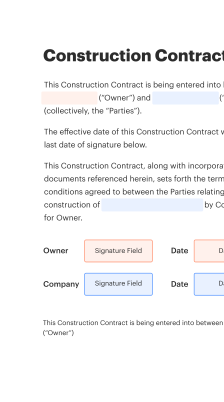
Dealer management system process flow for Life Sciences
dealer management system process flow for Life Sciences
Experience the benefits of using airSlate SignNow for your dealer management system process flow for Life Sciences. Simplify document signing, increase efficiency, and save time with airSlate SignNow's intuitive platform.
Try airSlate SignNow today and streamline your document workflow in the Life Sciences industry.
airSlate SignNow features that users love





Get legally-binding signatures now!
FAQs online signature
-
What is DMS in an auto dealership?
What Does a Dealer Management System (DMS) Do? Dealer management systems enable a dealership to perform all the day to day functions their dealership encounters from sales operations, financing operations, service operations and more; it is important that all these functions of a dealership work together.
-
What does a DMS do?
A document management system (DMS) is usually a computerized system used to store, share, track and manage files or documents.
-
What is quality in life science?
Quality is one of the most important aspects of Life Sciences, as it directly affects the safety and efficacy of products. QMS provides an organized and comprehensive system to control the processes and ensure products are safe for their intended use.
-
What is QMS in life science?
A Quality Management System in life sciences is a regulatory and quality blueprint. It documents the processes, procedures, and responsibilities required to maintain and exceed the industry's stringent standards.
-
What is a CRM in a car dealership?
An automotive CRM (customer relationship management) is a software solution that helps car companies with customer service, sales, and marketing. It enables dealerships to collect leads, coordinate a multi-channel sales operation, and foster deeper customer relationships.
-
What are the key points you consider while selecting a dealership management software?
5 Essential Features to Look for in a Dealership Management... Understanding Dealership Management Systems. ... Key Feature 2: Customer Relationship Management (CRM) Integration. ... Key Feature 3: Robust Reporting and Analytics. ... Key Feature 4: Seamless Financial Management.
-
What does a dealership management system do?
A DMS is a software platform that dealerships and service shops use to manage their day-to-day operations. These systems provide tools for different areas of your dealership. More commonly this includes tools for finance, sales, vehicle inventory, customer information management and credit reports.
-
What is OEM DMS?
Parts and Inventory Management A DMS that provides OEM integrations enables dealers to manage parts orders more effectively. This means that your dealership will be able to interface directly with key manufacturers and aftermarket suppliers to automate order submissions.
Trusted e-signature solution — what our customers are saying


How to create outlook signature
no project team is without issues but things get even more complicated when people are working in different locations when team members aren't physically together assumptions and expectations can cause frequent miscommunications people working remotely often feel isolated because they typically interact less with other team members there's also usually less collaboration and team bonding can suffer despite the obstacles virtual teams are a fact of life and all the standard good project management practices still apply let's look here at some issues that are especially important when working with remote members I expect that those of you who have manage virtual teams will quickly Nodge your heads in agreement as we make our way down the list I'll offer some of my own advice but I challenge you to think about your own Solutions and if they're effective so first talk with your team from the start draw on ideas of everyone on your team for the best ways to collaborate then periodically survey the team for what's working well and what's not next set communication expectations you need to think about accessibility while considering typical work hours for you and your team what are reasonable response times to emails for example how will you handle status briefings and reports have you defined a conflict resolution process be sure to establish ground rules for meetings too learn to accommodate time zone differences create clear agendas and keep the meetings on track and as short as possible next Define the work rules team members must of course meet their established commitments and rally when necessary to support the project at the same time leaders must be respectful of off workor hours no matter how inconvenient that may be with time zone differences project leaders must emphasize the feeling that we are all in this together you need to take advantage of technology and leverage video conferencing instant messaging and virtual collaboration tools so team members can easily ask questions access information and post status updates it's important to build team spirit because it's easy for virtual team members to feel separated one easy fix is to create a members page on a project website that would incl include each person's picture project duties contact info location and maybe even an item of personal interest you need to be sensitive to cultural differences when working across borders all members should be trained on social moras and aware of local HR practices you need to of course monitor productivity because remote team members are more at risk of saying they're on schedule and then surprising you with a late deliverable you should require relatively frequent deliverables and artifacts to ensure that work is being accomplished satisfactorily and plan regular one-on-one check-ins and choose phone calls over emails whenever practical for projects lasting six months or longer you should consider having the health of the project audited by one or more people from outside the project every quarter or so you need to maintain easily accessible project dashboards and solicit Fe feedback dashboards come in a variety of shapes and sizes and provide a snapshot of a project across key indicators metrics should be colorcoded using red yellow and green to indicate the status of each measure of a project being presented dashboards are not just for the organization's top leadership making project dashboards visible to a wider group of stakeholders gives your project better exposure granted you may be concerned that some of the exposure is unwanted especially when there are problem areas and although it's a bit C counterintuitive project transparency is a fabulous way of minimizing project risk if there are enough effective channels of communication dashboards can alert seemingly uninvolved stakeholders to step forward to offer resources ideas or solutions to issues that may be surfacing it's important to close issues commitments can certainly easily drift with remote teams and you need to ensure that concerns are addressed quickly fairly and closed appropriately you need to synchronize scope management with your dispersed stakeholders when a project gets rolling scope inevitably starts creeping many projects adhere to an organization's existing change management processes but simply recording your Project's intent itions to follow these standard practices in the project plan however is not enough you need to think about all the non-technical stakeholders who may have never sat on one of the Change Control boards besides you will still need to State constraints and parameters for managing scope change for example change items will only be accepted from date X to date y during the planning process early in the project virtual collaboration tools need to be used to extend your active Outreach to all stakeholders affected by your project anyone and everyone who might have valid or even invalid change requests needs to know how when and if they can have any input in the process managing expectations reduces risk especially during the implementation stage when suddenly new requirements surface that can radically alter the course of the project or jeopardize its success aggressive early proactive frequent and short virtual Town Hall meetings with stakeholders Focus solely on scope management will save you and your project teams lots of headaches down the road the larger and more complex your project is the more critical this becomes you need to put in some FaceTime when reasonable make face-to-face visits to help improve Communications and team camaraderie strive to bring the team physically together occasionally either in small groups or all at once and finally you need to praise show appreciation and celebrate success scattered teams can often feel out of the loop so be quick to highlight individual and team successes include all project members in noteworthy celebrations when major Milestones or events are achieved while we've talked a lot about the importance of virtual collaboration we need to also briefly discuss some of the pitfalls of virtual collaboration to avoid such as using virtual collaboration tools to replicate the standard dog and pony or debt by PowerPoint style of briefings and reports and move more to story- based forms of communication we need to avoid too much communication less is more in terms of information you need to offer many different opportunities and channels for people to communicate using Technologies to broadcast less and spend more time soliciting people's feedback and finally you need to avoid a lack of followup with people as the number and types of virtual interaction with stakeholders increases your risk of managing people's expectations also increases followup is crucial you need to put in place wealth outout processes for managing the feedback you receive you should be clear with people and if you drop a communication ball which is sometimes inevitable use it as an opportunity to be honest apologetic and transparent most people if you are really being genuine will graciously receive your apology
Show more