Streamline Your Workflow with airSlate SignNow's Lead Nurturing Plan in Onboarding Forms
airSlate SignNow regularly wins awards for ease of use and setup




See airSlate SignNow eSignatures in action
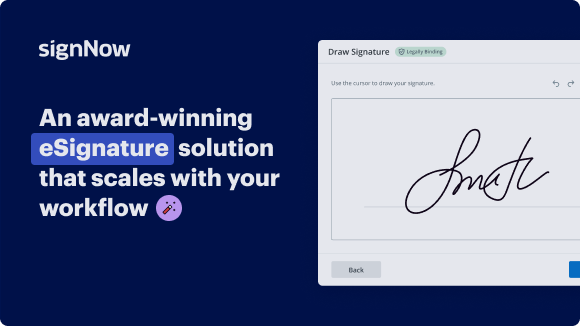
Our user reviews speak for themselves











Why choose airSlate SignNow
-
Free 7-day trial. Choose the plan you need and try it risk-free.
-
Honest pricing for full-featured plans. airSlate SignNow offers subscription plans with no overages or hidden fees at renewal.
-
Enterprise-grade security. airSlate SignNow helps you comply with global security standards.
Lead Nurturing Plan in Onboarding Forms
Lead nurturing plan in Onboarding forms
Streamline your lead nurturing plan in Onboarding forms effortlessly with airSlate SignNow. With its user-friendly interface and efficient features, airSlate SignNow is the ideal solution for businesses looking to optimize their document signing process.
Ready to enhance your lead nurturing process with airSlate SignNow? Sign up for a free trial today and experience the convenience of eSigning documents with ease!
airSlate SignNow features that users love





Get legally-binding signatures now!
FAQs online signature
-
Which of these is an example of lead nurturing in action?
timely response to a customer engaged Call To Action is an example of nurturing a lead.
-
What is the lead nurturing path?
LEAD NURTURING PATH It takes individual clients on a journey through a series of highly personalized and tailored interactions with your product or service. The aim is for clients to get to know you, trust you, and like you, eventually choosing you as the solution provider to their problem. A GUIDE TO CREATING A LEAD NURTURING WORKFLOW - LinkedIn LinkedIn https://.linkedin.com › pulse › building-strong-bon... LinkedIn https://.linkedin.com › pulse › building-strong-bon...
-
What is lead nurturing with example?
At its core, lead nurturing is the process of cultivating leads that are not yet ready to buy. Successful lead nurturing anticipates the needs of the buyer based on who they are (using profile characteristics, such as title, role, industry, and so on) and where they are in the buying process.
-
How to create a lead nurturing plan?
How to create a lead nurturing strategy? Understand the stages of a sales funnel. ... Align marketing and sales to uncover common objections. ... Identify and segment high-quality leads. ... Build out your email marketing campaigns. ... Create targeted content. ... Track, measure, and analyze.
-
What is the nurturing process of leads?
At its core, lead nurturing is the process of cultivating leads that are not yet ready to buy. Successful lead nurturing anticipates the needs of the buyer based on who they are (using profile characteristics, such as title, role, industry, and so on) and where they are in the buying process. What is Lead Nurturing? | Oracle United Kingdom Oracle https://.oracle.com › marketing › lead-management Oracle https://.oracle.com › marketing › lead-management
-
What is the lead nurturing sequence?
A lead nurturing email sequence is a series of emails that are automatically triggered when the lead takes a certain action. For example, once a customer adds an item to their cart, a lead nurturing email sequence could include a purchase reminder, a limited-time offer, or a list of similar products they may like.
-
How to create a nurture sequence?
Write an email sequence that makes your readers feel something. Welcome them into your world. Tell your origin story. Share success stories from clients you've helped. Bust a myth about what you do (Most people believe this…) Share your most valuable content. Share your process – how you can solve their problems. How to Write an Email Nurture Sequence: A Beginner's Guide Colin Scotland https://colinscotland.com › Content Marketing Colin Scotland https://colinscotland.com › Content Marketing
-
What is the lead nurturing phase?
Nurturing is the safety net for every stage of the buying cycle, helping ensure that no revenue opportunity is missed. Lead nurturing typically focuses on converting contacts that are already scored well within your marketing database, not generating new inquiries. This improves the results of leads already gathered. What is Lead Nurturing? | Oracle India Oracle https://.oracle.com › marketing › lead-management Oracle https://.oracle.com › marketing › lead-management
Trusted e-signature solution — what our customers are saying


How to create outlook signature
Hi. I'm Mariana from Mailchimp. In this video, I'll show you how to use customer journey builder to create dynamic, automated marketing paths, When you automate your marketing, it can save you time and helps you build a personalized experience for your contacts, which could drive engagement, and sales. Before we get started, here's an important thing to note. Depending on your plan, your access to customer journey builder could be limited. So check out our pricing page for details. Now, let's dive into Mailchimp. To start, click automations in the sidebar, and then click overview. We're gonna build a new journey from start to finish, so click the build from scratch button. Then you'll name your journey and choose your audience. My business is the potted planter. It's a fictional plant brand for teaching purposes, and I want to welcome my new subscribers to my email list and I'd like them to explore the products on my website. I'll also include a discount code just in case they're ready to buy. With that in mind, I'll name this journey. Welcome Journey. For my audience, I'll choose the potted planter. And I'll click start building. The first step is to choose a starting point, which determines who will enter your automation. So it helps to have a strategy in mind now. Think about who you want to target and what actions you want them to take. When you start with a clear goal, you'll have a better idea of how to structure your automation. This structure will take form of a journey map. Which visually represents all paths the contact can take. So it's like a blueprint of your automation. Of course, to begin, we need to choose that starting point. If a contact meets the conditions you've set for a starting point, they'll be added to your journey map. For instance, you may want your contacts who have viewed your webpage or anyone who has responded to your survey to enter your map. When you're ready to make a selection, click, choose a starting point. Some of our popular starting points are displayed here in the tiles, but you can also search under categories like contact activity, and shopping activity, each journey map can have up to three starting points. I wanna welcome all of my new email subscribers, so I'll just choose signs up for email. You can include contacts you've imported. For example, maybe you've uploaded a list of contacts through a CSV file. You can add a filter to find who will enter the journey map through the starting point. These filters are based on details in a contact's profile, their interactions with your marketing, and more. Once you're done with your setup, click save starting point, and welcome to the journey map. If you click edit settings by the gear icon, you can set a marketing objective, and this helps Mailchimp provide you with more personalized reports and recommendations. I'll choose nurture relationships as my objective. If your goal or strategy changes, you can edit your objective later. Now, I'll go over journey points. These are rules and actions that make up a journey map. Click add a journey point to bring up your options. First, let's take a look at actions. These tell our system to perform tasks like send an SMS or send an email. Send email is the first action I'll use. I'll name this email. Welcome. And click save. I won't go over the rest of the setup in detail, but normally you'd adjust the to and from name, enter a subject line, set the schedule and tracking and design your email. That's all for this part, so I'll click close to get back to the map. To add another journey point, click the plus sign. This time, let's look under rules. In Mailchimp, rules determine how and when a contact moves through the map. I want to send a follow-up email with a discount, but I don't want to send this right away. So I'll add a time delay rule. This rule prevents a contact from moving forward until a set time has passed. I'll set this to two days and click save. After the time delay, I'll add another send email action. Now name this email. Welcome discount. And to finish up, I'll click save and close. Alright. I think this map is just about ready to go. Keep in mind your contacts won't enter out the automation until after you turn it on. If you set a marketing objective, you'll see a turn on button near the x. And if not, the button will read continue. I'm all done here for now, so I'll click the x to return to the overview page. Let's say you've turned on your journey map. What's next? Well, it's important to regularly check-in on your journeys. That way, you can see what's working and what could use improvement. In the recent journey section, you'll find the status of your latest automations and stats on your contact's progress. For a more detailed look, click view report. If the journey you wanna analyze isn't visible, click view my journeys to see a complete list. The last thing I'll cover is how to use pre build journeys. These are great if you wanna get started quickly or if you just need some inspiration. You might not have access to all of our pre built journeys, so check out the details of your plan on our pricing page. To get started, click the button for choose a prebuilt journey. Let's take a look at AI powered journeys. Intuit assist works like a marketing It generates automations and emails, so all you have to do is review and publish. Intuit assist is in beta, and it's available certain customers with premium, standard, and legacy plans in select countries. Currently, we offer Intuit assist in English only. Its features and capabilities vary by plan, which could change to learn more, visit Mailchimp dot com. Moving on, you will find prebuild journeys in categories like find and welcome new contacts, nurture leads, and plenty of others. You can also use the drop down menus to filter your search. To give you an example, I'll click apps and integrations and choose Shopify. I'm excited to show you how personalized a journey can get, so I'll click target contacts who view specific products in your Shopify store. After you click on a prebuilt map, you'll see a description and a preview When you find a map that works for you, just click use this journey. Don't forget prebuilt journeys are customizable. You can add or delete journey points to fit your needs. That's about all I have for this video. Thanks for following along. As for next steps, try building a journey map. If you're new to this, A welcome journey is a good place to start. To learn more about customer journey builder, visit our help center for articles and videos.
Show more